
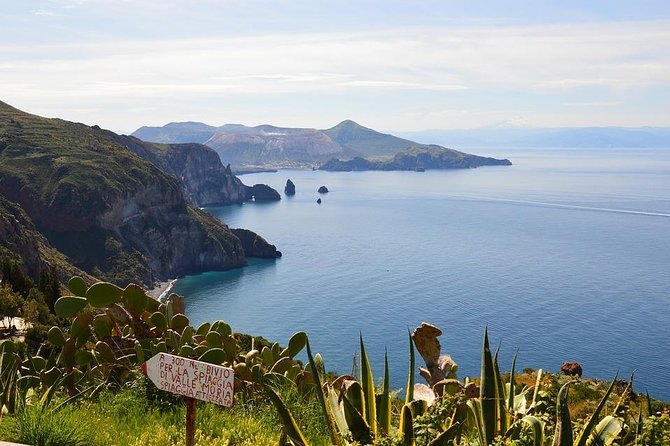
Aeolian Islands - Stromboli, Lipari Volcanic Fire Meets Tyrrhenian Blue
The evening sun dips below the horizon as a low rumble echoes across the Tyrrhenian Sea—followed by a plume of incandescent lava that arcs into the night sky like nature’s own fireworks. You feel the warm volcanic sand beneath your feet on Stromboli’s Sciara del Fuoco, smell the sulfurous tang of the earth, and hear the distant splash of molten rock meeting the sea. Just a short ferry ride away, the island of Lipari glows with golden light, its harbor bustling with fishing boats and pastel-colored houses stacked like sugar cubes. This is the Aeolian archipelago, a UNESCO World Heritage site of seven volcanic islands born from fire over 300,000 years ago [[46]]. Stromboli, one of the world’s most active volcanoes, has been erupting continuously for over 2,000 years—earning it the nickname “Lighthouse of the Mediterranean.” In an age of predictable travel experiences, the Aeolian Islands matter now more than ever—they offer a raw, elemental encounter with the planet’s creative power, where beauty and danger coexist in perfect, thrilling balance.
Why Aeolian Islands - Stromboli, Lipari Embodies Elemental Drama
The Aeolian Islands are not merely scenic destinations; they are living laboratories of geology and human resilience. Formed by volcanic activity along a tectonic fault line, the archipelago’s two main islands showcase contrasting faces of fire. Stromboli, standing 924 meters (3,031 feet) tall, is famed for its persistent, mild eruptions—occurring every 20–30 minutes—that have fascinated scientists and poets alike since antiquity. Its constant activity “solved” a historical problem: it served as a natural lighthouse for ancient mariners navigating the Tyrrhenian Sea. Lipari, the largest and most populous island, offers a gentler volcanic legacy—its pumice quarries fueled a prehistoric trade network, and its obsidian was prized across the Mediterranean for tools and weapons [[46]]. Today, this duality fulfills a modern need—for a place where you can witness the earth’s raw power on Stromboli by night and enjoy serene beaches and Baroque churches on Lipari by day. The islands’ unique geology also creates fertile soil, producing capers, Malvasia wine, and sweet white grapes that define the local cuisine—a perfect harmony of fire and flavor.
The Best Time to Experience Aeolian Islands - Stromboli, Lipari
To experience the islands in their most balanced and comfortable state, plan your visit for the specific windows of May 15–June 20 or September 10–October 5, 2026. During these periods, the weather is ideal, with daytime temperatures ranging from 22–27°C (72–81°F), and the sea has warmed to a swimmable 20–23°C (68–73°F) [[11]]. The best time of day to experience Stromboli’s eruptions is after sunset (8:30 PM–11:00 PM), when the lava flows are most visible against the dark sky. For Lipari’s beaches and trails, aim for 8:00–10:30 AM to avoid crowds and heat. It is essential to avoid the peak summer period of July 20–August 25, when ferry lines stretch for hours, accommodation prices double, and the serene atmosphere gives way to mass tourism [[65]]. For the most reliable information on ferry schedules, volcanic activity alerts, and guided tours,
Approximate Budget for a 7-Day Trip (2026)
This budget is calculated for a solo traveler seeking a comfortable, adventure-focused experience in the Aeolian Islands in 2026, based on current inflation trends and average regional costs.
- Accommodation: €95–€160 per night. Staying in a guesthouse in Stromboli’s San Vincenzo or Lipari’s Marina Corta offers authentic experiences. Options with sea views command higher prices.
- Food: €50 per day. Breakfast (€6): a cappuccino and cornetto at a local bar. Lunch (€18): a plate of pasta with fresh tuna at a seaside trattoria. Dinner (€26): a main course like grilled swordfish with a glass of local Malvasia wine.
- Transportation: €220 total. Round-trip ferry from Milazzo to the islands (€40). Inter-island ferry hops (€25). Guided nighttime hike to Stromboli’s summit crater (€65).
- Attractions: Entry to Lipari Archaeological Museum (€5). Boat tour around Vulcano’s sulfur springs (€30). Visit to the Obsidian Museum on Lipari (€4).
- Miscellaneous: €110. This covers a bottle of local wine (€20), several gelato stops (€4 each), a guided snorkeling tour (€45), and souvenirs like a piece of obsidian.
Total Estimated Cost: €1,020–€1,140
6 Essential Aeolian Islands - Stromboli, Lipari Experiences
- Witness Stromboli’s Night Eruption: Join a guided nighttime hike to the Sciara del Fuoco viewpoint. As darkness falls, watch lava fountains light up the sky—a primal, unforgettable spectacle. Bring a headlamp and warm layers.
- Relax on Lipari’s White Beach (Spiaggia Bianca): This crescent of pumice sand, backed by dramatic cliffs, is the archipelago’s most famous beach. The water is crystal-clear, perfect for swimming and snorkeling.
- Explore Lipari’s Ancient Citadel: Walk the fortified acropolis to see Greek walls, a Norman castle, and the Archaeological Museum housing artifacts from 5,000 years of history.
- Take a Boat Tour Around the Islands: Book a small-group tour to see Stromboli’s lava flows from the sea, swim in Vulcano’s thermal waters, and discover hidden coves inaccessible by land.
- Taste Local Wines and Capers: Visit a vineyard on Salina or Lipari to sample Malvasia delle Lipari, a sweet DOC wine, paired with the islands’ world-famous capers, grown in volcanic soil.
- Hike to Stromboli’s Summit Crater (with a guide): For the adventurous, a pre-dawn ascent offers close-up views of the active vents. This strenuous 4-hour hike requires a certified guide and good fitness.
3 Hidden Gems Most Travelers Miss
- Cala Junco on Panarea: A tiny, turquoise cove accessible only by boat or a steep path. Its amphitheater-like shape and clear water make it a paradise for snorkeling. Go on a weekday for solitude.
- The View from Monte Guardia on Lipari: This lesser-known peak offers a panoramic vista of the entire archipelago, including Stromboli’s smoke plume on the horizon. It’s a quiet alternative to the crowded castle.
- Ginostra Village on Stromboli: This isolated hamlet on Stromboli’s western coast has no roads—only mule paths and a tiny harbor. It’s a peaceful retreat from the main village’s bustle, reachable by private boat.
Cultural & Practical Tips
- Book ferries and guides early: The islands have limited capacity. For a summer 2026 trip, book by January 2026 to secure your spot.
- Bring water shoes and reef-safe sunscreen: Many beaches are rocky or pebbly, and the marine ecosystem is fragile. Protect your feet and the environment.
- Learn a few key phrases: “Dov’è il traghetto?” (DOH-veh eel trah-GHEHT-toh?) for “Where is the ferry?”, and “Un caffè, per favore” (oon kah-FEH).
- Respect volcanic safety rules: Never hike Stromboli without a certified guide. Always check the volcanic alert level before your visit at isole-eolie.it.
- Carry cash: Many small restaurants, boat operators, and even some B&Bs operate on a cash-only basis.
- Embrace the slow pace: Life on the islands runs on “island time.” Don’t rush. Sit at a bar, order a granita, and let the rhythm of the place wash over you.
Conclusion: Travel with Awe, Not Just Adventure
The Aeolian Islands are not a destination to be conquered; they are a force to be respected. In 2026, as we seek travel experiences that are both thrilling and meaningful, Stromboli and Lipari offer a profound lesson in humility—reminding us that we live on a dynamic, living planet. Your journey here should be one of awe, not just adrenaline. Feel the warmth of the volcanic earth, listen to the deep rumble of Stromboli’s inner fire, and marvel at the life that flourishes in its shadow. By traveling with this mindful respect, you honor the spirit of the islands and support their preservation as a UNESCO World Heritage site. Slow down. Watch the lava light up the night sky. In that quiet moment of communion with fire and sea, you don’t just visit the Aeolian Islands—you connect with the very pulse of the Earth.
Image Description: Stromboli volcano erupting at night with lava flows against a starry sky, viewed from the Aeolian Islands in Sicily