
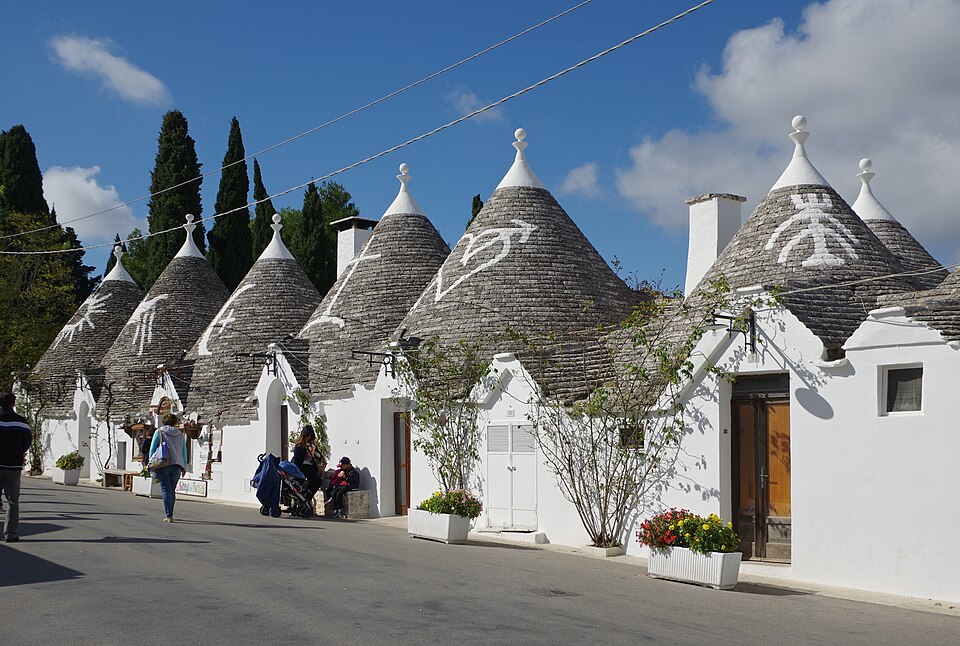
Alberobello Trulli Houses Conical Stone Meets Apulian Sunlight
The morning sun in Puglia strikes the whitewashed walls and conical roofs of Alberobello’s trulli, casting sharp, geometric shadows on the narrow, cobbled streets below. You hear the soft clatter of café cups from a hidden piazza, the distant hum of a Vespa navigating the labyrinth, and the gentle rustle of olive trees in the warm breeze. This is no ordinary town—it is a living museum of dry-stone architecture, where over 1,500 of these unique, beehive-shaped dwellings cluster together in the UNESCO-listed districts of Rione Monti and Aia Piccola [[14]]. Built without mortar from local limestone, the trulli’s origins trace back to the 14th century, though their current form was perfected in the 17th and 18th centuries as a clever tax-avoidance strategy—landowners could quickly dismantle them to evade property taxes imposed by the Kingdom of Naples [[14]]. Rising an average of 4–8 meters (13–26 feet) high, each conical roof is crowned with a symbolic pinnacle, often a cross, star, or spiral, believed to ward off evil. In an age of generic global architecture, Alberobello matters now more than ever—it is a testament to human ingenuity, a place where every stone tells a story of resilience, wit, and a deep connection to the earth.
Why Alberobello Trulli Houses Embodies Dry-Stone Ingenuity
The trulli of Alberobello are far more than picturesque curiosities; they are masterpieces of vernacular engineering that solved critical problems of survival and taxation in pre-modern southern Italy. Their defining feature—the conical roof built using the ancient technique of corbelling—is a marvel of dry-stone construction. Masons would layer concentric rings of limestone slabs (chiancarelle), each ring slightly smaller than the one below, until the structure closed at the apex. This method required no mortar, allowing for quick assembly and, crucially, rapid dismantling—a loophole exploited by feudal lords like the Counts of Conversano to avoid paying property taxes to the Spanish crown in the 17th century [[14]]. The thick stone walls, often up to 1.5 meters (5 feet) thick, provided natural insulation, keeping interiors cool in Puglia’s scorching summers and surprisingly warm in its mild winters. This fulfilled a profound need: to create durable, climate-responsive shelter from the most abundant local resource—the limestone bedrock itself. Today, this architectural legacy fulfills a modern desire for authenticity and sustainability. By preserving and repurposing these structures—as homes, shops, and even luxury hotels—Alberobello offers a powerful model of how ancient wisdom can inform contemporary living.
The Best Time to Experience Alberobello Trulli Houses
To fully appreciate Alberobello’s magic without the crowds, plan your visit for the specific windows of April 25–May 20 or September 15–October 10, 2026. During these periods, Puglia basks in ideal weather, with daytime temperatures ranging from a comfortable 22–26°C (72–79°F) and clear skies that showcase the trulli’s brilliant white against the blue sky [[11]]. The best time of day to explore is in the early morning, between 8:00 AM and 10:00 AM, when the light is soft, the streets are quiet, and you can photograph the iconic conical roofs without a sea of umbrellas in your frame. It is essential to avoid the peak summer period of July 15–August 25, when temperatures can soar above 33°C (91°F) and the narrow streets of Rione Monti become packed with tour groups, diminishing the sense of discovery [[32]]. For the most reliable information on opening hours, local festivals, and guided tours, always consult the official tourism website: viaggiareinpuglia.it.
Approximate Budget for a 7-Day Trip (2026)
This budget is calculated for a solo traveler seeking a comfortable, culturally immersive experience in Puglia in 2026, based on current inflation trends and average regional costs.
- Accommodation: €80–€140 per night. Staying in a restored trullo hotel in the Aia Piccola district offers an authentic and memorable experience. Options in the newer part of town are more affordable.
- Food: €42 per day. Breakfast (€5): a cappuccino and cornetto at a local bar. Lunch (€15): a plate of orecchiette pasta with tomato and ricotta forte. Dinner (€22): a main course like grilled lamb chops with a glass of local Primitivo wine.
- Transportation: €160 total. A regional train ticket from Bari to Alberobello (€5). A rental car for exploring the Itria Valley (€45/day). Local transport within Alberobello is on foot.
- Attractions: Entry to the Trullo Sovrano museum (€3). Guided walking tour of the historic districts (€18). Visit to a local olive oil mill (€10).
- Miscellaneous: €90. This covers a bottle of local wine (€15), several gelato stops (€3 each), a cooking class featuring regional recipes (€40), and souvenirs like handmade ceramics or olive wood kitchenware.
Total Estimated Cost: €907–€1,017
6 Essential Alberobello Trulli Houses Experiences
- Stay Overnight in a Restored Trullo: Book a room in a historic trullo like Trulli Holiday. Feel the cool, silent embrace of the thick stone walls and wake up in a space that has sheltered families for centuries.
- Explore Rione Monti at Sunrise: Be out by 7:30 AM to wander the main tourist district before the crowds arrive. The soft morning light on the conical roofs creates a magical, almost surreal atmosphere.
- Visit the Trullo Sovrano: This two-story trullo is the largest and most complex in Alberobello. Step inside to see how families lived, with a kitchen on the ground floor and sleeping quarters above.
- Discover the Quiet Aia Piccola District: Unlike the bustling Rione Monti, this residential zone is a peaceful maze of private trulli. Walk its silent lanes to see laundry drying between conical roofs and experience daily life.
- Dine Under the Stars in a Trullo Restaurant: Reserve a table at a restaurant like La Cantina, set inside a converted trullo. Savor local specialties like burrata cheese and fava bean purée in an intimate, historic setting.
- Learn the Craft at a Trullo Workshop: Visit a local artisan’s studio to see how the symbolic pinnacles (pinnacoli) are carved. Some workshops even offer short courses on dry-stone techniques.
3 Hidden Gems Most Travelers Miss
- The View from Belvedere Santa Lucia: This small viewpoint on the edge of town offers a panoramic vista over the entire sea of trulli. It’s just a 10-minute walk from the center but often missed by those focused on street-level exploration.
- Trullo Siamese (Siamese Trulli): Tucked away on Via Monte Pertica, this unique pair of trulli shares a single wall and chimney—a rare architectural curiosity. It’s unmarked, so ask a local for directions.
- The Olive Oil Mill at Masseria Moroseta: Just outside Alberobello, this stunning modern farmhouse offers tours of its organic olive groves and oil production. The contrast between ancient tradition and contemporary design is fascinating. Book ahead via their website.
Cultural & Practical Tips
- Wear comfortable walking shoes: The streets are steep, cobbled, and uneven. Sturdy footwear is essential for navigating the historic districts safely.
- Book your trullo accommodation early: The most authentic and atmospheric stays fill up months in advance, especially for the shoulder seasons. Booking by January 2026 is highly recommended.
- Learn a few key phrases: “Dov’è il trullo più antico?” (DOH-veh eel TROO-loh PEE-oo an-TEE-koh?) for “Where is the oldest trullo?”, and “Un caffè, per favore” (oon kah-FEH).
- Respect private property: Many trulli in Aia Piccola are private homes. Do not enter courtyards or peek through windows without permission.
- Beware of the midday sun in summer: The white stone reflects intense heat. Plan indoor visits (museums, churches) during the hottest part of the day (12:00–4:00 PM).
- Tipping is appreciated but not expected: A small tip of €1–€2 for exceptional service at a restaurant is a kind gesture.
Conclusion: Travel with Wonder, Not Just a Camera
Alberobello’s trulli are more than a photo opportunity—they are a portal into a world where architecture was born of necessity, wit, and a deep respect for the land. In 2026, as we seek travel experiences that are both meaningful and memorable, Alberobello offers a powerful lesson in sustainable ingenuity. Your journey here should be guided by wonder, not just by the viewfinder of your camera. Take time to feel the coolness of the stone walls, to decipher the symbols on the rooftops, and to imagine the lives of those who built these remarkable homes. By traveling with this mindful curiosity, you honor the legacy of the trulli and support their preservation for future generations. Slow down. Sit on a step and watch the light shift on the conical roofs. In that quiet moment of connection, you don’t just visit Alberobello—you become part of its enduring, stone-built story.