
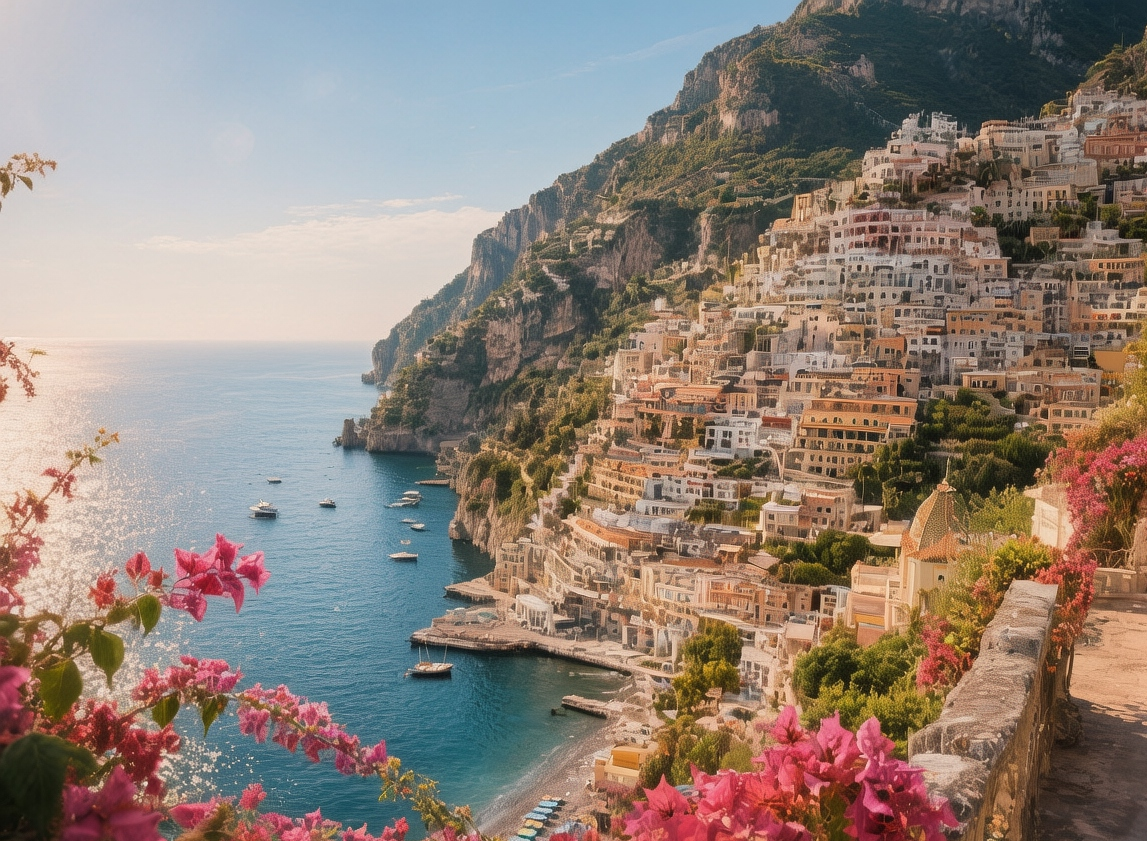
Amalfi Coast – Positano, Ravello Vertical Beauty Meets Mediterranean Soul
The late sun sets the Tyrrhenian Sea on fire—casting molten gold across waves that lap against sheer limestone cliffs. In Positano, bougainvillea spills over wrought-iron balconies like magenta waterfalls, and the scent of lemon zest and wood-fired pizza drifts from hidden courtyards. Higher up, in Ravello, the air is cooler, scented with jasmine and damp stone, as piano notes from Villa Rufolo’s terrace mingle with the distant hum of boat engines below. Carved into a 50-kilometer stretch of Italy’s Sorrentine Peninsula, the Amalfi Coast has defied gravity since Roman times—its villages stacked like porcelain dolls on slopes so steep they’re measured in 45-degree inclines. Positano, once a humble fishing village, rose to global fame through Picasso and Steinbeck; Ravello, perched at 350 meters (1,150 feet), hosted Wagner and inspired symphonies. In 2026, as climate change threatens coastal erosion and overtourism strains infrastructure, this UNESCO World Heritage site stands at a crossroads—where every visitor’s choice determines whether its soul remains rooted in local life or dissolves into luxury spectacle.
Why Amalfi Coast – Positano, Ravello Embodies Vertical Civilization
The Amalfi Coast isn’t just scenic—it’s an architectural rebellion against geography. Since the 9th century, when the Maritime Republic of Amalfi ruled Mediterranean trade routes, villagers have carved terraces into near-vertical cliffs using dry-stone walls to grow lemons, olives, and grapes. Positano’s urban fabric is a marvel of adaptive design: narrow, switchback alleys too steep for cars; houses built directly into rock faces; and staircases that double as communal living rooms. Ravello, founded in the 5th century by Roman nobles fleeing barbarian invasions, sits atop a plateau with panoramic views stretching from Capri to Mount Vesuvius. Its two famed villas—Rufolo (1270) and Cimbrone (11th century)—feature terraced gardens that seem to float above the sea, their “Terrace of Infinity” offering one of Earth’s most photographed vistas. The entire coast spans just 50 kilometers but climbs from sea level to over 1,400 meters at Monte San Michele, creating microclimates that nurture rare flora like the Amalfi lemon (sfusato amalfitano), protected by EU PGI status. Today, strict building codes forbid new construction on unstable slopes, preserving a landscape where human ingenuity and natural drama exist in precarious, breathtaking balance.
The Best Time to Experience Amalfi Coast – Positano, Ravello
To enjoy mild weather, open trails, and manageable crowds, target the precise window of May 10–24, 2026. During these weeks, daytime temperatures range from a comfortable 19–25°C (66–77°F)—ideal for hiking the Path of the Gods and swimming in crystalline coves [[23], [26]]. The sea is calm enough for boat tours, and lemon trees are heavy with fruit. Mornings between 7:00–9:00 AM offer empty streets in Positano and serene garden access in Ravello before tour buses arrive. Alternatively, September 20–October 4, 2026 provides similar conditions with fewer crowds and the added charm of grape harvests in Tramonti vineyards. Avoid visiting during peak periods: all of July and August, when temperatures exceed 32°C (90°F), parking is impossible, and ferry queues stretch for hours, and major holidays like Italian Ferragosto (August 15) [[28]]. For the most authentic experience, stay overnight—day-trippers vanish by 6:00 PM, revealing the coast’s quiet, residential rhythm. Always verify ferry schedules and trail conditions via the official tourism portal (amalficoast.com).
Approximate Budget for a 7-Day Trip
This budget reflects mid-range 2025 pricing adjusted for Italy’s projected 2026 inflation rate of 1.5% [[37]], offering a realistic estimate for a solo traveler splitting time between Positano and Ravello.
- Accommodation: €1,050–€1,400 total (€150–€200 per night) for a boutique guesthouse or private apartment in Positano’s Montepertuso district or Ravello’s historic center—offering views without resort prices.
- Food: €525 total (€75 per day). Breakfast at a café (€5 for cappuccino and sfogliatella); lunch of mozzarella di bufala and grilled octopus (€20); dinner at a family-run trattoria (€45 for spaghetti alle vongole, limoncello, and house white wine).
- Transportation: €95 total. Includes SITA bus from Naples (€6); regional ferries between towns (€25 round-trip); Path of the Gods guided hike (€35); and local taxi transfers (€29 for steep hillside rides).
- Attractions: €65 total. Villa Rufolo (€12); Villa Cimbrone (€10); Emerald Grotto boat entry (€8); Amalfi Paper Museum (€7); and a limoncello-making class (€28).
- Miscellaneous: €110 total. A hand-painted ceramic plate from Vietri sul Mare (€40); artisanal limoncello (€25); gelato from Buca di Bacco (€4); and a reusable tote bag from a local cooperative (€15).
Total Estimated Budget: €1,845–€2,200
6 Essential Amalfi Coast – Positano, Ravello Experiences
- Hike the Path of the Gods at Dawn: Start from Bomerano at 7:00 AM for misty, crowd-free views of the coastline. The 7.8-kilometer trail ends in Nocelle, where a 1,500-step descent leads to Positano’s Spiaggia Grande—a rewarding, immersive journey.
- Watch Sunset from Villa Cimbrone’s Terrace of Infinity: Arrive by 6:30 PM to secure a bench on this legendary belvedere. As the sun dips behind Capri, the sky ignites in hues that inspired E.M. Forster and Gore Vidal alike.
- Swim in Fornillo Beach’s Hidden Cove: Skip Positano’s main beach; instead, walk 15 minutes along the coastal path to Fornillo. Its quieter waters and pebble shore offer intimacy and clear snorkeling spots.
- Attend a Concert at Villa Rufolo: From June to September, Ravello hosts its famed music festival in this 13th-century villa’s cloister. Book early—the acoustics and starlit setting are transcendent.
- Tour a Lemon Grove in Maiori: Visit Agriturismo La Valle delle Ferriere to learn how sfusato lemons—long, fragrant, and PGI-certified—are harvested by hand on terraces inaccessible to machines.
- Ride the Ferry at Golden Hour: Take the 5:00 PM ferry from Amalfi to Positano. From the deck, the pastel villages appear as cascades of color tumbling into turquoise—a perspective only the sea can provide.
3 Hidden Gems Most Travelers Miss
- Atrani’s Secret Harbor: Just a 10-minute walk from Amalfi, this tiny fishing village is Italy’s smallest commune. Its piazza empties by noon—perfect for espresso at Bar da Salvatore while watching fishermen mend nets.
- Vallone del Dragone (Dragon Valley): Behind Ravello, this lush ravine features ancient paper mills and waterfalls. Access via the “Sentiero dei Limoni” trail—steep but serene—and look for wild orchids in spring.
- Conca dei Marini’s Emerald Grotto at Low Tide: While most visit by boat, locals know that at low tide, you can swim into the grotto’s emerald-lit cavern from the small public beach—no crowds, just magic.
Cultural & Practical Tips
- Use public transport wisely: SITA buses are cheap (€3–5 per ride) but crowded; ferries are faster but weather-dependent. Avoid renting a car—narrow roads and €40/day parking make it impractical.
- Dress modestly for churches: Shoulders and knees must be covered in religious sites like Amalfi Cathedral or Ravello’s Duomo.
- Carry cash and small bills: Many family-run eateries and trailside kiosks don’t accept cards. Tipping isn’t expected, but rounding up is appreciated.
- Learn key phrases: “Dov’è il sentiero per il Sentiero degli Dei?” (doh-VEH eel sen-TYEH-roh PEHR eel Sen-TYEH-roh dey-GLI DEH-ee?) for trail directions; “Grazie, buona giornata” (GRAHT-see-eh BWOH-nah jor-NAH-tah) for thanks.
- Respect residential spaces: These are working communities. Never block doorways for photos, and keep noise down after 10:00 PM in narrow alleyways.
Conclusion: Travel with Presence, Not Just Postcards
In 2026, the Amalfi Coast offers more than Instagram backdrops—it invites deep engagement. Your choices determine whether Positano remains a fishing village with boutiques or becomes a luxury ghost town, whether Ravello’s gardens thrive as cultural sanctuaries or fade into event venues. Choose a family-run agriturismo over a chain hotel; buy limoncello directly from a lemon grove; hike trails that fund landslide prevention. Slow down: sip espresso where nonnas gather, listen to the rhythm of boat horns at dusk, taste pasta made with tomatoes grown on terraces older than your country. By traveling with presence—prioritizing connection over consumption—you help ensure that the Amalfi Coast’s vertical beauty continues to shelter real lives, not just reflect tourist dreams. Let your journey be an act of stewardship, and these cliffs will echo your respect for centuries.