
Bardenas Reales Martian Landscapes Meet Ancient Navarrese Shepherding Routes
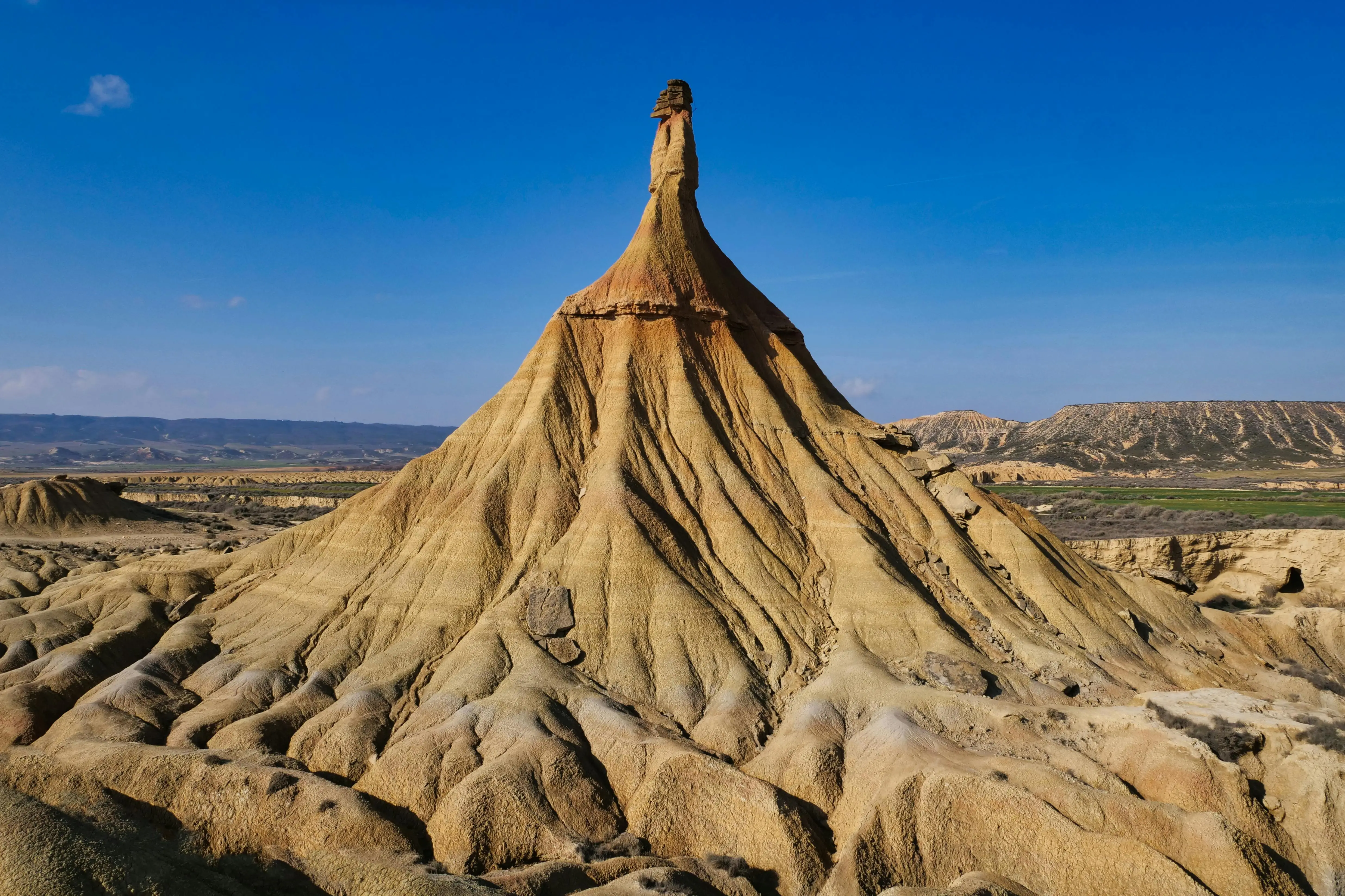
The wind howls through clay canyons at dawn—carving whispers through 42,000 hectares of Europe's most dramatic badlands as the first light transforms ochre sandstone into burning gold. You stand at the edge of Castildetierra, a mushroom-shaped rock formation sculpted by millennia of erosion, watching shadows retreat across a landscape so alien that filmmakers chose it to represent Dothraki seas in Game of Thrones. This semi-desert—designated a UNESCO Biosphere Reserve in 2000—stretches across southeastern Navarre between the towns of Tudela and Arguedas, its labyrinth of canyons, plateaus, and clay valleys formed by the relentless erosion of sedimentary deposits laid down during the Tertiary period, some 65 million years ago. The silence here is profound, broken only by the cry of griffon vultures circling on thermal currents 400 meters above and the occasional bleat of the hardy Merino sheep that have grazed these barren slopes since medieval times. In 2026, as climate change accelerates desertification across the Mediterranean basin, Bardenas Reales matters because it offers a living laboratory of adaptation—showing how life persists in extremes, how ancient geological forces continue to reshape the earth, and how humans have learned to coexist with one of Europe's harshest environments without conquering it.
Why Bardenas Reales Embodies Geological Drama
The Bardenas Reales Natural Park solves a fundamental geological puzzle: how water—seemingly absent in this arid landscape—becomes the primary sculptor of Europe's most spectacular badlands. This 41,845-hectare (103,400-acre) semi-desert represents one of the most advanced stages of erosion on the Iberian Peninsula, where annual rainfall of merely 350–450 millimeters (14–18 inches) concentrates into violent autumn storms that carve canyons 100 meters deep through layers of clay, limestone, gypsum, and sandstone. The park divides into two distinct zones: Bardena Blanca (White Bardena), the higher plateau at 550–650 meters elevation featuring salt flats and gypsum formations; and Bardena Negra (Black Bardena), the lower canyon system at 250–400 meters where pine forests cling to north-facing slopes, creating a stark contrast between barren clay and tenacious greenery.
Technical measurements reveal the scale of erosional forces: the Cortinas de Agua (Water Curtains) canyon system drops 80 meters over 2 kilometers, while Castildetierra—the park's iconic 20-meter-high rock pillar—loses approximately 2 centimeters of height per decade to wind and water erosion. The geological stratigraphy tells a 65-million-year story: Miocene conglomerates form the caprock protecting softer Pliocene clays beneath, creating the characteristic mushroom formations where harder limestone shields erodible sedimentary layers. The park's hydrological system, though intermittent, includes the Río Aragon tributaries that flash-flood through gullies during autumn storms, moving up to 500 cubic meters of sediment per second during peak events.
Historically, Bardenas Reales fulfilled a critical need for medieval Navarre: providing seasonal grazing lands through the Mesta system established in 1268, which granted shepherds communal rights to traverse and graze these marginal lands. The Real Consejo de las Bardenas (Royal Council of Bardenas), founded in 1552, still governs water rights and grazing permits today—one of Europe's oldest continuous land management institutions. The landscape also served strategic military purposes: the 11th-century Castilzaraz tower monitored the frontier between Christian Navarre and Muslim Zaragoza, while bandits used the canyon labyrinth as hideouts until the 19th century. Modern conservation efforts, beginning with the 1999 Natural Park designation and €8.5 million in EU LIFE program funding (2015–2022), balance ecological preservation with traditional pastoral use, maintaining the delicate ecosystem that supports 180 bird species including Spain's largest griffon vulture colony (over 200 breeding pairs).
The Best Time to Experience Bardenas Reales
For optimal conditions—when extreme temperatures moderate and autumn storms create dramatic cloud formations over the badlands—target April 15–June 10 or September 20–November 5. During these windows, daytime temperatures range 18–28°C (64–82°F), while nights cool to 6–14°C (43–57°F)—perfect for hiking exposed plateaus without summer's scorching heat or winter's potential flash flood dangers.
For photography and atmospheric exploration, arrive at the Centro de Interpretación (Visitor Center) by 7:00–8:00 AM when gates open, allowing you to reach Castildetierra before tour buses arrive from Zaragoza and Pamplona. The golden hour before sunset—approximately 8:30–9:40 PM in June, 7:00–8:00 PM in October—casts long shadows across the eroded canyons, creating ideal conditions for capturing the contrast between ochre clay and azure sky. Visit Tuesday through Thursday to avoid weekend crowds; Saturday mornings see visitor numbers reach 800+ people at popular viewpoints.
Avoid July 1–August 25 unless you tolerate temperatures exceeding 38°C (100°F) with zero shade on exposed trails; the clay surface radiates heat, making midday hiking dangerous without 4+ liters of water per person. November through February brings unpredictable flash floods—sudden storms can transform dry gullies into deadly torrents within minutes, closing access roads without warning. The park administration closes all trails during red weather alerts; check AEMET forecasts (www.aemet.es) before visiting.
Verify current conditions and road closures at the official Bardenas Reales website: www.bardenasreales.navarra.es or call +34 948 740 562.
Approximate Budget for a 7-Day Trip (2026)
This budget reflects mid-range travel with comfortable accommodations, quality dining, and comprehensive outdoor experiences—based on 2025 pricing adjusted for Spain's projected 3.2% inflation rate for 2026. Bardenas Reales sits in rural Navarre where costs run 25–35% lower than major cities, though guided tours and 4WD rentals add expense for accessing remote areas.
Accommodation: €65–€140 per night
- Rural casa rural in Arguedas (park entrance town): €65–€85 (Casa Rural Bardenas)
- Mid-range hotel in Tudela (25 km from park): €95–€140 (Hotel Tres Reyes Tudela)
- Eco-lodge near park boundary: €110–€150 (Finca de Arriero)
Food: €35–€60 per day
- Breakfast: €5–€8 (coffee, tostada, fresh orange juice at Bar Plaza Arguedas)
- Lunch: €12–€18 (menú del día: Navarrese lamb stew, grilled vegetables, or migas with wine included)
- Dinner: €18–€34 (traditional asador: roast lamb, Rioja wine, dessert)
Transportation:
- Rental car (7 days, compact SUV essential for park access): €280–€360
- 4WD rental with driver-guide (half-day): €180 (recommended for deep canyon access)
- Bus Pamplona to Tudela (Line 220): €9.80 one-way, 75 minutes
- Fuel for regional exploration (420 km): €58–€68
- Train Madrid to Tudela (RENFE): €42–€68 one-way, 3 hours
Attractions & Experiences:
- Guided 4WD tour (4 hours, includes park entry): €45 per person
- Visitor Center exhibition: Free
- Griffon vulture observation hide (guided): €12
- Stargazing tour (Bardenas certified Dark Sky area): €28
- Bicycle rental (mountain bike, per day): €18
Miscellaneous:
- Local wine (Navarra DO, bottle): €8–€22
- Artisan cheese (Roncal or Idiazábal): €14–€20
- Travel insurance (7 days, must cover outdoor activities): €28–€45
- Water and snacks for hiking: €15–€25
Total for 7 days (mid-range): €980–€1,320 per person (excluding international flights)
6 Essential Bardenas Reales Experiences
- Hike to Castildetierra at Sunrise: Begin at the Pisquerra parking area at 7:00 AM (gates open 7:00 AM–7:00 PM in summer, 8:00 AM–6:00 PM in winter), following the 2.5-kilometer marked trail (PR-N 48) to the iconic rock formation. The 45-minute walk traverses clay badlands with 80 meters of elevation gain; wear sturdy boots as the terrain is slippery after rain. Arrive by 7:45 AM to photograph Castildetierra's 20-meter pillar glowing amber in first light, with griffon vultures launching from thermal currents overhead. Return via the Barranco de los Labritos canyon for varied geological perspectives. Total hiking time: 2.5 hours round-trip.
- Explore the Cortinas de Agua Canyon: Join a guided 4WD tour (mandatory for this section) departing from the Visitor Center at 10:00 AM or 4:00 PM daily. The 15-kilometer route descends 80 meters through the park's deepest canyon system, revealing vertical walls of stratified clay and limestone sculpted by flash floods. Your guide will explain the hydrological forces that carved these gullies and point out fossilized shells embedded in Miocene rock layers. The tour includes stops at Rincón del Búho (Owl's Corner) for birdwatching and El Rallón viewpoint for panoramic photography. Duration: 4 hours; booking essential (+34 948 740 562).
- Observe Griffon Vultures from the Hide: Book the ornithological experience (€12, Tuesday and Thursday mornings, 8:00–11:00 AM) at the Planerón observation hide, where over 200 breeding pairs of Gyps fulvus nest in canyon walls. The hide, positioned 400 meters from the nearest cliff, allows photography with 300–400mm lenses without disturbing the colony. Park naturalists explain vulture behavior, conservation efforts, and the ecosystem's scavenger hierarchy. Bring binoculars or telephoto lens; the hide provides seating and interpretive panels. This experience requires advance reservation (email bardenas@navarra.es 72 hours ahead).
- Photograph the White Bardena Salt Flats: Drive to the Blanca sector via the NA-134 road (accessible with standard vehicles), arriving at 6:00 PM in summer or 5:00 PM in autumn for optimal light. The salt-encrusted plains reflect the sky like a mirror after rare rain events, creating surreal landscapes where horizon lines dissolve. Key viewpoints include Pisquerra and Carcastillo overlook; use a polarizing filter to enhance the contrast between white gypsum deposits and blue sky. The area's minimal light pollution makes it exceptional for astrophotography—return after sunset to capture the Milky Way arching over the salt flats. No hiking required; viewpoints are roadside accessible.
- Walk the Medieval Transhumance Routes: Follow the ancient cañada real (royal shepherd's path) that traverses the park's eastern boundary, used continuously since the 13th century for seasonal sheep migration. The 8-kilometer route (3 hours round-trip) begins at the Cortinas parking area, marked by stone cairns and wooden posts bearing the Mesta symbol. You'll pass weathered stone shelters (chabolas) where shepherds still rest during autumn and spring migrations, and encounter flocks of Merino sheep tended by modern-day pastores using methods unchanged for 700 years. Best walked in April–May or October–November when temperatures moderate and wildflowers bloom in the wadis. Carry 2+ liters of water; no shade available.
- Visit the Interpretation Center: Before exploring the park, spend 90 minutes at the Centro de Interpretación (free entry, open Tuesday–Sunday 10:00 AM–2:00 PM and 4:00–7:00 PM) to understand the geological and ecological context. The multimedia exhibits explain the 65-million-year formation process through interactive 3D models, while the ornithology section displays nesting cameras broadcasting live from vulture colonies. The highlight: a 12-minute immersive film projecting the park's seasonal transformations on a 180-degree screen. Rangers provide current trail conditions, weather warnings, and wildlife sighting maps. The center's terrace offers panoramic views of the Bardena Negra canyon system—ideal for planning your route.
3 Hidden Gems Most Travelers Miss
- Ermita de Sancho Abarca Hermitage: This 10th-century Romanesque chapel, tucked in a secluded canyon 3 kilometers north of the main park road, served as a refuge for shepherds and a waystation for medieval pilgrims on the Camino de Santiago's Tudela branch. Most visitors never discover this site; access requires a 45-minute hike from the Zarapuz parking area (unmarked trail—download GPS coordinates: 42.1847°N, 1.4523°W). The single-nave chapel preserves original fresco fragments depicting Sancho Abarca, the 10th-century King of Navarre who allegedly received divine protection while hunting in Bardenas. Visit Tuesday or Thursday mornings when the hermitage caretaker, María José Echeverría (+34 629 847 512), opens the door and shares oral histories about the site's role in transhumance culture. Bring a flashlight to examine the faded 1,000-year-old paintings.
- Fuente del Hierro Iron Spring: Hidden in the Bardena Negra canyon system, this natural spring emerges from iron-rich sandstone, creating a small oasis where tamarisk trees and reeds survive in the otherwise barren landscape. The spring's mineral water (high iron content gives it a reddish tint) has been used by shepherds for centuries and remains potable—fill your water bottle here during hikes. Access requires a 2-kilometer walk from the Rincón del Búho parking area; follow the dry riverbed north until you see green vegetation (approximately 30 minutes). The site is overlooked because it's not marked on standard tourist maps; request the detailed topographic map at the Visitor Center. Best visited at 11:00 AM when sunlight penetrates the canyon, illuminating the contrast between rust-colored rock and emerald vegetation.
- Corral de los Bandoleros Bandit Hideout: This natural amphitheater, formed by 15-meter-high clay walls in the park's western sector, served as a refuge for 19th-century bandits who robbed travelers on the Tudela-Zaragoza road. Local oral history recounts how the bandoleros stored stolen goods in caves carved into the soft sandstone and maintained lookout posts on the ridge above. Access requires a guided tour (€18, Saturday mornings at 9:00 AM, book via +34 948 740 562) led by historian Carlos Iribarren, whose grandfather shepherded sheep in Bardenas and heard stories from elders who remembered the bandit era. The 3-hour tour includes archival photographs, period weapons displays, and a visit to the actual cave shelters. Limited to 8 people per group; book 2 weeks ahead.
Cultural & Practical Tips
- Safety first—flash flood awareness: Bardenas Reales experiences sudden, violent storms primarily in autumn (September–November) that transform dry gullies into deadly torrents within minutes. Never enter canyons if rain is forecast or if you hear thunder; retreat to high ground immediately if water begins flowing in washes. The park's emergency number is 112; ranger patrols monitor weather conditions but cannot warn everyone in remote areas. Carry a whistle, mirror, and fully charged phone (coverage is spotty—Movistar works best).
- Language essentials: While Spanish dominates, you'll hear Navarrese dialect words: Chabola (cha-BOH-lah = shepherd's stone hut), Barranco (bah-RAN-koh = canyon/gully), Migas (MEE-gahs = traditional breadcrumb dish). Key phrases: ¿Dónde está el centro de visitantes? (DON-deh es-TAH el SEN-tro deh vee-see-TAN-tes = where is the visitor center?), Necesito ayuda (neh-seh-SEE-toh ah-YOO-dah = I need help), Gracias (GRAH-see-ahs = thank you).
- Photography guidelines: Drone use requires written permission from the Navarre Environmental Department (email medioambiente@navarra.es 14 days ahead)—generally granted for commercial projects but denied during bird nesting season (March–July). Tripods are permitted; use a circular polarizer to reduce glare on salt flats and enhance sky contrast. The best light occurs 7:00–9:00 AM and 7:00–9:00 PM (summer); midday sun creates harsh shadows in canyons. Respect wildlife: maintain 200-meter distance from vulture colonies.
- Vehicle requirements: While main roads (NA-134, park access roads) are paved or graded gravel, accessing remote viewpoints like Cortinas de Agua requires 4WD with high clearance. Rental companies in Tudela and Pamplona offer SUVs for €60–€80/day; standard cars risk getting stuck in clay after rain. Carry a spare tire, jack, and shovel. Fuel up in Tudela or Arguedas—no services exist inside the 42,000-hectare park. Download offline maps (Google Maps or Maps.me); GPS signal is reliable but cellular coverage is not.
- Water and sun protection: The park's arid climate (350–450mm annual rainfall) and minimal shade demand serious preparation: carry minimum 3 liters of water per person per day, plus electrolyte tablets. Wear UV-blocking sunglasses, wide-brimmed hat, and SPF 50+ sunscreen—reflection off white gypsum deposits intensifies UV exposure. Hiking boots with ankle support are essential; the clay surface becomes extremely slippery when wet and sharp when dry. Avoid visiting June–August unless you're acclimatized to extreme heat.
- Respect traditional land use: Bardenas Reales remains an active pastoral landscape where the Real Consejo de las Bardenas grants grazing rights to 12 local towns. You'll encounter sheep flocks (primarily Merino and Rasa Aragonesa breeds) and occasional cattle; maintain distance, close gates behind you, and never disturb working dogs. The council's shepherds have priority on all routes; yield to livestock vehicles. Photography of shepherds or their animals requires permission—most are happy to pose if asked respectfully. Remember: you're a guest in a working landscape, not just a tourist attraction.
- Dark Sky photography: Bardenas Reales received Starlight Reserve certification in 2019, offering exceptional astrophotography opportunities with minimal light pollution (Bortle Class 2–3). The best stargazing occurs during new moon phases; download astronomy apps like PhotoPills or Stellarium to plan Milky Way shots. Recommended locations: Pisquerra viewpoint (easy access) or Planerón salt flats (wide open horizon). Bring a red-light headlamp to preserve night vision, warm layers (temperatures drop to 5–10°C even in summer), and a sturdy tripod. Winter offers the Milky Way core; summer provides warmer conditions for extended sessions.
Conclusion: Travel with Humility, Not Just Adventure
Bardenas Reales doesn't need your conquest—it has endured 65 million years of geological transformation, outlasted empires, and adapted to climate shifts long before humans arrived with cameras and hiking boots. What it deserves is your humility: the willingness to walk softly across clay that records every footprint, to listen for the wind's lessons in erosion rather than simply checking Castildetierra off a bucket list, to understand that this landscape's beauty emerges from harshness, not despite it. In 2026, as overtourism threatens fragile ecosystems worldwide, Bardenas offers a masterclass in restraint—demonstrating how humans can witness geological drama without dominating it, how shepherds have grazed these slopes for 700 years without depleting them, how griffon vultures reclaim the sky because we've learned to observe from a distance. Travel here not to conquer the desert, but to be humbled by it. Let the silence teach you that some places exist not for our entertainment, but as reminders of forces far older and more powerful than human ambition. Carry only photographs; leave only footprints that the next storm will erase.