
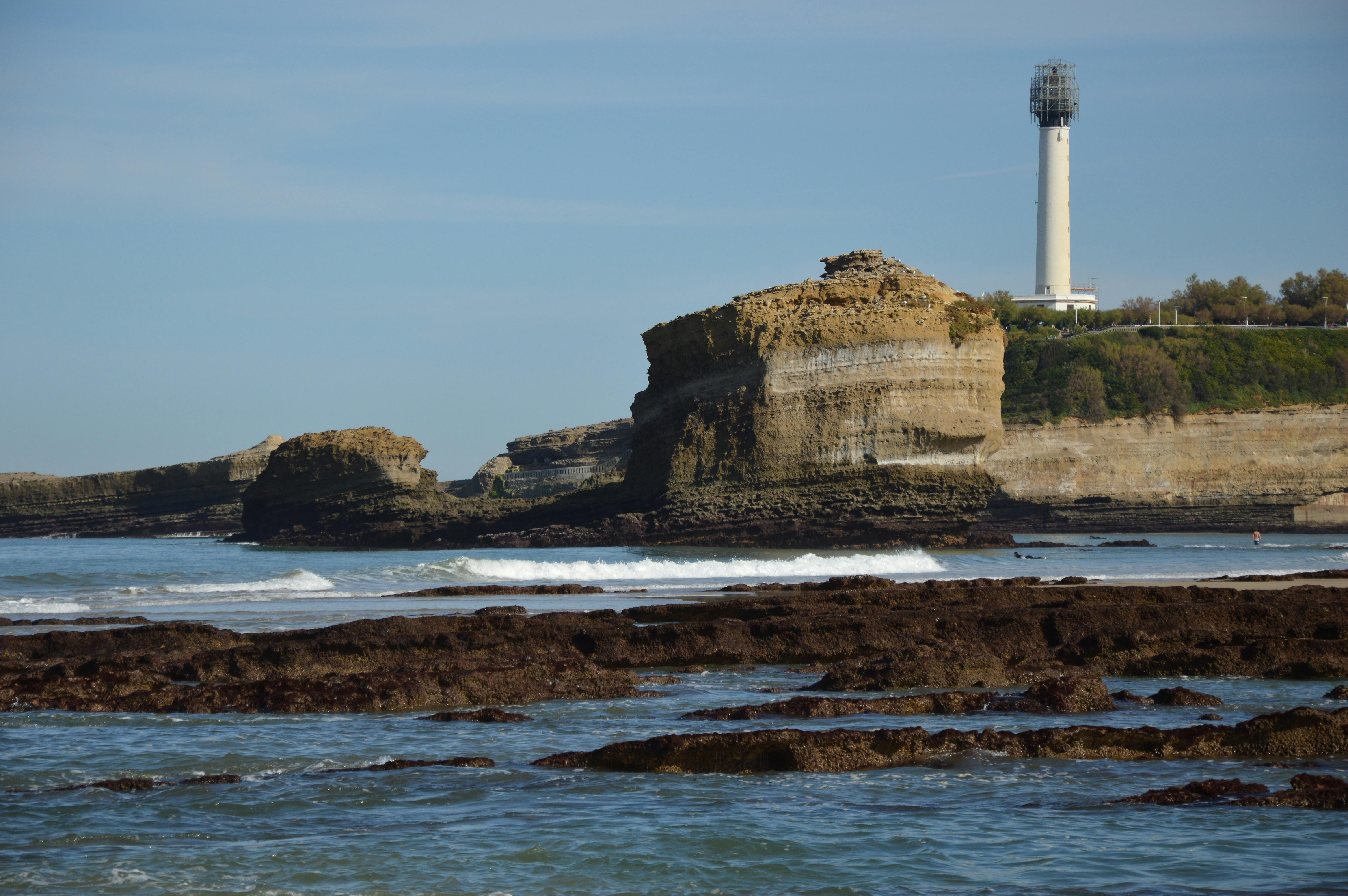
Biarritz Lighthouse : Atlantic Vigilance Meets Basque Light
The vigil begins before dawn. As the first hint of light touches the Bay of Biscay, the Biarritz lighthouse stands sentinel on its rocky promontory—its white cylindrical tower stark against indigo sky, Fresnel lens dormant until night's return. Below, Atlantic waves crash against the Rocher de la Vierge with rhythmic thunder, sending plumes of salt spray high above the cliffs. Then, as the sun breaches the horizon, illumination transforms the scene: golden light strikes the lighthouse's weathered stone, igniting the copper dome while casting long shadows across the 258 steps that spiral to its summit. This is not a relic frozen in time, but a working guardian—guiding ships past the treacherous Côte des Basques since 1834, its beam still cutting through fog with 17-mile reach. In 2026, the Biarritz lighthouse remains Europe's most poetically positioned coastal sentinel—not for height or grandeur, but for its unbroken dialogue between stone, sea, and sky.
Why Biarritz Lighthouse Embodies Atlantic Vigilance
Biarritz lighthouse represents more than navigational utility—it embodies the Basque Coast's centuries-long negotiation with a restless ocean. Built in 1834 following a series of shipwrecks that claimed over 200 lives on the jagged reefs below, this 47-meter tower solved a critical problem: how to warn mariners of the Atalaye rocks while withstanding the Bay of Biscay's legendary fury. Its engineering reflects pragmatic elegance—local stone quarried from the Pyrenees foothills, a copper dome designed to shed Atlantic gales, and a Fresnel lens (upgraded in 1904) that concentrates lamp light into a beam visible through the region's notorious fog banks. Unlike decommissioned lighthouses converted to museums, Biarritz's tower remains an active aid to navigation under France's Maritime Affairs authority, its light automated since 1980 but its presence still essential for vessels approaching the Adour River estuary. This continuity creates rare authenticity: where visitors climbing the spiral staircase trace the same path as 19th-century keepers who hand-wound clockwork mechanisms through winter storms.
The Best Time to Experience Biarritz Lighthouse
For optimal conditions—dramatic coastal light, manageable visitor numbers, and authentic maritime atmosphere—visit between May 18 and June 12 or September 20–October 8. These windows deliver daytime temperatures of 17–23°C (63–73°F), creating ideal conditions for the 258-step ascent without summer's oppressive heat radiating from stone surfaces. Mornings between 8:00–9:30 AM offer the most magical illumination: low-angle sun transforms the Atlantic into liquid gold while casting long shadows that accentuate the lighthouse's cylindrical geometry—a critical window before tour groups arrive from Bayonne. September provides a second excellent opportunity: departing crowds, stable weather patterns, and autumn light that intensifies the copper dome's patina while creating dramatic cloud formations over the Pyrenees. Avoid July 15–August 20 when temperatures exceed 28°C (82°F), making the unventilated staircase uncomfortably warm and viewpoints congested. Note that the lighthouse closes entirely during severe mistral events (winds exceeding 120 km/h) and for annual maintenance during the first two weeks of November—verify openings at biarritz-tourisme.com before travel.
Approximate Budget for a 7-Day Trip (2026)
Based on 2025 benchmarks adjusted for 4% inflation (per INSEE and Nouvelle-Aquitaine Tourism Board projections), here's a realistic mid-range budget for a Basque coastal itinerary:
- Accommodation: €105–€155 per night for a family-run guesthouse in Biarritz's old town or a boutique hotel near Côte des Basques—essential for lighthouse access without car dependency.
- Food: €90–€110 per day—breakfast at a café (€8), lunch of pintxos and local cider (€22–€28), dinner featuring grilled turbot at a beachfront guérite (€48–€62).
- Transportation: €32 for a 7-day Chronoplus pass (covers all buses). Train from Paris Montparnasse to Biarritz (4h20, €68–€98 one-way via SNCF Connect). Walking is optimal for coastal exploration.
- Attractions: Lighthouse entry/climb: €5. Musée de la Mer: €9. Surf lesson (2 hours): €68. Boat tour to Rocher de la Vierge: €16. Allocate €120 total.
- Miscellaneous: €55 for Basque linen towels from Maison Olhaberry, local Espelette pepper, or contributions to coastal conservation initiatives.
Total Estimated Cost: €1,100–€1,550 for seven days, excluding international flights.
5 Essential Biarritz Lighthouse Experiences
- Lighthouse Spiral Ascent: Climb the 258 worn stone steps to the lantern room—pause midway at the first landing to catch your breath while watching surfers navigate the Côte des Basques break below.
- 360-Degree Summit Vista: From the gallery surrounding the lantern, witness the unique convergence of Pyrenees foothills meeting Atlantic expanse—with clear days revealing Spain's Cap Higuer 30km south.
- Fresnel Lens Observation: Study the 1904 first-order lens up close—its concentric prisms still directing the automated LED beam that flashes white every 10 seconds, a rhythm unchanged since steam-powered rotation.
- Keepers' Quarters Exhibition: The ground-floor museum displays logbooks from 1897–1978 detailing storms survived, rescues coordinated, and the solitary rhythm of lighthouse life before automation.
- Sunset Sentinel Watch: Return at 7:30 PM (summer) to witness the light's first ignition at dusk—a moment when the beam cuts through twilight while the town below begins to glitter.
3 Hidden Gems Most Travelers Miss
- Chemin du Phare Secret Overlook: Behind the lighthouse base, follow an unmarked coastal path (look for weathered blue marker on rock face) 150m north to a natural platform offering the only perspective where the tower appears to rise directly from crashing waves.
- Pointe Saint-Martin Tide Pools: Accessible only 90 minutes before/after low tide via rocky descent east of the lighthouse—reveals anemone gardens and sea urchin colonies in pools carved by centuries of wave action (check tide tables at tourist office).
- Atelier du Signal: A retired lighthouse keeper's workshop hidden in a vaulted cellar at 7 Rue du Port-Vieux—observe Jean-Pierre Irigoïty repairing historic signaling equipment using techniques unchanged since the 1950s (open Wednesday mornings by appointment: +33 5 59 24 11 87).
Cultural & Practical Tips
- Ascent Preparation: Wear grippy-soled shoes—the spiral staircase's stone treads are polished smooth by 190 years of footsteps and become slippery after morning dew. No sandals or smooth leather soles.
- Respect Operational Integrity: Never touch the Fresnel lens or operational equipment. Photography without flash permitted, but never use tripods in the narrow staircase—they obstruct emergency egress.
- Learn Key Phrases: "Kaixo" (hello in Basque), "Merci," and "Zein da itsasargiaren historia?" (What is the lighthouse's history?) show respect—keepers often share deeper insights with curious visitors.
- Tide Awareness: The lighthouse promontory becomes partially submerged during spring high tides—check tide tables at biarritz-tourisme.com before coastal walks to avoid being cut off by rising water.
- Photography Protocol: Best exterior shots captured between 8:00–9:30 AM when eastern light illuminates the tower without harsh shadows. Never photograph through the lantern room windows—the glass distorts images and risks equipment damage.
Conclusion: Travel with Maritime Reverence, Not Just a Lens
Biarritz lighthouse endures not as attraction to be consumed, but as testament to humanity's humble negotiation with elemental forces. As a conscious traveler, your presence should honor this legacy: climb slowly to appreciate the engineering that has withstood 190 years of Atlantic fury, support local keepers' descendants who maintain coastal vigilance through volunteer surf lifesaving clubs, and understand that your footsteps tread ground where generations measured time by tides rather than clocks. Sit quietly on the western rocks at dusk and watch the beam ignite—the same light that guided Basque whalers home and warned steamships of hidden reefs. By approaching this sentinel not as backdrop for social media, but as teacher of resilience, you help ensure its light continues not just for navigation, but as reminder that some guardians still stand watch while the world rushes past—steadfast, essential, and beautifully unchanging.