
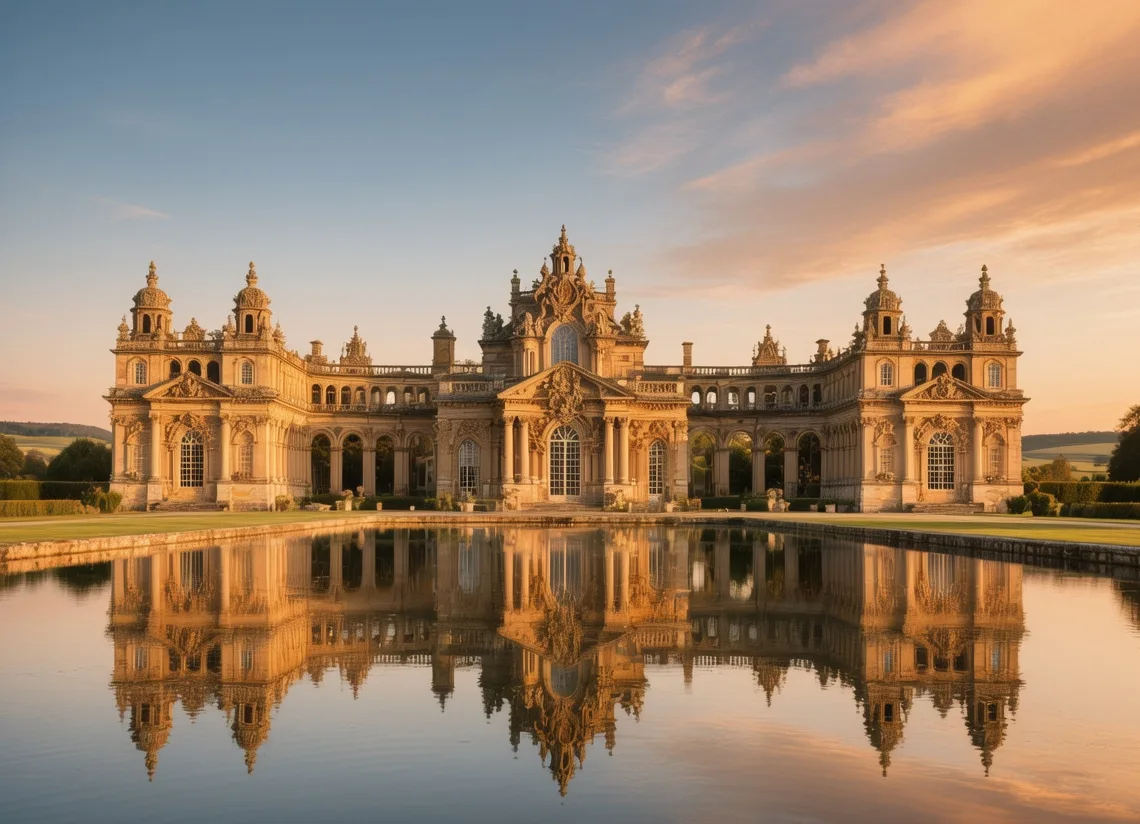
Blenheim Palace Baroque Grandeur Meets Churchillian Legacy
The clock chimes—a deep, resonant tone that echoes across the 2,000-acre parkland—as you stand before the East Gate at 9:15 AM, watching mist rise from the Great Lake while the honey-colored stone facade glows in the dawn light. The air smells of aged oak and manicured boxwood; the silence hums with the weight of three centuries of aristocratic history contained within these walls. Built between 1705 and 1722 as a gift from Queen Anne to the 1st Duke of Marlborough, Blenheim Palace stands as the only non-royal palace in England, spanning 187 rooms across 7 acres of floor space. You stand beneath the portico where Sir John Vanbrugh's baroque vision rises 43 meters at its highest point, while Capability Brown's landscaped grounds stretch toward the horizon like a living painting. Every column tells a story: military victories, political intrigue, and the birth of Winston Churchill in 1874. In 2026, as heritage sites balance preservation with accessibility, visiting Blenheim Palace means engaging with a monument that transcends its aristocratic origins. This place matters now because it remains a UNESCO World Heritage Site and a living testament to British history, challenging visitors to confront the complexity of legacy while navigating the splendor of baroque architecture.
Why Blenheim Palace Embodies Baroque Architectural Mastery
Blenheim Palace solves the architectural challenge of creating a monument worthy of military triumph while functioning as a family residence—a feat achieved through the controversial vision of Sir John Vanbrugh and Nicholas Hawksmoor. When Queen Anne granted the land in 1704 following the Battle of Blenheim, she commissioned a palace that would honor the 1st Duke's victory over French forces. The building utilizes local Cotswold stone quarried from nearby Heythrop, chosen for its durability and warm golden hue that intensifies with age. Engineering-wise, the Great Hall soars 20 meters to its ceiling, supported by massive Corinthian columns that create a theatrical entrance sequence. The palace features 187 rooms, including the 55-meter-long Picture Gallery with its baroque ceiling paintings by Louis Laguerre. Capability Brown transformed the formal gardens in the 1760s, creating the 40-hectare Great Lake by damming the River Glyme, demonstrating hydraulic engineering that remains functional today. The palace's baroque facade stretches 100 meters across the east front, with sculptural details by Grinling Gibbons adorning the interiors. Today, the 12th Duke of Marlborough resides in the palace while managing it as a visitor attraction, balancing private life with public access. This unique status ensures Blenheim Palace remains not merely a museum but a living estate, blending 18th-century grandeur with modern conservation in a manner few historic houses sustain.
The Best Time to Experience Blenheim Palace
For optimal lighting and manageable crowds, plan your visit between May 15–June 20 or September 10–October 15, when temperatures range from 15–22°C (59–72°F) and daylight extends until 9:00 PM. Arrive precisely at 10:00 AM when gates open to beat the tour groups that typically converge by 11:30 AM; the morning light illuminates the baroque facade beautifully without the glare of midday sun. Evening visits during summer offer a romantic atmosphere as the sun sets over the lake, though the palace closes at 5:00 PM except for special events. Avoid July 25–August 31 when school holidays bring peak congestion, pushing entry queues beyond 45 minutes despite timed tickets. Winter months (December–February) offer shorter lines but temperatures drop to 2–8°C (36–46°F), and the gardens become muddy underfoot. For special events like the Flower Show or Christmas illuminations, verify the calendar at blenheimpalace.com before booking, as these attract additional crowds. Tuesday and Thursday mornings typically see the lowest visitor volume, allowing for quieter contemplation in the State Rooms.
Approximate Budget for a 7-Day Trip (2026)
Oxfordshire remains a moderate destination, but staying near Blenheim provides immediate access to the palace without excessive transport costs. These 2026 estimates assume a moderate travel style, accounting for approximately 3-4% annual inflation in UK hospitality and attraction pricing.
- Accommodation: £110–£250 per night for a double room in Woodstock, Oxford, or Bladon; budget B&Bs from £75/night in nearby Kidlington
- Food: £50–80 per day—breakfast £9–13 (café pastry or full English), lunch £14–22 (pub meal or palace café), dinner £27–45 (mid-range restaurant with wine); traditional ploughman's lunch £15
- Transportation: £50.00 daily average for car rental and fuel; Train from London Paddington to Oxford £45 return; S3 bus from Oxford to Blenheim £8 return
- Attractions: Blenheim Palace £35.00 adult (includes palace, park, gardens), Churchill Exhibition £12.00, Oxford colleges £20.00, Cotswolds tour £45.00, Thames cruise £18.00
- Miscellaneous: Souvenir guidebook £15, palace postcards £5, rain jacket (essential) £35, travel insurance £50 for week
Total for 7 days: £1,350–1,900 per person (excluding international flights)
7 Essential Blenheim Palace Experiences
- State Rooms Tour: Walk the grand apartments used for state entertaining. Open 10:30 AM–4:30 PM; the audio guide details the history of each room. Look for the ornate ceilings in the Saloon and the Marlborough tapestries depicting battle scenes.
- Churchill Exhibition Visit: Explore the birthplace of Sir Winston Churchill. Located in the West Wing; open during palace hours. The exhibition features personal artifacts, photographs, and the room where he was born on November 30, 1874.
- Great Lake Walk: Stroll the 40-hectare water feature designed by Capability Brown. Open dawn–dusk; the view from the Grand Bridge is iconic. The water reflects the palace facade beautifully at sunset; listen for the waterfowl calling across the surface.
- Formal Gardens Exploration: Wander the terraced gardens east of the palace. Open 10:00 AM–5:00 PM; the Water Terraces feature fountains and sculptures. The scent of roses is strongest in June; sit on the benches to enjoy the symmetry of the design.
- Grand Bridge Crossing: Traverse Vanbrugh's monumental structure spanning the lake. The bridge contains 30 rooms within its structure; look for the Gothic details. The view from the center encompasses the entire palace and parkland.
- Palace Park Drive: Take the miniature train tour around the estate. Departs hourly from 11:00 AM–4:00 PM; the 20-minute journey covers 3 kilometers. The guide points out the Column of Victory and Queen Pool while explaining the landscape history.
- Butterfly House Visit: Step into the tropical conservatory near the gardens. Open 10:00 AM–5:00 PM; over 400 butterflies fly freely. The humidity is noticeable; watch the exotic species land on the flowers while children delight in the colors.
3 Hidden Gems Most Travelers Miss
- Column of Victory: This 41-meter Corinthian column stands 1.5 kilometers north of the palace. Access via the park footpaths; open during park hours. Most tourists stay near the palace, missing the panoramic view from the top (when open) and the statue of the 1st Duke surmounting the column.
- Blenheim Village Church: St. Martin's Church in Bladon contains the Churchill family graves. Access via the village road; open 9:00 AM–5:00 PM. The simple churchyard offers a quiet contrast to the palace grandeur; Winston Churchill is buried here with his wife Clementine.
- The Secret Garden: This walled garden near the East Courtyard is often overlooked. Access via the main garden path; open 10:00 AM–4:00 PM. The heritage roses and herbaceous borders are meticulously maintained; it provides a peaceful retreat away from the main tourist routes.
Cultural & Practical Tips
- Dress code: Comfortable walking shoes are essential; the park covers 2,000 acres with uneven terrain. Shoulders should be covered when entering the chapel; carry a light jacket for coverage.
- Photography rules: Photography is permitted in the park and gardens for personal use without flash. Interior photography is strictly prohibited in the State Rooms to protect light-sensitive artifacts. Phones must be silenced during tours.
- Parking logistics: Free parking is available on-site; arrive by 9:30 AM to secure a space close to the entrance during peak season. The car park is 500 meters from the palace; allow 10 minutes to walk.
- Local phrases: Learn "Mind the gap" (watch the step), "Cheers" (thanks), and "Queue here" (wait in line); locals appreciate visitors who respect pedestrian flow on the narrow paths.
- Weather preparedness: The park is exposed to wind and rain; carry a compact umbrella (£10 from Boots pharmacy) and waterproof layers. Grass paths become muddy after rain—wear shoes with good grip.
- Accessibility: The palace offers step-free access via ramps and lifts; wheelchair users receive priority entry—contact visitors@blenheimpalace.com 48 hours ahead to arrange assistance. Some garden paths are gravel and may be difficult.
- Respectful behavior: Keep voices lowered in the State Rooms and chapel; this is a private residence. Do not touch the artifacts or lean on the historic furniture; the materials are centuries old and fragile.
Conclusion: Travel with Reverence, Not Just Checklists
Blenheim Palace demands more than a snapshot beside the baroque facade—it invites you to contemplate the weight of history resting on that golden stone. When you walk the State Rooms in 2026, tracing the same floors worn by dukes and prime ministers, you're not just ticking a sightseeing box; you're witnessing the delicate balance between private residence and public heritage. As overtourism pressures historic landmarks, visiting mindfully means respecting the residential nature of this institution, understanding that behind the ticket barriers, the Marlborough family continues to maintain this legacy. Walk slowly across the parquet floors, noticing how the light changes on the gilded ceilings; listen to the silence of the park not as emptiness but as preservation. Leave only footprints on the grass, take only memories of baroque grandeur, and carry forward the understanding that places like this endure because each generation chooses to honor them—not as theme parks, but as living testaments to history, architecture, and the enduring complexity of British heritage.