
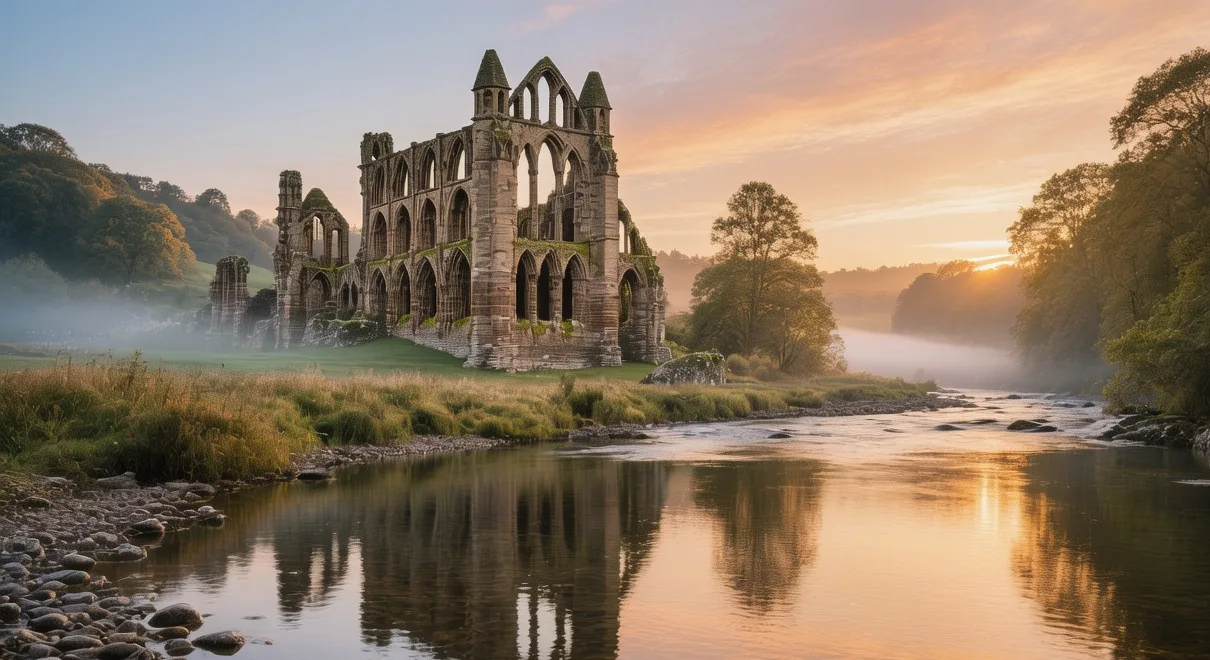
Bolton Abbey Ancient Ruins Meet Wharfe Valley Waters
6:00 AM breaks over the River Wharfe—a limestone channel measuring 25 meters wide winding through the heart of the Yorkshire Dales, England. The air bites at 7°C (45°F), sharp with the scent of damp moss, ancient sandstone, and the earthy perfume of wet woodland waking from sleep. Dawn light spills over the nave of Bolton Abbey, illuminating the Gothic arches constructed by Augustinian canons in 1154. This is not merely a ruin; it is a skeletal cathedral rising 20 meters to the vaulted ceiling, standing sentinel over the valley since the Middle Ages. You hear the rush of water over the stepping stones; a heron takes flight from the reeds, its wings breaking the silence with a single powerful stroke. In 2026, as heritage sites face pressure from climate change and overtourism, Bolton Abbey matters now more than ever. It remains a tactile connection to monastic history—a place where you walk the same flags as medieval brothers, where the past isn't behind glass but exposed to the elements, and where the landscape is preserved against the erosion of time. This is why you visit.
Why Bolton Abbey Embodies Monastic Engineering
Bolton Abbey isn't merely a picturesque silhouette—it's a testament to religious and architectural evolution spanning 400 years. Founded in 1154 by Augustinian canons seeking a remote place of prayer, the site grew to become one of the wealthiest monasteries in Northern England. The current ruins date primarily to the 13th century, constructed from local sandstone and limestone quarried within the estate boundaries. The abbey solved a fundamental medieval need: a self-sufficient center of prayer and industry that projected ecclesiastical power across the countryside. The engineering is precise: water channels diverted the River Wharfe to power mills, flush latrines, and supply the fish ponds, creating a hydraulic system unmatched in its time. In 1539, the Dissolution of the Monasteries under Henry VIII stripped the roof and lead, leaving the stone skeleton you see today. Today, the Devonshire Estate manages 30,000 acres of ruins and gardens, maintaining the structural integrity against weathering. The site supports a team of 40 conservators who work to prevent erosion from claiming the stonework. When you walk these grounds, you traverse a layered history: Norman foundations beneath the grass, Gothic arches framing the sky, and a contemporary commitment to preservation that defines the future of coastal heritage.
The Best Time to Experience Bolton Abbey
Bolton Abbey reveals its true character during specific windows, though it operates daily except for Christmas and Boxing Day. The definitive experience occurs between May 20 and June 15. During this window, you'll experience average temperatures of 13–17°C (55–63°F), with daylight stretching until 9:30 PM—ample time for evening photography after closing. The spring light filters beautifully through the nave windows, creating dramatic contrasts between shadow and illumination on the stone. The tourist hordes of July haven't yet descended. For those seeking quieter browsing, weekday mornings (9:00–10:30 AM) offer a more intimate atmosphere with significantly fewer tour groups on the path.
Autumn—specifically September 15–October 5—provides a second peak experience, with temperatures cooling to 8–12°C (46–54°F) and the woodland turning russet and gold. This is when you'll witness the migratory birds passing along the river. However, avoid August 24–31 unless you enjoy navigating crowds: this UK Bank Holiday period sees visitor numbers swell to 5,000 daily, with the visitor center becoming impassable and accommodation prices inflating by 45%. Winter visits are possible but limited due to weather closures. For real-time opening hours and tide information, verify current information at www.boltonabbey.com before your visit. Always check the weather forecast; high winds can close the cliff paths for safety.
Approximate Budget for a 7-Day Trip (2026)
North Yorkshire accommodates various budgets, though 2026 prices reflect post-pandemic tourism recovery and 3.5% UK inflation. The following breakdown assumes mid-range travel with comfortable accommodations, local dining, and comprehensive exploration including heritage site visits. Prices are listed in British pounds (£), the local currency.
- Accommodation: £110–£180 per night for a double room in a traditional Yorkshire guesthouse or boutique hotel in Skipton or Grassington. Luxury properties like The Swan command premium rates (£250–£400), while inland villages offer better value (£90–£130).
- Food: £50–£70 per day. Breakfast (£12–£16) typically includes Yorkshire black pudding, local bacon, and free-range eggs. Lunch (£15–£20) at estate cafés: Yorkshire curd tart, or a pork pie with salad. Dinner (£30–£40) featuring regional specialties: venison stew, fresh river trout, or sticky toffee pudding.
- Transportation: London King's Cross to Leeds train: £80–£120 return via LNER (2 hours 30 minutes). Leeds to Skipton bus (Route 580): £10 day pass. Car rental: £50–£70 per day plus £10 daily parking at estate. Fuel for seven days: £70–£90.
- Attractions: Bolton Abbey Estate Pass: £15 adults. Priory Ruins entry: Included. Falconry experience: £45. Guided estate tour: £15. Boat cruise ticket: £12.
- Miscellaneous: Ordnance Survey Explorer Map OL2: £11.95. Local wool scarf: £40–£80. Abbey guidebook: £14.99. Travel insurance: £35–£50 for the week.
Total estimated cost for seven days: £1,550–£2,150 per person (based on double occupancy)
Seven Essential Bolton Abbey Experiences
- Enter through the West Gate: Arrive at your timed slot (e.g., 10:00 AM). Walk the gravel drive toward the main facade. The columns rise 15 meters high, framing the nave above. Touch the limestone warmed by the morning sun. The symmetry is designed to overwhelm; stand still for a moment to absorb the scale. Allow 20 minutes here before entering the ruins to understand the architectural intent.
- Stand in the Nave: Enter the heart of the home at 10:30 AM. The space measures 90 meters long, though the roof is gone to the sky. Notice the pillar bases where monks once walked. The acoustics amplify the wind; speak softly. The room is exposed to the elements; wear layers. Stand quietly for 10 minutes. This is the spiritual heart of the site. Photography is permitted without flash.
- Cross the Stepping Stones: Visit the iconic stones across the River Wharfe (accessible during low flow). This path dates to the 1800s and was used by villagers. The water is cold at 10°C (50°F). View the carved stone crosses and medieval coins found during digs. The vaulted ceilings are original 13th-century stone. Audio guides are included with entry. Allow 40 minutes to read the displays. It contextualizes the ruins within religious history.
- Walk the Riverside Path: Exit the abbey grounds and follow the water trail west. The path drops 10 meters toward the moon ponds. The sound of waves crashing below is deafening close to the edge. Wear waterproof layers as the spray reaches the path. The middle section offers the best photography angle. Allow 60 minutes for the full circuit including the return. Do not venture too close to the unstable cliff edge.
- Visit the Priory Church: Located immediately beside the abbey, this active churchyard dates to 1150. The gravestones lean at angles due to the soft ground. Look for the grave of the Earl of Burlington, a pioneer of local politics. The yew trees are over 500 years old. Stand close to see the inscriptions worn by salt air. The light here is cooler, more subdued. It offers a contrast to the grand abbey ruins. A memorial to local fishermen is displayed near the gate.
- Watch the Light Show: Return to the abbey grounds at 7:00 PM (summer closing varies). The stone glows orange under the evening light. The shadows of the transept stretch across the grass. You can hear the town bells ringing below. The city noise diminishes. It is the best time for exterior photography. The west front frames the harbor perfectly. Allow 30 minutes for a full circuit.
- Dine at the Granary Café: End your visit at the courtyard café (open 10:00 AM–4:00 PM). Order a scone with jam (£6.50) in the glass-walled room. The building dates to 1980 but blends with the stone surroundings. Speak to the staff about the estate's farming operations. The fireplace crackles even in summer. This is the traditional end to a Bolton Abbey exploration.
Three Hidden Gems Most Travelers Miss
- The Nature Trail: While most visitors focus on the abbey, this woodland path sits 500 meters north. Access: Follow the red trail from the Main Courtyard (open dawn to dusk). It is overlooked because it requires a hike, but the view back toward the dome is the definitive photograph. Best visited: Late afternoon when the sun hits the stone. No facilities; bring water. It offers a perspective on Vanbrugh's landscape vision.
- Linton Falls: Located behind the Great Lake, this water feature was planted in 1700. Access: Enter via the gate near the Mausoleum. Open during estate hours. It's overlooked because it lacks signage, but the ancient oak trees are 300 years old. Insider tip: Look for the hidden statues along the paths. Benches available for rest. It provides context for the estate's forestry management.
- The Victorian Walled Garden: Beneath the kitchen garden lies a restored production area. Access: Booking required for tours (+44 1756 718000, £10). It is overlooked because it functions as a working garden. The stone walls are 3 meters thick. It's special because you see where the food for the house is grown. Best visited: Tuesday–Thursday when groups are fewer. The menu features produce grown here. A unique culinary heritage experience.
Cultural & Practical Tips
- Respect the Cliff Edge: The limestone cliff is unstable and eroding. Do not climb over safety barriers. Stay on marked paths at all times. This is not just etiquette; it is safety. Falling stones are a real risk during wet weather. Keep children close.
- Photography Guidelines: Photography is permitted on the grounds for personal use. Tripods are allowed but cannot obstruct paths. Do not use flash inside the museum. Respect other visitors during quiet contemplation. Silence your phone completely in the nave area.
- Booking Strategy: Timed entry slots are recommended during summer. Book online at least seven days in advance. Arrive 15 minutes before your slot to pass through ticket check. Late arrival may result in delayed entry. Print your ticket or save it to your phone wallet.
- Learn these Local Terms: "Fell" (hill/mountain), "Ginnel" (alleyway), and "Reyt" (right/correct). Locals appreciate the correct terminology. When asking for directions, say "the Abbey" rather than "the church." It shows respect for Whitby's specific heritage.
- Weather Preparation: Yorkshire is windy on the exposed headland. Even on sunny days, carry a windproof layer. The stone steps are slippery when wet; wear sturdy shoes. The site is unheated; dress in layers even in summer. Check the forecast; rain is common.
- Accessibility Information: The museum and lower grounds are wheelchair accessible. However, the 199 Steps and upper ruins have stairs only. Virtual tours are available online. Contact the visitor team at +44 1756 718000 for specific access queries before traveling.
- Support Conservation: Consider becoming an English Heritage member upon exit. Maintenance costs £1 million annually. Purchase guidebooks from the shop rather than online to support the local revenue stream. Membership offers free entry to other sites.
Conclusion: Travel with Stewardship, Not Just Sightseeing
Bolton Abbey in 2026 asks something different of you than mere tourism. This ruin—stone, sacred, resilient—has witnessed centuries of prayers, Viking raids, and literary inspiration. But it also sustains a fragile ecosystem of coastal flora and historic masonry threatened by erosion. To travel here responsibly means understanding that you're not just visiting a monument but entering a sanctuary maintained by strict preservation protocols. Walk softly on these flags; they've carried monks, fishermen, and writers for generations. Choose the quiet morning visit over the crowded afternoon. Listen to the wind in the arches, not just the guide's facts. Donate to the conservation fund, not just the gift shop. Let Bolton Abbey change you, not just entertain you. In an age of mass tourism and climate uncertainty, this is how we ensure that 2026's visitors don't become the generation that loved this place to death. The abbey will still be here in 2126—if we treat it not as a backdrop to consume but as a legacy to protect.