
British Museum Ancient Artifacts Meet Enlightenment Curiosity
The glass roof shimmers—a geometric lattice of 3,312 panes filtering London light onto the stone courtyard below—as you step into the Great Court at 9:55 AM, five minutes before the doors open. The air smells of old paper and polished limestone; the silence hums with the weight of two million years of human history contained within these walls. Founded in 1753, the British Museum houses over 8 million objects, ranging from the 115-centimeter Rosetta Stone to the colossal 76-meter-long Assyrian reliefs. You stand beneath the Norman Foster-designed canopy, completed in 2000, which encloses the largest covered square in Europe, while the Round Reading Room stands at the center like a cylindrical monument to knowledge. Every gallery whispers a different story: Egyptian mummies wrapped in linen, Greek marbles carved in 447 BC, and Sutton Hoo treasures buried in 625 AD. In 2026, as debates over provenance and repatriation intensify globally, visiting the British Museum means engaging with a complex legacy of empire and preservation. This place matters now because it remains the world's most comprehensive encyclopedia of human culture, challenging visitors to confront the past while navigating the ethical questions of the present.
Why British Museum Embodies Universal Human History
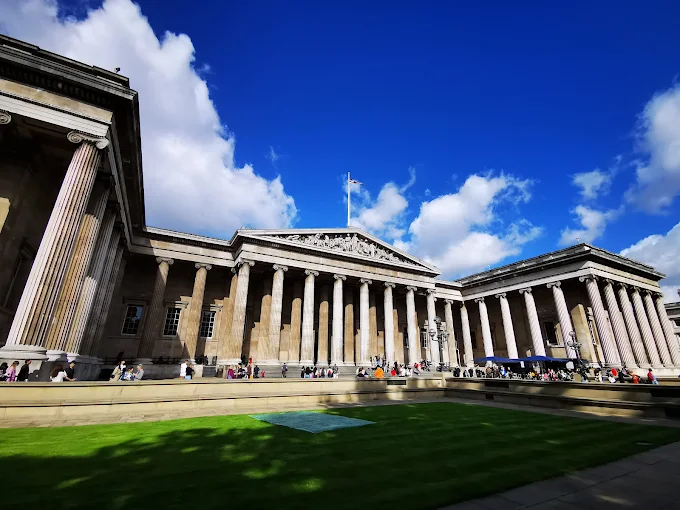
The British Museum solves the intellectual need to categorize and preserve human achievement under one roof—a mission established by the Parliament Act of 1753. Sir Hans Sloane's collection of 71,000 objects formed the nucleus, but the museum expanded rapidly, moving to its current Bloomsbury location in 1759. The King's Library, built between 1823 and 1827, houses 65,000 books collected by George III, while the Greek Revival facade, designed by Sir Robert Smirke, was completed in 1852 with 44 Ionic columns standing 14 meters high. Engineering-wise, the Great Court transformation involved removing 1970s bookstores to reveal the original courtyard, requiring complex steel nodes to support the glass roof without obstructing the historic facades. The collection spans every continent, with the Department of Ancient Egypt and Sudan holding over 100,000 items, including the 3,000-year-old statue of Ramesses II. Today, the museum operates as a non-departmental public body sponsored by the Department for Culture, Media and Sport, balancing free public access with the immense cost of conserving fragile artifacts. This unique status ensures the British Museum remains not merely a repository of treasures but a living institution where archaeologists, curators, and visitors collaborate to interpret the human story, blending academic rigor with public engagement in a manner few institutions sustain.
The Best Time to Experience British Museum
For optimal viewing and reduced congestion, plan your visit between May 15–June 20 or September 10–October 15, when London's temperatures range from 15–22°C (59–72°F) and daylight extends until 8:30 PM. Arrive precisely at 10:00 AM when doors open to beat the tour groups that typically converge by 11:30 AM; the morning light illuminates the Great Court beautifully without the glare of midday sun. Late Friday evenings offer a serene atmosphere during Lates events (5:00–9:00 PM), though specific galleries may close for private functions. Avoid July 25–August 31 when school holidays bring peak crowds, pushing entry queues beyond 30 minutes despite free admission. Winter months (December–February) offer shorter lines but temperatures drop to 2–8°C (36–46°F), and the stone floors become uncomfortably cold underfoot. For special exhibitions, verify the calendar at britishmuseum.org before booking, as popular ticketed shows can sell out weeks in advance. Tuesday and Thursday mornings typically see the lowest visitor volume, allowing for quieter contemplation in the Egyptian Sculpture Gallery.
Approximate Budget for a 7-Day Trip (2026)
London remains a premium destination, but staying in Zone 1 near Tottenham Court Road provides immediate access to the British Museum without excessive transport costs. These 2026 estimates assume a moderate travel style, accounting for approximately 3-4% annual inflation in UK hospitality and attraction pricing.
- Accommodation: £120–£260 per night for a double room in Bloomsbury, Holborn, or King's Cross; budget hostels from £45/night in nearby Camden
- Food: £45–70 per day—breakfast £8–12 (full English or café pastry), lunch £13–19 (museum café or market stall), dinner £24–39 (mid-range restaurant with wine); traditional Sunday roast £20
- Transportation: £8.10 daily cap for Zones 1-2 using contactless/Oyster; Heathrow Express £25 one-way or Elizabeth Line £12.80; Black Cab from Victoria £20 minimum
- Attractions: British Museum free (donation suggested), Special Exhibition £20.00, Westminster Abbey £33.00, Tower of London £34.80, Thames cruise £18.00
- Miscellaneous: Souvenir guidebook £15, museum postcards £5, rain jacket (essential) £35, travel insurance £45 for week
Total for 7 days: £1,250–1,800 per person (excluding international flights)
7 Essential British Museum Experiences
- Rosetta Stone Viewing: Stand before the granodiorite stele that unlocked Egyptian hieroglyphs. Located in Room 4, the stone is often crowded; arrive by 10:15 AM to see the inscriptions clearly without shoulders blocking your view. The lighting highlights the three scripts carved in 196 BC.
- Parthenon Sculptures Tour: Walk the long gallery in Room 18 to view the Elgin Marbles. The frieze depicts the Panathenaic procession; look for the horse heads and draped figures carved under Phidias. Audio guides provide context on the ongoing repatriation debate.
- Egyptian Sculpture Gallery: Enter Room 4 to see the colossal bust of Ramesses II. The 7-ton granite statue dominates the space; notice the intricate carving on the headdress and the serene expression that has survived 3,000 years of history.
- Great Court Lunch: Dine in the Court Restaurant beneath the glass roof. The natural light creates a stunning atmosphere; try the seasonal British menu. Sit near the Reading Room dome to watch the shadows shift across the stone floor as clouds pass.
- Enlightenment Gallery: Explore Room 1 to understand the museum's origins. The King's Library bookshelves line the walls; examine the globes, scientific instruments, and artifacts collected during the Age of Discovery. The room smells of old wood and leather.
- Assyrian Relief Walk: Traverse Rooms 6–10 to see the Lion Hunt reliefs from Nineveh. The alabaster panels depict King Ashurbanipal II; the detail in the animals' muscles and the chaos of the hunt is breathtaking. Allow 45 minutes to absorb the narrative flow.
- Reading Room Exterior: Circle the central cylindrical structure in the Great Court. Though the interior is restricted to researchers, the exterior colonnade offers a perfect photo opportunity. The blue and gold ceiling pattern is visible through the glass entrance doors.
3 Hidden Gems Most Travelers Miss
- King's Library Tower: This vertical space at the east end of the Enlightenment Gallery showcases items from the museum's foundation. Access is included with entry but often overlooked; visit at 3:30 PM when crowds thin to examine the Enlightenment-era categorization of knowledge. The glass cases display coins, medals, and natural history specimens from the 18th century.
- Wellcome Trust Gallery: Located in Room 24, this space focuses on living and dying across cultures. Access via the main staircase; the gallery features the Yaxchilan Lintels and intricate carvings from Mexico. Most tourists rush past to the mummies, missing the profound commentary on human mortality.
- Forgotten Corner Statues: In the stairwells between Rooms 15 and 16, lesser-known Greek and Roman statues stand in quiet alcoves. Access requires climbing the stairs rather than taking the lift; look for the portrait busts with remaining paint pigment. The lighting here is dramatic and moody, perfect for photography without flash.
Cultural & Practical Tips
- Bag policy: Large bags (over 40×40×50cm) must be checked at the cloakroom; small backpacks are permitted but must be worn on the front in crowded galleries. Allow 15 minutes for bag checks during peak hours (11:00 AM–2:00 PM).
- Photography rules: Photography is permitted in most permanent galleries for personal use without flash. Tripods and selfie sticks are prohibited; respect signs indicating no photography in special exhibitions or near light-sensitive artifacts.
- Security screening: All visitors pass through airport-style security; prohibited items include sharp objects, aerosols, and food. Enter via the Main Entrance on Great Russell Street or the North Gate for potentially shorter queues.
- Local phrases: Learn "Mind the gap" (watch the step), "Cheers" (thanks), and "Queue here" (wait in line); Londoners appreciate visitors who respect pedestrian flow in the narrow gallery corridors.
- Weather preparedness: The Great Court can be drafty in winter; carry a compact umbrella (£10 from Boots pharmacy) for the queue outside. Stone floors retain cold, so wear comfortable shoes with good grip.
- Accessibility: The museum offers step-free access via lifts and ramps; wheelchair users receive priority entry—contact access@britishmuseum.org 48 hours ahead to arrange assistance. Manual wheelchairs are available to borrow free of charge.
- Respectful behavior: Keep voices lowered at all times; this is a place of study. Do not touch the artifacts or lean on the display cases; many objects are centuries old and fragile beneath the glass.
Conclusion: Travel with Curiosity, Not Just Checklists
The British Museum demands more than a snapshot with the Rosetta Stone—it invites you to contemplate the weight of human history resting on those marble plinths. When you walk the galleries in 2026, tracing the same paths worn by scholars for centuries, you're not just ticking a sightseeing box; you're witnessing the delicate balance between preserving heritage and acknowledging colonial legacies. As overtourism pressures London's landmarks, visiting mindfully means respecting the scholarly nature of this institution, understanding that behind the free entry, curators work tirelessly to conserve fragile memories. Walk slowly across the stone floors, noticing how the light changes on the glass roof; listen to the hush of the galleries not as silence but as reverence. Leave only footprints on the tiles, take only memories of ancient craftsmanship, and carry forward the understanding that places like this endure because each generation chooses to question them—not as treasure chests, but as living testaments to our shared, complex, and enduring human story.