
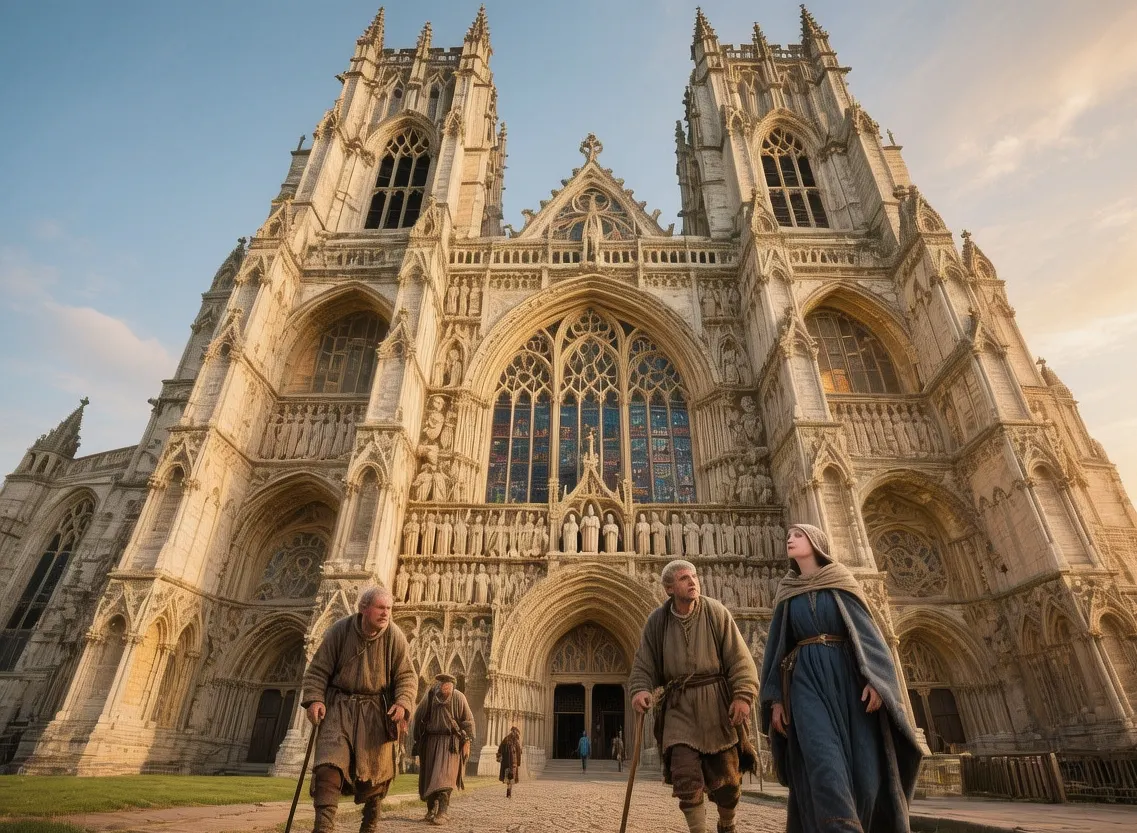
Canterbury Cathedral Medieval Pilgrimage Meets Gothic Grandeur
The bell tolls—a deep, resonant boom that vibrates through the chest—as you stand before the Great South Door at 9:15 AM, watching the light fracture across the limestone facade while pilgrims and tourists mingle on the ancient stones. The air smells of incense and old mortar; the silence hums with the weight of 1,400 years of Christian history contained within these walls. Founded by St. Augustine in 597 AD and rebuilt after a devastating fire in 1174, Canterbury Cathedral rises 72 meters at its highest point, dominating the Kent skyline with its twin western towers and central Bell Harry Tower. You stand where Thomas Becket fell in 1170, his martyrdom transforming this place into medieval Europe's most important pilgrimage site, while the stained glass windows—some dating to the 12th century—filter the Canterbury light into pools of ruby and sapphire on the stone floor. Every archway tells a story: Norman monks chanting the divine office, Chaucer's pilgrims seeking miracles, and modern worshippers continuing an unbroken tradition of faith. In 2026, as secularism reshapes Western society, visiting Canterbury Cathedral means engaging with a living monument that has witnessed the birth of English Christianity. This place matters now because it remains the spiritual heart of the Anglican Communion, challenging visitors to confront the continuity of faith while navigating the splendor of medieval craftsmanship.
Why Canterbury Cathedral Embodies Sacred Architectural Heritage
Canterbury Cathedral solves the spiritual need for a mother church of England—a feat achieved through centuries of architectural evolution and reconstruction following disasters. When St. Augustine arrived in 597 AD, he established the cathedral on the site of a Roman church, but the Norman reconstruction after the 1067 fire created the cruciform structure visible today. The cathedral spans 156 meters in length, utilizing Caen stone from Normandy and local Kentish ragstone, chosen for their durability and workability. Engineering-wise, the central Bell Harry Tower, completed in 1498, rises 72 meters above the crossing, supported by four massive piers that distribute the weight of 3,000 tons of masonry. The famous Miracle Windows in the Trinity Chapel, created between 1178 and 1220, represent the largest collection of 12th-century stained glass in the world, covering over 1,000 square meters. The cathedral's fan vaulting in the nave, added in the 15th century, demonstrates Perpendicular Gothic engineering at its finest, with ribs spreading like stone lace across the ceiling. Today, the cathedral welcomes over 1 million visitors annually while maintaining its role as a working church with daily services. This unique status ensures Canterbury Cathedral remains not merely a museum but a living house of prayer, blending 6th-century foundations with 21st-century ministry in a manner few cathedrals sustain.
The Best Time to Experience Canterbury Cathedral
For optimal lighting and manageable crowds, plan your visit between May 18–June 12 or September 10–October 15, when temperatures range from 15–22°C (59–72°F) and daylight extends until 9:00 PM. Arrive precisely at 9:00 AM when doors open to beat the tour groups that typically converge by 11:00 AM; the morning light illuminates the stained glass beautifully without the glare of midday sun. Evening visits during summer offer a romantic atmosphere during Choral Evensong at 5:30 PM, though seating is limited to worshippers. Avoid July 25–August 31 when school holidays bring peak congestion, pushing entry queues beyond 45 minutes despite timed tickets. Winter months (December–February) offer shorter lines but temperatures drop to 2–8°C (36–46°F), and the stone becomes uncomfortably cold to touch. For service schedules and special events, verify the calendar at canterbury-cathedral.org before booking, as state occasions can close sections unexpectedly. Tuesday and Thursday mornings typically see the lowest visitor volume, allowing for quieter contemplation in the Trinity Chapel.
Approximate Budget for a 7-Day Trip (2026)
Kent remains a moderate destination, but staying in Canterbury provides immediate access to the cathedral without excessive transport costs. These 2026 estimates assume a moderate travel style, accounting for approximately 3-4% annual inflation in UK hospitality and attraction pricing.
- Accommodation: £110–£250 per night for a double room in Canterbury City Centre, St. Dunstan's, or Wincheap; budget B&Bs from £75/night in nearby Whitstable
- Food: £50–80 per day—breakfast £9–13 (café pastry or full English), lunch £14–22 (pub meal or cathedral café), dinner £27–45 (mid-range restaurant with wine); traditional Kentish ale £6
- Transportation: £45.00 daily average for car rental and fuel; Train from London St. Pancras to Canterbury £35 return; Local bus day pass £8
- Attractions: Canterbury Cathedral £20.00 adult, Canterbury Tales £15.00, St. Augustine's Abbey £12.00, Dover Castle £32.00, Leeds Castle £28.00
- Miscellaneous: Souvenir guidebook £12, cathedral postcards £5, rain jacket (essential) £35, travel insurance £50 for week
Total for 7 days: £1,300–1,850 per person (excluding international flights)
7 Essential Canterbury Cathedral Experiences
- Cathedral Interior Tour: Walk the nave beneath the fan vaulting. Open 9:00 AM–5:00 PM; the audio guide details the history of the glass. Look for the Becket Crown in the Trinity Chapel; the light streams through the Miracle Windows at noon.
- Becket's Shrine Site: Stand where the martyr's shrine once stood. Located in the Trinity Chapel; the spot is marked on the floor. The atmosphere is hushed; imagine the medieval pilgrims kneeling here seeking miracles.
- Bell Harry Tower Climb: Ascend the 180 steps for panoramic views. Open 10:00 AM–3:00 PM (weather permitting); the view encompasses the Kent countryside. The tower bells ring every hour; listen for the peal echoing across the city.
- Stained Glass Viewing: Examine the 12th-century Miracle Windows. Located in the Trinity Chapel; the colors are vivid despite age. The glass depicts Becket's miracles; the detail in the faces is remarkable even from ground level.
- Choral Evensong: Listen to the choir sing in the quire. Service at 5:30 PM Monday–Saturday; arrive by 5:00 PM to secure a seat. The acoustics amplify the voices; the organ music vibrates through the stone pillars.
- Cathedral Gardens Stroll: Wander the grounds surrounding the cathedral. Open dawn–dusk; the green space offers peace. The scent of roses is strongest in June; sit on the benches to enjoy the view of the towers.
- Great South Door Photography: Capture the iconic entrance facade. Best light occurs at 8:00 AM or 7:00 PM; the stone glows amber. Use the pavement opposite to frame the building without obstructing the pedestrian flow.
3 Hidden Gems Most Travelers Miss
- Cathedral Library: This medieval library houses rare manuscripts and early printed books. Access via guided tour only; book in advance at the visitor center. Most tourists stay in the main cathedral, missing the 15th-century chained library and the oldest surviving copy of the Venerable Bede's works.
- Undercroft Museum: Located beneath the cathedral, this space contains Romanesque carvings and artifacts. Access via the south transept; open 10:00 AM–4:00 PM. The crypt dates to the 11th century; the carved capitals depict biblical scenes rarely seen by casual visitors.
- Marlowe's Grave: The playwright Christopher Marlowe is buried in St. Nicholas Church nearby. Access via the churchyard; open during daylight hours. The simple grave contrasts with the cathedral grandeur; it offers a literary connection often overlooked by religious tourists.
Cultural & Practical Tips
- Dress code: Shoulders and knees must be covered when entering the cathedral. Security may deny entry to those dressed inappropriately, so carry a scarf or light jacket for coverage during summer visits.
- Photography rules: Photography is permitted in the nave for personal use without flash. Interior photography is strictly prohibited in the Trinity Chapel to protect the stained glass. Phones must be silenced and stored during services.
- Service times: Daily services occur throughout the day; tourists must exit during worship. Check the service schedule online; plan your visit around the times to avoid disruption.
- Local phrases: Learn "Mind the gap" (watch the step), "Cheers" (thanks), and "Queue here" (wait in line); locals appreciate visitors who respect pedestrian flow on the narrow medieval streets.
- Weather preparedness: Canterbury is exposed to rain; carry a compact umbrella (£10 from Boots pharmacy) and waterproof layers. Stone surfaces become slippery when wet—wear shoes with good grip.
- Accessibility: The cathedral offers step-free access via ramps; wheelchair users receive priority entry—contact visitors@canterbury-cathedral.org 48 hours ahead to arrange assistance. Some areas have thresholds.
- Respectful behavior: Keep voices lowered at all times; this is a place of worship. Do not touch the stained glass or lean on the historic stonework; the materials are centuries old and fragile.
Conclusion: Travel with Reverence, Not Just Checklists
Canterbury Cathedral demands more than a snapshot beneath the vaulting—it invites you to contemplate the weight of history resting on that ancient stone. When you walk the nave in 2026, tracing the same floors worn by pilgrims for centuries, you're not just ticking a sightseeing box; you're witnessing the delicate balance between preserving sanctity and sharing heritage. As overtourism pressures historic landmarks, visiting mindfully means respecting the spiritual nature of this institution, understanding that behind the tourist tickets, daily prayers continue an unbroken tradition. Walk slowly across the stone floor, noticing how the light changes on the glass; listen to the silence of the chapel not as emptiness but as reverence. Leave only footprints on the tiles, take only memories of medieval grandeur, and carry forward the understanding that places like this endure because each generation chooses to honor them—not as museums, but as living testaments to faith, history, and the enduring human search for meaning.