
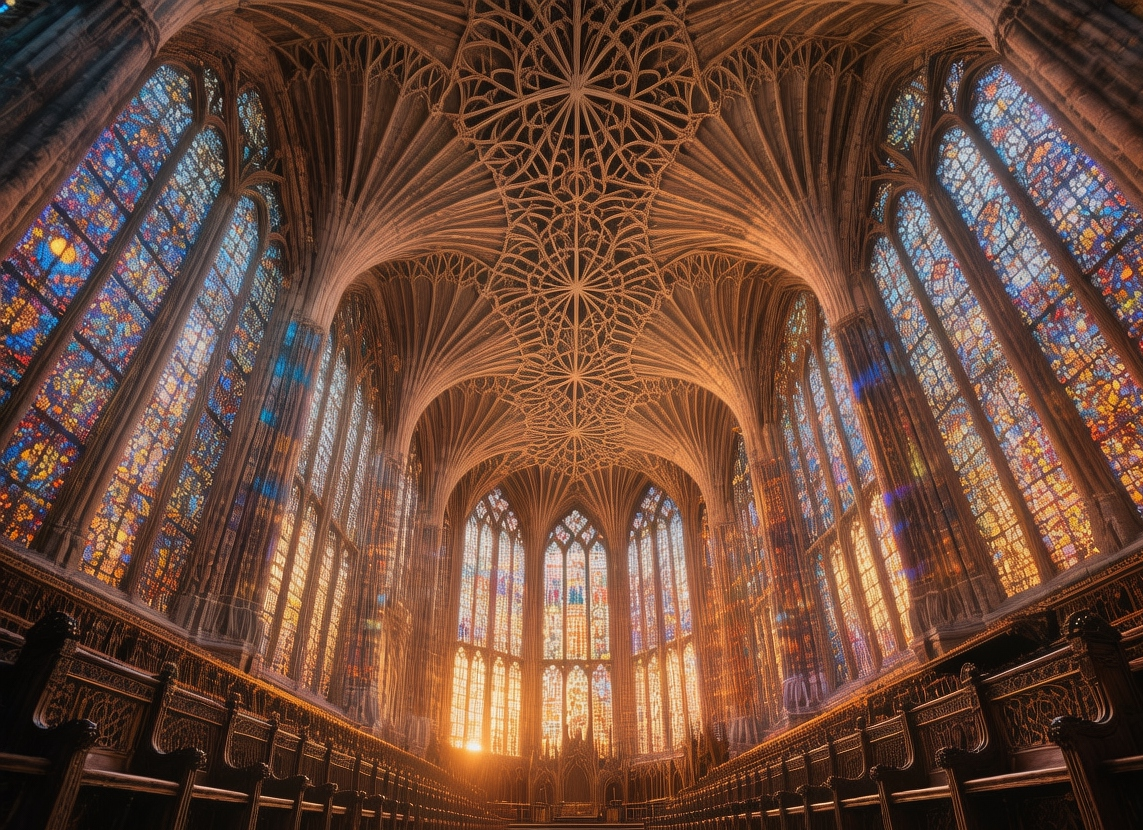
King's College Chapel Perpendicular Gothic Meets Heavenly Light
The organ swells—a deep, resonant vibration that shakes the limestone floor—as you stand beneath the fan vaulting at 5:45 PM, watching the light fracture through the stained glass while the shadows lengthen across the stone. The air smells of beeswax and old mortar; the silence hums with the weight of five centuries of prayer and scholarship contained within these walls. Founded by Henry VI in 1441 and completed in 1515, King's College Chapel spans 88 meters in length, making it one of the finest examples of Perpendicular Gothic architecture in the world. You stand before the Rubens altarpiece, where the 12-meter-high fan vaulting ceiling hangs without central columns, a structural marvel that defies gravity while filtering the Cambridge sky into ruby and sapphire pools. Every window tells a story: Tudor monarchs funding the glass, Victorian restorers preserving the paint, and modern choristers singing the evening service. In 2026, as digital distractions fragment our attention, visiting King's College Chapel means engaging with a sanctuary that demands patience and reverence. This place matters now because it remains the spiritual heart of the university, challenging visitors to confront the continuity of faith while navigating the splendor of medieval engineering.
Why King's College Chapel Embodies Gothic Architectural Mastery
King's College Chapel solves the architectural challenge of creating a vast worship space without internal supports—a feat achieved through the revolutionary fan vaulting design completed in 1515. When Henry VI laid the foundation stone in 1446, he envisioned a chapel that would reflect the power of the monarchy and the church, utilizing Barnack stone quarried from Northamptonshire for its durability and warm hue. The ceiling spans 12 meters in width, supported by 47 individual vaulting cones that distribute the weight of the stone to the external buttresses, allowing the interior to remain unobstructed for processions. Engineering-wise, the stained glass windows, installed between 1515 and 1531, cover 670 square meters, representing the largest expanse of original Tudor glass in existence. The chapel's walls are 3 meters thick at the base, tapering to support the 24-meter height of the vaulting without collapsing under wind load. Today, the college manages the balance between active worship and public tourism, restricting access during exams to protect student welfare. This unique status ensures King's College Chapel remains not merely a museum but a living house of prayer, blending 15th-century craftsmanship with modern conservation in a manner few historic sites sustain.
The Best Time to Experience King's College Chapel
For optimal lighting and manageable crowds, plan your visit between May 18–June 12 or September 10–October 15, when temperatures range from 15–22°C (59–72°F) and daylight extends until 9:00 PM. Arrive precisely at 9:30 AM when doors open to beat the tour groups that typically converge by 11:00 AM; the morning light illuminates the stained glass beautifully without the glare of midday sun. Evening visits during summer offer a romantic atmosphere during Choral Evensong at 5:30 PM, though seating is limited to worshippers. Avoid May 1–June 15 during Easter and May Terms exams, as the chapel often closes completely to tourists to ensure student quiet. Winter months (December–February) offer shorter lines but temperatures drop to 2–8°C (36–46°F), and the stone becomes uncomfortably cold to touch. For service schedules, verify the calendar at kings.cam.ac.uk before booking, as special events can close sections unexpectedly. Tuesday and Thursday mornings typically see the lowest visitor volume, allowing for quieter contemplation in the antechapel.
Approximate Budget for a 7-Day Trip (2026)
Cambridge remains a premium destination, but staying in the city center provides immediate access to the chapel without excessive transport costs. These 2026 estimates assume a moderate travel style, accounting for approximately 3-4% annual inflation in UK hospitality and attraction pricing.
- Accommodation: £130–£300 per night for a double room in Cambridge City Centre, Mill Road, or Newnham; budget hostels from £50/night in nearby Chesterton
- Food: £50–85 per day—breakfast £10–15 (café pastry or full English), lunch £15–25 (pub meal or college cafeteria), dinner £25–45 (mid-range restaurant with wine); traditional cream tea £18
- Transportation: £15.00 daily average for local buses; Train from London King's Cross to Cambridge £45 return; Taxi from station £15 minimum
- Attractions: King's College Chapel £20.00 adult, Trinity College £10.00, Fitzwilliam Museum free, Punting £25.00, Cambridge Castle Mound free
- Miscellaneous: Souvenir guidebook £15, chapel postcards £5, rain jacket (essential) £35, travel insurance £50 for week
Total for 7 days: £1,450–2,050 per person (excluding international flights)
7 Essential King's College Chapel Experiences
- Chapel Interior Tour: Walk the nave beneath the fan vaulting. Open 9:30 AM–4:30 PM (varies by term); the audio guide details the history of the glass. Look for the Tudor roses carved in the stone; the light streams through the north windows at noon.
- Choral Evensong: Listen to the choir sing in the quire. Service at 5:30 PM Monday–Saturday; arrive by 5:00 PM to secure a seat. The acoustics amplify the boy choristers' voices; the organ music vibrates through the wooden pews.
- Rubens Altarpiece Viewing: Examine the painting above the altar. Located at the east end; the adoration of the magi is detailed. The colors are vivid despite the age; the frame is gilded and catches the candlelight during evening services.
- Antechapel Exploration: Visit the entrance area where notable figures are buried. Open during chapel hours; the floor stones mark the graves of scholars. The atmosphere is hushed; look for the memorial to the poet Rupert Brooke on the north wall.
- Backs View Photography: Capture the chapel from the River Cam. Best light occurs at 8:00 AM or 7:00 PM; the reflection in the water is iconic. Use the path behind the college to frame the building without obstructing the pedestrian flow.
- Organ Recital Attendance: Hear the historic instrument played live. Check schedule for lunchtime recitals; the pipes fill the vaulting with sound. The craftsmanship of the 19th-century case is visible from the nave; the music resonates for seconds after the keys are released.
- Gibbs Building Courtyard: Walk the adjacent neo-classical courtyard. Open during daylight hours; the contrast with the Gothic chapel is striking. The lawn is manicured; sit on the benches to read while watching students cycle past the stone arches.
3 Hidden Gems Most Travelers Miss
- Chapel Roof View: Special tours occasionally allow access to the roof. Access via booking at the lodge; dates vary by term. Most tourists stay on the ground, missing the close-up view of the fan vaulting cones and the gargoyles that drain the roof.
- War Memorial Garden: Located behind the chapel, this quiet garden honors fallen alumni. Access via the King's Parade gate; open during daylight hours. The yew trees provide shade; it offers a serene spot to reflect away from the busy tourist paths on the street.
- The Screen Passage: This corridor connects the chapel to the college courts. Access during opening hours; the woodwork is carved with intricate details. Look for the small door used by choristers; the acoustics here differ from the main nave, creating a whispering effect.
Cultural & Practical Tips
- Dress code: Shoulders and knees must be covered when entering the chapel. Security may deny entry to those dressed inappropriately, so carry a scarf or light jacket for coverage during summer visits.
- Photography rules: Photography is permitted in the courtyard for personal use without flash. Interior photography is strictly prohibited during services and often restricted generally to protect the glass. Phones must be silenced and stored during tours.
- Exam closures: The chapel closes during exam terms (May–June). Verify opening status online before traveling; do not attempt to enter closed gates as security is strict.
- Local phrases: Learn "Mind the gap" (watch the step), "Cheers" (thanks), and "Queue here" (wait in line); locals appreciate visitors who respect pedestrian flow on the narrow pavements.
- Weather preparedness: Cambridge is exposed to rain; carry a compact umbrella (£10 from Boots pharmacy) and waterproof layers. Stone surfaces become slippery when wet—wear shoes with good grip.
- Accessibility: The chapel offers step-free access via ramps; wheelchair users receive priority entry—contact admissions@kings.cam.ac.uk 48 hours ahead to arrange assistance. Some areas have thresholds.
- Respectful behavior: Keep voices lowered at all times; this is a place of worship. Do not touch the stained glass or lean on the historic woodwork; the materials are centuries old and fragile.
Conclusion: Travel with Reverence, Not Just Checklists
King's College Chapel demands more than a snapshot beneath the vaulting—it invites you to contemplate the weight of history resting on that stone. When you walk the nave in 2026, tracing the same floors worn by scholars for centuries, you're not just ticking a sightseeing box; you're witnessing the delicate balance between preserving sanctity and sharing heritage. As overtourism pressures historic landmarks, visiting mindfully means respecting the spiritual nature of this institution, understanding that behind the tourist tickets, daily prayers rise toward the vaulting. Walk slowly across the stone floor, noticing how the light changes on the glass; listen to the organ not as background music but as worship. Leave only footprints on the tiles, take only memories of heavenly light, and carry forward the understanding that places like this endure because each generation chooses to honor them—not as museums, but as living testaments to faith, art, and the enduring human spirit.