
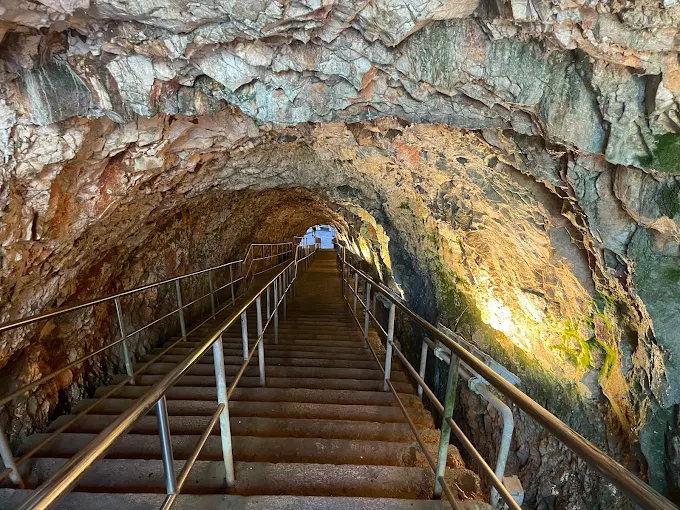
Castellana Grotte Caves Sunlit Chasms Meet Subterranean Silence
A shaft of midday sun plunges 60 meters (197 feet) through a colossal hole in the earth, illuminating a cathedral of stone that has been growing in darkness for millions of years. You hear the soft echo of your own footsteps on the path, the distant drip of water from a stalactite, and a profound, almost sacred silence that seems to absorb all sound. This is La Grave, the monumental entrance chamber of the Castellana Grotte, a 3-kilometer (1.86-mile) labyrinth of caves discovered in 1938 by speleologist Franco Anelli [[18]]. Located just 30 kilometers (19 miles) from Bari in Italy’s Puglia region, this subterranean world is a masterpiece of karst geology, where every twist of the path reveals a new wonder: forests of stalagmites, frozen waterfalls of flowstone, and chambers so vast they could hold a city block. In an age of digital noise and surface-level experiences, the Castellana Grotte matter now more than ever—they offer a journey into the planet’s quiet heart, a place where time is measured not in minutes, but in millennia of slow, patient creation.
Why Castellana Grotte Caves Embodies Geological Time
The Castellana Grotte are not just a tourist attraction; they are a living archive of Earth’s history, a testament to the immense power of water and time. Formed over 90 million years ago during the Cretaceous period, the caves were carved by rainwater, which became slightly acidic as it absorbed carbon dioxide from the atmosphere. This weak acid slowly dissolved the region’s limestone bedrock, creating a network of tunnels and chambers that stretch for 3,348 meters (2.08 miles), with a vertical drop of 122 meters (400 feet) [[18]]. The discovery in 1938 was a pivotal moment for Italian speleology, and the subsequent development of a safe, accessible path by Anelli and local miners transformed the site into one of Europe’s most important show caves. The “problem” it solved was both scientific and cultural: it made the hidden wonders of the underground world available to the public while preserving its delicate ecosystem. Today, the caves fulfill a deep human need—for awe and perspective. Walking through chambers like the White Grotto, with its blindingly white calcite deposits, or the Wolf’s Grotto, named for its howling acoustics, you are not just sightseeing; you are witnessing the planet’s slow, artistic process. Each formation, from the tiniest soda straw to the massive “Monument,” is a sculpture built drop by drop over thousands of years.
The Best Time to Experience Castellana Grotte Caves
To experience the caves in their most comfortable and crowd-free state, plan your visit for the specific windows of April 15–June 10 or September 15–October 20, 2026. The caves maintain a constant, cool temperature of 16–18°C (61–64°F) year-round, making them a perfect escape from Puglia’s summer heat, but visiting during the shoulder seasons ensures shorter lines and a more peaceful atmosphere [[11]]. The best time of day to enter is in the morning, between 9:00 AM and 11:00 AM, when the first tours of the day are less crowded, allowing you to fully absorb the silence and grandeur of the chambers without distraction. It is strongly advised to avoid the peak summer months of July and August, when the site can receive over 1,000 visitors per hour, turning the tranquil paths into a bustling corridor [[36]]. For the most current information on tour times, ticket prices, and special events like the “Caves by Candlelight” evening tours, always consult the official website: grottedicastellana.it.
Approximate Budget for a 7-Day Trip (2026)
This budget is calculated for a solo traveler seeking a comfortable, nature-focused experience in Puglia in 2026, based on current inflation trends and average regional costs.
- Accommodation: €80–€140 per night. Staying in a nearby town like Alberobello or Conversano offers easy access to the caves and other Itria Valley attractions. Options in Castellana Grotte itself are more limited but convenient.
- Food: €40 per day. Breakfast (€5): a cappuccino and cornetto at a local bar. Lunch (€15): a plate of orecchiette pasta with tomato and ricotta forte. Dinner (€20): a main course like grilled lamb chops with a glass of local Primitivo wine.
- Transportation: €150 total. A regional train ticket from Bari to Castellana Grotte (€4). A rental car for exploring the Itria Valley (€40/day). Local transport is minimal.
- Attractions: Full cave tour (€20). Short cave tour (€14). Visit to the Speleo Museum (€5). Guided “Caves by Candlelight” evening tour (€25).
- Miscellaneous: €85. This covers a bottle of local olive oil (€15), several gelato stops (€3 each), a cooking class featuring regional recipes (€40), and souvenirs like handmade ceramics.
Total Estimated Cost: €905–€1,025
6 Essential Castellana Grotte Caves Experiences
- Take the Full 3-Kilometer Cave Tour: The complete journey lasts about 2 hours and takes you through all the major chambers, including the awe-inspiring La Grave and the ethereal White Grotto. Wear a light jacket—the constant 16°C (61°F) feels chilly after the Puglian sun.
- Experience the “Caves by Candlelight” Evening Tour: Book this special seasonal tour to see the grottos illuminated only by the soft glow of candles. The absence of electric lights creates a magical, primordial atmosphere that is unforgettable.
- Visit the Speleo Museum: Located at the cave entrance, this museum details the 1938 discovery and the geology of the caves. It’s a perfect primer before your descent or a thoughtful reflection afterward.
- Marvel at La Grave at Midday: If you’re not taking a tour, you can visit La Grave independently for a small fee. Time your visit for noon to witness the dramatic sunbeam that pierces the chasm, creating a spotlight on the forest of stalagmites below.
- Listen to the Acoustics in the Wolf’s Grotto: Your guide will demonstrate the chamber’s incredible sound properties. The sharp, resonant echo is said to mimic a wolf’s howl, giving the room its name.
- Explore the Surface Nature Trail: After your subterranean adventure, walk the short botanical path around the cave entrance to see the native Mediterranean flora that thrives above the hidden world.
3 Hidden Gems Most Travelers Miss
- The Monument Chamber: While many focus on La Grave, the “Monument”—a 15-meter (49-foot) tall stalagmite—is the true geological masterpiece of the caves. Listen to your guide’s story about its 150,000-year formation.
- The Infinito Grotto: Near the end of the full tour, this narrow passage opens into a seemingly endless tunnel. Its name, meaning “infinity,” comes from the optical illusion that makes it appear to stretch forever.
- The Local Olive Oil Mill in Castellana: Just a short drive from the caves, Masseria Rossi offers tours of its ancient olive groves and mill. Tasting the fresh, peppery oil provides a perfect contrast to the mineral world you’ve just explored.
Cultural & Practical Tips
- Wear closed-toe shoes with good grip: The paths inside the caves can be damp and slippery. Sandals or smooth-soled shoes are not safe.
- Bring a light jacket or sweater: The constant 16–18°C (61–64°F) temperature is a shock after the Puglian heat, especially on a longer tour.
- Photography is allowed, but no flash: Flash photography is prohibited to protect the delicate micro-organisms that live on the cave walls. Use your phone’s night mode for better low-light shots.
- Book your tickets online in advance: Especially during the shoulder seasons, pre-booking guarantees your spot and often includes a small discount.
- Learn a few key phrases: “Dov’è l’ingresso?” (DOH-veh leel een-GRES-soh?) for “Where is the entrance?”, and “Un caffè, per favore” (oon kah-FEH).
- Respect the silence: Keep your voice low inside the caves. The acoustics amplify sound, and the quiet is part of the experience for everyone.
Conclusion: Travel with Awe, Not Just Curiosity
The Castellana Grotte are a powerful reminder that the most profound journeys are often the ones that take us inward—and downward. In 2026, as we seek travel that transcends the superficial, these caves offer a rare gift: a direct encounter with deep time and the quiet, persistent creativity of our planet. Your presence here should be one of reverence, not just curiosity. Take a moment in the White Grotto to feel the weight of millennia in the air; listen to the single drop of water that will, in another thousand years, add another layer to a stalagmite. By traveling with this mindful awe, you honor the fragile ecosystem of the caves and support their preservation for future generations. Slow down. Let the silence of the stone speak to you. In that quiet communion with the Earth’s ancient heart, you don’t just see the Castellana Grotte—you feel the very pulse of geological time.