
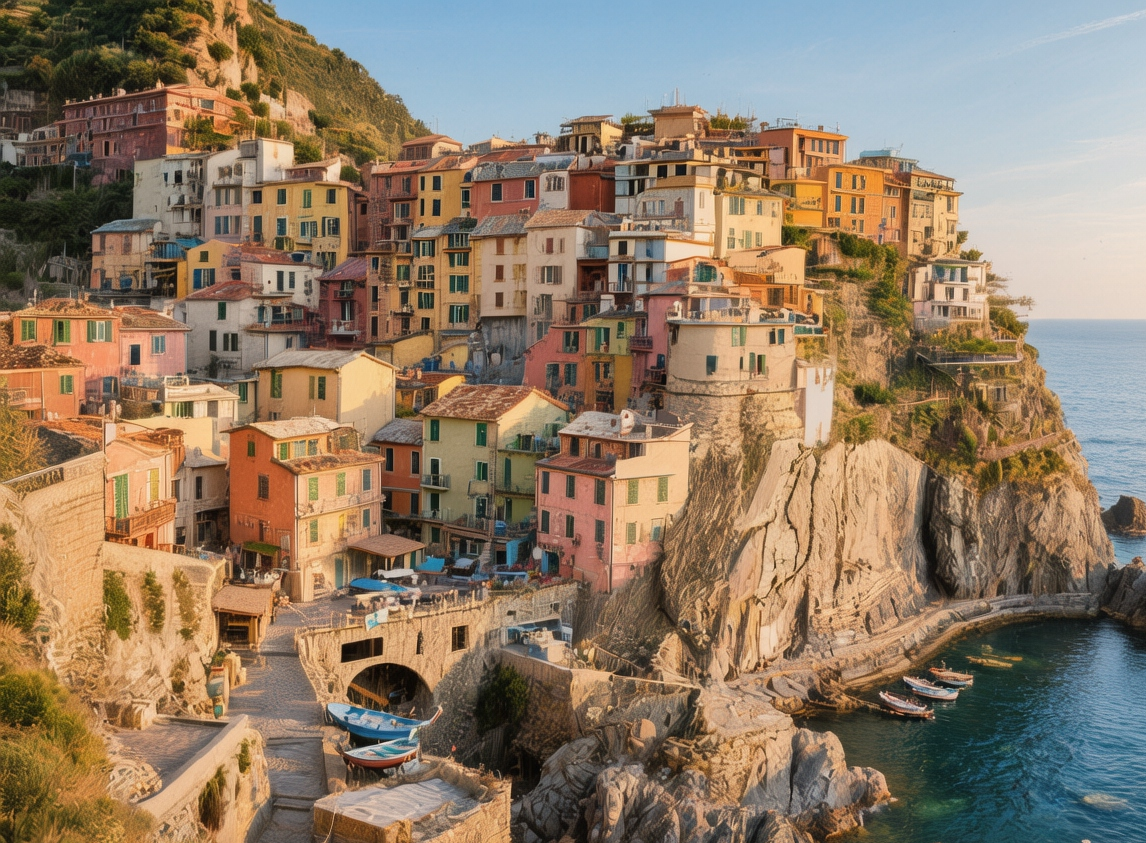
Cinque Terre Villages Mediterranean Light Meets Vertical Living
The late sun sets the Ligurian Sea ablaze—turning its surface into liquid gold that laps gently against ancient stone quays. In Riomaggiore, the southernmost of the Cinque Terre villages, laundry flutters from wrought-iron balconies like confetti, and the scent of basil and frying anchovies drifts from open windows. You hear the clatter of dinner plates, the murmur of Italian families gathering on narrow lanes too steep for cars, and the distant chug of a fishing boat returning home. Carved into sheer cliffs between Genoa and La Spezia, these five villages—Monterosso al Mare, Vernazza, Corniglia, Manarola, and Riomaggiore—have clung to this rugged coastline since the 11th century. Their terraced vineyards, once painstakingly built with dry-stone walls to coax wine from rock, now form a UNESCO World Heritage landscape spanning 15 square kilometers. In 2026, as overtourism strains fragile ecosystems worldwide, the Cinque Terre stands as both a beacon of sustainable resilience and a cautionary tale—where every visitor’s choice shapes whether these vertical villages endure as living communities or fade into postcard relics.
Why Cinque Terre Embodies Human Harmony with Rugged Terrain
The Cinque Terre is not just a scenic marvel—it is a 1,000-year-old testament to human ingenuity in the face of geographical adversity. Starting in the 11th century, villagers transformed near-vertical slopes into arable land by constructing over 7,000 kilometers of dry-stone walls—earning the region its UNESCO designation in 1997. These terraces, some as narrow as two meters wide, once produced the prized Sciachetrà wine and sustained isolated communities accessible only by sea or treacherous footpaths. The villages themselves are masterclasses in vertical urbanism: houses stacked like children’s blocks, painted in ochre, coral, and sky blue to reflect sunlight and repel salt corrosion. Monterosso (population ~1,500) is the only village with a proper beach; Corniglia (population ~250) perches 100 meters above sea level, reachable only by a 382-step staircase or shuttle bus. The famed Sentiero Azzurro (Blue Trail), connecting all five villages, spans 12 kilometers—but landslides have intermittently closed sections since 2011, highlighting the delicate balance between tourism and preservation. Today, the Parco Nazionale delle Cinque Terre manages strict visitor protocols, including mandatory trail passes and waste reduction initiatives, ensuring this cultural landscape remains a living ecosystem, not just a backdrop.
The Best Time to Experience Cinque Terre Villages
To hike the trails and explore the villages without oppressive heat or crowds, target the precise window of May 12–26, 2026. During these weeks, daytime temperatures range from a comfortable 18–24°C (64–75°F)—ideal for coastal walking and swimming [[22], [25]]. The sea is calm enough for boat trips, and wildflowers bloom on terraced hillsides. Mornings between 7:00–9:00 AM offer near-solitude on trails and in village centers, especially in Vernazza and Manarola. Alternatively, September 15–29, 2026 provides similar conditions with the added bonus of grape harvest festivals and fewer day-trippers. Avoid visiting during peak periods: all of July and August, when temperatures exceed 30°C (86°F) and trails become dangerously congested, and major holidays like Easter week or Italian Ferragosto (August 15) [[27]]. For the most authentic experience, stay overnight—day visitors vanish by 6:00 PM, revealing the villages’ quiet, residential soul. Always verify trail status via the official park website (parconazionale5terre.it), as closures due to rain or landslides are common.
Approximate Budget for a 7-Day Trip
This budget reflects mid-range 2025 pricing adjusted for Italy’s projected 2026 inflation rate of 1.5% [[37]], offering a realistic estimate for a solo traveler based in one village with day hikes to others.
- Accommodation: €840–€1,120 total (€120–€160 per night) for a private room or small apartment in Vernazza or Manarola—central yet quieter than Monterosso.
- Food: €490 total (€70 per day). Breakfast at a local bar (€4 for cappuccino and cornetto); lunch of focaccia with pesto and farinata (€12); dinner at a family-run trattoria (€45 for trofie al pesto, fried anchovies, and house white wine).
- Transportation: €65 total. Includes Cinque Terre Train Card (€22 for 7 days, unlimited regional trains); ferry tickets between villages (€18 round-trip); and local shuttle buses (€5).
- Attractions: €35 total. Cinque Terre Trekking Card (€18 for trail access); wine tasting at a local cantina (€12); guided history walk (€5 donation).
- Miscellaneous: €100 total. A hand-painted ceramic tile from a Vernazza artisan (€35); gelato from Gelateria Love Boat (€4); locally made pesto sauce (€15); and a reusable water bottle (€20) to reduce plastic waste.
Total Estimated Budget: €1,530–€1,830
6 Essential Cinque Terre Experiences
- Hike the Via dell’Amore at Dawn: Though partially closed for years, the iconic “Lover’s Walk” between Riomaggiore and Manarola reopened in summer 2024. Book an early-morning slot (7:00 AM) for misty sea views and empty paths—a romantic, reflective start to your day.
- Swim from Vernazza’s Harbor Rocks: Skip the crowded pebble beach; instead, climb the stone steps east of the harbor to find smooth, sun-warmed rocks perfect for jumping into clear, turquoise water.
- Watch Sunset from Corniglia’s Largo Taragio: After climbing the 382-step “Lardarina” staircase, reward yourself with panoramic views of all five villages glowing in golden light—a perspective few day-trippers earn.
- Taste Sciachetrà Wine in Manarola: Visit Enoteca Dau Cila for a tasting of this rare, sweet dessert wine made from sun-dried grapes—a tradition dating back to the 13th century.
- Ride the Ferry at Golden Hour: Take the 5:30 PM ferry from Monterosso to Riomaggiore. From the water, the villages appear as cascades of color tumbling into the sea—a view impossible from land.
- Join a Pesto-Making Class: Book a morning workshop in Monterosso with a local nonna. Learn to grind basil, pine nuts, and garlic in a marble mortar—the authentic way this Ligurian staple has been made for centuries.
3 Hidden Gems Most Travelers Miss
- Santuario di Nostra Signora di Montenero: Above Riomaggiore, this 14th-century hilltop sanctuary offers sweeping views and quiet contemplation. Reach it via the “SVAI 501” trail—steep but uncrowded—and enjoy homemade lemonade from the caretaker’s stand.
- Guva Beach (Spiaggia di Guvano): Accessible only by footpath from Corniglia or by train to the abandoned “Guvano” stop, this secluded pebble cove is framed by cliffs and railway tunnels—a favorite among locals for nude sunbathing and snorkeling.
- Volastra Hamlet: Perched 300 meters above Manarola, this tiny cluster of stone houses is reached via the steep “Sentiero Rosso” trail. Its terrace offers the most dramatic aerial view of Manarola’s harbor—and zero souvenir shops.
Cultural & Practical Tips
- Buy the Cinque Terre Card: The “Treno + Trekking” card (€22 for 7 days) covers unlimited regional trains and trail access—essential for hopping between villages efficiently.
- Wear proper hiking shoes: Trails are rocky, uneven, and often slippery. Sandals or flip-flops are dangerous on descents like the Corniglia staircase.
- Respect residential life: These are working villages, not theme parks. Keep noise down after 10:00 PM, and never block doorways or private staircases for photos.
- Learn key phrases: “Dov’è il sentiero per Vernazza?” (doh-VEH eel sen-TYEH-roh PEHR Ver-NAHT-tsah?) for directions; “Grazie, buona serata” (GRAHT-see-eh BWOH-nah seh-RAH-tah) for evening thanks.
- Carry water and cash: Many small eateries and trail kiosks don’t accept cards. Refill bottles at public fountains marked “acqua potabile.”
Conclusion: Travel with Stewardship, Not Just Selfies
In 2026, visiting the Cinque Terre is a privilege—not a right. Your presence directly impacts whether these villages remain vibrant communities or devolve into seasonal photo ops. The €18 trekking card you purchase funds landslide prevention and terrace restoration; choosing a family-run guesthouse over an Airbnb supports generational residents; carrying out your trash preserves the sea turtles that nest offshore. Slow down: sip espresso at a bar where fishermen gather, learn the story behind the dry-stone walls, taste wine made from grapes grown on slopes too steep for machines. By traveling with stewardship—choosing depth over speed, connection over consumption—you help ensure that the Cinque Terre’s colorful facades continue to shelter real lives, not just reflect tourist lenses. Let your journey be an act of care, and these cliffs will echo your respect for generations.