
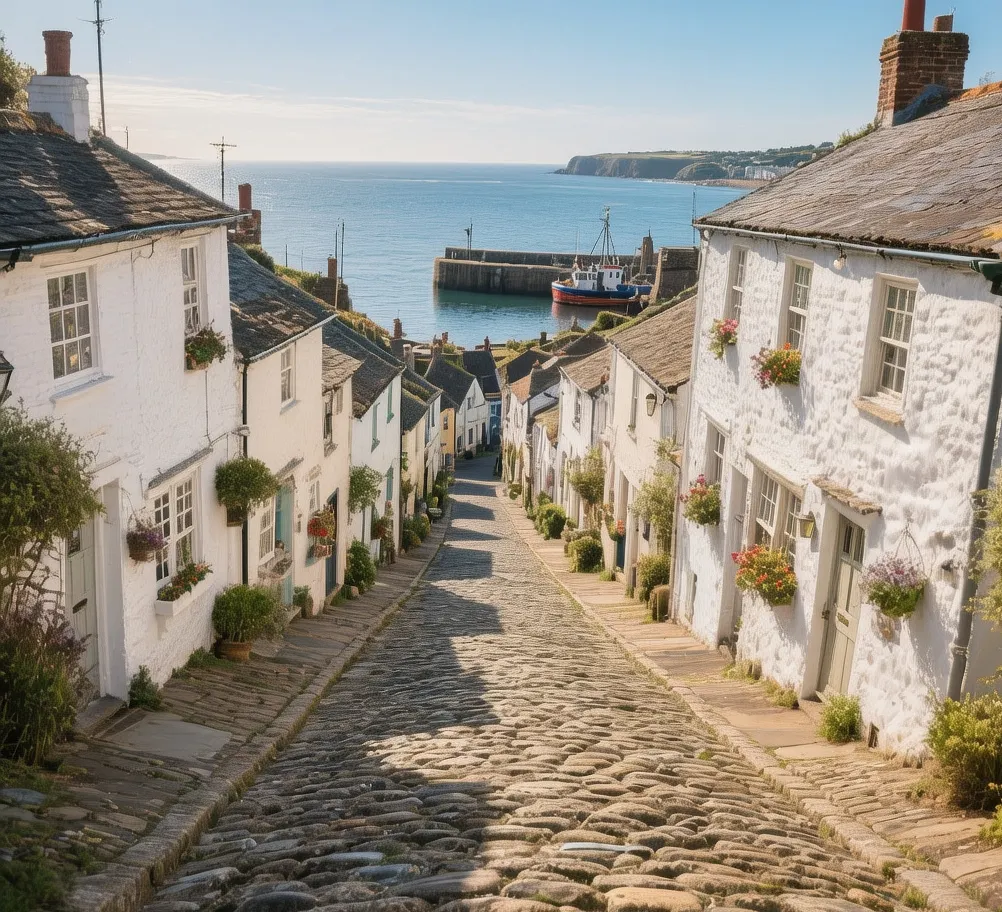
Clovelly Cliff Village Cobbled Streets Meet Atlantic Tides
Donkey hooves clip-clop against wet granite as dawn breaks over the harbor—echoing up the steep cobbled street that drops 90 meters (300 feet) from the clifftop to the sea. You stand at the entrance of Clovelly cliff village, the scent of woodsmoke and salt spray mixing in the narrow air, while whitewashed cottages cling to the hillside like swallows' nests against the slate. Built originally in the 12th century and fortified by the Hamlyn family in the 1500s, this car-free settlement remains one of the steepest inhabited places in Britain, with a gradient of 1 in 4 in sections. As you watch the morning light illuminate the herringbone pattern of the cobbles, listening to the distant cry of herring gulls, you realize this place matters now more than ever: in an era of motorized convenience, Clovelly cliff village offers a tangible connection to a slower pace of life, preserving a unique pedestrian heritage that continues to define North Devon's identity in 2026.
Why Clovelly Cliff Village Embodies Living History
The Clovelly cliff village is not merely a tourist attraction; it is a preserved example of medieval urban planning adapted to extreme topography. Owned by the Hamlyn family from 1500 until 1980, the estate was transferred to a charitable trust to ensure its survival against modern development pressures. The street itself solves a logistical problem: how to transport goods down a 90-meter (300-foot) cliff without vehicles. Technical engineering involves herringbone cobblestones laid in the 18th century to provide grip for sledges and donkeys, with drainage channels carved directly into the stone to manage the significant rainfall of the region. This infrastructure supports a population of approximately 400 residents who live without cars, relying on foot power and sledges for transport.
Today, it fulfills a cultural need for connection to a pre-industrial way of life. Managed by the Clovelly Estate, the site hosts over 300,000 annual visitors who walk the same stones as Tudor merchants and Victorian fishermen. The architecture showcases 16th-century cob walls alongside Georgian townhouses, creating a layered narrative of coastal adaptation. When you walk the High Street, you traverse a space where herring was cured and where Victorian tourists first marveled at the view. The Clovelly cliff village represents a continuous thread of community resilience, preserved by the very organization that now maintains the cottages against the corrosive power of the Atlantic salt air and the erosion of time.
The Best Time to Experience Clovelly Cliff Village
To witness Clovelly cliff village in optimal atmospheric conditions, plan your visit between May 18 and June 12. During this window, temperatures average 13-18°C (55-64°F), and daylight extends until 9:15 PM, maximizing time for harbor walks and photography. The best light occurs between 7:30-9:30 AM when morning mist lifts off the water, and 6:00-8:00 PM for golden hour illumination on the whitewashed walls. Visiting early also allows you to explore the High Street before tour coaches arrive from Barnstaple, typically between 11:00 AM and 3:00 PM.
Autumn offers a secondary window—specifically September 10 to October 15—when summer crowds dissipate and the heathland turns russet and gold. Temperatures remain mild at 12-17°C (54-63°F), though daylight hours shorten rapidly. Avoid July 25 to August 25 when school holidays push visitor numbers above 2,000 daily, creating congestion on the narrow cobbles and limited seating in cafes. Winter months (November-February) offer solitude but challenging conditions; some shops close for maintenance, and sunset occurs as early as 4:05 PM in December. For current opening hours and tide times, verify information at www.clovelly.co.uk or contact the visitor center at +44 (0)1237 431781.
Approximate Budget for a 7-Day Trip (2026)
Exploring Clovelly cliff village and the wider North Devon coast requires moderate budgeting, as the region commands premium prices during peak season. The following budget reflects mid-range travel for one person in 2026, accounting for approximately 4.5% UK inflation (ONS data, January 2026). Prices assume a base in Bideford or Westward Ho! for optimal access to the village and coastal paths.
- Accommodation: £90-£150 per night for a B&B or guesthouse in Bideford (6 nights = £540-£900). Budget options: £50-£70 for hostels in Westward Ho! or camping at Clovelly Bay.
- Food: £50-70 per day total • Breakfast: £10-15 (Full English at The Red Lion Hotel) • Lunch: £15-20 (Fish and chips at Clovelly Bay Cafe) • Dinner: £25-35 (Seafood platter at The New Inn or The Gurnard's Head)
- Transportation: • Train London Paddington to Barnstaple + Bus 319: £75-130 return • Local bus (Route 319): £4.50 day pass • Car rental (recommended): £65/day plus fuel £1.58/liter • Parking at Clovelly: £8/day (March-October)
- Attractions: • Clovelly Village Entry: £17.50 • Donkey Ride: £5 • Clovelly Court Gardens: £12 • Free: Coastal path, harbor view, churchyard
- Miscellaneous: • Ordnance Survey Explorer Map 113: £10.99 • Local artisan souvenirs: £25 • Travel insurance: £40-60 for week • Waterproof gear rental: £20
Total estimated cost: £1,400-£1,750 for 7 days (excluding international flights)
5 Essential Clovelly Cliff Village Experiences
- Walk the High Street at Dawn: Arrive at the visitor center by 8:00 AM to experience the cobbles before crowds. The slope is steep; wear sturdy shoes with ankle support. The view encompasses the harbor and the Bristol Channel. Bring a windbreaker; exposure at the clifftop creates wind chill 5°C below valley temperatures. Spend 30 minutes photographing the cottages before shops open. This experience connects you to the daily rhythm of the residents.
- Visit the Donkey Stable: Located halfway down the High Street, the stable houses the working donkeys. Entry is included with village ticket. Spend 20 minutes observing the animals used for transport. The scent of straw and leather fills the air. Open 10:00 AM-5:00 PM daily. This context enriches your visit, showing the living heritage of the village's transport system.
- Eat Fish and Chips by the Harbor: Walk to the bottom of the street to the harbor cafe. Order fresh haddock and chips (£15). Sit on the pier wall watching the boats. The sound of waves lapping against the stone is calming. Best visited at low tide when the beach is exposed. This experience provides a tangible connection to the fishing industry that sustained the village.
- Explore the Fisherman's Cottage Museum: Located near the harbor, this 18th-century cottage is preserved as a museum. Entry is £5. Spend 45 minutes examining the tools and furniture. The rooms are small, showing the cramped living conditions. Open 10:00 AM-4:00 PM daily. This experience demonstrates the domestic history of the working class in the 19th century.
- Hike the South West Coast Path: Dedicate 90 minutes to the section north toward Hartland. The path climbs 100 meters to clifftops offering panoramic views. The scent of gorse and thrift fills the air. Wear sturdy shoes; paths are uneven and exposed. This experience connects the village to the wider geological landscape of the North Devon Heritage Coast.
3 Hidden Gems Most Travelers Miss
- All Saints Church: While crowds cluster on the High Street, this 12th-century church at the top of the village remains surprisingly quiet. Access via the path behind the visitor center (parking at SS355245). The churchyard offers a secluded view over the valley. Visit between 3:00-5:00 PM when light hits the stained glass. No facilities exist—bring water. The National Trust notes this area has high historical interest due to medieval monuments.
- Clovelly Court Gardens: Located 500 meters east, grid reference SS360240, lies the private gardens of the estate. Access is restricted to guided tours on Tuesdays at 11:00 AM. The walled garden features Victorian glasshouses. Visit during weekday mornings when the site is empty. No facilities exist—bring snacks. This spot demonstrates the aristocratic history of the area, offering a raw view of the landscape before it became a tourist destination.
- Pebble Ridge Beach: Contact the visitor center (+44 (0)1237 431781) for access updates to this secluded beach east of the harbor. The site features smooth pebbles and rock pools. Access is restricted to footpath only; no vehicles. The space offers a tangible connection to the quieter side of the bay. This site reveals the acoustic properties of the shore, showing how the waves move the stones without the noise of the harbor.
Cultural & Practical Tips
- Respect the residents: This is a living village, not a theme park. Do not look into private windows. Follow staff instructions regarding private areas. Keep voices low in residential zones. The Estate reports 5-10 incidents annually due to visitors straying into private gardens.
- Understand the terrain: The street is steep and cobbled. Check www.clovelly.co.uk for weather warnings. Never run on wet stones. If paths are closed, respect the barriers. The coastguard monitors the area closely.
- Leave no trace: Remove all litter, including biodegradable items. The Estate collects 8 tonnes of waste annually from the village. Do not remove stones or plants—this violates the Wildlife and Countryside Act 1981. Photograph specimens in situ instead.
- Learn local terminology: "Cobbles" (paved street); "Sledge" (transport tool); "Herringbone" (pattern). Using these terms shows respect for local heritage and helps guides assist you better during tours.
- Photography guidelines: Tripods are permitted on the street but restricted during busy periods. Drone use requires written permission from the Estate and Civil Aviation Authority—apply 6 weeks in advance. Respect other visitors; do not block pathways for extended shoots during peak hours (11:00 AM-3:00 PM).
- Weather preparedness: The village is exposed; wind chill is common even in summer. Pack waterproof layers; Devon showers are sudden. Wear sturdy shoes with grippy soles—granite becomes slippery when wet. Sun protection is essential; reflection from sea increases UV exposure by 25%.
- Accessibility considerations: The village is not wheelchair accessible due to steps and slope. Alternative viewing exists from the visitor center terrace. The Museum has step access. Request an accessibility map at the ticket office upon arrival.
Conclusion: Travel with Respect, Not Just Consumption
The Clovelly cliff village does not exist merely to be photographed—it exists to be understood as a living community. When you walk these cobbles in 2026, you are not observing a static museum; you are entering a space where residents still haul goods by sledge and donkeys still work the street. The merchants who traded herring are gone, but their warehouses remain embedded in the hill. The fishermen who sailed the Bristol Channel are gone, but their boats still bob in the harbor. This is not heritage frozen in amber—it is heritage living, breathing, enduring.
So slow down. Sit on the harbor wall for ten minutes without your phone. Listen to the wind that once carried the sounds of sailing ships and now carries the laughter of children. Buy your lunch from a café whose owners pay rates that support the local community. Donate to the Clovelly Estate Trust rather than purchasing plastic souvenirs. Leave only footprints on wet stone, take only memories of cobbles and sea, carry home only the profound understanding that some things—community, history, natural beauty—cannot be rushed, cannot be owned, can only be honored. The village will still stand in 2126 if we choose stewardship over exploitation today.