
Compiègne Forest Royal Hunts Meet Ancient Woodland
The late afternoon sun filters through a cathedral-like canopy of beech and oak, casting long, dancing shadows on the forest floor. You walk along a soft, moss-covered path, the air thick with the scent of damp earth, decaying leaves, and the faint, sweet perfume of wild honeysuckle. The only sounds are the crunch of your footsteps, the distant call of a woodpecker, and the gentle rustle of leaves in the breeze. This is the Forêt de Compiègne, a 14,500-hectare (35,800-acre) expanse of ancient woodland that has stood as a silent witness to French history for over a millennium [[2]]. Once the private hunting ground of French kings from Clovis to Napoleon III, it was here in a railway carriage in the Clairière de l’Armistice that both World Wars formally ended—in 1918 and 1940 [[3]]. In 2026, as we seek refuge from our hyper-connected world, the Compiègne Forest offers a profound sanctuary of quietude, history, and natural grandeur.
Why Compiègne Forest Embodies Historical Sanctuary
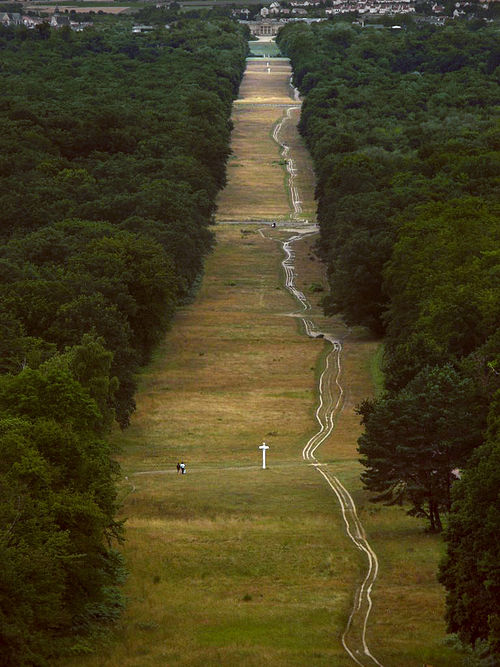
The Compiègne Forest is far more than a collection of trees; it is a living archive of French history and ecology. Its origins trace back to the royal forests established by the Merovingian kings in the 6th century, making it one of the oldest managed woodlands in Europe [[2]]. For centuries, it served as the exclusive hunting preserve for French monarchs, who built the nearby Château de Compiègne as their forest retreat. The forest’s layout itself is a testament to human intervention and design. In the 18th century, under Louis XV and Louis XVI, the royal architect Jean-François Leroy laid out a vast network of straight, intersecting avenues—over 1,000 kilometers (620 miles) in total—to facilitate royal hunts and carriage rides [[4]]. These grand allées, like the famous Route du Roy, are still meticulously maintained today, creating a unique geometric pattern within the natural chaos of the woodland. The forest also holds immense 20th-century historical weight. The Clairière de l’Armistice (Glade of the Armistice), a small clearing deep within the woods, is the site where the 1918 Armistice ending World War I was signed, and where Hitler deliberately chose to sign France’s 1940 surrender. Today, the forest fulfills a critical need for the modern traveler: it is a place of deep peace and reflection, where the scale of nature puts human history into perspective.
The Best Time to Experience Compiègne Forest
To experience the forest in its most vibrant and accessible state, plan your visit for the specific window of May 10–June 5, 2026. During these late spring weeks, the forest floor is carpeted with bluebells and wild garlic, the new leaves create a lush green canopy, and the weather is reliably mild [[12]]. Daytime temperatures range from a comfortable 15°C to 19°C (59°F–66°F)—perfect for long walks or cycling without the summer heat or the chill of autumn [[12]]. The ideal time of day is early morning, between 7:30 and 9:30 AM, when the light is soft, the mist is rising from the clearings, and you have the best chance of spotting wildlife like deer or wild boar. Avoid the peak summer months of July and August, when the forest can be crowded with day-trippers, and the leafy canopy blocks much of the sky, making the interior feel dark and closed-in [[12]]. For the most current information on trail conditions, guided walks, and access to the Armistice Glade, always consult the official website of the Office National des Forêts (ONF): onf.fr [[2]].
Approximate Budget for a 7-Day Trip (2026)
This budget is calculated for a comfortable, mid-range nature and history-focused trip to the Compiègne region in 2026, accounting for a 4% annual inflation rate as per INSEE standards.
- Accommodation: €80–€110 per night for a room in a charming 3-star hotel or a guesthouse in the town of Compiègne, providing easy access to both the forest and the château.
- Food: €45 per day. Breakfast (€7): coffee and a croissant at a local boulangerie. Lunch (€15): a picnic of cheese, charcuterie, and bread bought from the town market to enjoy in a forest clearing. Dinner (€23): a three-course meal at a traditional French restaurant featuring regional dishes like rabbit stew or forest mushroom omelette.
- Transportation: The easiest way to reach Compiègne is by train from Paris (Gare du Nord to Compiègne, a 50-minute journey). A round-trip ticket costs around €20. Renting a bicycle for a day to explore the forest trails is highly recommended and costs about €15.
- Attractions: Entry to the Château de Compiègne costs €12. A visit to the Armistice Museum at the Clairière de l’Armistice is €8. Guided forest walks with a naturalist ranger are a worthwhile splurge at €15 per person.
- Miscellaneous: Allow €50 for souvenirs (e.g., a jar of local honey, a map of the forest’s historic routes) and small experiences like a canoe trip on the Aisne River that borders the forest (€25).
Total Estimated Cost: €700–€900 for one person for 7 days.
6 Essential Compiègne Forest Experiences
- Walk the Route du Roy at Dawn: Follow this grand, straight avenue that was once used by kings for their morning rides. The early light filtering through the tall trees creates a magical, almost spiritual atmosphere. Start from the edge of Compiègne town and walk east for a truly regal experience.
- Visit the Clairière de l’Armistice: Take the time to visit this profoundly moving historical site. The reconstructed railway carriage and the surrounding memorial offer a powerful, somber reflection on the cost of war and the fragility of peace.
- Cycle Through the Carrefour de l’Arbre Mort: This central crossroads is a hub for many forest trails. Rent a bike and explore the network of paths that radiate from here, each leading to a different landscape of ponds, heathland, or dense woodland.
- Picnic in the Clairs (Forest Clearings): The forest is dotted with open, grassy clearings called “clairs.” Find one, spread out a blanket, and enjoy a simple lunch surrounded by nothing but birdsong and the whisper of the wind in the trees.
- Attend a Guided Wildlife Walk: Join a ranger-led walk to learn about the forest’s ecosystem. You’ll discover its diverse flora—from ancient oaks to rare orchids—and may even catch a glimpse of its elusive fauna, including deer, foxes, and over 100 species of birds.
- Explore the Étang des Biches (Deer Pond): This beautiful, serene pond is a favorite spot for local wildlife. Bring binoculars and sit quietly on its banks at dusk for a chance to see deer come to drink.
3 Hidden Gems Most Travelers Miss
- The Ruins of the Hermitage of Saint Corneille: Deep in the forest near the village of Saint-Corneille, the stone foundations of a 7th-century hermitage can still be found. It’s a peaceful, mystical spot that requires a bit of a hike to reach, which is why it’s often missed. Use the ONF trail map #7 to find it.
- The View from Mont Ganelon: This small hill on the forest’s western edge offers a panoramic vista over the treetops. It’s a perfect spot for a sunset picnic and is rarely visited by tourists. Access is via a narrow dirt road off the D1017.
- The Arboretum de la Fosse Dionne: A short drive from the main forest, this experimental arboretum houses over 200 species of trees from around the world. It’s a quiet, educational oasis that showcases the work of the ONF in forest conservation. Open daily; entry is free.
Cultural & Practical Tips
- Stay on marked trails: The forest is a protected national domain. Straying from the paths can damage fragile ecosystems and is against the rules set by the Office National des Forêts.
- Learn a few key phrases: A polite “Bonjour, Madame/Monsieur” (bon-zhoor, mah-dam/muh-syuh) will be appreciated by local guides and park rangers.
- Bring a physical map: Mobile phone signal is very poor throughout the forest. Download an offline map or, better yet, pick up a paper trail map from the Compiègne tourist office before you enter.
- Dress in layers and wear sturdy boots: The forest floor can be muddy and uneven, even in summer. The temperature under the canopy can be several degrees cooler than in the town.
- Respect the silence: This is a place of peace. Keep your voice low to not disturb wildlife and to preserve the tranquil atmosphere for other visitors.
Conclusion: Travel with Presence, Not Just Itineraries
In 2026, the Compiègne Forest stands as a vital counterpoint to our fast-paced lives—a place where time slows to the rhythm of the seasons and the growth of ancient trees. It is not a destination to be checked off a list, but a sanctuary to be felt and absorbed. By traveling with presence—with a willingness to listen to the silence, to watch the light change on the leaves, and to reflect on the layers of history embedded in the soil—you engage in a form of travel that is both restorative and respectful. Your mindful visit supports the crucial conservation work of the ONF, ensuring this magnificent woodland will continue to inspire awe and offer solace for generations to come. So, leave the noise behind. Step into the green cathedral. Let the forest heal you.