
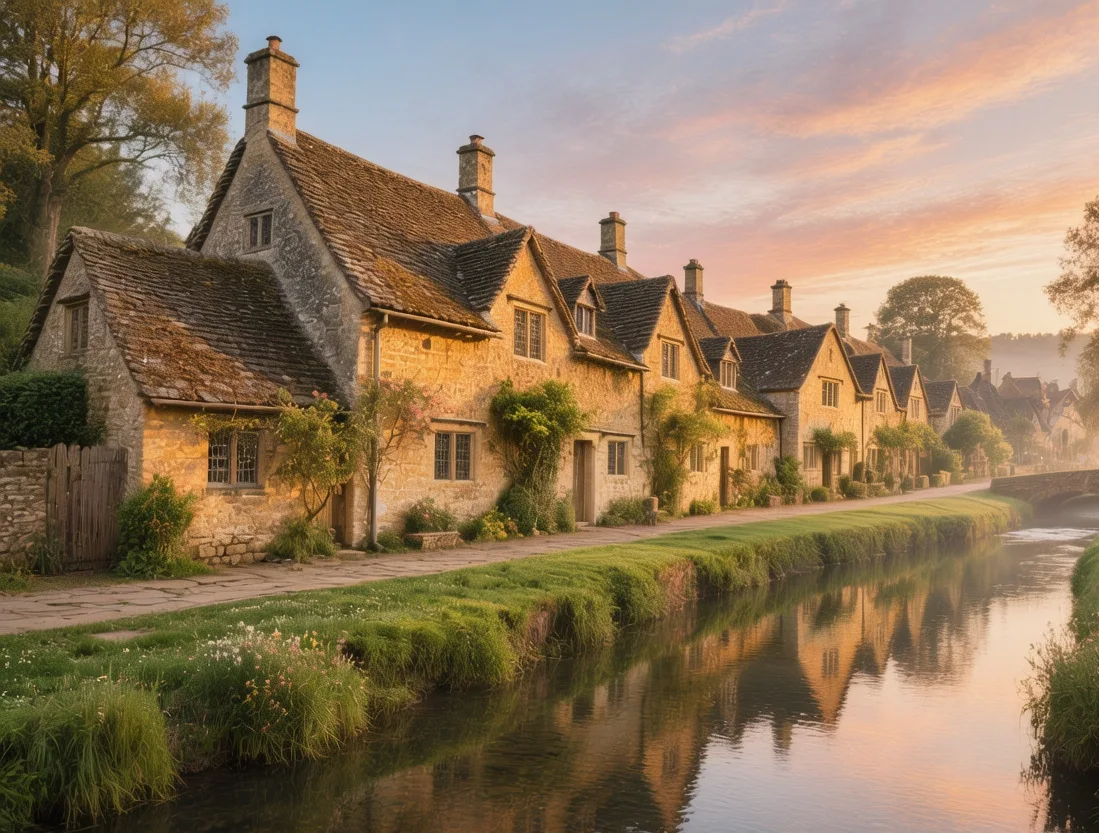
Cotswolds Villages Honeyed Stone Meets River Serenity
The water rushes—a clear, babbling melody that echoes off the limestone walls—as you stand on the arched bridge at 7:30 AM, watching mist rise from the River Coln while the sun ignites the honey-colored facades. The air smells of damp earth and blooming lavender; the silence hums with the weight of six centuries of wool trade history preserved in the mortar. Established in the 14th century during the height of the wool boom, the Cotswolds villages of Bibury and Bourton-on-the-Water span 2,038 square kilometers of Area of Outstanding Natural Beauty, protecting over 200 settlements built from oolitic limestone. You stand before Arlington Row, where the 17th-century weavers' cottages lean slightly into the stream, while the low stone walls of Bourton's High Street stretch 1.5 kilometers along the Windrush. Every cobblestone tells a story: medieval merchants counting florins, Victorian tourists discovering the countryside, and modern residents guarding the rural character. In 2026, as urbanization accelerates globally, visiting the Cotswolds villages means engaging with a landscape that prioritizes heritage over density. This place matters now because it remains the definitive example of English rural architecture, challenging visitors to slow down and witness the harmony between human settlement and the natural world.
Why Cotswolds Villages Embodies Rural Architectural Heritage
The Cotswolds villages solve the historical need for durable, locally sourced housing in a region dominated by sheep farming—a feat achieved through the utilization of oolitic limestone. When the wool trade peaked in the 15th century, merchants funded the construction of stone churches and cottages, creating a uniform aesthetic that persists today. The buildings in Bibury, constructed between 1380 and 1650, utilize stone quarried within 10 kilometers, ensuring the walls weather to a distinctive golden hue under oxidation. Engineering-wise, the dry stone walls that divide the pastures are built without mortar, relying on gravity and precise stacking to withstand frost heave and livestock pressure. The River Coln and Windrush provided the water power for fulling mills, which processed wool cloth, driving the economic engine that built these settlements. Today, the Cotswolds Conservation Board manages the Area of Outstanding Natural Beauty, balancing tourism with agricultural preservation to prevent overdevelopment. This unique status ensures the Cotswolds villages remain not merely a scenic backdrop but a living working landscape, blending medieval infrastructure with modern rural life in a manner few regions sustain.
The Best Time to Experience Cotswolds Villages
For optimal lighting and manageable crowds, plan your visit between May 15–June 20 or September 10–October 15, when temperatures range from 15–22°C (59–72°F) and daylight extends until 9:00 PM. Arrive precisely at 8:00 AM when the villages wake to beat the tour buses that typically converge by 10:30 AM; the morning light illuminates the stone facades beautifully without the glare of midday sun. Evening visits during summer offer a romantic atmosphere as the pubs fill, though shops close by 5:00 PM. Avoid August 25–September 2 when the Bank Holiday weekend brings peak congestion, parking in Bourton becomes impossible, and narrow lanes gridlock. Winter months (December–February) offer shorter lines but temperatures drop to 2–8°C (36–46°F), and some attractions reduce hours. For event schedules, verify the calendar at https://www.bibury.com/ before booking, as village fêtes can close roads unexpectedly. Tuesday and Wednesday mornings typically see the lowest visitor volume, allowing for quieter contemplation along the riverbanks.
Approximate Budget for a 7-Day Trip (2026)
The Cotswolds remain a premium rural destination, but staying in local market towns provides immediate access to the villages without excessive transport costs. These 2026 estimates assume a moderate travel style, accounting for approximately 3-4% annual inflation in UK hospitality and attraction pricing.
- Accommodation: £120–£280 per night for a double room in Cirencester, Stow-on-the-Wold, or Bourton; budget B&Bs from £80/night in nearby Northleach
- Food: £50–85 per day—breakfast £10–15 (full English or café pastry), lunch £15–25 (pub meal or ploughman's), dinner £25–45 (gastropub with wine); traditional cream tea £18
- Transportation: £60.00 daily average for car rental and fuel; Train from London Paddington to Kemble £45 return; Local bus day pass £15
- Attractions: Arlington Row free (donation suggested), Cotswold Motoring Museum £12.00, Birdland Park £16.50, St. Mary's Church £5.00, Thames cruise £18.00
- Miscellaneous: Souvenir guidebook £12, local honey £8, rain jacket (essential) £35, travel insurance £50 for week
Total for 7 days: £1,400–1,950 per person (excluding international flights)
7 Essential Cotswolds Villages Experiences
- Arlington Row Walk: Stroll the iconic street in Bibury lined with cottages. Open 24 hours; the view from the meadow opposite is classic. The stone is warm to the touch in the afternoon; listen for the river flowing beneath the gardens.
- Bourton Model Village: Explore the 1:9 scale replica of the village. Open 10:00 AM–5:00 PM; the limestone models are hand-carved. Look for the miniature pubs and churches; the detail in the thatched roofs is extraordinary.
- River Windrush Paddle: Walk along the shallow river in Bourton's center. Open dawn–dusk; the water is cold but refreshing in summer. The low bridges force you to duck, creating a playful interaction with the landscape.
- Bibury Trout Farm Visit: Tour the working fish farm established in 1902. Open 9:00 AM–5:00 PM; feed the trout in the rainbow pools. The smokehouse sells fresh fish; the scent of woodsmoke permeates the air near the drying sheds.
- St. Mary's Church Tower: Climb the tower in Bibury for panoramic views. Open weekends 10:00 AM–4:00 PM; the 15th-century stone stairs are steep. The vista encompasses the entire valley and the red-roofed cottages below.
- Traditional Pub Lunch: Dine at The Swan or The Rissington Inn. Open 12:00 PM–9:00 PM; order a Sunday roast or local ale. The interiors feature exposed beams and inglenook fireplaces that date to the 17th century.
- Cotswold Motoring Museum: View the vintage car collection in Bourton. Open 10:00 AM–5:00 PM; the Brum exhibit appeals to children. The collection includes vehicles from the 1920s; the polish on the chrome reflects the museum lights.
3 Hidden Gems Most Travelers Miss
- Coln St. Aldwyns Churchyard: This secluded village nearby offers a quiet alternative to Bibury. Access via the B4425 road; open during daylight hours. The church dates to the 12th century; the yew tree in the yard is over 1,000 years old and rarely crowded.
- The Dragonfly Maze: Located in Bourton, this hedge maze is often overlooked for the Model Village. Access via the High Street; open 10:00 AM–5:00 PM. The center offers a view over the village rooftops; it provides a quiet challenge away from the river crowds.
- Bibury Court Garden: This private garden opens occasionally for the National Garden Scheme. Access varies; check ngs.org.uk for dates. The walled garden features heritage roses; the scent is intoxicating in June, and the setting is far more intimate than the public rows.
Cultural & Practical Tips
- Driving etiquette: Country lanes are narrow; use passing places on the left to let oncoming traffic pass. Drive slowly; livestock and pedestrians often share the road without warning.
- Photography rules: Photography is permitted in public areas for personal use without flash. Respect private property; do not enter the gardens of Arlington Row cottages as they are residential homes.
- Parking logistics: Parking in Bourton is limited; use the pay-and-display lots on the village edge. Arrive by 9:00 AM to secure a space; fines for illegal parking are strictly enforced by local wardens.
- Local phrases: Learn "Mind the gap" (watch the step), "Cheers" (thanks), and "Queue here" (wait in line); locals appreciate visitors who respect pedestrian flow on the narrow pavements.
- Weather preparedness: The countryside is exposed to rain; carry a compact umbrella (£10 from Boots pharmacy) and waterproof layers. Grass paths become muddy after rain—wear shoes with good grip.
- Accessibility: Village centers have cobblestones and uneven surfaces; wheelchair users may find some paths difficult. Contact specific attractions ahead to arrange assistance for entry.
- Respectful behavior: Keep voices lowered near residential cottages; this is a living community. Do not knock on doors or lean on the historic walls; the mortar is centuries old and fragile.
Conclusion: Travel with Reverence, Not Just Checklists
The Cotswolds villages demand more than a snapshot beside the stone cottages—it invites you to contemplate the weight of history resting on that honeyed limestone. When you walk the lanes in 2026, tracing the same paths worn by wool merchants for centuries, you're not just ticking a sightseeing box; you're witnessing the delicate balance between rural preservation and modern tourism. As overtourism pressures historic landscapes, visiting mindfully means respecting the residential nature of this region, understanding that behind the picturesque facades, real people live and maintain this legacy. Walk slowly across the stone bridges, noticing how the light changes on the water; listen to the river not as background noise but as the lifeblood of the valley. Leave only footprints on the grass, take only memories of rural harmony, and carry forward the understanding that places like this endure because each generation chooses to protect them—not as theme parks, but as living testaments to heritage, nature, and the enduring human connection to the land.