
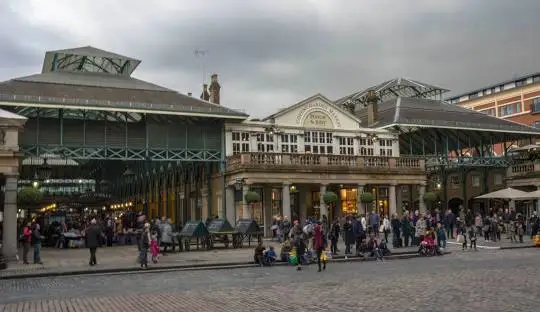
Covent Garden Victorian Market Meets West End Theatre
The guitar strings vibrate—a crisp, acoustic ripple that cuts through the chatter of the crowd—as you stand beneath the glass and steel roof at 11:15 AM, watching dust motes dance in the shafts of London light. The air smells of roasted coffee beans and fresh flowers; the energy hums with the rhythm of a thousand footsteps on the cobblestones. Established as a formal market in 1630 and redesigned in 1830, Covent Garden spans 4 hectares of pedestrianized streets, housing over 60 shops and 20 restaurants within the historic Apple Market building. You stand near the central stage, where buskers perform for tips, while the 45-meter-high portico of St. Paul's Church watches over the square like a silent guardian of the arts. Every corner holds a story: Victorian ironwork, Georgian townhouses, and the glittering marquees of the Theatreland district just steps away. In 2026, as high streets struggle against online retail, visiting Covent Garden means engaging with a resilient model of experiential commerce. This place matters now because it remains the cultural heartbeat of London, challenging visitors to slow down and witness the living performance of urban life.
Why Covent Garden Embodies Urban Cultural Regeneration
Covent Garden solves the architectural challenge of preserving historic infrastructure while adapting to modern retail needs—a feat achieved through decades of careful restoration. Originally designed by Inigo Jones in 1630 as London's first planned square, the area served as a wholesale fruit and vegetable market for over 300 years until its relocation to Nine Elms in 1974. The current market building, constructed in 1830 by Charles Fowler, features a classical colonnade with 36 granite columns, each weighing 3 tons, supporting a timber and glass roof that floods the interior with natural light. Engineering-wise, the 1980s regeneration led by Stuart Mosscrop converted the wholesale halls into a festival marketplace, retaining the original cast-iron pillars while reinforcing the foundations to support heavy foot traffic. Today, the district attracts over 45 million visitors annually, balancing tourist commerce with working theatres like the Royal Opera House, which opened in its current form in 1858. This unique status ensures Covent Garden remains not merely a shopping center but a living cultural quarter, blending heritage conservation with contemporary entertainment in a manner few urban districts sustain.
The Best Time to Experience Covent Garden
For optimal atmosphere and manageable crowds, plan your visit between May 15–June 20 or September 10–October 15, when London's temperatures range from 15–22°C (59–72°F) and daylight extends until 9:00 PM. Arrive precisely at 9:00 AM when the shops open to beat the tour groups that typically converge by 11:30 AM; the morning light illuminates the Piazza beautifully without the glare of midday sun. Evening visits between 7:00–9:00 PM offer a romantic atmosphere as the street lamps glow and pre-theatre diners fill the restaurants. Avoid December 20–January 5 when holiday crowds bring peak congestion, pushing pedestrian flow to a standstill despite the festive decorations. Winter months (December–February) offer shorter lines but temperatures drop to 2–8°C (36–46°F), and the outdoor seating becomes uncomfortable. For event schedules, verify the calendar at coventgarden.london before booking, as special performances can close sections of the Piazza. Tuesday and Wednesday mornings typically see the lowest visitor volume, allowing for quieter exploration of the market stalls.
Approximate Budget for a 7-Day Trip (2026)
London remains a premium destination, but staying in Zone 1 near Holborn provides immediate access to Covent Garden without excessive transport costs. These 2026 estimates assume a moderate travel style, accounting for approximately 3-4% annual inflation in UK hospitality and attraction pricing.
- Accommodation: £140–£300 per night for a double room in Holborn, Strand, or Soho; budget hostels from £55/night in nearby King's Cross
- Food: £55–85 per day—breakfast £10–14 (café pastry or full English), lunch £15–22 (market stall or pub meal), dinner £30–49 (mid-range restaurant with wine); traditional pie and mash £18
- Transportation: £8.10 daily cap for Zones 1-2 using contactless/Oyster; Heathrow Express £25 one-way or Elizabeth Line £12.80; Black Cab from Victoria £20 minimum
- Attractions: Covent Garden free (donation suggested for buskers), Royal Opera House tour £25.00, London Transport Museum £24.00, West End Show £60.00, Thames cruise £18.00
- Miscellaneous: Souvenir art print £20, market postcards £5, rain jacket (essential) £35, travel insurance £50 for week
Total for 7 days: £1,400–1,950 per person (excluding international flights)
7 Essential Covent Garden Experiences
- Street Performance Viewing: Stand near the central stage to watch licensed buskers perform. Shows run hourly from 10:00 AM–7:00 PM; arrive 10 minutes early to secure a front-row spot. The acoustics of the glass roof amplify music beautifully, and tipping is customary.
- Apple Market Exploration: Traverse the covered market halls to view artisan crafts and vintage goods. The stalls open at 10:00 AM; look for the hand-painted signs and jewelry makers working at their benches. The cast-iron pillars create a historic atmosphere for shopping.
- Royal Opera House Tour: Join a guided tour of the historic theatre and backstage areas. Tours depart at 11:00 AM and 2:00 PM; you'll see the auditorium where prima donnas have sung since 1858. The velvet seats and gold leaf detailing are breathtaking.
- Neal's Yard Visit: Step through the narrow alleyway to find the colorful courtyard. Open 24 hours; the buildings are painted in vibrant rainbow hues. Sit at the café tables to enjoy organic food while surrounded by climbing plants and murals.
- Seven Dials Walk: Explore the seven intersecting streets radiating from the sundial pillar. The area features independent boutiques and bookshops; look for the original 1694 sundial column in the center of the junction. The cobblestones date to the 19th century.
- West End Theatre Show: Book tickets for a musical in the adjacent Theatreland district. Shows typically start at 7:30 PM; arrive by 7:00 PM to collect tickets and browse the merchandise. The historic facades of the theatres are landmarks themselves.
- Jubilee Market Haggling: Visit the outdoor market on Tavistock Street for antiques and collectibles. Open daily; the antique fair runs on Mondays. Vendors are often open to negotiation on prices, especially towards the end of the trading day at 5:00 PM.
3 Hidden Gems Most Travelers Miss
- St. Paul's Church Actors' Church: This historic church on the west side of the Piazza serves the theatre community. Access is via the main door on Bedford Street; open Tuesday–Friday 10:00 AM–4:00 PM. Look for the memorial stones for Charlie Chaplin and Vivien Leigh in the garden. The interior features simple wooden pews and a serene atmosphere contrasting the busy square.
- London Transport Museum Depot: Located in Acty, this satellite venue houses the reserve collection of buses and trains. Access requires booking a shuttle bus from Covent Garden on select weekends; tours run at 11:00 AM and 2:00 PM. You'll see vintage vehicles not displayed in the main museum, including 1930s Underground carriages.
- Maiden Lane Pedestrian Street: This narrow cobblestone lane runs parallel to the Strand, lined with historic pubs and restaurants. Access via the archway near the Opera House; open 24 hours. Look for the original 18th-century signage on the buildings. The street retains a quiet, village-like feel despite being steps from the tourist crowds.
Cultural & Practical Tips
- Busker etiquette: Always tip performers if you stop to watch; they rely on donations for income. Stand behind the marked viewing lines to avoid blocking pathways for other pedestrians.
- Photography rules: Photography is permitted in public areas for personal use without flash. Tripods require permission from the management office; respect signs indicating no photography inside specific shops or theatres.
- Security screening: Bag checks may occur at market entrances during peak events; prohibited items include large suitcases and hazardous materials. Allow 10 minutes for checks during holiday periods (December 20–31).
- Local phrases: Learn "Mind the gap" (watch the step), "Cheers" (thanks), and "Queue here" (wait in line); Londoners appreciate visitors who respect pedestrian flow on the narrow cobblestone streets.
- Weather preparedness: The Piazza is outdoors and exposed to rain; carry a compact umbrella (£10 from Boots pharmacy) and waterproof layers. Stone surfaces become slippery when wet—wear shoes with good grip.
- Accessibility: The market offers step-free access via ramps and lifts; wheelchair users receive assistance—contact info@coventgarden.london 48 hours ahead to arrange support. Some historic cobbled areas may be uneven.
- Respectful behavior: Keep voices lowered near the Opera House and theatres during performance times. Do not touch the market stalls or merchandise without asking; many items are handmade and fragile.
Conclusion: Travel with Curiosity, Not Just Checklists
Covent Garden demands more than a shopping bag and a selfie—it invites you to contemplate the layers of history resting on those cobblestone streets. When you walk the Piazza in 2026, tracing the same paths worn by merchants and actors for centuries, you're not just ticking a sightseeing box; you're witnessing the delicate balance between commercial vitality and cultural preservation. As overtourism pressures London's landmarks, visiting mindfully means respecting the working nature of this district, understanding that behind the market stalls, a community of artists and traders thrives. Walk slowly across the stone flags, noticing how the light changes on the glass roof; listen to the buskers not as background noise but as the soundtrack of the city. Leave only footprints on the cobbles, take only memories of vibrant performance, and carry forward the understanding that places like this endure because each generation chooses to animate them—not as static museums, but as living testaments to commerce, art, and the enduring human spirit.