
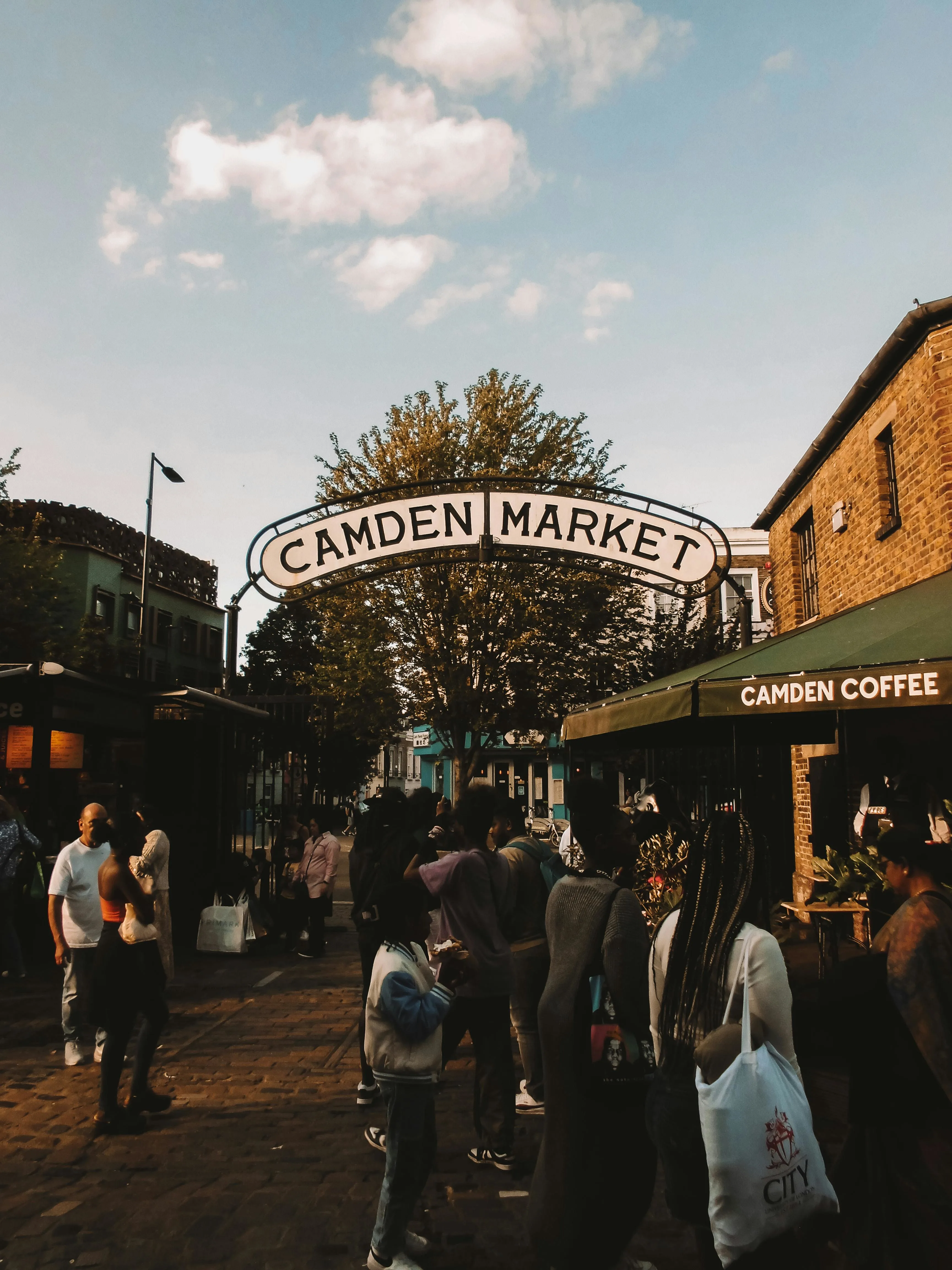
Camden Market Punk Heritage Meets Regent's Canal Vitality
The air thickens—a potent cocktail of sizzling jerk chicken, incense, and diesel fumes from the canal boats—as you step onto the cobblestones at 11:30 AM, immersed in the cacophony of a thousand conversations. You stand beside the Camden Lock, watching the water rise 2.5 meters to lift narrowboats toward Regent's Park, while the graffiti-covered brick walls vibrate with the bass of nearby music venues. Established in 1974 as a small crafts fair, Camden Market now spans 5.5 hectares along the Regent's Canal, hosting over 1,000 stalls and attracting 250,000 visitors weekly. The industrial architecture of the former Pickfords Stables frames the scene, where Victorian ironwork supports modern street food vendors serving cuisine from 40 different nations. Every corner pulses with energy: vintage leather jackets hanging beside cyberpunk accessories, buskers playing violins against drum machines, and the constant churn of the lock gates. In 2026, as homogenized high streets dominate global retail, visiting Camden Market means engaging with a resilient enclave of counter-culture commerce. This place matters now because it remains London's most vibrant testament to individual expression, challenging visitors to navigate the chaos and find authenticity in the crowd.
Why Camden Market Embodies Alternative Cultural Regeneration
Camden Market solves the urban planning challenge of repurposing industrial infrastructure for community commerce—a feat achieved through organic growth rather than top-down design. Originally a hub for canal transport and horse trading, the site transformed in 1974 when the Camden Lock Place opened, converting warehouses into retail spaces for independent artisans. The Stables Market, housed in the former Pickfords Canteen and Horse Hospital built in 1835, retains the original wrought-iron railings and cobblestone floors designed for equine traffic, now supporting footfall of 25,000 people daily. Engineering-wise, the canal lock system, upgraded in 1998, uses hydraulic gates to manage water levels between the Thames and Regent's Canal, allowing 30-meter boats to pass through the 15-meter-wide chamber. Today, the market operates as a private estate managed by Camden Market Company, balancing commercial viability with cultural preservation by restricting chain stores to maintain independent vendor dominance. This unique status ensures Camden Market remains not merely a shopping destination but a living ecosystem of subcultures, blending Victorian engineering with modern street culture in a manner few urban districts sustain.
The Best Time to Experience Camden Market
For optimal atmosphere and manageable crowds, plan your visit between May 15–June 20 or September 10–October 15, when London's temperatures range from 15–22°C (59–72°F) and daylight extends until 9:00 PM. Arrive precisely at 10:00 AM when stalls open to beat the tour groups that typically converge by 12:30 PM; the morning light illuminates the canal beautifully without the glare of midday sun. Evening visits between 6:00–9:00 PM offer a romantic atmosphere as the string lights glow and the crowd shifts from shoppers to diners. Avoid August 25–September 2 when the Bank Holiday weekend brings peak congestion, pushing pedestrian flow to a standstill despite the extended opening hours. Winter months (December–February) offer shorter lines but temperatures drop to 2–8°C (36–46°F), and the outdoor stalls become uncomfortably cold. For event schedules, verify the calendar at camdenmarket.com before booking, as special festivals can close sections of the market. Weekday mornings typically see the lowest visitor volume, allowing for quieter exploration of the vintage archives.
Approximate Budget for a 7-Day Trip (2026)
London remains a premium destination, but staying in Zone 2 near Camden Town provides immediate access to the market without central London price gouging. These 2026 estimates assume a moderate travel style, accounting for approximately 3-4% annual inflation in UK hospitality and attraction pricing.
- Accommodation: £110–£240 per night for a double room in Camden, King's Cross, or Primrose Hill; budget hostels from £45/night in nearby Chalk Farm
- Food: £45–75 per day—breakfast £8–12 (café pastry or full English), lunch £12–20 (market street food stall), dinner £25–43 (pub meal with pint); traditional fish and chips £16
- Transportation: £8.10 daily cap for Zones 1-2 using contactless/Oyster; Heathrow Express £25 one-way or Elizabeth Line £12.80; Santander Cycle £20 daily access
- Attractions: Camden Market free (entry), London Zoo £38.00, Regent's Park free, Primrose Hill view free, Thames cruise £18.00
- Miscellaneous: Vintage clothing £50, market souvenirs £15, rain jacket (essential) £35, travel insurance £45 for week
Total for 7 days: £1,150–1,650 per person (excluding international flights)
7 Essential Camden Market Experiences
- Street Food Hall Dining: Sample global cuisine in the Camden Food Court. Open 11:00 AM–10:00 PM; try the Korean fried chicken or Ethiopian injera. The aroma of spices fills the industrial hall, and communal seating encourages conversation with fellow travelers.
- Camden Lock Viewing: Watch the lock gates operate to raise boats 2.5 meters. Best viewed from the bridge at 12:00 PM when scheduled passages occur. The mechanical groan of the gates contrasts with the chatter of the crowd gathered to watch the water rise.
- Vintage Archive Shopping: Explore the upper levels of the Stables Market for curated vintage clothing. Open 10:00 AM–6:00 PM; look for 1970s leather jackets and band memorabilia. The racks are densely packed, requiring patience to sift through decades of fashion history.
- Regent's Canal Walk: Stroll the towpath toward King's Cross along the water. The 3-kilometer path takes 45 minutes; notice the houseboats moored along the edge. The water reflects the willow trees and brick warehouses, offering a serene contrast to the market noise.
- Live Music Venue Visit: Attend a gig at the Roundhouse or Electric Ballroom. Shows typically start at 7:00 PM; check listings for emerging artists. The acoustics in these historic venues amplify the energy of live performance, connecting you to Camden's musical legacy.
- Street Art Exploration: Hunt for murals in the back alleys of Camden Lock Place. The art changes monthly; look for the large-scale portraits near the canal exit. The vibrant colors stand out against the gray brick, documenting the evolving visual culture of the area.
- Cyberdog Store Experience: Enter the futuristic retail space featuring neon clothing and robots. Open 10:00 AM–8:00 PM; the store plays techno music at high volume. The mannequins move and light up, creating an immersive sensory experience unique to this vendor.
3 Hidden Gems Most Travelers Miss
- Camden Lock Place Roof Terrace: This elevated viewing platform offers a panoramic view of the market sprawl. Access via the stairs near the food court; open 11:00 AM–5:00 PM. Most visitors stay at ground level, missing the geometric pattern of the stall roofs and the canal beyond.
- Hawley Arms Balcony: This historic pub, rebuilt after the 2008 fire, offers a quiet balcony overlooking the canal. Access via the main bar on Castlehaven Road; open 12:00 PM–11:00 PM. Order a local ale and watch the narrowboats pass without the pressure of the crowd below.
- Regent's Canal Tunnel Walk: A short section of the towpath enters a dark tunnel near King's Cross. Access is safe during daylight hours; bring a phone torch. The echo of footsteps on the wet brick creates an atmospheric journey beneath the city streets, rarely used by tourists.
Cultural & Practical Tips
- Cash and card: Most stalls accept contactless payment, but some vintage vendors prefer cash. Carry £20 in small notes for bargaining or smaller purchases where terminals may be offline.
- Photography rules: Photography is permitted in public areas for personal use without flash. Ask vendors before photographing specific items; respect signs indicating no photography inside specific boutiques or art installations.
- Crowd navigation: The market narrows significantly near the lock; keep moving to avoid blocking flow. Stand to the side if you need to check a map or send a message during peak hours (12:00 PM–4:00 PM).
- Local phrases: Learn "Mind the gap" (watch the step), "Cheers" (thanks), and "Queue here" (wait in line); Londoners appreciate visitors who respect pedestrian flow on the narrow cobblestone streets.
- Weather preparedness: The market is largely outdoors and exposed to rain; carry a compact umbrella (£10 from Boots pharmacy) and waterproof layers. Stone surfaces become slippery when wet—wear shoes with good grip.
- Accessibility: The market offers step-free access via ramps in main areas; wheelchair users may find some vintage stalls narrow. Contact info@camdenmarket.com 48 hours ahead to arrange assistance for specific venues.
- Respectful behavior: Keep voices lowered near residential buildings bordering the market. Do not touch merchandise without asking; many vintage items are fragile and irreplaceable beneath the racks.
Conclusion: Travel with Curiosity, Not Just Checklists
Camden Market demands more than a souvenir keyring and a selfie—it invites you to contemplate the layers of subculture resting on those cobblestone streets. When you walk the stalls in 2026, tracing the same paths worn by punks and artisans for decades, you're not just ticking a sightseeing box; you're witnessing the delicate balance between commercial vitality and cultural preservation. As overtourism pressures London's landmarks, visiting mindfully means respecting the working nature of this district, understanding that behind the market stalls, a community of creators and traders thrives. Walk slowly across the stone flags, noticing how the light changes on the canal water; listen to the buskers not as background noise but as the soundtrack of the city. Leave only footprints on the cobbles, take only memories of vibrant performance, and carry forward the understanding that places like this endure because each generation chooses to animate them—not as static museums, but as living testaments to commerce, art, and the enduring human spirit.