
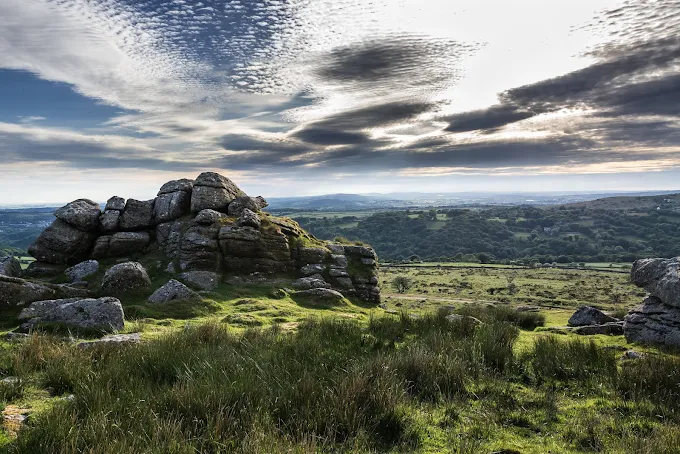
Dartmoor National Park Ancient Tors Meet Wild Ponies
Mist clings to the granite peaks as dawn breaks over the moor—silver light filtering through the skeletal branches of ancient oaks while the soft percussion of pony hooves echoes across the heathland. You stand at the base of High Willhays, 621 meters (2,037 feet) of Devonshire stone rising abruptly from the peat bogs, while the distant chime of church bells echoes from the village below. Designated as a National Park in 1951, this 954-square-kilometer (368-square-mile) landscape preserves over 3,000 Bronze Age archaeological sites, making it one of the most historically dense wildernesses in Europe. As you trace the cold stone of a tors weathered by 4,000 years of wind and rain, you realize Dartmoor National Park matters now more than ever: in an era of digital saturation, it offers a tangible connection to deep time, a physical anchor for myths and history that continue to shape cultural identity in 2026.
Why Dartmoor National Park Embodies Wilderness Heritage
The Dartmoor National Park is not merely a recreational space; it is a geological archive carved into the heart of Devon. Formed from a massive granite intrusion that cooled 280 million years ago, the landscape solves a preservation problem: protecting a unique ecosystem of peat bogs, oak woodlands, and heathland from agricultural intensification. The iconic tors, such as Haytor and Vixen Tor, are natural outcrops shaped by freeze-thaw weathering, standing as sentinels over valleys where tin miners worked from the 12th century until 1930. Technical analysis of the peat layers reveals climate data spanning millennia, making the park a critical site for environmental research.
Today, it fulfills a cultural need for connection to untamed nature in an increasingly managed world. Managed by the Dartmoor National Park Authority, established in 1951, the site hosts over 10 million visitor days annually who walk the 730 kilometers (454 miles) of public rights of way. The architecture of the moor includes clapper bridges dating to the 14th century and medieval longhouses that remain inhabited. When you walk the moorland, you traverse a space where Bronze Age farmers buried their dead and where Victorian convicts built the prison at Princetown. The Dartmoor National Park represents a continuous narrative of human adaptation to harsh environments, preserved by the very organization that now maintains the footpaths against the erosive power of millions of footsteps and the encroaching scrub of the countryside.
The Best Time to Experience Dartmoor National Park
To witness Dartmoor National Park in optimal atmospheric conditions, plan your visit between May 18 and June 12. During this window, temperatures average 12-17°C (54-63°F), and daylight extends until 9:15 PM, providing ample time for hiking. The best light for photography occurs between 7:30-9:30 AM when morning mist lifts off the valleys, and 6:00-8:00 PM for golden hour illumination on the tors. Visiting early also allows you to explore popular sites like Haytor before tour buses arrive from Exeter, typically between 11:00 AM and 3:00 PM.
Autumn offers a secondary window—specifically September 10 to October 15—when summer crowds dissipate and the heather turns russet and gold. Temperatures remain mild at 10-15°C (50-59°F), though daylight hours shorten rapidly. Avoid July 25 to August 25 when school holidays push visitor numbers above 20,000 daily, creating congestion at parking areas and limited space on popular trails. Winter months (November-February) offer solitude but challenging conditions; snow often closes high-altitude paths, and sunset occurs as early as 4:05 PM in December. For current weather warnings and path closures, verify information at www.dartmoor.gov.uk or contact the visitor center at +44 (0)1822 890414.
Approximate Budget for a 7-Day Trip (2026)
Exploring Dartmoor National Park and the wider Devon countryside requires moderate budgeting, as rural southern England commands premium prices during peak season. The following budget reflects mid-range travel for one person in 2026, accounting for approximately 4.2% UK inflation (ONS data, January 2026). Prices assume a base in Tavistock or Yelverton for optimal access to the moor and surrounding villages.
- Accommodation: £85-£140 per night for a B&B or inn in Tavistock (6 nights = £510-£840). Budget options: £45-£65 for hostels in Princetown or camping at Blackdown.
- Food: £45-65 per day total • Breakfast: £10-15 (Full English at The Bedford Hotel) • Lunch: £12-18 (Ploughman's lunch at The Drapers Arms) • Dinner: £25-35 (Three-course meal at The Royal Oak or The Masons Arms)
- Transportation: • Train London Paddington to Plymouth + Bus 118: £70-120 return • Local bus (Route 118): £4.50 day pass • Car rental (recommended): £60/day plus fuel £1.58/liter • Parking at Dartmoor: £6/day (March-October)
- Attractions: • Dartmoor Prison Museum: £8.50 • Guided Moorland Walk: £25 • Castle Drogo Entry: £15 • Free: Public footpaths, tors, visitor centers
- Miscellaneous: • Ordnance Survey Explorer Map OL28: £10.99 • Local artisan souvenirs: £25 • Travel insurance: £40-60 for week • Waterproof gear rental: £20
Total estimated cost: £1,300-£1,600 for 7 days (excluding international flights)
5 Essential Dartmoor National Park Experiences
- Hike High Willhays Summit: Arrive at the car park by 8:00 AM to avoid crowds. Ascend the 621-meter (2,037-foot) peak via the northern ridge. The view encompasses the entire park and the Cornish coast on clear days. Bring a windbreaker; exposure at the summit creates wind chill 5°C below valley temperatures. Spend 30 minutes photographing the tors before descending. This experience connects you to the highest point in southern England.
- Observe Wild Ponies: Walk the heathland near Postbridge to see the semi-feral Dartmoor ponies. Maintain a distance of 50 meters; do not feed the animals. The ponies graze freely and are owned by local commoners. Visit between 7:00-9:00 AM when they are most active. This experience demonstrates the traditional commoning practices that maintain the moorland ecosystem.
- Cross the Clapper Bridge: Visit the medieval bridge at Postbridge, built in the 14th century. The granite slabs span the River Meavy without mortar. Spend 20 minutes examining the construction technique. The sound of water rushing beneath the stones is deafening after rain. Best visited at low water levels. This context enriches your visit, showing the engineering ingenuity of medieval moorland travelers.
- Explore Princetown Village: Dedicate 60 minutes to walking the main street of this high-altitude village. Visit the Dartmoor Prison Museum (£8.50). The village retains a Victorian grid plan despite its remote location. Stop for cream tea at The Plume of Feathers. This experience provides context for the penal history that shaped the central moor.
- Wild Swim in the River Dart: Find a safe pooling spot near Holne Bridge (check safety signage). The water is cold, averaging 12°C (54°F) in summer. Spend 30 minutes swimming and sunbathing on the rocks. Wear sturdy shoes for entry; riverbeds are rocky. This experience offers a physical connection to the waterways that carve the granite landscape.
3 Hidden Gems Most Travelers Miss
- Black Tor Beacon: While crowds cluster at Haytor, this western summit remains surprisingly quiet. Access via the footpath from Merrivale (parking at SX545745). The site features a Bronze Age stone circle near the summit. Visit between 3:00-5:00 PM when light hits the stones. No facilities exist—bring water and a headlamp for the return. The National Park Authority notes this area has high archaeological density but limited signage.
- The Grimspound Settlement: Located 5 kilometers east, grid reference SX705825, lies a well-preserved Bronze Age enclosure. Access via a public footpath from the B3387 road. The stone huts date to 1000 BC. Visit during weekday mornings when the site is empty. No facilities exist—bring snacks. This spot demonstrates the domestic history of the moor, offering a raw view of the landscape before it became a royal hunting forest.
- Becky Fall Valley: Contact the visitor center (+44 (0)1822 890414) for access updates to this wooded valley near Manaton. The site features a waterfall and ancient oak trees. Access is restricted to footpath only; no vehicles. The space offers a tangible connection to the sheltered side of the moor. This site reveals the biodiversity hidden within the granite landscape, showing how woodlands survive despite exposure.
Cultural & Practical Tips
- Respect the ponies: Do not feed or approach the wild ponies. They are livestock, not pets. The Commoners' Association reports 10-15 incidents annually due to visitors straying too close. Keep dogs on leads at all times. Stay on marked paths to avoid disturbing grazing animals.
- Understand weather risks: The moor is exposed; conditions change rapidly. Check www.metoffice.gov.uk before visiting. Never hike in fog without a compass. If paths are closed, respect the barriers. The rescue team monitors the area closely.
- Leave no trace: Remove all litter, including biodegradable items. The Authority collects 20 tonnes of waste annually from the park. Do not remove stones or plants—this violates the Wildlife and Countryside Act 1981. Photograph specimens in situ instead.
- Learn local terminology: "Tor" (rocky hill); "Commoning" (grazing rights); "Clapper" (bridge type). Using these terms shows respect for local heritage and helps guides assist you better during tours.
- Photography guidelines: Tripods are permitted on the moor but restricted near private property. Drone use requires written permission from the National Park Authority and Civil Aviation Authority—apply 6 weeks in advance. Respect other visitors; do not block pathways for extended shoots during peak hours (11:00 AM-3:00 PM).
- Weather preparedness: The park is exposed; wind chill is common even in summer. Pack waterproof layers; Devon showers are sudden. Wear sturdy shoes with grippy soles—granite becomes slippery when wet. Sun protection is essential; reflection from peat increases UV exposure by 15%.
- Accessibility considerations: Some car parks are wheelchair accessible. The moorland paths are not accessible due to uneven terrain. Alternative viewing exists from visitor centers. Request an accessibility map at the ticket office upon arrival.
Conclusion: Travel with Reverence, Not Just Sightseeing
The Dartmoor National Park does not exist merely to be hiked—it exists to be felt as a sanctuary of stone and sky. When you walk these tors in 2026, you are not observing a static landscape; you are entering a space where geology and history converge in a perpetual dialogue. The Bronze Age farmers who built the huts are gone, but their walls remain embedded in the heather. The tin miners who dug the streams are gone, but their leats still channel water. This is not heritage frozen in amber—it is heritage living, breathing, enduring.
So slow down. Sit on the granite for ten minutes without your phone. Listen to the wind that once carried the sounds of ancient rituals and now carries the cries of curlews. Buy your lunch from a pub whose owners pay rates that support the local community. Donate to the Dartmoor Trust rather than purchasing plastic souvenirs. Leave only footprints on ancient peat, take only memories of mist and stone, carry home only the profound understanding that some things—wilderness, history, natural beauty—cannot be rushed, cannot be owned, can only be honored. The moor will still stand in 2126 if we choose stewardship over exploitation today.