
Deauville Boardwalk Riviera Glamour Meets Norman Coast
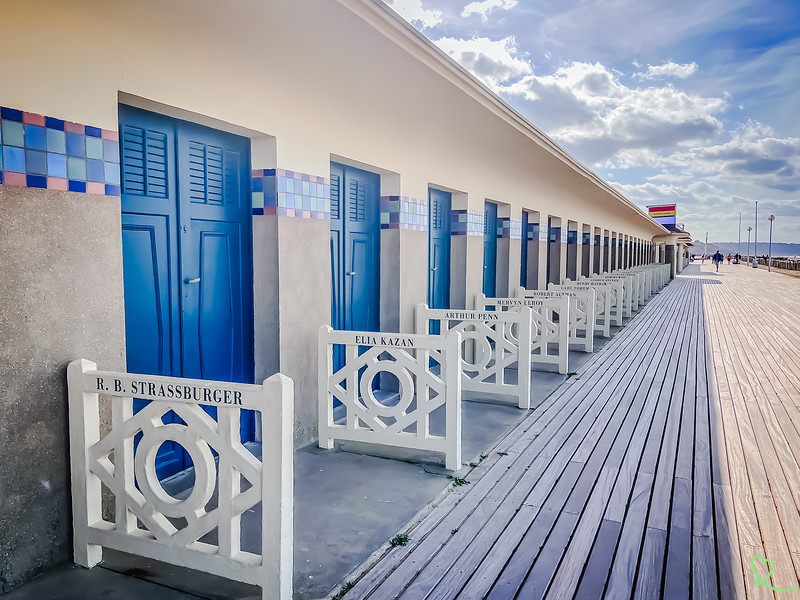
The late afternoon sun gilds the English Channel as you step onto the legendary Planches de Deauville. The air is a crisp cocktail of salt, seaweed, and the faint, buttery scent of a nearby crêperie. Beneath your feet, the 643-meter-long (2,110-foot) wooden promenade—laid in 1923 and meticulously maintained ever since—creaks with a familiar, rhythmic sigh. To your left, the iconic row of 570 private beach cabanas, painted in bold red-and-white stripes with names like “Chanel” and “Proust” stenciled on their doors, stand as sentinels of a bygone era of seaside chic. To your right, the vast expanse of the pebble beach gives way to the churning grey-green water of the Channel. This is where Coco Chanel opened her first shop outside Paris in 1913, where Hollywood stars have strutted since the 1950s Deauville American Film Festival began, and where the French aristocracy still comes to see and be seen. In 2026, as we seek places that blend timeless elegance with vibrant energy, the Deauville boardwalk remains an unparalleled stage for the art of living well.
Why Deauville Boardwalk Embodies Seaside Sophistication
The Deauville boardwalk, or “Les Planches,” is far more than a simple walkway—it is the very spine of the town’s identity and a masterstroke of early 20th-century resort engineering. Conceived by the visionary developer Duc de Morny in the 1860s to transform Deauville from a marshy backwater into a rival to the French Riviera, the boardwalk was the key infrastructure that connected the grand hotels of the town center to the newly created beach [[2]]. Its current iteration, built in 1923 from durable exotic hardwoods, stretches for a precise 643 meters along the Grand Plage, providing a stable, elevated platform above the shifting pebbles. The boardwalk solved a fundamental problem of the Norman coast: how to make its rugged, shingle beaches accessible and elegant for high society. Its genius lies in its integration with the private cabanas, which were assigned to wealthy families and celebrities, creating an exclusive yet public-facing social scene. The naming of each cabana after a famous figure—from literary giants like Proust to film legends like Grace Kelly—is a unique cultural tradition that turns a simple stroll into a walk through a who’s who of modern culture. Today, it fulfills a deep need for the traveler seeking a place where history, luxury, and natural beauty coexist in perfect harmony.
The Best Time to Experience Deauville Boardwalk
To experience the boardwalk in its most luminous and lively state, plan your visit for the specific window of May 25–June 15, 2026. During these late spring weeks, the weather is reliably pleasant, the famous hydrangeas in the town’s gardens are beginning to bloom, and the massive crowds of summer have not yet arrived [[18]]. Daytime temperatures are a comfortable 17°C to 21°C (63°F–70°F)—ideal for a long walk without the intense heat or the chill of the shoulder seasons [[18]]. The absolute best time of day is 5:30–7:30 PM, when the golden hour light bathes the red-and-white cabanas in a warm glow and the promenade fills with locals enjoying their evening constitutional. You must avoid the peak period of the Deauville American Film Festival (usually the first two weeks of September), when hotel prices skyrocket and the boardwalk becomes a chaotic red-carpet zone inaccessible to the general public [[18]]. For the most current information on events, tide schedules, and any temporary closures, always consult the official Deauville Tourism Office website: en.deauville.org [[7]].
Approximate Budget for a 7-Day Trip (2026)
This budget is calculated for a comfortable, mid-to-upper-range trip to Deauville in 2026, accounting for a 4% annual inflation rate as per INSEE standards. It reflects the town’s reputation as a luxury destination while offering practical options.
- Accommodation: €150–€220 per night for a room in a stylish 4-star hotel or a boutique guesthouse within a 10-minute walk of the boardwalk. Staying in the town center provides easy access to all amenities.
- Food: €65 per day. Breakfast (€12): a coffee and a pain au chocolat at a café with a view of the marina. Lunch (€22): a fresh seafood platter or a gourmet salad at a brasserie near the casino. Dinner (€31): a three-course meal at a traditional Norman restaurant featuring dishes like duck breast with Calvados or sole meunière.
- Transportation: The most convenient way to reach Deauville is by train from Paris (Gare Saint-Lazare to Trouville-Deauville station, then a short taxi ride). A one-way ticket costs around €35 if booked in advance. Within the compact town, walking is the best option; a car is unnecessary and expensive to park.
- Attractions: Walking the boardwalk is free. A guided historical tour of Deauville costs €20. Entry to the Villa Strassburger museum is €8. A relaxing treatment at the Barrière Spa would be a luxury splurge at €90.
- Miscellaneous: Allow €70 for souvenirs (e.g., a bottle of local cider, a silk scarf from a boutique) and small experiences like a horseback ride on the beach (€45) or a sunset cruise from the port (€30).
Total Estimated Cost: €1,200–€1,600 for one person for 7 days.
6 Essential Deauville Boardwalk Experiences
- Walk the Full Length at Sunset: Start at the western end near the Hôtel Normandy and walk the entire 643 meters to the eastern tip. As the sun dips below the horizon, the red-and-white cabanas become silhouetted against the fiery sky—a truly iconic Deauville moment.
- Find Your Favorite Cabana Name: Take your time to read the names on the 570 private cabanas. Look for your favorite author, actor, or director. It’s a fun, personal scavenger hunt that connects you to the town’s rich cultural tapestry.
- Dine at a Boardwalk-Adjacent Terrace: Book a table at a restaurant like Le Central or La Petite Maison, which offer terraces just steps from the Planches. Enjoy a glass of chilled Sancerre as you watch the elegant parade of passersby.
- Attend the Morning Fish Market: Just behind the boardwalk, the covered market on Rue du 19 Août hosts a vibrant fish market in the early morning. Go around 8:00 AM to see the day’s catch—sole, turbot, and oysters—being auctioned.
- Ride a Horse on the Beach: Deauville’s equestrian heritage is world-famous. Several stables offer guided rides directly onto the Grand Plage. The sight of riders trotting along the water’s edge, with the boardwalk in the background, is pure poetry.
- Visit the Casino Gardens: At the western end of the boardwalk, the manicured gardens of the Casino de Deauville offer a peaceful retreat. The floral displays are changed seasonally and provide a stunning photo backdrop with the sea beyond.
3 Hidden Gems Most Travelers Miss
- The Pol Roger Champagne Cellar Tour: In the heart of town, this historic champagne house offers intimate tours of its cellars. It’s overlooked because it’s not on the main tourist path. Book ahead via their website (+33 2 31 14 63 63); the tasting of their vintage Cuvée Sir Winston Churchill is unforgettable.
- The View from the Port’s East Jetty: Walk past the glitzy yachts in the main port to the quieter east jetty. From here, you get a perfect, postcard-worthy panoramic view of the entire boardwalk and the Grand Plage, framed by the harbor. Go at sunrise for solitude.
- The Church of Notre-Dame-des-Pins: A short walk inland, this beautiful neo-Gothic church built in 1875 is a masterpiece of stone and stained glass. Its quiet interior is a stark, peaceful contrast to the bustle of the boardwalk. Open daily from 9:00 AM to 6:00 PM.
Cultural & Practical Tips
- Dress with understated elegance: Deauville has a refined, chic atmosphere. While beachwear is acceptable on the sand, smart casual attire is expected in town, especially for dinner at a good restaurant.
- Learn a few key phrases: A polite “Bonjour, Madame/Monsieur” (bon-zhoor, mah-dam/muh-syuh) and “Merci beaucoup” (mair-see bo-koo) will open many doors with local shopkeepers and hotel staff.
- Photography is welcome, but respect privacy: The boardwalk is a public space, but the cabanas are private property. Feel free to photograph the architecture and the sea, but avoid zooming in on people inside their cabanas.
- Check the tide times: The beach experience changes dramatically between high and low tide. At low tide, you can walk far out on the wet sand for a unique perspective of the boardwalk. Tide tables are posted at the tourist office.
- Embrace the “art de vivre”: Life in Deauville is about savoring the moment. Don’t rush your coffee, your walk, or your meal. This unhurried pace is the essence of the Deauville experience.
Conclusion: Travel with Intention, Not Just Itineraries
In 2026, the Deauville boardwalk is more than a destination; it is a philosophy. It represents a deliberate choice to live beautifully, to find joy in the details—the creak of the wood underfoot, the rhythm of the waves, the legacy of names on painted doors. To simply walk its length is to participate in a century-old tradition of grace and leisure. By traveling with intention—with respect for its history, its residents, and its carefully curated aesthetic—you honor the spirit of the place. Your mindful presence, your support of its local artisans and family-run businesses, ensures that this iconic symbol of French seaside sophistication will continue to inspire for generations to come. Slow down. Breathe. Let the timeless rhythm of the Planches guide your journey.