
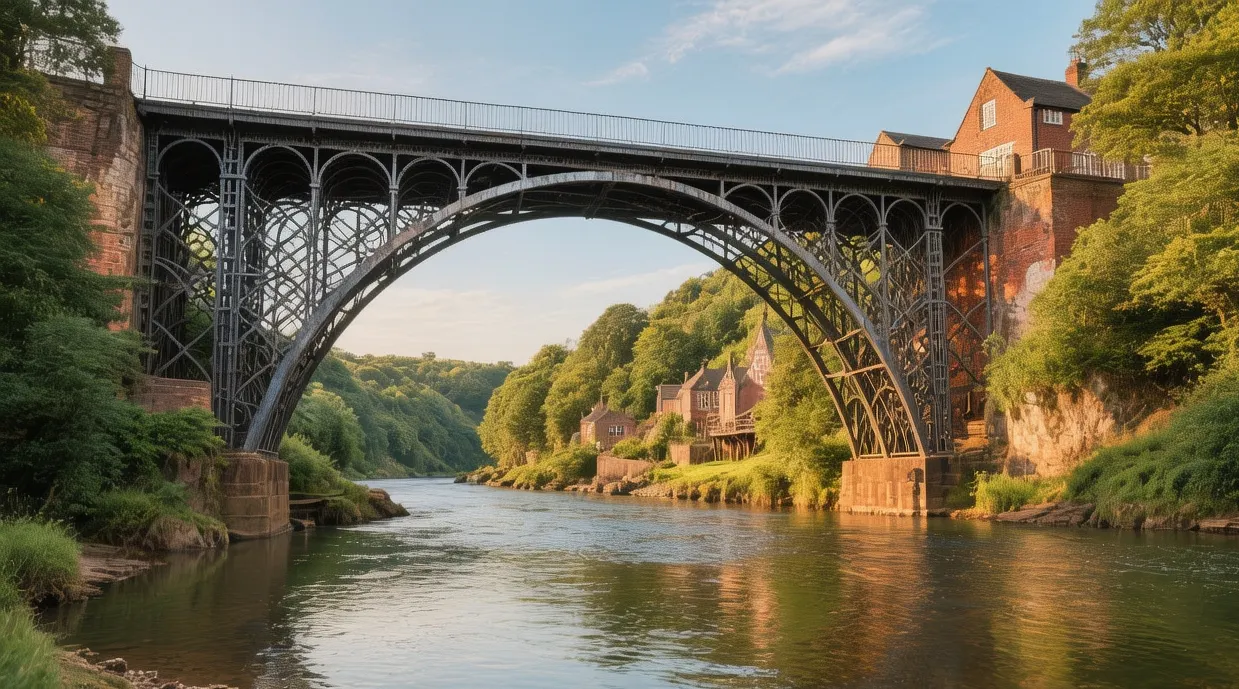
Ironbridge Gorge Cast Iron Meets Industrial Heritage
Mist clings to the River Severn as dawn breaks over the valley—silver light filtering through the intricate lattice of the world's first cast iron bridge while the distant chime of factory bells echoes from 1779. You stand on the bank of the Ironbridge Gorge, the scent of damp earth and oxidized metal mixing in the cool air, while the 30.5-meter (100-foot) arch spans the water like a skeleton of the Industrial Revolution. Designed by Abraham Darby III and opened in 1781, this structure solved a critical logistical problem: how to cross the steep gorge without obstructing the barges that carried coal and clay to the kilns below. As you trace the cold rivets of the arch, looking down at the water that powered the wheels of innovation, you realize this place matters now more than ever: in an era of digital abstraction, the Ironbridge Gorge remains a tangible anchor for human ingenuity, preserving the physical origins of the modern world that continue to shape our identity in 2026.
Why Ironbridge Gorge Embodies Industrial Legacy
The Ironbridge Gorge is not merely a museum site; it is the forensic record of the Industrial Revolution carved into the Shropshire landscape. Designated a UNESCO World Heritage Site in 1986, the 550-hectare (1,359-acre) zone contains the remains of coal mines, clay pits, and ironworks that fueled global change. The Iron Bridge itself utilizes 378 tons of cast iron, assembled using carpentry joints adapted for metal—a technical innovation that solved the brittleness problem of early iron casting. This engineering feat demonstrated that iron could be used for large-scale construction, paving the way for the railways and skyscrapers of the following centuries. The gorge solved a geographical need: accessing the rich mineral deposits hidden within the steep valley walls while transporting them via the navigable River Severn.
Today, it fulfills a cultural need for connection to the roots of modernity. Managed by the Ironbridge Gorge Museums Trust, the site hosts over 400,000 annual visitors who walk the same cobbles as 18th-century laborers. The architecture showcases Georgian townhouses alongside industrial slag heaps, creating a layered narrative of wealth and toil. When you walk the towpath, you traverse a space where steam engines first pumped water and where porcelain was fired for royal tables. The Ironbridge Gorge represents a continuous thread of innovation, preserved by the very organization that now maintains the blast furnaces against the corrosion of time and the erosion of the river banks. It stands as a testament to the transition from agrarian society to industrial power, a shift that defines the Anthropocene epoch we inhabit today.
The Best Time to Experience Ironbridge Gorge
To witness the Ironbridge Gorge in optimal atmospheric conditions, plan your visit between May 18 and June 12. During this window, temperatures average 14-19°C (57-66°F), and daylight extends until 9:15 PM, maximizing time for museum exploration and river walks. The best light for photography occurs between 7:30-9:30 AM when morning mist lifts off the Severn, and 6:00-8:00 PM for golden hour illumination on the iron arch. Visiting early also allows you to explore the Bridge before tour coaches arrive from Birmingham, typically between 11:00 AM and 3:00 PM.
Autumn offers a secondary window—specifically September 10 to October 15—when summer crowds dissipate and the woodland turns russet and gold. Temperatures remain mild at 12-17°C (54-63°F), though daylight hours shorten rapidly. Avoid July 25 to August 25 when school holidays push visitor numbers above 2,000 daily, creating congestion at the ticket offices and limited parking in the village. Winter months (November-February) offer solitude but challenging conditions; some outdoor exhibits close, and sunset occurs as early as 4:05 PM in December. For current opening hours and event schedules, verify information at www.ironbridge.org.uk or contact the visitor center at +44 (0)1952 432166.
Approximate Budget for a 7-Day Trip (2026)
Exploring the Ironbridge Gorge and the wider Shropshire countryside requires moderate budgeting, as rural England commands premium prices during peak season. The following budget reflects mid-range travel for one person in 2026, accounting for approximately 4.2% UK inflation (ONS data, January 2026). Prices assume a base in Ironbridge or Telford for optimal access to the museums and transport links.
- Accommodation: £85-£140 per night for a B&B or inn in Ironbridge village (6 nights = £510-£840). Budget options: £50-£70 for hostels in Telford or camping at Blists Hill.
- Food: £45-65 per day total • Breakfast: £10-15 (Full English at The Iron Bridge Inn) • Lunch: £12-18 (Ploughman's lunch at The Swan Hotel) • Dinner: £25-35 (Three-course meal at The Old Court House or Raj Mahal)
- Transportation: • Train London Euston to Telford + Bus 1: £60-100 return (advance booking) • Local bus (Arriva routes 1, 555): £4.50 day pass • Car rental (recommended): £60/day plus fuel £1.58/liter • Parking at Ironbridge: £6/day (March-October)
- Attractions: • All Museums Pass: £36 • Guided Gorge Walk: £25 • River Severn Boat Trip: £15 • Free: Bridge viewing, towpath, churchyard
- Miscellaneous: • Ordnance Survey Explorer Map 202: £10.99 • Local artisan ceramics: £30 • Travel insurance: £40-60 for week • Waterproof gear rental: £20
Total estimated cost: £1,300-£1,600 for 7 days (excluding international flights)
5 Essential Ironbridge Gorge Experiences
- Walk the Iron Bridge at Sunrise: Arrive at the bridge by 7:00 AM to experience the structure before traffic. The view encompasses the gorge and the river. Bring a windbreaker; exposure at the center creates wind chill 5°C below valley temperatures. Spend 30 minutes photographing the lattice work before shops open. This experience connects you to the engineering marvel that changed construction forever.
- Explore Blists Hill Victorian Town: Enter the open-air museum at 10:00 AM. The scent of coal smoke and baking bread fills the air. Spend 3 hours interacting with costumed interpreters. Use Victorian currency bought at the bank to purchase goods. Open 10:00 AM-5:00 PM daily. This context enriches your visit, showing the daily life of the workers who built the industrial age.
- Visit the Coalbrookside Museum of Iron: Located near the Old Furnace, this site houses the original castings. Entry is included in the pass. Spend 60 minutes examining the engine parts. The sound of the water wheel is audible from the river. Open 10:00 AM-5:00 PM daily. This experience demonstrates the technical evolution from charcoal to coke smelting.
- Hike the Gorge Towpath: Dedicate 90 minutes to the section along the River Severn. The path is flat and scenic, offering views of the museums from below. The scent of wild garlic fills the air in spring. Wear sturdy shoes; paths are uneven and exposed. This experience connects the industrial sites to the natural landscape that powered them.
- Watch the Glassmaking Demonstration: Visit the Coalport China Museum at 2:00 PM. The kilns reach temperatures of 1,200°C (2,192°F). Spend 45 minutes watching artisans shape molten glass. The heat is intense; stand back as instructed. This experience provides a tangible connection to the delicate craftsmanship that complemented the heavy industry.
3 Hidden Gems Most Travelers Miss
- The Tar Tunnel: While crowds cluster at the bridge, this natural bitumen spring 1 kilometer east remains surprisingly quiet. Access via the footpath from Coalport (parking at SJ675095). The walls glisten with black oil seeping from the rock. Visit between 2:00-4:00 PM when guided tours occur. No facilities exist—bring water. The Trust notes this site demonstrates the geological resources that attracted industry to the gorge.
- Darby House Ruins: Located 500 meters north, grid reference SJ670090, lies the home of the ironmasters. Access via a public footpath from the main road. The stone walls date to the 1700s. Visit during weekday mornings when the site is empty. No facilities exist—bring snacks. This spot demonstrates the domestic history of the families who owned the works, offering a raw view of the landscape before tourism took hold.
- Jackfield Tile Museum: Contact the visitor center (+44 (0)1952 432166) for access updates to this specialized museum. The site features Victorian encaustic tiles used globally. Access is restricted to bus or car; no direct footpath. The space offers a tangible connection to the decorative side of the industry. This site reveals the artistic output of the gorge, showing how utility met beauty in the 19th century.
Cultural & Practical Tips
- Respect the museums: Do not touch the exhibits unless invited. Follow staff instructions regarding hot surfaces. Keep voices low in indoor galleries. The Trust reports 5-10 incidents annually due to visitors ignoring safety barriers.
- Understand the terrain: The gorge is steep and uneven. Check www.ironbridge.org.uk for weather warnings. Never climb on the bridge structure. If paths are closed, respect the barriers. The rescue team monitors the area closely.
- Leave no trace: Remove all litter, including biodegradable items. The Trust collects 10 tonnes of waste annually from the site. Do not remove stones or artifacts—this violates the Ancient Monuments Act. Photograph specimens in situ instead.
- Learn local terminology: "Slag" (waste material); "Coke" (fuel); "Towpath" (river path). Using these terms shows respect for industrial heritage and helps guides assist you better during tours.
- Photography guidelines: Tripods are permitted outdoors but restricted inside museums during busy periods. Drone use requires written permission from the Trust and Civil Aviation Authority—apply 6 weeks in advance. Respect other visitors; do not block pathways for extended shoots during peak hours (11:00 AM-3:00 PM).
- Weather preparedness: The valley is exposed; wind chill is common even in summer. Pack waterproof layers; Shropshire showers are sudden. Wear sturdy shoes with grippy soles—iron grating becomes slippery when wet. Sun protection is essential; reflection from river increases UV exposure by 15%.
- Accessibility considerations: The Bridge is accessible but steep. The Museums have lift access. Alternative viewing exists from the visitor center. Request an accessibility map at the ticket office upon arrival.
Conclusion: Travel with Reverence, Not Just Sightseeing
The Ironbridge Gorge does not exist merely to be photographed—it exists to be understood as the cradle of the modern world. When you walk this valley in 2026, you are not observing a static museum; you are entering a space where the future was forged in fire and iron. The founders who smelted the ore are gone, but their furnaces remain embedded in the hill. The workers who carried the coal are gone, but their paths still wind the river. This is not heritage frozen in amber—it is heritage living, breathing, enduring.
So slow down. Sit on the riverbank for ten minutes without your phone. Listen to the water that once powered the bellows and now carries the cries of kingfishers. Buy your lunch from a pub whose owners pay rates that support the local community. Donate to the Museums Trust rather than purchasing plastic souvenirs. Leave only footprints on cobbled streets, take only memories of iron and steam, carry home only the profound understanding that some things—industry, innovation, natural beauty—cannot be rushed, cannot be owned, can only be honored. The gorge will still stand in 2126 if we choose stewardship over exploitation today.