
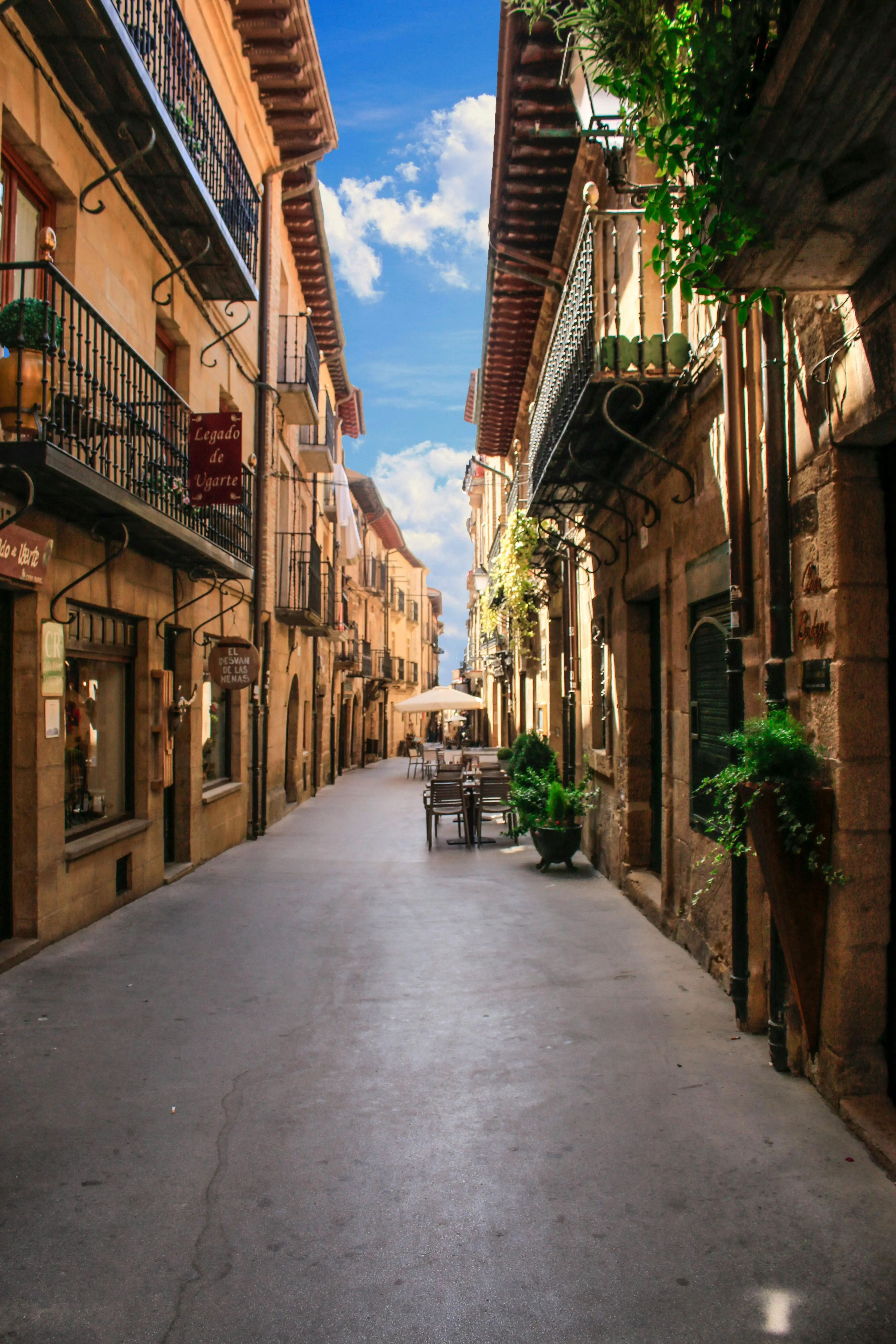
Laguardia Medieval Walls Basque Stone Meets Rioja Wine Country
The morning mist clings to limestone ramparts as the first light of dawn breaks over Rioja Alavesa—eight hundred years of history standing sentinel above terraced vineyards that cascade toward the Ebro River. You can hear it before you see it: the hollow echo of footsteps on medieval stone, the whisper of wind through crenellated battlements, the distant chime of bells from Santa María de los Reyes. These walls—1.2 kilometers of fortified perimeter punctuated by five monumental gates—don't merely encircle a town; they preserve a living testament to 13th-century Basque defensive architecture, built between 1260 and 1360 when Laguardia served as a strategic frontier between Castile and Navarre. Today, as you trace your fingers along weathered ashlar blocks still bearing the marks of medieval masons, you're walking the same path as knights, merchants, and winemakers who shaped this corner of Álava. In 2026, as overtourism threatens historic sites across Europe, Laguardia's walls matter more than ever—not as a museum piece, but as a reminder that preservation and authentic experience can coexist when travelers choose depth over checklists.
Why Laguardia Medieval Walls Embody Basque Defensive Heritage
Laguardia's fortification system represents one of the most complete examples of medieval military architecture in the Basque Country—a distinction that becomes apparent when you understand the engineering prowess embedded in every meter of its 1,200-meter perimeter. Constructed primarily during the reign of Alfonso X "the Wise" between 1260 and 1290, with expansions continuing through 1360, these walls solved a critical geopolitical problem: protecting a prosperous market town positioned on the volatile border between the Kingdoms of Castile and Navarre. The walls rise 8 to 10 meters high in their best-preserved sections, built from locally quarried limestone using ashlar masonry techniques that have withstood seven centuries of weather, warfare, and neglect.
Five gates pierce this defensive ring, each serving distinct purposes: the Santa Engracia Gate (north, circa 1300) controlled access from Vitoria; the Carnicerías Viejas Gate (south) opened toward the Rioja plains; the Payeras Gate (east) and San Juan Gate (west) managed secondary traffic; while the Santa María Gate—adorned with a 16th-century Plateresque arch—served as the ceremonial entrance. The walls incorporate 12 semi-circular towers spaced at strategic intervals, originally supporting wooden hoardings and later stone parapets with merlons for archers. What makes this fortification remarkable isn't just its scale but its adaptation: in the 17th century, as military technology evolved, the walls were reinforced with earth-filled ramparts to absorb cannon fire—a modification still visible in the thicker western sections.
Beneath your feet lies another layer of history: over 300 underground wine cellars (cuevas) carved into the sandstone bedrock, some dating to the 11th century—predating the walls themselves. These subterranean chambers, maintaining a constant 12–14°C (54–57°F) year-round, created a symbiotic relationship between defense and viticulture: the walls protected both people and their most valuable commodity, Rioja wine. Today, the Centro de Interpretación de la Muralla (Wall Interpretation Center), housed in a restored 16th-century building near Santa Engracia Gate, provides archaeological context through multimedia exhibits and original stonework recovered during the 2018–2020 restoration project funded by the Basque Government's Cultural Heritage Department (€2.3 million investment).
The Best Time to Experience Laguardia Medieval Walls
Timing transforms a visit from pleasant to transcendent. For optimal conditions—when the stone glows amber in angled light and vineyards display their full chromatic range—target May 15–June 20 or September 10–October 25. During these windows, daytime temperatures hover between 18–24°C (64–75°F), while mornings dip to a crisp 8–12°C (46–54°F)—ideal for walking the 1.2-kilometer wall circuit without summer's oppressive heat or winter's biting cierzo winds.
For photography and atmosphere, arrive at the Santa María Gate between 7:30–9:00 AM, when the eastern sun illuminates the Plateresque arch and mist still clings to the Rioja vineyards below. The golden hour before sunset—approximately 8:15–9:30 PM in June, 6:45–7:45 PM in September—casts long shadows across the battlements, creating dramatic contrasts perfect for capturing the texture of medieval stone. Visit on a Tuesday or Wednesday morning to avoid weekend crowds from Vitoria-Gasteiz and Bilbao; Saturday afternoons see visitor numbers swell to 400+ people within the walled perimeter.
Avoid July 20–August 15 unless you tolerate temperatures exceeding 32°C (90°F) with minimal shade along the walls. December through February brings frequent rain (averaging 12–15 rainy days per month) and temperatures dropping to 2–6°C (36–43°F), though the walls take on a moody, atmospheric quality that some photographers prefer. For wine harvest atmosphere, target September 25–October 10 when the pisado de uva (grape stomping) festivals animate the town, but book accommodations six months in advance.
Approximate Budget for a 7-Day Trip (2026)
This budget reflects mid-range travel with comfortable accommodations, quality dining, and comprehensive experiences—based on 2025 pricing adjusted for Spain's projected 3.2% inflation rate for 2026. Laguardia sits in Spain's Rioja Alavesa region, where wine-country pricing applies, but costs remain 20–30% lower than comparable destinations like San Sebastián or Barcelona.
Accommodation: €85–€160 per night
- Budget pensión within walls: €85–€110 (Hostal Villa de Laguardia)
- Boutique hotel with vineyard views: €130–€160 (Hotel Villa de Laguardia or Palacio de Samaniego)
- Luxury wine estate (hacienda): €200–€350 (Viura Hotel or Eguren Ugarte)
Food: €45–€75 per day
- Breakfast: €6–€10 (coffee, tostada, fresh orange juice at Café Etxebarri)
- Lunch: €15–€25 (menú del día: Rioja alavesa lamb stew, grilled chuletón, or bacalao al pil-pil with wine included)
- Dinner: €25–€40 (tapas crawl: 6–8 pintxos at €3–€5 each plus one glass of Rioja Reserva at €4–€6)
Transportation:
- Round-trip bus Vitoria-Gasteiz to Laguardia (Line 162): €12.40
- Rental car (7 days, compact): €280–€350 (essential for winery visits)
- Fuel for regional exploration (400 km): €55–€65
- Taxi from Vitoria airport: €65 one-way
Attractions & Experiences:
- Wall Interpretation Center guided tour: €6
- Santa María de los Reyes church (Gothic polychrome portal): €3
- Winery tour with tasting (Marqués de Riscal, Ysios, or Elciego estate): €15–€35
- Underground wine cellar tour: €12
- Museo de la Villa medieval site: €4
Miscellaneous:
- Bottle of Rioja Gran Reserva (to ship home): €18–€45
- Local artisan cheese (Idiazábal DOP): €12–€18
- Travel insurance (7 days): €25–€40
- Souvenirs and incidentals: €50–€80
Total for 7 days (mid-range): €1,150–€1,450 per person (excluding international flights)
6 Essential Laguardia Medieval Walls Experiences
- Walk the Complete Wall Circuit at Sunrise: Begin at the Santa Engracia Gate at 7:30 AM, following the 1.2-kilometer perimeter clockwise. The eastern section offers the most intact battlements with original merlons; pause at the northeast tower for panoramic views of the Sierra de Cantabria mountains. Allow 45 minutes for the full circuit, bringing a flashlight if visiting October–March when dawn breaks after 8:00 AM.
- Descend into Medieval Wine Cellars: Book the Ruta Subterránea (Underground Route) through the Tourism Office—this 90-minute guided descent takes you through interconnected 11th-century cellars beneath Plaza Mayor. You'll crawl through 2-meter-high tunnels carved into sandstone, visiting three distinct cuevas with original fermentation vats. Tours run Tuesday–Saturday at 11:00 AM and 5:00 PM; reservation required (+34 945 600 845).
- Photograph the Santa María Gate's Plateresque Arch: This 16th-century addition to the medieval gate features intricate Renaissance carvings depicting the Annunciation and coats of arms. Position yourself in Plaza de Santa María at 8:00 AM when side-lighting reveals the depth of the stone relief. The polychrome portal of the adjacent Santa María de los Reyes church—one of only three preserved in the Basque Country—demands equal attention; entry €3, open 10:30 AM–1:30 PM and 4:00–7:00 PM.
- Attend a Wine Tasting in a 13th-Century Cellar: Bodegas Elciego offers tastings within walls that predate the town's fortifications. Their "Heritage & Wine" experience (€28) pairs four Rioja Alavesa wines with local Idiazábal cheese and quince paste in a vaulted stone chamber where temperature never exceeds 14°C. Book online at least 48 hours ahead; they limit groups to 12 people to preserve the intimate atmosphere.
- Climb to the Atalaya Viewpoint: This elevated terrace at the town's highest point (685 meters elevation) provides 360-degree views of the walled town nested within vineyard patchwork. Arrive 30 minutes before sunset with a bottle of local sparkling wine (espumoso) from Bodegas Fabiano. The viewpoint is accessible via Calle Mayor's steepest incline—wear sturdy shoes for the cobblestone ascent.
- Explore the Wall Interpretation Center: Don't skip this €6 investment. The multimedia exhibits use augmented reality to reconstruct how the walls looked in 1350, complete with wooden hoardings and defending archers. The highlight: a 1:50 scale model showing the complete defensive system including the now-demolished outer barbican. Open Tuesday–Sunday, 10:00 AM–2:00 PM and 4:00–7:00 PM (winter: 3:30–6:30 PM).
3 Hidden Gems Most Travelers Miss
- Ermita de Santa Engracia Hermitage: This 12th-century Romanesque chapel sits 400 meters outside the north wall, accessible via a vineyard trail that begins behind the Santa Engracia Gate. Most visitors turn around at the gate; continue 10 minutes along the gravel path (marked with yellow-and-white GR-93 markers) to discover a single-nave chapel with original fresco fragments and a stone sarcophagus. The hermitage opens only during the May 13 pilgrimage festival, but the exterior and surrounding vineyard views are accessible year-round. Best visited at 5:00 PM when afternoon light illuminates the apse.
- Pozo de los Tunels (Well of the Tunnels): Tucked in a narrow alley behind Calle Carnicerías Viejas, this 14th-century well connects to a 200-meter section of underground passage that once allowed defenders to move between towers unseen. Access requires advance arrangement through the Tourism Office (€8, minimum 4 people); they provide helmets and LED lights for this 45-minute caving experience. The tunnel maintains 13°C year-round—bring a light jacket even in summer. Not suitable for claustrophobic visitors or those with mobility issues.
- Bodega Ysios Architectural Terrace: While thousands visit Santiago Calatrava's iconic winery building 3 km outside town, few realize the rooftop terrace is free to access during opening hours (10:00 AM–6:00 PM, Monday–Saturday). The terrace offers the single best photographic vantage point of Laguardia's walls silhouetted against the Sierra de Cantabria—especially dramatic at 7:00 PM in summer. No purchase necessary; simply walk up the sculptural ramp and enjoy the view. The gift shop sells limited-edition wines unavailable elsewhere.
Cultural & Practical Tips
- Language etiquette: While Spanish (castellano) is universally spoken, Laguardia sits in the Basque Autonomous Community where Euskera (Basque) holds co-official status. Learn these phrases: Eskerrik asko (es-keh-reek ash-koh = thank you), Agur (ah-goor = hello/goodbye), Ardo tinto bat, mesedez (ar-doh teen-toh bot meh-seh-des = one red wine, please). Locals appreciate the effort even if your pronunciation falters.
- Wine tasting protocol: Never pour your own wine in a tasting room—wait for the host. When swirling and spitting (expected behavior, not rudeness), direct the stream into the provided spittoon, not the sink. It's acceptable to decline a pour if you've reached your limit; simply place your hand over the glass and say "Ya estoy bien, gracias" (yah es-toy byehn grah-see-ahs).
- Photography guidelines: Drone use requires written permission from the Basque Cultural Heritage Department—email patrimonio@ejgv.eus at least 14 days in advance. Tripods are prohibited inside Santa María de los Reyes church during services (Sunday 12:00 PM Mass). Flash photography damages the 15th-century polychrome portal—use natural light or high ISO settings.
- Wall access restrictions: The battlement walkway is closed during heavy rain (slippery stone) and high winds exceeding 50 km/h. Check the AEMET weather service (www.aemet.es) before planning sunrise walks. The eastern tower section closes for conservation work every Monday morning (8:00 AM–12:00 PM).
- Dining hours: Lunch runs 1:30–3:30 PM; dinner doesn't begin until 8:30 PM (9:30 PM in summer). Arriving at 7:00 PM for dinner means waiting outside or settling for tapas at the bar. Most kitchens close by 11:00 PM on weekdays, midnight on weekends.
- Footwear imperative: Laguardia's medieval streets feature uneven cobblestones with 15–20 cm elevation changes between stones. Heels and smooth-soled shoes are genuinely dangerous. Wear hiking shoes or sneakers with grip—even "dressy" occasions here accommodate practical footwear.
- Market day advantage: Every Thursday morning (8:00 AM–2:00 PM), Plaza Mayor transforms into a farmers' market selling local produce, cheeses, and chorizo. This is your best opportunity to buy Idiazábal DOP cheese directly from shepherds at €18–€22/kg (versus €28/kg in shops). Vendors speak limited English—bring cash and point enthusiastically.
Conclusion: Travel with Reverence, Not Just Checklists
Laguardia's medieval walls don't need your Instagram post—they've stood for 750 years without validation from social media. What they need, what they deserve, is your reverence: the willingness to pause at Santa Engracia Gate and imagine the weight of a 13th-century portcullis descending; the patience to learn why ashlar limestone was quarried from specific hillsides; the respect to understand that every wine cellar beneath your feet sustained families through sieges and plagues. In 2026, as heritage sites worldwide buckle under the weight of performative tourism, Laguardia offers an alternative: not a backdrop for your vacation narrative, but a living dialogue between past and present. Walk these walls slowly. Taste the wine thoughtfully. Speak to shopkeepers in broken Basque. Let the stones teach you that preservation isn't about freezing time—it's about honoring continuity. The walls will outlast us all; the question is whether we'll leave them richer for our passage, or merely worn.