
San Millán Monasteries Spanish Language Was Born Meets Rioja Mountain Silence
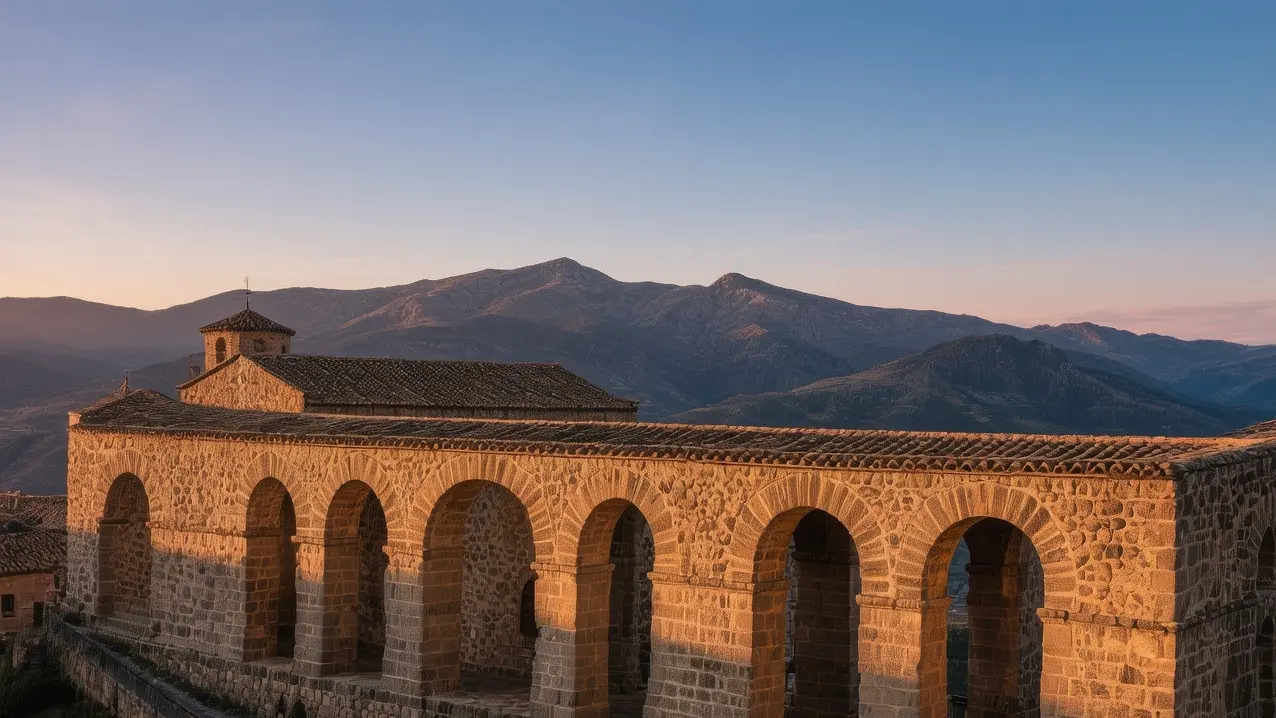
Dawn breaks over the Cárdenas valley as mist clings to limestone cliffs—1,500 years of monastic silence punctuated only by the distant tolling of bells and the whisper of wind through cypress trees. You stand before San Millán de Suso, its Visigothic horseshoe arches glowing amber in the first light, while below in the valley floor, the Renaissance grandeur of San Millán de Yuso emerges from shadow. These twin monasteries—separated by just 200 meters but divided by ten centuries of architectural evolution—guard a treasure far more precious than gold: the Glosas Emilianenses, those marginal annotations scribbled by anonymous monks around 950 AD that mark the birth of written Spanish and Basque. Founded by Saint Emilianus (473–574 AD) in a remote cave that still exists within the upper monastery's sacred precinct, this UNESCO World Heritage Site (inscribed 1997) represents the cradle of Hispanic culture. In 2026, as digital communication fragments language and erodes cultural memory, walking these hallowed stones matters profoundly—not as a pilgrimage to the past, but as a reminder that words, once written, can outlast empires.
Why San Millán Monasteries Embody the Birth of Spanish Culture
The Monasteries of San Millán de la Cogolla solve a fundamental human need: the preservation of identity through language. When Visigothic monk Emilianus retreated to this remote valley in the Sierra de la Demanda at age 19, seeking solitude in a cave that measures barely 3 meters wide, he couldn't have known his hermitage would evolve into the intellectual crucible where Spanish (Castilian) and Basque first emerged as written languages distinct from Latin. The Glosas Emilianenses—marginal notes translating Latin religious texts into early Romance and Basque—represent the oldest surviving written evidence of both languages, making these monasteries the linguistic equivalent of Rosetta Stone for 500 million Spanish speakers worldwide.
Architecturally, the complex presents a masterclass in religious evolution: San Millán de Suso (the upper monastery) showcases 10th-century Mozarabic construction with its three-nave basilica measuring 22 meters long, featuring horseshoe arches with a 2:1 height-to-width ratio typical of Visigothic design, while the 12th-century Romanesque additions include a portico with intricately carved capitals depicting biblical scenes and Visigothic motifs. The hermit's cave, incorporated into the church's southern wall, maintains its original 6th-century stone altar. Below, San Millán de Yuso (the lower monastery), constructed between the 11th and 16th centuries, displays Renaissance grandeur: its church rises 30 meters to the dome, the cloister features 54 Doric columns arranged in a 40-meter square, and the library houses 30,000 volumes including 289 incunabula (pre-1501 printed books).
The monasteries fulfilled critical medieval needs beyond spirituality: they served as scriptoriums producing illuminated manuscripts, agricultural innovation centers experimenting with vineyard cultivation in Rioja's challenging climate, and educational institutions training clergy who would spread literacy across northern Spain. The 2015–2023 conservation project (€4.2 million funded by Spain's Ministry of Culture and UNESCO) stabilized the Suso monastery's deteriorating sandstone façade using traditional lime mortar techniques, ensuring these structures survive for future generations to trace the evolution of their mother tongue.
The Best Time to Experience San Millán Monasteries
For optimal conditions—when mountain light creates dramatic contrasts on ancient stone and Rioja's vineyards display their full seasonal palette—target May 10–June 25 or September 15–October 20. During these windows, daytime temperatures range 16–24°C (61–75°F), while mornings dip to 6–11°C (43–52°F)—perfect for exploring both the exposed upper monastery and the cooler stone interiors without summer crowds or winter's potential snow closures.
For photography and spiritual atmosphere, arrive at San Millán de Suso between 8:00–9:30 AM, when eastern sunlight illuminates the Mozarabic arches and the valley remains shrouded in mist. The golden hour before sunset—approximately 8:30–9:45 PM in June, 7:00–8:00 PM in September—casts long shadows across Yuso's Renaissance cloister, creating ideal conditions for capturing the interplay of light on sandstone. Visit Tuesday through Thursday to avoid weekend pilgrims from Burgos and Logroño; Saturday mornings see visitor numbers reach 300+ people.
Avoid July 15–August 20 unless you tolerate temperatures exceeding 30°C (86°F) with minimal shade on the steep path between monasteries. December through February brings frequent snow (averaging 8–12 snowy days per month) and temperatures dropping to -2 to 5°C (28–41°F); while the snow-covered monasteries create stunning photography opportunities, the access road from Logroño (N-120) can close without warning. For the feast day atmosphere, target November 12 (San Millán's feast day) when traditional Basque-Navarrese pilgrims walk the 15-kilometer route from Santo Domingo de la Calzada, but expect crowds and book accommodations three months ahead.
Approximate Budget for a 7-Day Trip (2026)
This budget reflects mid-range travel with comfortable accommodations, quality dining, and comprehensive cultural experiences—based on 2025 pricing adjusted for Spain's projected 3.2% inflation rate for 2026. San Millán de la Cogolla sits in rural La Rioja, where costs run 25–35% lower than major cities like Madrid or Barcelona, though specialized wine tourism experiences command premium pricing.
Accommodation: €65–€140 per night
- Rural casa rural in San Millán village: €65–€85 (Casa Rural Cogolla)
- Boutique hotel in nearby Santo Domingo de la Calzada (20 km): €95–€140 (Parador Santo Domingo)
- Monastery guesthouse (limited availability): €55–€75 (requires advance booking)
Food: €35–€60 per day
- Breakfast: €5–€8 (coffee, tostada, fresh orange juice at Bar Cogolla)
- Lunch: €12–€20 (menú del día: Rioja-style lamb, patatas a la riojana, or grilled trout with wine included)
- Dinner: €18–€32 (traditional asador: suckling pig or lamb chops, Rioja wine, dessert)
Transportation:
- Round-trip bus Logroño to Santo Domingo de la Calzada (Line 142): €14.80
- Taxi Santo Domingo to San Millán (20 km): €28 one-way
- Rental car (7 days, compact): €240–€310 (essential for winery visits)
- Fuel for regional exploration (350 km): €48–€58
- Train Madrid to Logroño (RENFE Alvia): €42–€68 one-way
Attractions & Experiences:
- Combined monastery ticket (Suso + Yuso): €8
- Guided tour with Glosas Emilianenses expert: €12 (advance booking required)
- Museum of the Spanish Language: €4
- Winery tour (Bodegas Contino or Roda): €18–€35
- Camino de Santiago walking tour (half-day): €25
Miscellaneous:
- Bottle of Rioja Gran Reserva (to ship home): €22–€55
- Local artisan cheese (Idiazábal DOP): €14–€20
- Travel insurance (7 days): €25–€40
- Souvenirs and incidentals: €40–€70
Total for 7 days (mid-range): €980–€1,280 per person (excluding international flights)
6 Essential San Millán Monasteries Experiences
- Explore San Millán de Suso at Opening: Arrive at 10:00 AM when the upper monastery opens, allowing you to experience the Visigothic basilica in near-solitude. Enter through the 12th-century Romanesque portico, noting the carved capitals depicting Daniel in the lions' den and Visigothic knotwork. Crawl through Saint Emilianus's original 6th-century cave (ceiling height: 1.8 meters), where a stone altar still bears 1,500-year-old chisel marks. The hermitage's southern wall incorporates the cave's natural rock face—touch the cool limestone where the saint prayed. Allow 45 minutes; photography without flash is permitted.
- Study the Glosas Emilianenses Facsimile: In Yuso's museum, examine the high-resolution facsimile of codex Aemilianensis 60, the actual manuscript containing the first written Spanish and Basque words. Look for marginal note 42: "Cono aiutorio de nuestro dueno Cristo" (With the help of our Lord Christ)—the oldest surviving Spanish sentence. The museum's interactive digital station lets you compare Latin text with Romance glosses side-by-side. Spend 30 minutes here; the €4 museum ticket includes audio guide in five languages.
- Walk the Cloister of Yuso: Enter the Renaissance cloister at 11:30 AM when sunlight streams through the arcade, illuminating the 54 Doric columns quarried from local sandstone. Notice the 16th-century murals depicting Saint Emilianus's life in the upper gallery. The cloister's 40-meter square layout follows Vitruvian proportions; pause at the central fountain (1588) where monks washed before meals. The library entrance—featuring a Plateresque doorway carved by Juan de Rasines—leads to a reading room housing incunabula including a 1492 Nebrija grammar (the first Spanish grammar book). Allow 40 minutes.
- Attend Monastic Chant (Seasonal): From June to September, the monastery hosts Gregorian chant concerts in Yuso's church on Saturday evenings at 8:00 PM (€15). The 30-meter vaulted ceiling creates 4.2-second reverberation, transforming simple chants into transcendent experiences. The Benedictine community from nearby monasteries performs polyphonic masses composed between 1550–1650, using the same acoustic space as medieval monks. Book online at least two weeks ahead; concerts sell out monthly.
- Hike to Santa Cecilia Hermitage: This 10-minute uphill walk (400 meters, 50-meter elevation gain) from Suso leads to a 12th-century hermitage perched on a cliff overlooking the valley. The single-nave Romanesque chapel contains faded 13th-century frescoes depicting the Last Judgment. Arrive at 5:00 PM for optimal lighting; the western exposure illuminates the apse frescoes. The hermitage opens daily 10:00 AM–7:00 PM (summer), 10:00 AM–5:00 PM (winter); no entrance fee, donations accepted.
- Visit the Museum of the Spanish Language: Located in the monastery's former pilgrim hospital (built 1540), this modern museum traces Spanish evolution from the Glosas Emilianenses to modern digital communication. The highlight: a 12-meter touchscreen timeline showing how 300 Visigothic marginal notes became the foundation of a global language. Interactive stations let you record your voice comparing medieval Spanish pronunciation with modern variants. Open Tuesday–Sunday, 10:00 AM–2:00 PM and 4:00–7:00 PM; combined ticket with monasteries €10.
3 Hidden Gems Most Travelers Miss
- San Millán's Scriptorium Recreation: Tucked in Yuso's west wing, this small room recreates a 10th-century scriptorium with authentic tools: quills cut from goose feathers, iron-gall ink prepared from oak galls, and vellum stretched on wooden frames. Most visitors rush past, but the volunteer calligrapher (present Tuesday and Thursday, 11:00 AM–1:00 PM) demonstrates how monks wrote the Glosas using Carolingian minuscule script. Request permission to try writing your name in Visigothic script—it takes 20 minutes and creates a unique souvenir. No additional cost; tips appreciated.
- Cueva de San Millán Pilgrim Path: While 90% of visitors drive between the monasteries, the original pilgrim path winds through oak forest along the Cárdenas stream, passing three small 11th-century shrines marking Saint Emilianus's meditation spots. The 1.2-kilometer trail (30-minute walk) begins behind Suso's parking area, marked by yellow-and-white Camino de Santiago markers. Stop at the Fuente del Santo (Saint's Fountain), where a natural spring emerges from limestone; locals believe the water has healing properties. Best walked at 7:00–8:00 AM when birdsong fills the valley. Bring sturdy shoes; the path can be muddy after rain.
- Biblioteca de los Manuscritos (Manuscript Library): By advance appointment only, scholars and serious history enthusiasts can request access to view digitized manuscripts in Yuso's climate-controlled reading room. While the original Glosas codex resides in Madrid's Real Academia de la Historia, San Millán preserves 47 medieval manuscripts on local history, agriculture, and theology. Email biblioteca@sanmillan.org at least 14 days ahead, specifying your research interest. The librarian, Dr. María José Rodríguez (contact: +34 941 373 312 ext. 24), provides expert context on 10th-century monastic life. Free for researchers; €15 administrative fee for non-academic visitors.
Cultural & Practical Tips
- Language respect: While Spanish is universal, this region of La Rioja borders Basque Country, and some locals speak Euskera. Learn these phrases: Eskerrik asko (es-keh-reek ash-koh = thank you in Basque), Gracias (GRAH-see-ahs = thank you in Spanish), ¿Dónde está el monasterio? (DON-deh es-TAH el moh-nahs-TEH-ree-oh = where is the monastery?). Using Basque greetings in San Millán shows cultural awareness of the region's linguistic diversity.
- Monastery etiquette: San Millán de Yuso remains an active religious community with six resident monks. Maintain silence in cloisters and churches; mobile phones must be silenced. Women should cover shoulders when entering sacred spaces (carry a light scarf). Photography is prohibited during Mass (Sunday 12:00 PM) and monastic prayer times (7:00 AM, 12:00 PM, 7:00 PM).
- Photography guidelines: Tripods require written permission from the San Millán Foundation (email patrimonio@sanmillan.org 7 days ahead). Flash photography damages 13th-century frescoes in Suso—use natural light or high ISO settings (1600–3200). The best interior shots occur 11:00 AM–1:00 PM when sunlight penetrates the nave windows. Drone use is strictly prohibited within 500 meters of the monasteries (UNESCO buffer zone).
- Weather preparation: The valley sits at 765 meters (2,510 feet) elevation; temperatures drop 6°C for every 1,000 meters climbed. Even in summer, bring a light jacket for early morning visits to Suso (exposed hillside location). Autumn and spring bring sudden rain showers—pack a waterproof layer. Winter snow can close the N-120 access road; check AEMET weather service (www.aemet.es) before traveling December–March.
- Dining schedules: Rural La Rioja follows traditional Spanish meal times: lunch 2:00–4:00 PM, dinner 9:00–11:00 PM. Many restaurants in San Millán village close between 4:00–8:00 PM; plan accordingly. For authentic Rioja cuisine, try menestra de verduras (vegetable stew), chuletillas al sarmiento (lamb chops grilled over vine shoots), and of course, Rioja wine—order crianza (aged 2 years) for €12–€18 per bottle.
- Accessibility considerations: San Millán de Suso involves steep, uneven paths and 47 stone steps—unsuitable for wheelchairs or visitors with mobility issues. San Millán de Yuso offers partial accessibility: the church and museum have ramps, but the cloister's three steps lack handrails. Wheelchair users should call ahead (+34 941 373 312) to arrange alternative viewing routes. Audio guides available in Spanish, English, French, German, and Basque.
- Camino de Santiago connection: San Millán lies on the Camino Ignaciano (St. Ignatius Way) and 8 km from the main Camino Francés. Pilgrims with credenciales (pilgrim passports) receive discounted monastery entry (€5 instead of €8) and can stay at the pilgrim hostel (€8 donation, first-come-first-served, 20 beds). The hostel opens 2:00–10:00 PM; arrive before 9:00 PM to secure a bed.
Conclusion: Travel with Reverence, Not Just Checklists
The Monasteries of San Millán de la Cogolla don't require your admiration—they've inspired kings, scholars, and pilgrims for fifteen centuries without validation from guidebooks or Instagram. What they deserve is your reverence: the patience to sit in Saint Emilianus's cave and contemplate how a hermit's solitude birthed a global language; the curiosity to trace how marginal notes in Latin texts became the foundation of Spanish literature; the humility to recognize that these stones witnessed the evolution of human expression itself. In 2026, as artificial intelligence generates text faster than monks could copy manuscripts, San Millán reminds us that language isn't merely data—it's the soul of culture, painstakingly preserved by hands that knew their work would outlast them. Walk these cloisters slowly. Touch the Visigothic stone gently. Speak softly in the scriptorium where Spanish took its first breath. Let the silence teach you that preservation isn't about freezing time—it's about honoring the continuum between those who came before and those who will follow. The Glosas Emilianenses survived Visigothic collapse, Moorish conquest, and modern neglect; they'll endure long after our digital footprints fade. The question isn't whether these monasteries will survive—it's whether we'll be worthy of the legacy they guard.