
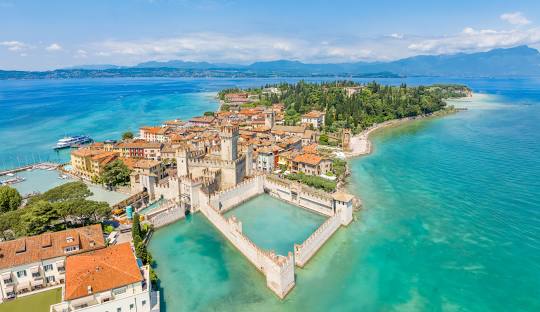
Lake Garda – Sirmione Alpine Light Meets Mediterranean Soul
The late sun gilds the waters of Lake Garda—turning its surface into liquid amber as it laps gently against the limestone walls of Sirmione’s Scaliger Castle. You hear the distant chime of boat bells, the rustle of olive leaves in the breeze, and the murmur of Italian families gathering on the narrow lanes of this peninsula village. Jutting 4 kilometers into Italy’s largest lake, Sirmione has been a sanctuary since Roman times—when poet Catullus built his villa here in the 1st century BCE. Today, its charm lies in the rare fusion of alpine grandeur and Mediterranean ease: cypress trees frame views of snow-capped Dolomites, lemon groves thrive beside vineyards, and thermal springs bubble beneath ancient ruins. The Scaliger Castle, completed in 1277, stands sentinel at the peninsula’s tip—a masterpiece of medieval military architecture with three towers and a fortified harbor. In 2026, as overtourism strains lakeside towns, Sirmione balances its allure with strict visitor management, proving that beauty and sustainability can coexist—if approached with care.
Why Lake Garda – Sirmione Embodies Peninsula Perfection
Sirmione isn’t just picturesque—it’s a geological and historical marvel shaped by water and time. Formed by glacial activity over 10,000 years ago, Lake Garda stretches 52 kilometers long and reaches depths of 346 meters, creating a microclimate where olive trees, palms, and citrus flourish despite its northern latitude. Sirmione’s narrow peninsula—just 400 meters wide at its base—was a strategic stronghold for the Scaligeri lords of Verona, who built their castle between 1262 and 1277 to control lake traffic. The fortress features a rare double moat (one filled with lake water, the other dry), three imposing towers, and a dock inside the walls—making it one of Europe’s best-preserved medieval harbors. Just steps away, the Grotte di Catullo—Roman ruins of a 2nd-century BCE villa—reveal thermal baths, mosaic floors, and panoramic terraces where the poet once penned his verses. This layered history—Roman, medieval, and modern—makes Sirmione not a resort, but a living archive where every cobblestone whispers of empires, poets, and thermal healers.
The Best Time to Experience Lake Garda – Sirmione
To enjoy Sirmione’s luminous beauty and manageable crowds, target the precise window of May 18–June 12, 2026. During these weeks, daytime temperatures range from a comfortable 19–25°C (66–77°F)—ideal for swimming, castle exploration, and lakeside walks [[24], [27]]. Mornings between 8:00–9:30 AM offer empty streets, calm water for photography, and the chance to explore the Scaliger Castle before tour groups arrive. Alternatively, September 10–24, 2026 provides similar conditions with golden light and fewer day-trippers. Avoid visiting during peak periods: all of July and August, when heat exceeds 32°C (90°F), ferry queues stretch for hours, and hotel rates triple, and major holidays like Ferragosto (August 15) [[29]]. For the most magical experience, stay overnight—day visitors vanish by 6:00 PM, revealing the village’s quiet, residential soul. Always verify ferry schedules via the official Navigazione Lago di Garda website (navigazionegarda.it).
Approximate Budget for a 7-Day Trip (2026)
This budget reflects mid-range 2025 pricing adjusted for Italy’s projected 2026 inflation rate of 1.5% [[37]], offering a realistic estimate for a solo traveler based in Sirmione or nearby Desenzano.
- Accommodation: €840–€1,120 total (€120–€160 per night) for a boutique guesthouse or private apartment in Sirmione’s historic center—steps from the castle and lakefront.
- Food: €490 total (€70 per day). Breakfast at a café (€4 for cappuccino and cornetto); lunch of bigoli pasta with duck ragù (€15); dinner at a family-run osteria (€45 for risotto with perch, grilled lake fish, and house Bardolino wine).
- Transportation: €75 total. Includes train from Milan or Verona (€20 round-trip); ferry pass for 7 days (€45); and occasional taxi for luggage (€10).
- Attractions: €65 total. Scaliger Castle entry (€8); Grotte di Catullo (€6); guided thermal springs walk (€20); boat tour to Isola del Garda (€25); and gelato from Gelateria Pasticceria Pineta (€4).
- Miscellaneous: €90 total. A high-quality print of the castle (€25); locally made olive oil (€20); leather journal from Libreria La Bottega del Libro (€30); and aperitivo at Bar Centrale (€4).
Total Estimated Budget: €1,560–€1,850
6 Essential Lake Garda – Sirmione Experiences
- Enter Scaliger Castle at Dawn: Arrive by 8:00 AM to explore the fortress ramparts and inner harbor in solitude. Climb the 47-meter tower for panoramic views of the lake and Dolomites—an unmatched vantage point.
- Walk the Grotte di Catullo at Sunrise: Stroll through the Roman villa’s thermal baths and olive groves as morning light filters through ancient arches—the same path Catullus walked 2,000 years ago.
- Swim at Jamaica Beach: Just a 15-minute walk from the center, this rocky cove offers crystal-clear water and smooth stones perfect for sunbathing—far quieter than the main lido.
- Take the Sunset Ferry to Desenzano: Board the 6:30 PM public ferry for a 20-minute ride along the peninsula’s edge. Watch Sirmione glow rose-gold as the lake turns to glass.
- Dine on Via Santa Maria Maggiore: At Osteria Al Pozzo, enjoy a plate of tortellini in brodo seated on a centuries-old stone alley—the heart of Sirmione’s culinary tradition.
- Visit the Thermal Springs of Virgilio: Book a guided walk to these natural hot springs north of town, where warm, mineral-rich waters have healed since Roman times.
3 Hidden Gems Most Travelers Miss
- Chiesa di San Pietro in Mavino: Tucked near the castle, this 8th-century church features Lombard frescoes and a peaceful cloister—often empty even in high season.
- Viale delle Palme Secret Path: Behind the main street, this shaded lane lined with palm trees leads to hidden courtyards and artisan workshops—ideal for quiet photography.
- Libreria La Bottega del Libro: Established in 1985, this independent bookstore specializes in lake history and poetry. Its reading nook overlooks the water—a perfect reflective pause.
Cultural & Practical Tips
- Use ferries, not cars: Sirmione bans private vehicles beyond the causeway. Park in the large lot (€25/day) and explore on foot or by public ferry.
- Wear water shoes: Rocky beaches like Jamaica require sturdy footwear. Flip-flops won’t suffice for safe swimming.
- Respect residential life: These are working homes, not photo backdrops. Keep noise down after 10:00 PM, and never block doorways for selfies.
- Learn key phrases: “Dov’è il castello?” (doh-VEH eel kah-STEL-loh?) for directions; “Grazie mille” (GRAHT-see-eh MEE-leh) for sincere thanks.
- Carry cash for small vendors: Many cafés and boutiques don’t accept cards. Tipping isn’t expected, but rounding up is appreciated.
Conclusion: Travel with Presence, Not Just Postcards
In 2026, Sirmione invites more than admiration—it calls for mindful presence. Your choice to stay overnight eases pressure on daily infrastructure; dining at a family osteria supports generational artisans; swimming responsibly honors the lake’s fragile ecosystem. Slow down: taste wine pressed from local grapes, listen to the rhythm of waves against ancient stone, watch the light shift on Scaliger battlements as it has for centuries. By traveling with presence—prioritizing connection over content—you help ensure Sirmione remains not just a backdrop for luxury, but a living community where history, nature, and hospitality thrive together. Let your visit be a quiet promise: that beauty, carefully tended, can endure along this luminous shore.