
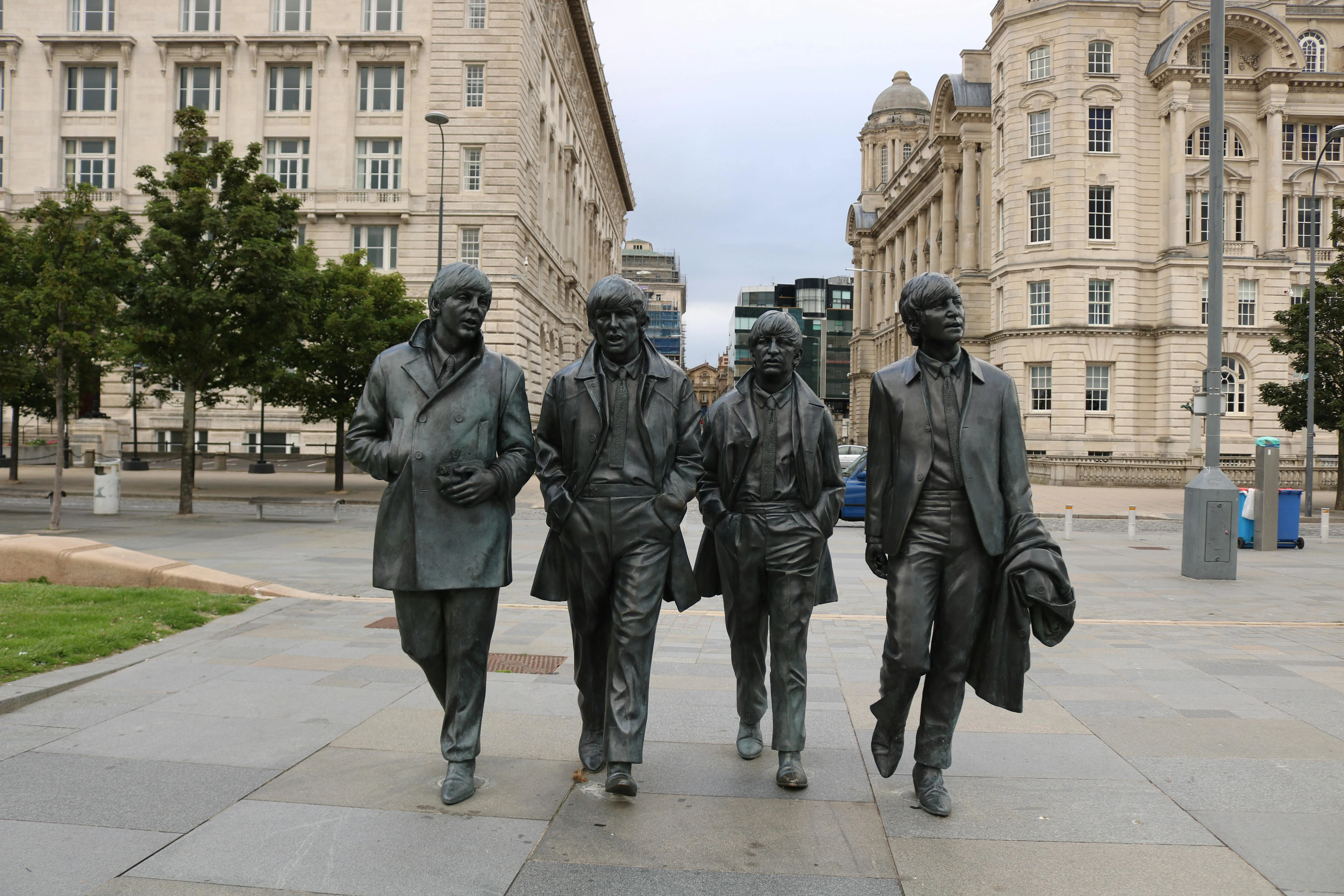
Liverpool Beatles Sites Musical Legends Meet Mersey Sound
Brick dust mingles with the scent of rain as dawn breaks over Mathew Street—echoing with the ghost of guitar riffs that changed popular music forever. You stand outside the Cavern Club, the red-brick archway rising 8 meters (26 feet) above the cobbled street where John, Paul, George, and Ringo played 292 times between 1961 and 1963. The Beatles' story began in these streets of Liverpool, a port city that exported culture as vigorously as it imported goods, transforming working-class neighborhoods into the birthplace of the British Invasion. As you trace the weathered surface of the Penny Lane sign, looking toward the shelter where Paul McCartney waited for buses to John Lennon's home, you realize these Liverpool Beatles sites matter now more than ever: in an era of digital streaming and virtual concerts, they offer a tangible connection to the physical spaces where creativity flourished, preserving the authentic roots of a musical revolution that continues to shape global culture in 2026.
Why Liverpool Beatles Sites Embodies Musical Heritage
The Liverpool Beatles sites are not merely tourist attractions; they are forensic records of a cultural phenomenon that reshaped the 20th century. From the humble terrace houses of 20 Forthlin Road and 251 Menlove Avenue to the iconic Cavern Club and Penny Lane, these locations solved a critical creative need: providing spaces where four working-class youths could experiment with sound, develop their craft, and ultimately redefine popular music. The architecture of these sites tells a story of post-war Britain—red-brick Victorian terraces, air-raid shelters repurposed as practice rooms, and dance halls that hosted the Merseybeat explosion. Technical details matter: the Cavern's 800-person capacity, the specific acoustics of the Mathew Street cellar, the 12-bar blues structures practiced in those cramped living rooms—all contributed to a sound that traveled 5,000 kilometers to conquer America.
Today, these sites fulfill a cultural need for authenticity in an increasingly manufactured entertainment industry. Managed by National Trust, Liverpool City Council, and private operators, the locations host over 2.5 million visitors annually who walk the same pavements as the Fab Four. The preservation efforts ensure that 20 Forthlin Road remains exactly as Paul McCartney left it in 1964, while Penny Lane retains its 1960s character despite urban development. When you visit these Liverpool Beatles sites, you traverse a landscape where creativity emerged from constraint, where limited resources spawned innovation, and where local talent achieved global impact. The sites represent a continuous thread of musical heritage, preserved by organizations that now maintain the brickwork against the erosion of time and the pressures of mass tourism, ensuring that future generations can experience the authentic spaces where "Love Me Do" became "I Want to Hold Your Hand," and where Liverpool changed the world.
The Best Time to Experience Liverpool Beatles Sites
To witness the Liverpool Beatles sites in optimal conditions, plan your visit between May 18 and June 12. During this window, temperatures average 14-19°C (57-66°F), and daylight extends until 9:15 PM, maximizing time for photography and site visits. The best light for capturing the red-brick architecture occurs between 7:30-9:30 AM when morning mist lifts off the Mersey, and 6:00-8:00 PM for golden hour illumination on Mathew Street. Visiting early also allows you to explore Penny Lane before tour groups arrive from Manchester, typically between 11:00 AM and 3:00 PM.
Autumn offers a secondary window—specifically September 10 to October 15—when summer crowds dissipate and the Mersey takes on a dramatic grey beauty. Temperatures remain mild at 12-17°C (54-63°F), though daylight hours shorten rapidly. Avoid August 1-15 when the Liverpool International Music Festival and school holidays push visitor numbers above 10,000 daily, creating congestion at the Cavern Club and limited availability for house tours. Winter months (November-February) offer solitude but challenging conditions; some outdoor sites close early, and sunset occurs as early as 4:05 PM in December. For current opening hours and tour availability,.
Approximate Budget for a 7-Day Trip (2026)
Exploring the Liverpool Beatles sites and the wider Merseyside region requires moderate budgeting, as Liverpool offers excellent value compared to London. The following budget reflects mid-range travel for one person in 2026, accounting for approximately 4.2% UK inflation (ONS data, January 2026). Prices assume a base in Liverpool City Centre or the Baltic Triangle for optimal access to the Beatles trail and transport links.
- Accommodation: £75-£130 per night for a boutique hotel or B&B in City Centre (6 nights = £450-£780). Budget options: £40-£60 for hostels in the Georgian Quarter or camping at Crosby Beach.
- Food: £40-60 per day total • Breakfast: £8-12 (Full English at The Art School) • Lunch: £10-15 (Scouse stew at The Philharmonic Dining Rooms) • Dinner: £22-33 (Three-course meal at The London Carriage Works or Maray)
- Transportation: • Train London Euston to Liverpool Lime Street: £55-95 return (advance booking) • Local bus (Arriva routes 86, 75, 76): £4.50 day pass • Merseyrail pass: £12/day • Car rental (optional): £55/day plus fuel £1.58/liter • Parking at City Centre: £18/day (March-October)
- Attractions: • The Beatles Story Museum: £19.50 • Cavern Club Tour: £15 • National Trust Houses (20 Forthlin Road, 251 Menlove Avenue): £16.50 • Magical Mystery Tour Bus: £22 • Free: Penny Lane, Strawberry Field, Mathew Street
- Miscellaneous: • Ordnance Survey Explorer Map 276: £10.99 • Beatles vinyl records: £40-80 • Travel insurance: £35-55 for week • Waterproof gear rental: £20
Total estimated cost: £1,200-£1,550 for 7 days (excluding international flights)
5 Essential Liverpool Beatles Experiences
- Walk Penny Lane at Sunrise: Arrive at the Penny Lane roundabout by 7:00 AM to photograph the iconic street sign before crowds. The barber shop, bank, and shelter mentioned in the song remain visible. Spend 45 minutes walking the route Paul McCartney took to John Lennon's home. Bring a windbreaker; exposure near the Mersey creates wind chill 5°C below city temperatures. This experience connects you to the specific geography that inspired one of the Beatles' most nostalgic songs.
- Visit 20 Forthlin Road: Book the National Trust tour (departs hourly from 10:00 AM). This is where Paul McCartney wrote "I Saw Her Standing There" and "Love Me Do." The 1930s semi-detached house remains frozen in 1964. Spend 60 minutes exploring the rooms where the Beatles rehearsed. The scent of old carpet and wood polish fills the air. This context enriches your understanding of the working-class origins of the band.
- Explore the Cavern Club: Descend the 12 steps into the rebuilt cellar club on Mathew Street. Entry is £15 for the tour. Spend 90 minutes examining the memorabilia and brickwork. The acoustics remain similar to the 1960s. Live music performs nightly from 8:00 PM. This experience demonstrates the intimate venue where the Beatles honed their craft through 292 performances.
- Take the Magical Mystery Tour: Board the vintage bus at Pier Head at 10:00 AM. The 90-minute tour visits Strawberry Field, Penny Lane, and childhood homes. The guide provides historical context and plays relevant songs. Cost is £22. This experience offers comprehensive coverage of all major sites with expert commentary.
- Visit Strawberry Field: Travel to this Salvation Army children's home that inspired "Strawberry Fields Forever." The red gates and grounds are open daily from 10:00 AM-6:00 PM. Entry is free. Spend 30 minutes in the gardens. The site now includes a visitor center and recording studio. This experience connects you to John Lennon's childhood sanctuary and creative inspiration.
3 Hidden Gems Most Travelers Miss
- 251 Menlove Avenue (John Lennon's Childhood Home): While crowds cluster at Paul's house, John's childhood home with Aunt Mimi remains surprisingly quiet. Access via National Trust tour only (book 2 weeks ahead). The 1930s semi-detached house contains John's childhood bedroom and piano. Visit between 2:00-4:00 PM when light hits the garden. No facilities exist on-site—bring water. The National Trust notes this property offers intimate insight into Lennon's formative years and musical development.
- The Casbah Coffee Club: Located 5 kilometers west in West Derby, grid reference SJ425925, lies the club Pete Best's mother founded in 1959. Access via bus route 20 or car. The cellar club retains its original hand-painted murals by John Lennon and Stuart Sutcliffe. Visit during weekday afternoons when guided tours occur at 2:00 PM. Entry is £12. This spot demonstrates the pre-Cavern venue where the Beatles (then the Quarrymen) played their earliest gigs, offering a raw view of the scene before fame.
- Forthlin Road Practice Room: Contact National Trust (+44 (0)151 427 7231) for access to the garden shed where the Beatles rehearsed. The small wooden structure contains replica instruments. Access is restricted to specific tour times on Thursdays at 11:00 AM. The space offers a tangible connection to the creative process, showing how four teenagers transformed a garden shed into a songwriting factory that changed popular music forever.
Cultural & Practical Tips
- Respect the neighborhoods: These are residential areas, not theme parks. Do not knock on doors or peer through windows. Follow National Trust guidelines regarding private property. Keep voices low on residential streets. The Council reports 10-15 incidents annually due to fans disturbing residents.
- Understand the terrain: Liverpool is walkable but hilly. Check www.visitliverpool.com for weather warnings. Wear comfortable shoes with good grip—cobbled streets and cellar steps can be slippery. If using public transport, purchase a day saver ticket for unlimited travel.
- Leave no trace: Remove all litter, including biodegradable items. The City Council collects 15 tonnes of waste annually from Mathew Street. Do not remove bricks or memorabilia—this violates heritage protection laws. Photograph specimens in situ instead.
- Learn local terminology: "Scouse" (local dialect/stew); "Cavern" (cellar club); "Merseybeat" (musical style). Using these terms shows respect for local heritage and helps guides assist you better during tours.
- Photography guidelines: Tripods are permitted outdoors but restricted inside museums during busy periods. Drone use requires written permission from Liverpool City Council and Civil Aviation Authority—apply 6 weeks in advance. Respect other visitors; do not block pathways for extended shoots during peak hours (11:00 AM-3:00 PM).
- Weather preparedness: Liverpool is exposed to Mersey winds; wind chill is common even in summer. Pack waterproof layers; rain occurs on 140+ days annually. Wear sturdy shoes with grippy soles—Victorian paving becomes slippery when wet. Sun protection is essential; reflection from the Mersey increases UV exposure by 20%.
- Accessibility considerations: The Cavern Club involves steps and is not wheelchair accessible. National Trust houses have limited accessibility. Alternative viewing exists from street level. Request an accessibility map at the visitor center upon arrival.
Conclusion: Travel with Reverence, Not Just Nostalgia
The Liverpool Beatles sites do not exist merely to be photographed—they exist to be understood as the physical foundation of a cultural revolution. When you walk these streets in 2026, you are not chasing ghosts; you are entering spaces where four working-class lads transformed limitation into innovation, where garden sheds became songwriting factories, and where cellar clubs became global stages. The bricks of 20 Forthlin Road remain, but the music that echoed within them lives on in billions of streams. The Cavern's steps descend to the same cellar, but the energy that pulsed through that space continues to inspire new generations. This is not heritage frozen in amber—it is heritage living, breathing, evolving.
So slow down. Sit on the Penny Lane shelter for ten minutes without your phone. Listen to the wind that once carried the sounds of practice sessions and now carries the laughter of schoolchildren. Buy your lunch from a café whose owners pay rates that support the local community. Donate to the National Trust rather than purchasing mass-produced memorabilia. Leave only footprints on cobbled streets, take only memories of brick and melody, carry home only the profound understanding that some things—creativity, community, cultural impact—cannot be rushed, cannot be owned, can only be honored. These sites will still inspire in 2126 if we choose stewardship over exploitation today.