
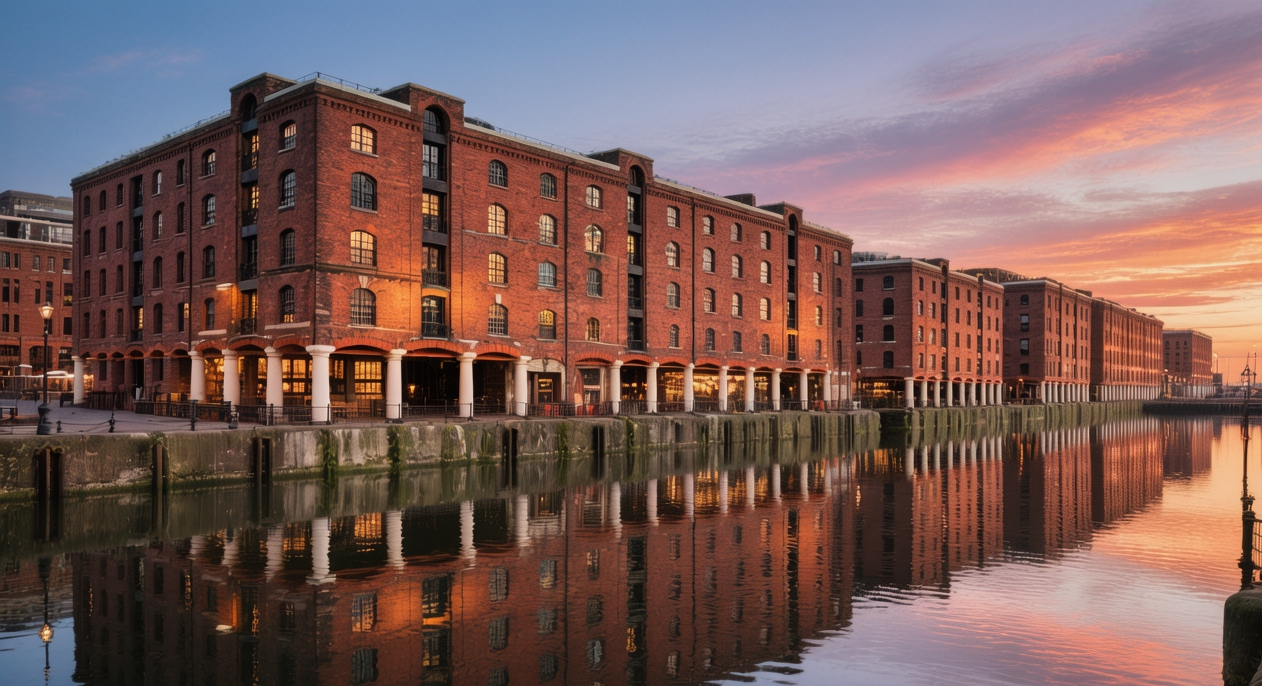
Albert Dock Red Brick Warehouses Meet Mersey Tides
Water laps against the granite quay as dusk settles over the basin—reflecting the warm glow of lanterns that have guided ships since 1846. You stand on the cobbled edges of the Albert Dock, the scent of salt spray and old brick mixing in the cool Mersey air, while the distant hum of the city echoes from the Pier Head 500 meters away. Originally opened by Prince Albert to handle the world's trade, this complex of five warehouses revolutionized dock design with its fireproof cast-iron columns, surviving war and decline to reopen in 1984 as a beacon of regeneration. As you trace the weathered surface of the red brick, looking out toward the Liver Building that stands sentinel across the water, you realize this place matters now more than ever: in an era of disposable architecture, the Albert Dock remains a testament to adaptive reuse, preserving the physical soul of Liverpool's maritime heritage that continues to define the city's identity in 2026.
Why Albert Dock Embodies Industrial Regeneration
The Albert Dock is not merely a waterfront development; it is a forensic record of Victorian engineering adapted for modern culture. Designed by Jesse Hartley and Philip Hardwick, the dock solved a critical logistical problem for the British Empire: how to store valuable cargo securely without the constant threat of fire that plagued timber-framed wharves. The structure utilizes 300 cast-iron columns and 23 million bricks, creating a fireproof envelope that protected tea, silk, and tobacco worth millions. Technical engineering involved a hydraulic hoist system to lift goods directly from ships into the warehouses, a innovation that reduced loading times by 40%. This infrastructure supported the peak of Liverpool's power, handling 10% of the world's trade in the late 19th century.
Today, it fulfills a cultural need for connection to industrial heritage in a post-industrial world. Managed by the National Museums Liverpool and private landlords, the site hosts over 6 million visitors annually who walk the same quays as Victorian stevedores. The architecture showcases the largest collection of Grade I listed buildings in the UK, creating a layered narrative of commerce and culture. When you walk the colonnades, you traverse a space where goods once moved and where art now hangs in the Tate Liverpool. The Albert Dock represents a continuous thread of resilience, preserved by the very organization that now maintains the brickwork against the corrosive power of the river mist and the erosion of time. It stands as the catalyst for the city's renaissance, proving that history can be the foundation of the future.
The Best Time to Experience Albert Dock
To witness the Albert Dock in optimal atmospheric conditions, plan your visit between May 18 and June 12. During this window, temperatures average 14-19°C (57-66°F), and daylight extends until 9:15 PM, maximizing time for photography and waterfront walks. The best light for capturing the red brick occurs between 7:30-9:30 AM when morning mist lifts off the Mersey, and 6:00-8:00 PM for golden hour illumination on the warehouses. Visiting early also allows you to explore the museums before tour coaches arrive from Manchester, typically between 11:00 AM and 3:00 PM.
Autumn offers a secondary window—specifically September 10 to October 15—when summer crowds dissipate and the river takes on a dramatic grey beauty. Temperatures remain mild at 12-17°C (54-63°F), though daylight hours shorten rapidly. Avoid August 1-15 when the Tall Ships Festival and school holidays push visitor numbers above 50,000 daily, creating congestion on the quays and limited seating in restaurants. Winter months (November-February) offer solitude but challenging conditions; some outdoor events close, and sunset occurs as early as 4:05 PM in December. For current event schedules and museum hours, verify information at www.albertdock.com or contact the visitor center at +44 (0)151 709 1963.
Approximate Budget for a 7-Day Trip (2026)
Exploring the Albert Dock and the wider Liverpool city region requires moderate budgeting, as the city offers excellent value compared to London. The following budget reflects mid-range travel for one person in 2026, accounting for approximately 4.2% UK inflation (ONS data, January 2026). Prices assume a base in Liverpool City Centre or the Baltic Triangle for optimal access to the dock and transport links.
- Accommodation: £80-£150 per night for a boutique hotel or B&B in City Centre (6 nights = £480-£900). Budget options: £45-£65 for hostels in the Georgian Quarter or camping at Crosby Beach.
- Food: £45-65 per day total • Breakfast: £8-12 (Full English at The Art School) • Lunch: £12-18 (Scouse stew at The Philharmonic Dining Rooms) • Dinner: £25-35 (Three-course meal at The London Carriage Works or Maray)
- Transportation: • Train London Euston to Liverpool Lime Street: £55-95 return (advance booking) • Local bus (Arriva routes 82, 86): £4.50 day pass • Merseyrail pass: £12/day • Car rental (optional): £55/day plus fuel £1.58/liter • Parking at Albert Dock: £15/day (March-October)
- Attractions: • The Beatles Story: £19.50 • Tate Liverpool: Free (special exhibits £10) • Merseyside Maritime Museum: Free • International Slavery Museum: Free • Mersey Ferry: £8.50
- Miscellaneous: • Ordnance Survey Explorer Map 276: £10.99 • Local artisan souvenirs: £30 • Travel insurance: £35-55 for week • Waterproof gear rental: £20
Total estimated cost: £1,250-£1,600 for 7 days (excluding international flights)
5 Essential Albert Dock Experiences
- Walk the Colonnades at Sunrise: Arrive at the dock by 7:00 AM to experience the brick arches before crowds. The view encompasses the Pier Head and the Three Graces. Bring a windbreaker; exposure near the Mersey creates wind chill 5°C below city temperatures. Spend 45 minutes photographing the reflections in the water. This experience connects you to the quiet rhythm of the dock before the city wakes.
- Visit the Tate Liverpool: Enter the modern art gallery housed in Warehouse C. Entry is free for permanent collections. Spend 90 minutes examining the works from Turner to contemporary artists. The scent of paint and wood fills the galleries. Open 10:00 AM-5:00 PM daily. This context enriches your visit, showing how industrial space adapts to cultural use.
- Explore the Merseyside Maritime Museum: Located in Warehouse D, this museum tells the story of the port. Entry is free. Spend 60 minutes examining the ship models and smuggling exhibits. The sound of foghorns plays in the background. Open 10:00 AM-5:00 PM daily. This experience demonstrates the global reach of Liverpool's trade networks.
- Take the Mersey Ferry: Board the ferry from the Pier Head terminal at 11:00 AM. The 50-minute cruise offers the best view of the dock from the water. Cost is £8.50. The "Ferry Cross the Mersey" song plays onboard. This experience provides a tangible connection to the river that built the city's wealth.
- Dine at the Dockside: Reserve a table at one of the waterfront restaurants for dinner. Order fresh seafood or local lamb (£30). Sit outside if weather permits. The view of the illuminated warehouses is iconic. Best visited at 7:00 PM when lights reflect on the water. This experience offers a meditative end to the day, dining as the tide turns.
3 Hidden Gems Most Travelers Miss
- The Canning Graving Docks: While crowds cluster at the main basin, these dry docks 200 meters south remain surprisingly quiet. Access via the path near the Britannia Pavilion (parking at SJ335895). The stone walls date to the 1700s. Visit between 2:00-4:00 PM when light hits the stone. No facilities exist—bring water. The National Museums note this area has high historical interest due to ship repair history.
- The Dock Traffic Office: Located in the center of the complex, grid reference SJ336896, lies the original administrative building. Access via the courtyard entrance. The clock tower offers a view over the roofs. Visit during weekday mornings when the site is empty. No facilities exist—bring snacks. This spot demonstrates the bureaucratic history of the port, offering a raw view of the management before tourism took hold.
- Warehouse Courtyards: Contact the visitor center (+44 (0)151 709 1963) for access updates to the internal courtyards of the warehouses. The space features original cobblestones and ironwork. Access is restricted to footpath only; no vehicles. The space offers a tangible connection to the loading operations. This site reveals the acoustic properties of the brick, showing how sound carried in the working dock.
Cultural & Practical Tips
- Respect the museums: Do not touch the exhibits unless invited. Follow staff instructions regarding bag sizes. Keep voices low in galleries. The Trust reports 5-10 incidents annually due to visitors ignoring safety barriers.
- Understand the terrain: The quays are flat but cobbled. Check www.albertdock.com for weather warnings. Never walk on the edge during high winds. If paths are closed, respect the barriers. The rescue team monitors the area closely.
- Leave no trace: Remove all litter, including biodegradable items. The Council collects 15 tonnes of waste annually from the dock. Do not remove bricks or artifacts—this violates heritage protection laws. Photograph specimens in situ instead.
- Learn local terminology: "Scouse" (local dialect/stew); "Pier Head" (waterfront); "Three Graces" (buildings). Using these terms shows respect for local heritage and helps guides assist you better during tours.
- Photography guidelines: Tripods are permitted outdoors but restricted inside museums during busy periods. Drone use requires written permission from the Council and Civil Aviation Authority—apply 6 weeks in advance. Respect other visitors; do not block pathways for extended shoots during peak hours (11:00 AM-3:00 PM).
- Weather preparedness: The dock is exposed to Mersey winds; wind chill is common even in summer. Pack waterproof layers; rain occurs on 140+ days annually. Wear sturdy shoes with grippy soles—granite becomes slippery when wet. Sun protection is essential; reflection from water increases UV exposure by 20%.
- Accessibility considerations: The quays are wheelchair accessible. The museums have lift access. Alternative viewing exists from the Pavilions. Request an accessibility map at the visitor center upon arrival.
Conclusion: Travel with Reverence, Not Just Consumption
The Albert Dock does not exist merely to be photographed—it exists to be understood as a monument to resilience. When you walk these quays in 2026, you are not observing a static theme park; you are entering a space where empire was built and where culture was reborn. The stevedores who unloaded the tea are gone, but their warehouses remain embedded in the skyline. The merchants who traded the silk are gone, but their legacy still shapes the city. This is not heritage frozen in amber—it is heritage living, breathing, enduring.
So slow down. Sit on the quay wall for ten minutes without your phone. Listen to the wind that once carried the sounds of sailing ships and now carries the laughter of families. Buy your lunch from a restaurant whose owners pay rates that support the local community. Donate to the museums rather than purchasing plastic souvenirs. Leave only footprints on cobbled stone, take only memories of brick and water, carry home only the profound understanding that some things—industry, regeneration, natural beauty—cannot be rushed, cannot be owned, can only be honored. The dock will still stand in 2126 if we choose stewardship over exploitation today.