
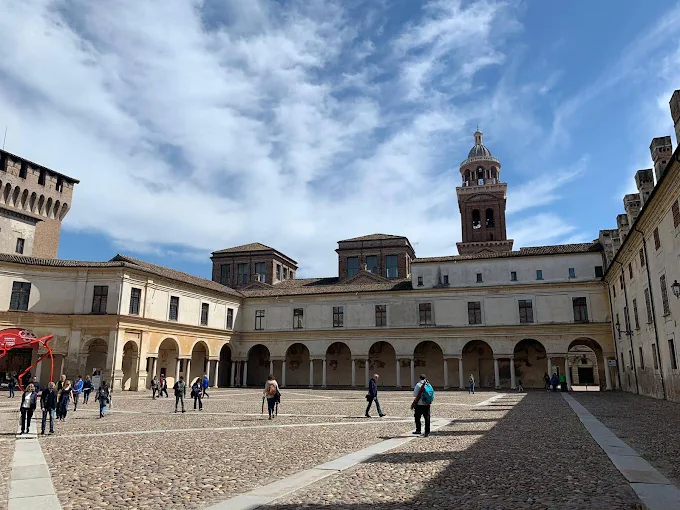
Mantua Palaces Renaissance Splendor Meets River Serenity
The late sun gilds the Mincio River—turning its surface into liquid topaz as it flows around the island city of Mantua, where swans glide past the ochre façades of Renaissance palaces. You hear the distant chime of church bells from Sant’Andrea, the rustle of cypress leaves in the breeze, and the murmur of Italian families gathering in Piazza Sordello. Encircled by three lakes formed by the Mincio River, this UNESCO World Heritage site was the seat of the Gonzaga dynasty for nearly four centuries—a court that rivaled Florence and Venice in artistic patronage. The Palazzo Ducale alone spans 34,000 square meters with over 500 rooms, while the Palazzo Te dazzles with Giulio Romano’s frescoed chambers that blur the line between architecture and illusion. In 2026, as mass tourism bypasses inland gems for coastal hotspots, Mantua offers something rare: monumental grandeur without the crowds, where every courtyard whispers of humanist scholars, opera premieres, and the quiet dignity of a city shaped by water and art.
Why Mantua Palaces Embodies Humanist Power
Mantua’s palaces aren’t just opulent—they’re revolutionary statements of Renaissance humanism and dynastic ambition. When the Gonzaga family rose to power in 1328, they transformed this marshy island into a cultural powerhouse, commissioning architects like Leon Battista Alberti and Giulio Romano to build palaces that fused art, politics, and innovation. The **Palazzo Ducale**, expanded over 300 years, served as the ducal residence and now houses masterpieces like Andrea Mantegna’s Camera degli Sposi—a frescoed chamber that pioneered perspective and illusionistic architecture. Just south of the city center, the **Palazzo Te** (1524–1534) was built as a leisure villa for Federico II Gonzaga. Designed by Giulio Romano, its Sala dei Giganti features a trompe-l’œil ceiling where gods hurl boulders onto falling giants—a daring, almost theatrical use of space that shocked contemporaries. These palaces solved a profound need: to project legitimacy and intellectual prestige in an era of rival city-states. Built from local brick and limestone, adorned with frescoes, stucco, and classical motifs, they became laboratories for Renaissance ideals. Today, they stand as testaments to how art and power can coexist—not through domination, but through beauty.
The Best Time to Experience Mantua Palaces
To explore the palaces in comfortable weather and optimal light, target the precise window of May 15–29, 2026. During these weeks, daytime temperatures range from a pleasant 18–24°C (64–75°F)—ideal for walking between palaces and enjoying riverside cafés [[24], [27]]. Mornings between 8:30–10:00 AM offer soft light that enhances fresco details and empty galleries for contemplation. Alternatively, September 12–26, 2026 provides similar conditions with golden autumn light and fewer tourists. Avoid visiting during peak periods: all of July and August, when heat exceeds 32°C (90°F) and humidity dulls the experience, and major events like the Festivaletteratura (early September), when hotels fill months ahead [[29]]. For the most immersive experience, book the “Sunset at Palazzo Te” guided tour (€10 extra)—offered at 6:00 PM—and witness the Sala dei Giganti bathed in golden-hour drama. Always verify opening hours via the official Fondazione Palazzo Te website (palazzote.it).
Approximate Budget for a 7-Day Trip (2026)
This budget reflects mid-range 2025 pricing adjusted for Italy’s projected 2026 inflation rate of 1.5% [[37]], offering a realistic estimate for a solo traveler based in Mantua’s historic center.
- Accommodation: €770–€1,050 total (€110–€150 per night) for a boutique guesthouse or private apartment near Piazza Sordello—central and steps from the main palaces.
- Food: €490 total (€70 per day). Breakfast at Caffè Torino (€4 for cappuccino and cornetto); lunch of pumpkin-filled tortelli (€14); dinner at a family-run osteria (€45 for risotto with salamella, grilled lake fish, and house Lambrusco wine).
- Transportation: €65 total. Includes train from Milan or Verona (€20 round-trip); local bus pass (€15 for 7 days); and occasional taxi for luggage (€30).
- Attractions: €75 total. Palazzo Ducale + Camera degli Sposi (€13); Palazzo Te (€10); Basilica di Sant’Andrea (€5); guided Gonzaga heritage walk (€20); and boat tour on the Mincio River (€20).
- Miscellaneous: €90 total. A high-quality print of Mantegna’s frescoes (€25); locally made mostarda di frutta (€20); leather journal from Libreria La Bottega del Libro (€30); and gelato from Gelateria Dondoli (€4).
Total Estimated Budget: €1,490–€1,780
6 Essential Mantua Palaces Experiences
- Marvel at the Camera degli Sposi at Dawn: Arrive by 8:30 AM to experience Mantegna’s masterpiece in solitude. The oculus ceiling—featuring the first known use of di sotto in sù perspective—creates an illusion of sky and courtiers peering down.
- Witness the Sala dei Giganti at Sunset: Book the evening tour to see Giulio Romano’s frescoed chamber in dramatic golden light. The collapsing architecture and falling giants feel almost cinematic—a precursor to Baroque drama.
- Stroll the Palazzo Ducale Courtyards: Wander through the Cortile della Cavallerizza and Cortile d’Onore, where arcades and loggias frame views of the Mincio River—a serene counterpoint to the palace’s grand interiors.
- Take a Mincio River Boat Tour: Board a small electric boat at Porto Catena for a 45-minute loop around the city. From the water, the palaces reveal their full scale against the lakes—a perspective few tourists seek.
- Dine on Piazza Sordello: At Osteria dell’Oca, enjoy a plate of stracotto mantovano (slow-cooked beef stew) seated beneath the Palazzo Ducale’s loggia—the same spot where Gonzaga courtiers once gathered.
- Attend an Evening Concert: In summer, the Palazzo Te hosts classical recitals in the Cortile d’Onore. Reserve early—these intimate performances sell out weeks ahead.
3 Hidden Gems Most Travelers Miss
- Rotonda di San Lorenzo: Tucked near the Duomo, this 11th-century circular church is Mantua’s oldest. Its simple stone interior and ancient crypt offer a quiet refuge from palace grandeur.
- Libreria La Bottega del Libro: Established in 1985, this independent bookstore specializes in Renaissance art and Gonzaga history. Its reading nook overlooks a hidden courtyard—a favorite among scholars.
- Giardino dei Semplici: Behind Palazzo Te, this botanical garden features medicinal herbs and citrus trees once used by the Gonzaga court physicians. Entry is free, and you’ll likely have it to yourself.
Cultural & Practical Tips
- Book palace tickets online: Same-day entry often sells out in summer. Reserve timed slots via museicivici.mn.it to skip lines.
- Dress modestly: Shoulders and knees must be covered to enter churches like Sant’Andrea or the Duomo.
- Wear comfortable shoes: Palaces involve extensive walking on uneven stone floors and courtyards. Sturdy soles are essential.
- Learn key phrases: “Dov’è il Palazzo Ducale?” (doh-VEH eel pah-LAH-tsoh DOO-kah-leh?) for directions; “Grazie mille” (GRAHT-see-eh MEE-leh) for sincere thanks.
- Photography is restricted: No flash inside frescoed rooms. Tripods require special permission—always ask at the entrance.
Conclusion: Travel with Reverence, Not Just Recognition
In 2026, Mantua’s palaces invite more than admiration—they call for historical presence. Your €13 ticket funds the meticulous conservation of Mantegna’s frescoes and Romano’s stucco; choosing a family osteria supports generational artisans; sitting quietly in the Camera degli Sposi honors centuries of artistic genius. Slow down: taste wine pressed from local grapes, listen to the lap of river water against ancient stone, let the weight of humanist vision settle in your bones. By traveling with reverence—prioritizing depth over speed—you help ensure Mantua remains not just a monument, but a living testament to the Renaissance ideal that beauty can elevate humanity. Let your visit be a quiet promise—and these walls will remember your respect long after you’ve left the lakeside.