
Mer de Glace Glacier : Witnessing the Silent Retreat of Alpine Ice
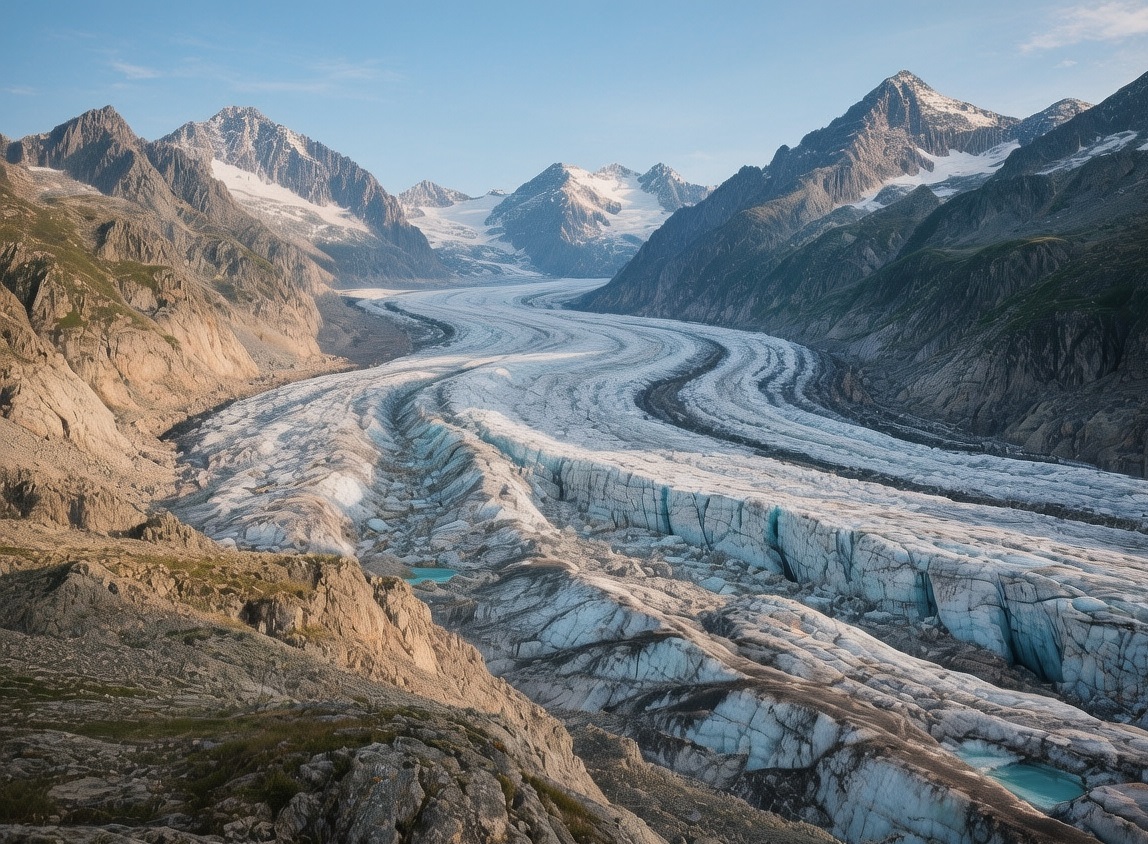
The first sound isn't what you expect. Before the vintage Montenvers train even reaches the terminus, a low groan echoes through the valley—a deep, resonant crack that seems to emanate from the mountain itself. As you step onto the viewing platform at 1,913 meters, the scale becomes humbling: France's largest glacier sprawls across the valley floor like a frozen river, its surface a chaotic tapestry of crevasses glowing with impossible blue light where sunlight penetrates centuries-old ice. Yet this grandeur carries a quiet urgency. Where Victorian tourists once stepped directly onto the ice from the station, a steep staircase of 547 steps now descends 120 vertical meters to reach the retreating tongue—a silent testament to 150 years of warming. In 2026, visiting the Mer de Glace glacier is no longer merely scenic; it's an act of witness to one of Earth's most visible climate chronicles.
Why Mer de Glace Glacier Demands Our Witness
The Mer de Glace represents more than alpine spectacle—it embodies a visible timeline of planetary change. Flowing for 7 kilometers beneath the north face of Mont Blanc, this river of ice has been meticulously documented since 1820, creating one of the world's longest continuous glaciological records. Its retreat—approximately 2 kilometers since the mid-19th century, accelerating to 40–50 meters annually since 2000—provides irrefutable evidence of warming trends validated by France's national meteorological service (Météo-France) and the GLACIOCLIM observatory. Unlike abstract climate data, the glacier's transformation is visceral: the ice cave (Grotte de Glace), re-excavated each spring by guides, now requires descending deeper each year just to reach the ice surface. This isn't theatrical staging but scientific reality—where every step down the staircase represents approximately one year of retreat. As UNESCO considers Alpine glaciers for World Heritage status based on their climate significance, the Mer de Glace offers not spectacle, but perspective: a chance to stand where ice once touched rock and comprehend time made visible.
The Best Time to Visit Mer de Glace Glacier
For optimal conditions—stable ice access, manageable crowds, and meaningful light—visit between June 20 and July 15. These weeks deliver valley temperatures of 18–24°C (64–75°F) with glacier surface conditions firm enough for safe access to the ice cave. Morning visits between 8:30–10:00 AM offer the clearest views before afternoon clouds envelop the Mont Blanc massif, while low-angle light illuminates crevasses with ethereal blue intensity. Crucially, arrive via the first Montenvers train departure (8:30 AM from Chamonix) to experience the glacier before tour groups arrive—this window provides solitude for contemplation and unobstructed photography. September 5–20 offers a second excellent opportunity: fewer visitors, stable weather, and autumn light that intensifies the ice's sapphire hues. Avoid July 25–August 20 when afternoon thunderstorms frequently close the ice cave for safety, and queues for the train exceed 90 minutes. Note that the site closes entirely November–April due to avalanche risk and railway maintenance.
Approximate Budget for a 7-Day Trip (2026)
Based on 2025 benchmarks adjusted for 4% inflation (per INSEE and Auvergne-Rhône-Alpes Tourism Board projections), here's a realistic mid-range budget for a Chamonix-focused itinerary:
- Accommodation: €125–€180 per night for a family-run chalet in Les Bois or Chamonix center—essential for early train access.
- Food: €95–€115 per day—breakfast at lodging, lunch of raclette at mountain refuge (€28–€35), dinner featuring Savoyard specialties (€50–€65).
- Transportation: €40 for a 7-day Mont Blanc Unlimited pass (covers Montenvers Railway and all valley transport). Geneva Airport transfers: €38 one-way via shared shuttle.
- Activities: Montenvers Railway round-trip: €34. Ice cave entry: included. Glaciology exhibition: €6. Guided crevasse walk (with certified guide): €85. Allocate €150 total.
- Miscellaneous: €60 for local honey from high-altitude apiaries, Beaufort cheese, or donations to the GLACIOCLIM research fund.
Total Estimated Cost: €1,300–€1,850 for seven days, excluding international flights.
5 Essential Mer de Glace Experiences
- The 547-Step Descent: The staircase itself tells the story—each landing features historical markers showing the glacier's surface level in 1850, 1900, 1950, and today. Descend slowly to absorb this vertical timeline.
- Ice Cave (Grotte de Glace): Walk through chambers carved annually into the glacier's snout—observe how the entrance location shifts yearly as the ice retreats uphill.
- Glaciology Exhibition: The "Glacier de France" museum at Montenvers station displays 200 years of measurement data, historical photographs, and interactive models showing projected retreat scenarios.
- Viewpoint de la Charpoua: A 20-minute walk from the main platform offers the only perspective where the entire glacier tongue is visible against the Grandes Jorasses north face.
- Dawn Light on the Seracs: Take the 7:30 AM "photographers' train" (limited availability) to witness sunrise illuminating the glacier's upper icefalls with rose-gold light before clouds form.
3 Hidden Perspectives Most Travelers Miss
- Signal Forbes Viewpoint: Hike 45 minutes uphill from Montenvers station along the Chemin des Glaciers to this historic 19th-century observation point—offers the only perspective where the glacier's entire flow path from the Col du Géant is visible.
- Glacier Margin Trail: At the base of the staircase, follow the unmarked path left along the lateral moraine (ask guides for permission) to witness where meltwater emerges from beneath the ice—a powerful demonstration of glacial hydrology.
- Montenvers Historic Engine Shed: Behind the main station, a restored 1909 steam locomotive remains operational for special departures—request a viewing from station staff on weekday mornings.
Cultural & Practical Tips
- Book Train Tickets Early: Reserve Montenvers Railway tickets exactly 30 days ahead via montblancnaturalresort.com—morning slots sell out within hours during summer.
- Footwear is Critical: The glacier surface is uneven and slippery. Wear sturdy hiking boots with aggressive tread—rent crampons (€8) at the base if conditions are icy.
- Respect Scientific Integrity: Never remove ice samples or disturb measurement markers. The glacier is an active research site—your presence should not compromise data collection.
- Photography Ethics: Never stage "melting ice" photos for social media—this misrepresents natural calving processes. Capture the glacier's dignity, not manufactured drama.
- Learn Key Phrases: "Bonjour," "Merci," and "Où est le sentier glaciaire?" (Where is the glacier trail?) show respect—guides share deeper insights with curious visitors.
Conclusion: Travel with Witness, Not Just Wonder
The Mer de Glace endures not as attraction to be consumed, but as chronicle to be honored. As a conscious traveler, your presence carries responsibility: to witness without exploiting, to learn without appropriating, to carry the glacier's story beyond these mountains with accuracy and urgency. Support operators funding glaciological research (Compagnie du Mont-Blanc contributes 5% of ticket revenue to GLACIOCLIM). Sit quietly at the viewpoint for ten minutes without photographing—absorb the scale of change with your own senses. Share what you've witnessed not as "disappearing beauty" but as documented reality requiring collective action. By approaching this glacier not as backdrop for adventure but as teacher of planetary interconnectedness, you ensure your visit contributes to its legacy: not as relic of loss, but as catalyst for understanding that ice holds memory, and memory demands response.