
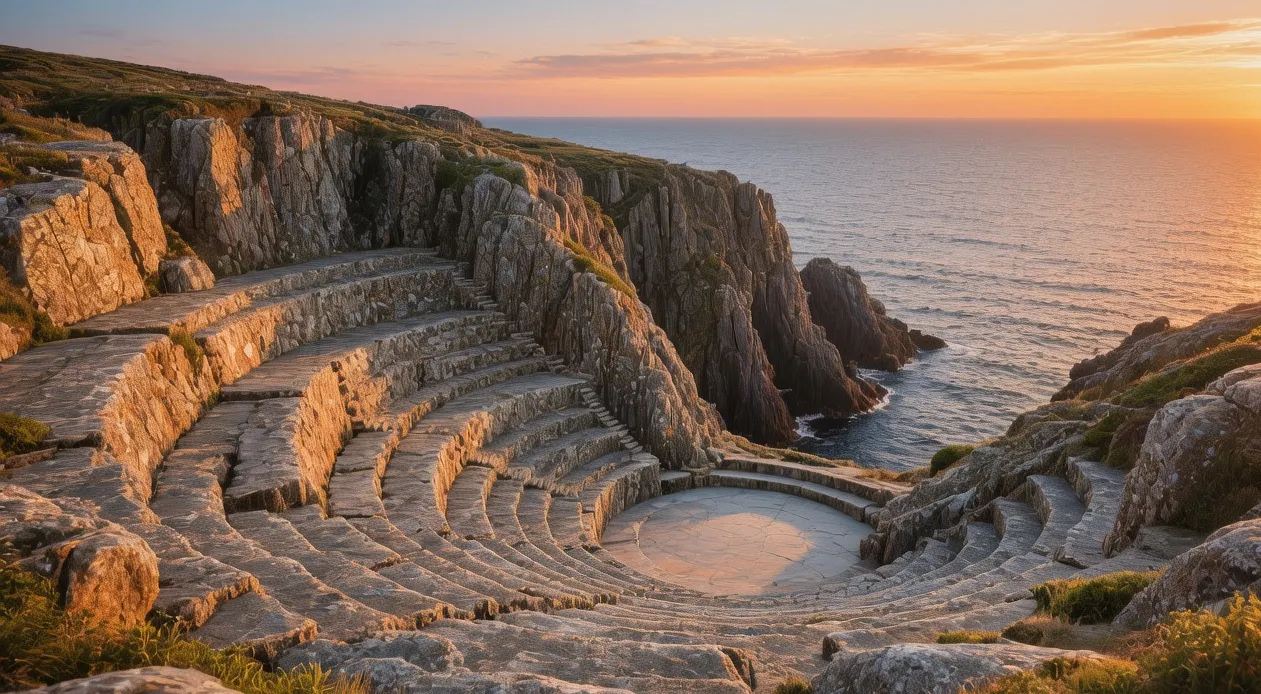
Minack Theatre Granite Cliffs Meet Open-Air Drama
Waves crash against the base of the cliff as the curtain rises—mixing the roar of the Atlantic with the voices of actors performing 60 meters (197 feet) above the sea. You sit on a stone bench carved directly into the granite, the scent of salt spray and wild thyme filling the air, while the setting sun paints the stage in hues of amber and violet. Construction of this open-air amphitheater began in 1932 under the direction of Rowena Cade, who spent 50 years shaping the rock with her own hands to create a space for 500 spectators. As you watch the light fade over Porthcurno Bay, listening to the overture swell against the natural acoustics of the cove, you realize the Minack Theatre matters now more than ever: in an era of digital screens and artificial environments, it remains a testament to human endurance and artistic vision, proving that culture can thrive at the edge of the world in 2026.
Why Minack Theatre Embodies Artistic Resilience
The Minack Theatre is not merely a performance venue; it is a monument to one woman's obsession with landscape and drama. Rowena Cade purchased the land in 1929 for £100, seeking a natural setting for a production of The Tempest. Over the next five decades, she and her team quarried the local granite, mixed concrete with sand from the beach below, and hand-carved the seating tiers that rise steeply from the stage. This structure solved a logistical problem: how to create a permanent theatrical space without compromising the natural beauty of the Cornish coast. Technical engineering involved reinforcing the cliffs against erosion while ensuring sightlines remained unobstructed for every seat in the 500-capacity auditorium.
Today, it fulfills a cultural need for connection to live performance in a raw environment. Managed by the Minack Theatre Trust since Cade's death in 1983, the site hosts over 150 performances annually, ranging from Shakespeare to modern musicals. The acoustics are naturally amplified by the concave shape of the cliff, reducing the need for electronic amplification. When you walk the stone pathways, you traverse a space where Cade lived in a cottage overlooking the stage, monitoring every detail. The Minack Theatre represents a continuous narrative of creativity against the elements, preserved by the very organization that now maintains the stonework against the corrosive power of the Atlantic salt air.
The Best Time to Experience Minack Theatre
To witness the Minack Theatre in optimal atmospheric conditions, plan your visit between May 18 and June 12. During this window, temperatures average 14-19°C (57-66°F), and daylight extends until 9:15 PM, allowing for evening performances in natural light. The best visibility occurs between 7:00-9:00 PM when the sun sets over the sea behind the stage. Visiting early in the season also allows you to explore the visitor center before tour coaches arrive from Land's End, typically between 11:00 AM and 3:00 PM.
Autumn offers a secondary window—specifically September 10 to October 15—when summer crowds dissipate and the sea retains summer warmth. Temperatures remain mild at 13-18°C (55-64°F), though daylight hours shorten rapidly. Avoid July 25 to August 25 when school holidays push visitor numbers above 3,000 daily, creating congestion on the steep paths and limited parking in Porthcurno. Winter months (November-February) offer solitude but limited performances; the site closes for maintenance, and sunset occurs as early as 4:05 PM in December. For current performance schedules and closure notices, verify information at www.minack.com or contact the box office at +44 (0)1736 810181.
Approximate Budget for a 7-Day Trip (2026)
Exploring the Minack Theatre and the wider Penwith peninsula requires moderate budgeting, as West Cornwall commands premium prices during peak season. The following budget reflects mid-range travel for one person in 2026, accounting for approximately 4.5% UK inflation (ONS data, January 2026). Prices assume a base in Penzance or St Just for optimal access to the theatre and coastal paths.
- Accommodation: £95-£160 per night for a B&B or cottage in St Just (6 nights = £570-£960). Budget options: £55-£75 for hostels in Penzance or camping at Trewellard.
- Food: £50-70 per day total • Breakfast: £10-15 (Full English at The Logan Rock Inn) • Lunch: £15-20 (Cornish pasty at The Porthcurno Cafe) • Dinner: £25-35 (Seafood platter at The Old Coastguard or Reef)
- Transportation: • Train London Paddington to Penzance: £80-140 return (advance booking) • Local bus (Route 1): £4.50 day pass • Car rental (recommended): £65/day plus fuel £1.58/liter • Parking at Minack: £8/day (March-October)
- Attractions: • Minack Theatre Show Ticket: £35-£55 • Day Visitor Entry: £18.50 • Telegraph Museum Entry: £14.50 • Free: Coastal path, Porthcurno beach
- Miscellaneous: • Ordnance Survey Explorer Map 102: £10.99 • Local artisan souvenirs: £25 • Travel insurance: £40-60 for week • Seat cushion rental: £5
Total estimated cost: £1,450-£1,800 for 7 days (excluding international flights)
5 Essential Minack Theatre Experiences
- Attend an Evening Performance: Book tickets 3 months in advance for shows between May-September. Arrive 45 minutes before curtain to find your seat and watch the sunset. The temperature drops 5°C after dusk; bring warm layers. The sound of waves often accompanies the dialogue. This experience demonstrates the unique acoustics and atmosphere that define the venue.
- Take the Day Visitor Tour: Enter the site between 10:00 AM-4:00 PM when no performances are scheduled. Entry is £18.50. Spend 90 minutes exploring the stage, dressing rooms, and exhibition. The staff provide free talks on Rowena Cade at 11:00 AM and 2:00 PM. This context enriches your understanding of the construction process and the woman behind the vision.
- Visit the Visitor Centre: Located at the entrance, this museum houses photographs and models of the theatre's evolution. Spend 45 minutes examining the archives. The scent of old paper and wood fills the room. Open 9:30 AM-5:00 PM daily. This experience provides historical depth, showing the progression from a single concrete platform to a world-famous amphitheater.
- Walk to Porthcurno Beach: Descend the path from the theatre to the beach below (5-minute walk). The sand is white and the water turquoise. Spend 60 minutes swimming or sunbathing. The view looking up at the cliffs reveals the theatre's precarious position. Best visited at low tide. This experience connects the cultural site to the natural landscape that inspired it.
- Hike the South West Coast Path: Dedicate 90 minutes to the section east toward Pedn Vounder. The path climbs 50 meters to clifftops offering panoramic views. The scent of gorse and thrift fills the air. Wear sturdy shoes; paths are uneven and exposed. This experience connects the theatre to the wider geological landscape of the Penwith Heritage Coast.
3 Hidden Gems Most Travelers Miss
- PK Porthcurno Telegraph Museum: While crowds cluster at the theatre, this museum 500 meters away remains surprisingly quiet. Access via the road toward Porthcurno village (parking at SW365255). The site features underground bunkers from WWII. Visit between 2:00-4:00 PM when guided tours occur. No facilities exist nearby—bring water. The Arts Council notes this site demonstrates the technological history that paralleled the cultural development of the valley.
- Pedn Vounder Beach: Located 1 kilometer east, grid reference SV365245, lies a secluded cove accessible via the coastal path. The sand is finer and the water deeper than Porthcurno. Visit during weekday mornings when the site is empty. No facilities exist—bring snacks. This spot demonstrates the natural beauty of the coastline, offering a raw view of the cliffs before they were carved for performance.
- Rowena's Cottage: Contact the Trust (+44 (0)1736 810181) for access to the original cottage where Cade lived. The interior remains largely unchanged since 1983. Access is restricted to special tours on Thursdays at 11:00 AM. The space offers a tangible connection to the daily life of the creator. This site reveals the personal sacrifice and dedication required to build the theatre over 50 years.
Cultural & Practical Tips
- Respect the seating: The stone benches are hard and cold. Rent a cushion (£5) or bring your own. Do not stand on seats during performances. Follow staff instructions regarding aisles. Keep voices low during the show. The Trust reports 5-10 incidents annually due to visitors blocking views.
- Understand weather risks: The theatre is open-air; performances proceed in rain unless dangerous. Check www.minack.com for weather warnings. Never stand on wet stone near the edge. If paths are closed, respect the barriers. The coastguard monitors the area closely.
- Leave no trace: Remove all litter, including biodegradable items. The site collects 10 tonnes of waste annually from the grounds. Do not remove stones or plants—this violates the Wildlife and Countryside Act 1981. Photograph specimens in situ instead.
- Learn local terminology: "Amphitheatre" (open-air venue); "Cove" (small bay); "Granite" (local rock). Using these terms shows respect for geological heritage and helps guides assist you better during tours.
- Photography guidelines: Tripods are permitted during day visits but restricted during performances. Flash photography is prohibited during shows. Respect other visitors; do not block pathways for extended shoots during peak hours (11:00 AM-3:00 PM).
- Weather preparedness: The site is exposed; wind chill is common even in summer. Pack waterproof layers; Cornwall showers are sudden. Wear sturdy shoes with grippy soles—stone becomes slippery when wet. Sun protection is essential; reflection from sea increases UV exposure by 25%.
- Accessibility considerations: The theatre involves steep steps; not wheelchair accessible. Alternative viewing exists from the visitor center terrace. The Museum is fully accessible. Request an accessibility map at the ticket office upon arrival.
Conclusion: Travel with Reverence, Not Just Sightseeing
The Minack Theatre does not exist merely to be photographed—it exists to be experienced as a fusion of art and nature. When you sit on these stone benches in 2026, you are not observing a static monument; you are entering a space where one woman's vision transformed a cliff into a stage. Rowena Cade is gone, but her concrete mixing bowl remains in the exhibition. The actors who perform here are transient, but the granite endures. This is not heritage frozen in amber—it is heritage living, breathing, enduring.
So slow down. Sit on the grassy banks for ten minutes without your phone. Listen to the wind that once carried the sounds of construction and now carries the voices of Shakespeare. Buy your lunch from a café whose owners pay rates that support the local community. Donate to the Minack Trust rather than purchasing plastic souvenirs. Leave only footprints on ancient stone, take only memories of drama against the sea, carry home only the profound understanding that some things—creativity, landscape, legacy—cannot be rushed, cannot be owned, can only be honored. The theatre will still stand in 2126 if we choose stewardship over exploitation today.