
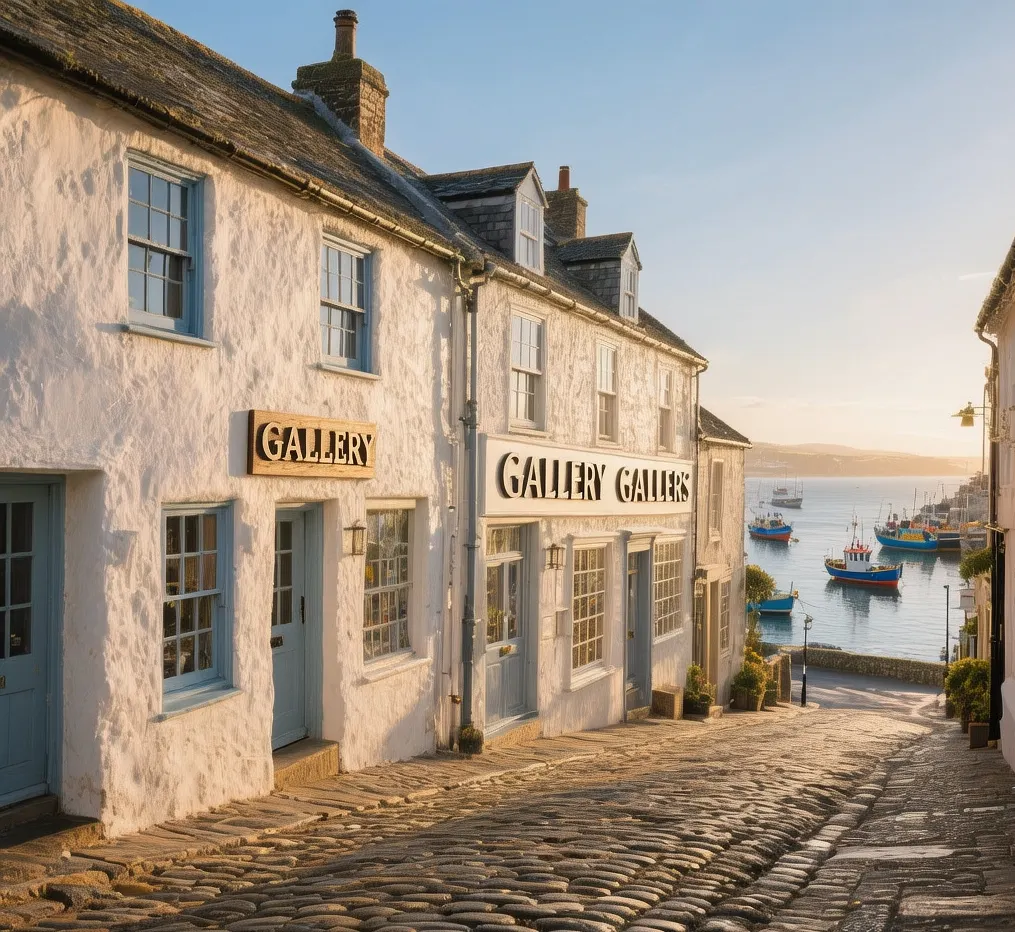
St Ives Art Galleries Modernist Light Meets Cornish Sea
Light floods through north-facing windows as dawn breaks over Porthmeor Beach—illuminating dust motes dancing above canvases that have captured the Cornish coast since 1928. You stand on the cobbled streets of St Ives, the scent of turpentine mixing with salt spray from the harbor 200 meters (656 feet) below, while the ghost of Barbara Hepworth seems to linger in the sculpted gardens nearby. The Tate St Ives opened in 1993 on the site of a former gasworks, cementing this town's status as the capital of British modernism; yet the artistic lineage stretches back to the 1880s when the railway first brought painters seeking unique illumination. As you trace the texture of oil paint on a gallery wall, listening to the distant cry of herring gulls, you realize the St Ives art galleries matter now more than ever: in an age of digital reproduction, they offer a tangible connection to the hand of the artist, preserving a legacy of observation and light that continues to define British culture in 2026.
Why St Ives Art Galleries Embodies Creative Legacy
The St Ives art galleries are not merely exhibition spaces; they are the physical remnants of the St Ives School, one of the most significant modernist movements in 20th-century art. Founded formally with the St Ives Society of Artists in 1928, the colony attracted heavyweights like Ben Nicholson and Christopher Wood, who sought refuge from London's industrial灰霾. The problem this community solved was artistic isolation; by clustering in this remote peninsula, artists created a critical mass of creativity that survived World War II when much of Europe's art scene collapsed. Technical analysis of the studios reveals specific architectural adaptations: north-facing glazing to ensure consistent, shadowless light; high ceilings to accommodate large-scale abstract works; and thick stone walls to maintain stable humidity for oil paints.
Today, the site fulfills a cultural need for connection to tangible craftsmanship in a virtual world. Managed by Tate and the Hepworth Estate, the galleries host over 400,000 annual visitors who walk the same floors as Naum Gabo and Alfred Wallis. The Barbara Hepworth Museum and Sculpture Garden, opened to the public in 1961, remains exactly as the artist left it upon her death in 1975. When you walk these rooms, you traverse a space where abstract forms were carved from local elm and bronze was cast using lost-wax techniques. The St Ives art galleries represent a continuous narrative of innovation, preserved by the very organization that now maintains the climate control systems to protect the canvases from the corrosive Atlantic salt air.
The Best Time to Experience St Ives Art Galleries
To witness the St Ives art galleries in optimal lighting conditions, plan your visit between May 15 and June 25. During this window, temperatures average 14-19°C (57-66°F), and daylight extends until 9:15 PM, maximizing time for both gallery visits and coastal walks. The best light for viewing paintings occurs between 10:00-11:30 AM when natural illumination fills the gallery spaces without glare. Visiting early also allows you to explore the Tate before tour coaches arrive from Plymouth, typically between 11:00 AM and 3:00 PM.
Autumn offers a secondary window—specifically September 10 to October 15—when summer crowds dissipate and the light takes on a golden quality favored by the modernists. Temperatures remain mild at 12-17°C (54-63°F), though daylight hours shorten rapidly. Avoid July 25 to August 25 when school holidays push visitor numbers above 5,000 daily, creating congestion in the narrow gallery corridors and limited parking in the town center. Winter months (November-February) offer solitude but reduced hours; some smaller studios close, and sunset occurs as early as 4:05 PM in December. For current opening hours .
Approximate Budget for a 7-Day Trip (2026)
Exploring the St Ives art galleries and the wider Cornwall coast requires moderate budgeting, as the region commands premium prices during peak season. The following budget reflects mid-range travel for one person in 2026, accounting for approximately 4.5% UK inflation (ONS data, January 2026). Prices assume a base in St Ives or Lelant for optimal access to the galleries and coastal paths.
- Accommodation: £100-£180 per night for a boutique hotel or B&B in St Ives town center (6 nights = £600-£1,080). Budget options: £60-£80 for hostels in Lelant or camping at Carbis Bay.
- Food: £55-75 per day total • Breakfast: £12-16 (Full English at The Seafood Cafe) • Lunch: £18-25 (Fresh crab sandwich at Porthminster Beach Cafe) • Dinner: £25-40 (Cornish seafood platter at The Sloop Inn)
- Transportation: • Train London Paddington to St Ives (via St Erth): £85-150 return (advance booking) • Local bus (Route 300): £4.50 day pass • Car rental (not recommended): £70/day plus fuel £1.58/liter • Parking at St Ives: £12/day (March-October)
- Attractions: • Tate St Ives Entry: £18.50 • Barbara Hepworth Museum: £14.50 • St Ives Society of Artists: £5 • Free: Gallery hopping, harbor walks, public beaches
- Miscellaneous: • Art prints and catalogs: £40 • Local artisan ceramics: £35 • Travel insurance: £45-65 for week • Waterproof gear rental: £20
Total estimated cost: £1,550-£1,950 for 7 days (excluding international flights)
5 Essential St Ives Art Experiences
- Explore Tate St Ives: Arrive at opening time (10:00 AM) to experience the main gallery before crowds. The building overlooks Porthmeor Beach; spend 90 minutes viewing the permanent collection of Nicholson and Hepworth. The light in the main gallery changes hourly; revisit the same piece at noon and 3:00 PM. Bring a sketchbook; drawing is permitted in most zones. This experience provides the foundational context for the entire St Ives School movement.
- Walk the Hepworth Sculpture Garden: Enter the museum at 4 Barnoon Hill. The garden houses 60+ original works displayed among sub-tropical plants. Spend 60 minutes walking the winding paths. The scent of magnolia and sea air mixes with the smell of stone dust. Open 10:00 AM-5:00 PM daily. This context enriches your gallery visit, showing how the artist integrated nature with form.
- Visit Porthmeor Studios: Walk to the beachfront studios used by artists since 1890. Access is via guided tour only (£12, book 2 weeks ahead). You will see working artists in their original spaces. The sound of chisels and brushes provides an auditory backdrop. Tours depart at 11:00 AM and 2:00 PM daily. This experience demonstrates the continuity of practice from the 19th century to 2026.
- Gallery Hop Down Back Street: Dedicate 90 minutes to walking this narrow lane packed with independent galleries. The concentration of art per square meter is highest here. Visit between 10:00-11:00 AM when gallery owners are present to discuss work. The scent of oil paint is strongest in these smaller spaces. This experience connects you to the contemporary scene thriving alongside the historical giants.
- Attend an Artist Talk: Check the Tate schedule for evening lectures (£10, usually Thursdays). Experts discuss specific movements or conservation techniques. The acoustic resonance of the lecture hall creates an intimate atmosphere. Seating is limited to 100 people; reserve 3 weeks in advance. This experience provides intellectual depth to the visual experience, explaining the theory behind the abstraction.
3 Hidden Gems Most Travelers Miss
- The Leach Pottery: While crowds cluster at the Tate, this working pottery 1 kilometer east remains surprisingly quiet. Access via the footpath from Higher Stennack (parking at SW535405). Founded by Bernard Leach in 1920, it is the oldest working pottery in the UK. Visit between 2:00-4:00 PM when kilns are often firing. No facilities exist nearby—bring water. The Arts Council notes this site demonstrates the craft heritage that paralleled the fine art movement.
- St Nicholas Chapel: Located on the Island at low tide, grid reference SW535415, lies a medieval chapel used for exhibitions. Access is restricted to tide times; check www.uktides.co.uk. The stone walls date to the 14th century. Visit during weekday mornings when the site is empty. No facilities exist—bring snacks. This spot demonstrates the spiritual history of the headland, offering a raw view of the landscape before artists arrived.
- The Castle Gallery: Contact the St Ives Society (+44 (0)1736 796226) for access to the upper rooms of the Castle building. The collection features early works by Alfred Wallis rarely displayed in the main hall. Access is restricted to guided tours on Wednesdays at 11:00 AM. The space offers a tangible connection to the naive art style that influenced the modernists. This site reveals the foundational works that inspired the later abstract movement.
Cultural & Practical Tips
- Respect the artwork: Do not touch sculptures or lean on walls. Oils from skin damage surfaces. Follow staff instructions regarding barriers. Keep voices low in contemplation zones. The Tate reports 5-10 incidents annually due to visitors straying too close.
- Understand parking limitations: St Ives has limited car access. Check www.stives-cornwall.co.uk for traffic warnings. Never park on double yellow lines; fines are strict. If roads are closed, use the park-and-ride from Lelant. The train runs every 20 minutes during peak season.
- Leave no trace: Remove all litter, including sketching materials. The Town Council collects 10 tonnes of waste annually from the streets. Do not remove stones or shells—this violates the Wildlife and Countryside Act 1981. Photograph specimens in situ instead.
- Learn local terminology: "St Ives School" (art movement); "Naive Art" (Wallis style); "Porthmeor" (beach name). Using these terms shows respect for artistic heritage and helps guides assist you better during tours.
- Photography guidelines: Tripods are permitted in some galleries but restricted during busy periods. Flash photography is prohibited to protect pigments. Respect other visitors; do not block pathways for extended shoots during peak hours (11:00 AM-3:00 PM).
- Weather preparedness: The town is exposed; wind chill is common even in summer. Pack waterproof layers; Cornwall showers are sudden. Wear sturdy shoes with grippy soles—cobbles become slippery when wet. Sun protection is essential; reflection from sea increases UV exposure by 25%.
- Accessibility considerations: The Tate is wheelchair accessible via lift. The Hepworth Garden has some uneven paths. Alternative viewing exists from the cafe terrace. Request an accessibility map at the ticket office upon arrival.
Conclusion: Travel with Curiosity, Not Just Consumption
The St Ives art galleries do not exist merely to be ticked off a list—they exist to be understood as a dialogue between light and form. When you walk these floors in 2026, you are not observing static objects; you are entering a space where visionaries transformed a fishing village into a global capital of modernism. The painters who mixed pigments are gone, but their colors remain vibrant. The sculptors who carved stone are gone, but their forms still catch the sea light. This is not heritage frozen in amber—it is heritage living, breathing, enduring.
So slow down. Sit on the harbor wall for ten minutes without your phone. Listen to the wind that once carried the sounds of fishing boats and now carries the whispers of art historians. Buy your lunch from a café whose owners pay rates that support the local community. Donate to the Tate rather than purchasing mass-produced prints. Leave only footprints on cobbled streets, take only memories of color and light, carry home only the profound understanding that some things—creativity, vision, natural beauty—cannot be rushed, cannot be owned, can only be honored. The galleries will still shine in 2126 if we choose stewardship over exploitation today.