
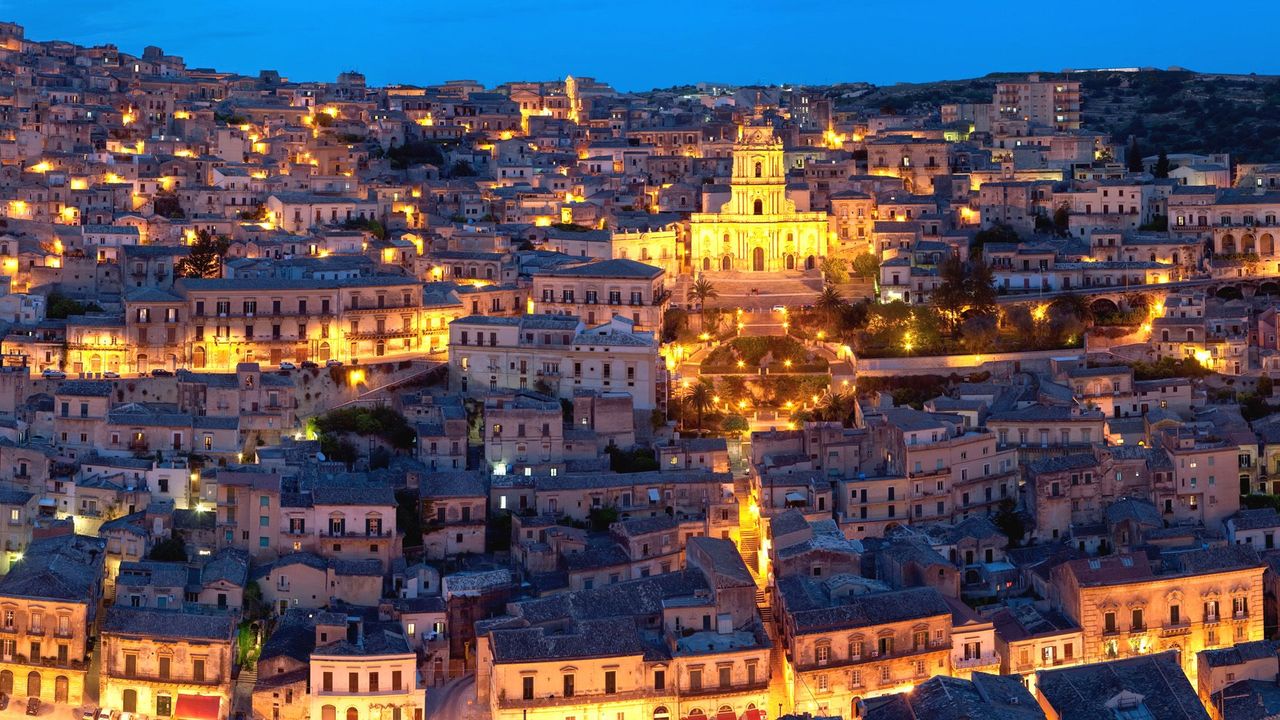
Modica Chocolate Town Aztec Tradition Meets Sicilian Baroque
The morning sun filters through the ornate Baroque balconies of Modica’s historic center, casting dappled shadows on cobbled streets that smell faintly of cocoa and vanilla. You hear the soft clink of chocolate molds being tapped in a hidden workshop, the murmur of locals debating the day’s news over espresso, and the distant chime of bells from the Cathedral of San Giorgio. This is the heart of southeastern Sicily, a town where chocolate isn’t just a treat—it’s a 500-year-old cultural institution. Modica’s unique cioccolato di Modica is made using an ancient cold-processing method brought by the Spanish from the Aztecs in the 16th century, resulting in a grainy, intensely flavored bar that melts slowly on the tongue [[44]]. In an age of mass-produced confectionery and fleeting food trends, Modica matters now more than ever—it is a living museum of culinary heritage, where every bite tells a story of cultural fusion, resilience, and artisanal pride.
Why Modica Chocolate Town Embodies Culinary Heritage
Modica’s chocolate tradition is not a modern marketing gimmick; it is a direct lineage from the Aztec empire, preserved through centuries of Sicilian history. When the Spanish ruled Sicily in the 1500s, they brought back the Aztec technique of grinding roasted cacao beans with sugar and spices without conching—a process that retains the cacao’s natural texture and robust flavor. This method “solved” a critical problem of its time: how to preserve the cacao’s potency without modern machinery. The result is a chocolate that is intentionally coarse, with visible sugar crystals and a deep, complex flavor profile often enhanced with cinnamon, vanilla, or chili. Recognized by the EU with Protected Geographical Indication (PGI) status in 2018, authentic Modica chocolate must be produced within the town using this traditional method [[44]]. Today, this heritage fulfills a modern need—for authenticity in a world of homogenized taste. The town’s dozens of artisanal shops, from the historic Antica Dolceria Bonajuto (est. 1880) to innovative newcomers, are not just stores but cultural custodians, keeping a pre-industrial craft alive in the heart of a UNESCO-listed Baroque town.
The Best Time to Experience Modica Chocolate Town
To experience Modica in its most vibrant and comfortable state, plan your visit for the specific windows of April 20–May 30 or September 10–October 15, 2026. During these periods, the weather in southeastern Sicily is ideal, with daytime temperatures ranging from a pleasant 22–27°C (72–81°F), and the intense summer crowds have yet to arrive or have already departed [[11]]. The best time of day to explore the chocolate shops is in the late morning, between 10:00 AM and 12:00 PM, when the workshops are active and you can often see the chocolate being poured into molds. It is strongly advised to avoid the peak summer months of July and August, when temperatures can soar above 35°C (95°F) and the narrow streets feel claustrophobic with crowds [[62]]. For the most current information on opening hours, the annual Chocobarocco festival (December), and guided tours, always consult the official tourism portal: comune.modica.rg.it.
Approximate Budget for a 7-Day Trip (2026)
This budget is calculated for a solo traveler seeking a comfortable, culturally rich experience in southeastern Sicily in 2026, based on current inflation trends and average regional costs.
- Accommodation: €85–€140 per night. Staying in a boutique hotel in the historic center offers easy access to chocolate shops and Baroque sites. Options in the newer part of town are more affordable.
- Food: €45 per day. Breakfast (€5): a cappuccino and brioche at Caffè Europa. Lunch (€16): a plate of pasta with fresh ricotta at a trattoria near Piazza Matteotti. Dinner (€24): a main course like grilled lamb chops with a glass of local Frappato wine.
- Transportation: €120 total. A rental car for the week is essential for exploring the Val di Noto (€40/day). Occasional taxi rides from the bus station (€10).
- Attractions: Entry to the Castle of the Counts of Modica (€5). Guided chocolate-making workshop (€25). Visit to the San Giorgio Cathedral (free).
- Miscellaneous: €100. This covers several bars of artisanal chocolate (€5–€15 each), several gelato stops (€3 each), a cooking class featuring local recipes (€40), and souvenirs like a ceramic chocolate mold.
Total Estimated Cost: €885–€1,005
6 Essential Modica Chocolate Town Experiences
- Taste Chocolate at Antica Dolceria Bonajuto: Visit Sicily’s oldest chocolate shop (est. 1880) to sample classic flavors like cinnamon and vanilla. Watch artisans pour molten chocolate into traditional molds through the viewing window.
- Take a Chocolate-Making Workshop: Book a hands-on class at a local bottega to learn the cold-processing method. Grind cacao beans, mix in your choice of spices, and take home your own handmade bar.
- Explore the Chocobarocco Festival: If visiting in December, attend this annual celebration where the town transforms into a chocolate wonderland with tastings, art installations, and live music.
- Visit the Castle of the Counts of Modica: This 13th-century fortress houses a small museum and offers panoramic views over the town’s red rooftops and the surrounding Hyblaean Mountains.
- Stroll Corso Umberto I: Walk the main street to admire Baroque palaces and pop into smaller chocolate shops like Quelli del Sapore or Laboratorio della Dolcezza for unique flavor experiments.
- Pair Chocolate with Local Wine: At a restaurant like Ristorante Duomo, try a dessert pairing of Modica chocolate with a sweet Malvasia dessert wine—a perfect marriage of local terroir.
3 Hidden Gems Most Travelers Miss
- Laboratorio dell’Arte Dolciaria: Tucked away on Via Grimaldi, this tiny workshop specializes in experimental flavors like sea salt and bergamot. The owner, a former chemist, treats chocolate as an art form.
- The Secret Courtyard of Palazzo De Leva: Look for the unmarked archway near Piazza Municipio. Inside, a private courtyard features a beautiful Baroque fountain and a small chocolate tasting room by appointment only.
- Vista dal Belvedere di Cartellino: This lesser-known viewpoint on the eastern edge of town offers a panoramic vista that includes the entire sweep of Modica’s Baroque skyline—perfect for a quiet moment with a chocolate bar.
Cultural & Practical Tips
- Ask before taking photos in workshops: Many chocolatiers are happy to be photographed, but always ask with a smile first. A simple “Permesso?” (pehr-MEH-soh?) goes a long way.
- Buy directly from artisanal shops: Avoid generic souvenir stores. Authentic Modica chocolate will list “cacao, sugar, [spice]” as the only ingredients and cost €5–€15 for a 100g bar.
- Learn a few key phrases: “Posso assaggiare?” (POS-soh ah-sah-JAH-reh?) for “Can I taste it?”, and “Un caffè, per favore” (oon kah-FEH).
- Beware of the midday sun in summer: The white stone reflects intense heat. Wear a hat, sunglasses, and high-SPF sunscreen, especially between 11:00 AM and 3:00 PM.
- Combine your visit with other Baroque towns: Modica pairs perfectly with a trip to Ragusa Ibla or Noto. A car is recommended for these excursions.
- Tipping is appreciated but not expected: Rounding up the bill or leaving €1–€2 for exceptional service is a kind gesture.
Conclusion: Travel with Taste, Not Just a Checklist
Modica is not a town to be ticked off a list; it is a sensory journey to be savored slowly, one square of chocolate at a time. In 2026, as we seek travel experiences that are both authentic and meaningful, Modica offers a powerful lesson in cultural preservation through craft. Your journey here should be one of mindful tasting—not just buying chocolate, but understanding the centuries of history in every grainy bite, connecting with the artisans who keep this tradition alive, and appreciating the fusion of Aztec ingenuity and Sicilian soul. By traveling with this deep attention, you support the local economy and help ensure this unique heritage endures. Slow down. Sit at a café and let a square of cinnamon chocolate melt on your tongue. In that quiet moment of flavor and reflection, you don’t just visit Modica—you become part of its enduring, bittersweet story.