
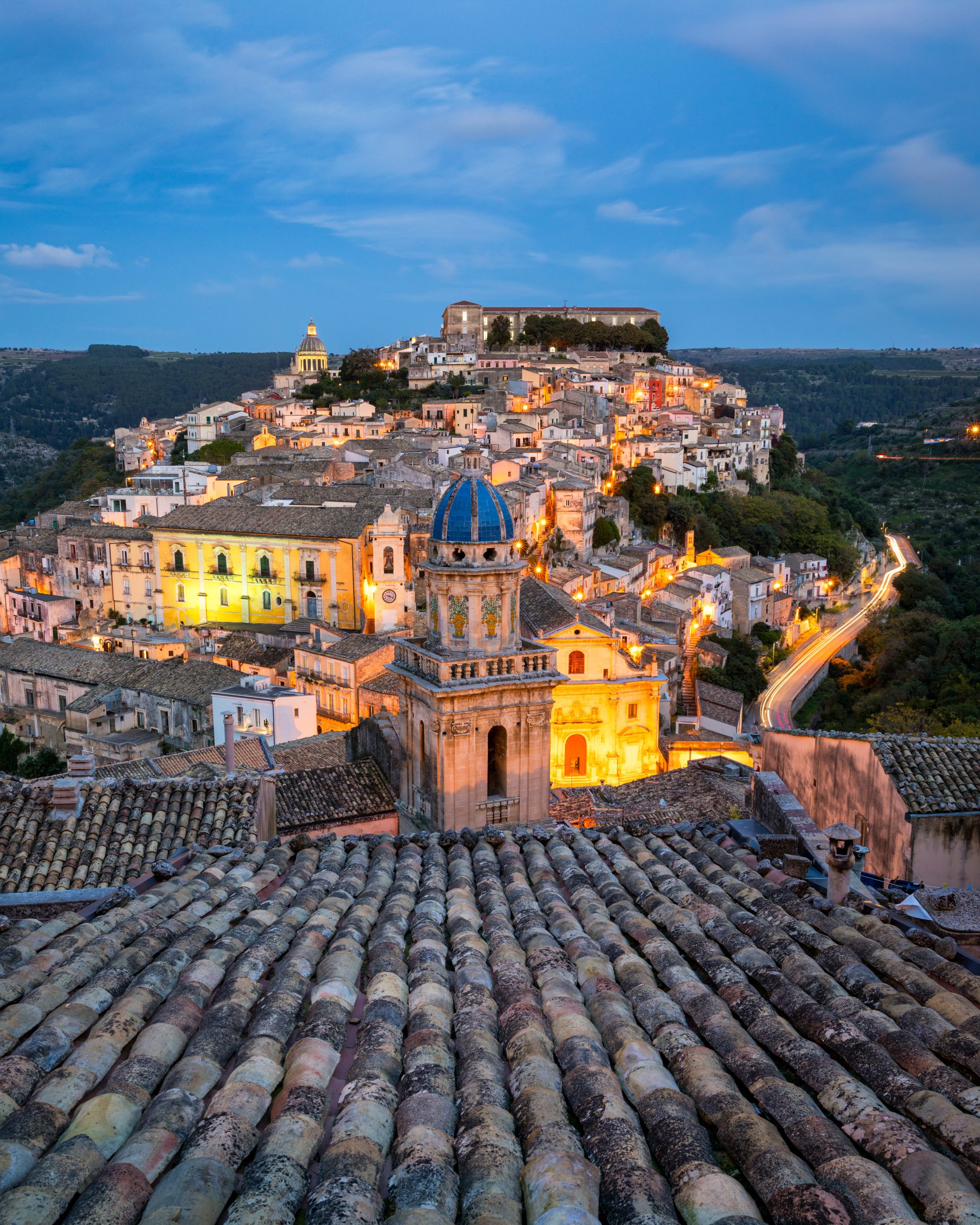
Ragusa Ibla Baroque Labyrinth Meets Sicilian Light
The morning sun warms the honey-colored limestone of Ragusa Ibla, casting long shadows across a labyrinth of cobbled streets that tumble down a steep hillside like a cascade of terracotta rooftops. You hear the soft echo of footsteps on ancient basalt stones, the distant chime of bells from the Duomo di San Giorgio, and the murmur of locals gathering at a café beneath wrought-iron balconies dripping with bougainvillea. This is the historic heart of Ragusa, a town rebuilt in the exuberant Sicilian Baroque style after the catastrophic 1693 earthquake that leveled southeastern Sicily [[43]]. Perched on a 520-meter (1,706-foot) high promontory between two deep ravines, Ibla is a masterpiece of urban resilience—its 52 churches, noble palaces, and hidden courtyards all constructed from local golden stone that glows spectacularly in the Mediterranean light. In an age of homogenized travel experiences, Ragusa Ibla matters now more than ever—it is a place where beauty is not staged, but lived-in; where every alleyway tells a story of survival, faith, and artistic triumph.
Why Ragusa Ibla Embodies Resilient Beauty
Ragusa Ibla’s Baroque splendor is a direct response to catastrophe—a testament to human ingenuity rising from the rubble. After the 1693 earthquake destroyed the original medieval settlement, the survivors faced a choice: abandon the site or rebuild. They chose the latter, but with a revolutionary vision. While the new administrative center, Ragusa Superiore, was built on a nearby plateau with a rational grid plan, the old town of Ibla was lovingly reconstructed on its original, dramatic hillside, embracing its organic, chaotic layout. The result is a stunning contrast: Ibla’s dense, winding streets create intimate spaces that open suddenly onto grand piazzas dominated by masterpieces like the Duomo di San Giorgio, designed by Rosario Gagliardi and completed in 1775. Its undulating facade, crowned by a soaring bell tower, is considered one of the finest examples of Sicilian Baroque. This approach “solved” a profound emotional need: how to heal a community through beauty. Today, it fulfills a modern longing—for authenticity in a world of curated facades. Ibla isn’t a museum; it’s a living neighborhood where laundry hangs between Baroque balconies and nonnas roll pasta on their doorsteps.
The Best Time to Experience Ragusa Ibla
To experience Ibla in its most atmospheric and comfortable state, plan your visit for the specific windows of April 20–May 30 or September 10–October 15, 2026. During these periods, the weather in southeastern Sicily is ideal, with daytime temperatures ranging from a pleasant 22–27°C (72–81°F), and the intense summer crowds have yet to arrive or have already departed [[11]]. The best time of day to explore is in the early morning, between 8:00 AM and 10:30 AM, when the light is soft, the streets are quiet, and you can witness the town awakening. It is strongly advised to avoid the peak summer months of July and August, when temperatures can soar above 35°C (95°F) and the narrow, unshaded alleys become uncomfortably hot [[61]]. For the most current information on opening hours, the famous Festa di San Giorgio (April 23), and guided tours,
Approximate Budget for a 7-Day Trip (2026)
This budget is calculated for a solo traveler seeking a comfortable, culturally rich experience in southeastern Sicily in 2026, based on current inflation trends and average regional costs.
- Accommodation: €90–€160 per night. Staying in a restored palazzo in Ibla offers an unforgettable experience. Options in Ragusa Superiore are more affordable but require a short bus ride.
- Food: €45 per day. Breakfast (€5): a cappuccino and brioche at Caffè dell’Arte. Lunch (€16): a plate of cavatelli alla ragusana (pasta with tomato and ricotta) at a trattoria near Piazza Duomo. Dinner (€24): a main course like grilled lamb chops with a glass of local Frappato wine.
- Transportation: €120 total. A rental car for the week is essential for exploring the Val di Noto (€40/day). The local bus between Ibla and Superiore costs €1.20.
- Attractions: Entry to the Duomo di San Giorgio Treasury (€3). Guided walking tour of Ibla’s history and secrets (€20). Visit to the Hyblean Archaeological Museum (€5).
- Miscellaneous: €95. This covers a box of Modica chocolate (€15), several gelato stops (€3 each), a cooking class featuring local recipes (€40), and souvenirs like handmade ceramics.
Total Estimated Cost: €890–€1,010
6 Essential Ragusa Ibla Experiences
- Get Lost in the Morning Labyrinth: Wander the cobbled stradine (alleyways) of Ibla before the crowds arrive. Discover hidden courtyards, Baroque doorways, and sudden vistas over the ravine.
- Climb the Duomo di San Giorgio Bell Tower: For a small fee, ascend the 18th-century tower for a panoramic view over the red rooftops of Ibla and the surrounding Hyblaean Mountains.
- Savor Modica Chocolate: Visit Antica Dolceria Bonajuto, Sicily’s oldest chocolate shop (est. 1880), to taste the city’s famed cold-processed chocolate flavored with cinnamon, vanilla, or chili.
- Attend an Evening Concert at Palazzo Arezzo: This 18th-century palace often hosts classical music performances in its courtyard. The acoustics and atmosphere are magical.
- Walk the Giardino Ibleo: These public gardens on the edge of the ravine offer a peaceful retreat with panoramic views, fountains, and rare Mediterranean flora.
- Dine on a Rooftop Terrace: Reserve a table at a restaurant like Locanda Don Serafino for dinner. Savor local specialties as the sun sets and the Baroque facades begin to glow with evening light.
3 Hidden Gems Most Travelers Miss
- The Church of Santa Maria dell’Itria: Tucked away on a quiet street, this small church has a stunning elliptical dome and a peaceful cloister. It’s often locked, but ask at the nearby tourist office for access.
- The Secret Courtyard of Palazzo La Rocca: Look for the unmarked archway near Piazza Pola. Inside, a private courtyard features a beautiful Baroque fountain and centuries-old citrus trees.
- The View from Ponte Vecchio: This ancient bridge spanning the southern ravine offers a dramatic, postcard-perfect vista of Ibla’s cascading rooftops and the Duomo’s bell tower. Go at sunset for the best light.
Cultural & Practical Tips
- Wear sturdy walking shoes: The streets are steep, cobbled, and uneven. Good footwear is essential for navigating the town safely.
- Dress respectfully for churches: Shoulders and knees must be covered. Carry a light scarf or jacket even in summer.
- Learn a few key phrases: “Dov’è il duomo?” (DOH-veh eel DOO-oh-moh?) for “Where is the cathedral?”, and “Un caffè, per favore” (oon kah-FEH).
- Beware of the midday sun in summer: The white stone reflects intense heat. Wear a hat, sunglasses, and high-SPF sunscreen, especially between 11:00 AM and 3:00 PM.
- Respect the siesta: Many small shops and cafes close between 1:00 PM and 4:00 PM. Plan your hikes or visits to viewpoints during these hours.
- Tipping is appreciated but not expected: Rounding up the bill or leaving €1–€2 for exceptional service is a kind gesture.
Conclusion: Travel with Heart, Not Just a Lens
Ragusa Ibla is not a backdrop for your vacation photos; it is a living, breathing community with a soul of its own. In 2026, as we seek travel that is both beautiful and meaningful, Ibla offers a powerful lesson in resilience and authenticity. Your journey here should be one of heart—not just capturing its Baroque facades, but feeling its pulse in the rhythm of daily life, tasting its essence in a square of Modica chocolate, and connecting with its people who have guarded their way of life for generations. By traveling with this open-hearted respect, you honor the spirit of Ibla and help ensure its colors remain genuine, not just for the camera, but for the community that calls it home. Slow down. Sit on a step and watch the light change on the terracotta roofs. In that quiet moment of connection, you don’t just visit Ragusa Ibla—you become part of its enduring, luminous story.
Image Description: Sun-drenched Baroque buildings cascading down a hill in Ragusa Ibla, with terracotta roofs and the Hyblaean Mountains under a clear blue sky at mid-morning