
Monreale Cathedral Mosaics Golden Light Meets Divine Majesty
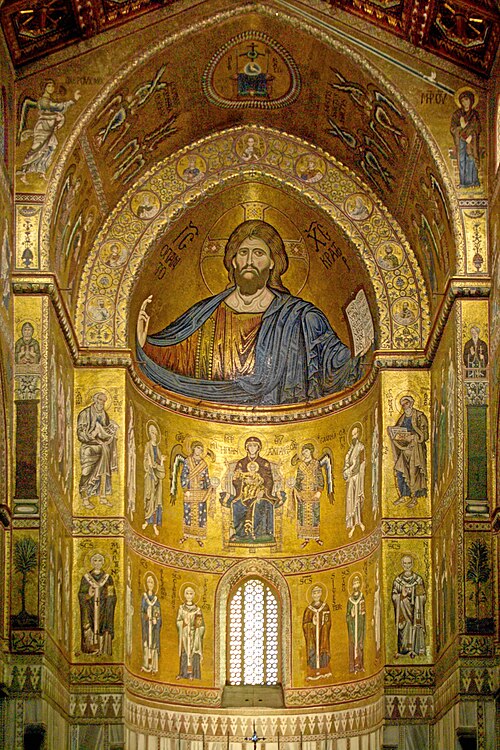
The morning sun streams through the high windows of Monreale Cathedral, igniting a blaze of gold that seems to emanate from the walls themselves. You hear the soft echo of your footsteps on the ancient stone floor, the distant murmur of a whispered prayer, and the profound silence that hangs over this sacred space. Before you, the colossal figure of Christ Pantocrator—“Ruler of All”—gazes down from the apse with an expression of serene authority, his hand raised in blessing. This is not mere decoration; it is one of the world’s greatest masterpieces of Byzantine art, a mosaic covering over 6,500 square meters (70,000 square feet) with more than 100 million glass and gold tesserae [[36]]. Commissioned in 1174 by King William II of Sicily, the cathedral stands as a testament to a unique moment in history when Norman, Arab, and Byzantine cultures converged on this island to create something transcendent. In an age of digital distraction and fleeting images, the mosaics of Monreale matter now more than ever—they are a portal to a world where art, faith, and power were woven together in threads of gold.
Why Monreale Cathedral Mosaics Embodies Triumphant Synthesis
The mosaics of Monreale Cathedral are not just beautiful; they are a political and theological manifesto rendered in glass and gold. Built between 1174 and 1189 under the patronage of the Norman King William II, the cathedral was a deliberate act of cultural synthesis. At a time when Sicily was a crossroads of empires, William sought to legitimize his rule by blending the artistic languages of his diverse kingdom: the architectural grandeur of the Normans, the intricate geometric patterns of the Arabs, and the spiritual iconography of the Byzantines. The result is a breathtaking narrative cycle that covers every inch of the walls and ceilings, depicting over 130 scenes from the Old and New Testaments. The central apse features the iconic Christ Pantocrator, a 7-meter (23-foot) tall image whose eyes seem to follow you wherever you stand—a powerful symbol of divine omniscience. This vast program “solved” a critical problem of its time: how to educate a largely illiterate populace about Christian doctrine while simultaneously showcasing the king’s piety and power. Today, it fulfills a modern need—for an immersive experience of art that is both intellectually profound and emotionally overwhelming.
The Best Time to Experience Monreale Cathedral Mosaics
To experience the cathedral in its most atmospheric and peaceful state, plan your visit for the specific windows of April 15–May 30 or September 10–October 20, 2026. During these periods, the weather in western Sicily is ideal, with daytime temperatures ranging from a comfortable 21–26°C (70–79°F), and the intense summer crowds have yet to arrive or have already departed [[11]]. The best time of day to visit is in the mid-morning, between 9:30 AM and 11:30 AM, when the sunlight streams through the clerestory windows, illuminating the golden mosaics and creating a truly ethereal atmosphere. It is strongly advised to avoid the peak summer months of July and August, when the combination of heat and large tour groups can diminish the contemplative experience [[54]]. For the most current information on opening hours, special masses, and guided tours, always consult the official website: monrealecattedrale.it.
Approximate Budget for a 7-Day Trip (2026)
This budget is calculated for a solo traveler seeking a comfortable, culturally rich experience in western Sicily in 2026, based on current inflation trends and average regional costs.
- Accommodation: €85–€150 per night. Staying in a boutique hotel in Palermo offers easy access to Monreale (just a 20-minute drive). Options in Monreale itself are limited but charming.
- Food: €45 per day. Breakfast (€5): a cappuccino and brioche at a local bar. Lunch (€16): a plate of pasta alla Norma at a trattoria near the cathedral. Dinner (€24): a main course like grilled swordfish with a glass of local Grillo wine.
- Transportation: €120 total. A regional train ticket from Palermo to Monreale (€2). A weekly AMAT pass for unlimited public transport in Palermo (€15). Occasional taxi rides to Monreale (€15 each way).
- Attractions: Entry to Monreale Cathedral and Cloister (€6). Guided tour of the mosaics (€15). Visit to the Regional Museum of Palermo (€8).
- Miscellaneous: €95. This covers a bottle of local wine (€15), several gelato stops (€3 each), a cooking class featuring Sicilian recipes (€40), and souvenirs like a book of mosaic prints.
Total Estimated Cost: €870–€990
6 Essential Monreale Cathedral Mosaics Experiences
- Stand Beneath Christ Pantocrator: Position yourself directly under the apse to fully appreciate the scale and detail of the 7-meter-tall mosaic. Notice how the artist used subtle shading in the gold tesserae to create a three-dimensional effect.
- Follow the Biblical Narrative: Start at the nave and walk clockwise to follow the story from Genesis to Revelation. The Old Testament scenes are on the left, the New Testament on the right—a visual catechism for the medieval faithful.
- Explore the Cloister: Just outside the main church, the 12th-century cloister is a masterpiece of Norman-Arab architecture, with 228 twin columns, each uniquely carved with biblical scenes, animals, and mythological creatures.
- Attend a Mid-Morning Mass: If your visit coincides with a service, attend to hear the acoustics of the space and see the mosaics in their original context—as a living place of worship.
- Hire a Knowledgeable Guide: A local expert can decode the symbolism of the mosaics—the hidden messages, the political statements, and the artistic techniques that make this site so extraordinary.
- Photograph the Light at 10:00 AM: The angle of the morning sun creates a magical glow on the golden backgrounds. Use your camera’s HDR mode to capture the full range of light and detail.
3 Hidden Gems Most Travelers Miss
- The Royal Tombs: In the south transept, the tombs of King William I and William II are often overlooked. The porphyry sarcophagi are stunning examples of Norman royal funerary art.
- The View from the Cathedral Terrace: After your visit, climb the steps behind the apse to a small public terrace. The panoramic view over Palermo and the Conca d’Oro valley is breathtaking—and free.
- The Ancient Olive Tree in the Piazza: In the square in front of the cathedral, a gnarled olive tree is said to be over 500 years old. It’s a quiet spot to reflect after the intensity of the mosaics.
Cultural & Practical Tips
- Dress respectfully: Shoulders and knees must be covered to enter the cathedral. Carry a scarf or light jacket even in summer.
- Speak in hushed tones: This is an active place of worship. Keep your voice low to preserve the atmosphere for everyone.
- Learn a few key phrases: “Dov’è la cattedrale?” (DOH-veh lah kah-teh-DRAH-leh?) for “Where is the cathedral?”, and “Un caffè, per favore” (oon kah-FEH).
- Photography is allowed, but no flash: Flash photography is prohibited to protect the delicate surfaces of the mosaics. Use natural light only.
- Combine your visit with Palermo: Monreale is just a short trip from Palermo. Pair your visit with the Palatine Chapel or the street markets for a full day of cultural immersion.
- Tipping is appreciated but not expected: A small tip of €2–€5 for your guide is a kind gesture for an insightful tour.
Conclusion: Travel with Reverence, Not Just a Lens
The mosaics of Monreale Cathedral are not a backdrop for your vacation photos; they are a silent sermon in gold and glass that has been preaching for over 800 years. In 2026, as we seek travel experiences that are both awe-inspiring and meaningful, this sacred space offers a rare gift: the chance to stand in the presence of something truly transcendent. Your journey here should be one of reverence, not just curiosity. Feel the weight of history in the cool stone, listen to the silence that hangs between the golden tiles, and let the gaze of Christ Pantocrator put your own life into perspective. By traveling with this mindful respect, you honor the legacy of the artisans who spent decades creating this masterpiece and help ensure its power endures. Slow down. Sit on a bench and let the light wash over you. In that quiet moment of communion with art and faith, you don’t just visit Monreale—you become part of its timeless, golden story.