
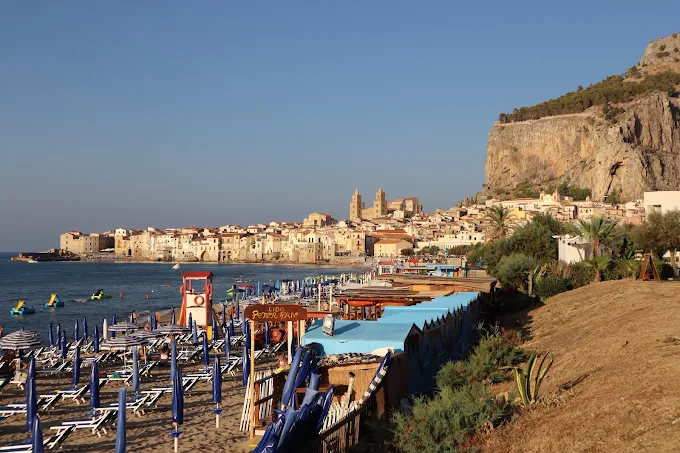
Cefalù Beach and Duomo Norman Majesty Meets Tyrrhenian Blue
The morning sun glints off the turquoise waters of the Tyrrhenian Sea as gentle waves lap against Cefalù’s golden-sand beach. You hear the soft crunch of your footsteps on the shore, the distant chime of church bells from the 12th-century Duomo, and the low murmur of locals sipping espresso at a café beneath the shadow of La Rocca mountain. This is the heart of Sicily’s northern coast—a town where history and nature exist in perfect harmony. The Duomo di Cefalù, with its iconic twin towers and breathtaking Byzantine mosaics, stands sentinel over a crescent of pristine beach that stretches for 1.2 kilometers (0.75 miles). Founded by the Normans in 1131 under King Roger II, this UNESCO World Heritage site embodies the island’s unique cultural fusion. In an age of overtourism and fleeting experiences, Cefalù matters now more than ever—it is a place where you can swim in crystal-clear water in the morning and stand before divine artistry by afternoon, all within a single, walkable frame.
Why Cefalù Beach and Duomo Embodies Cultural Harmony
Cefalù’s genius lies in its seamless integration of sacred architecture and natural beauty—a duality that has defined the town for over 900 years. Commissioned by King Roger II in 1131, the Duomo was part of a grand political and spiritual project to consolidate Norman rule over Sicily’s diverse population of Greeks, Arabs, and Latins. Its fortress-like exterior, with massive stone walls and imposing twin bell towers, reflects Norman military pragmatism, while its interior houses one of the most magnificent Byzantine mosaics in the world—the 6-meter (20-foot) tall Christ Pantocrator in the apse [[37]]. This synthesis “solved” a critical problem of its time: how to create a unifying symbol of Christian authority that could speak to multiple cultures. Meanwhile, the adjacent beach—sheltered by the curve of La Rocca mountain—provided a safe harbor for maritime trade and a natural gathering space for the community. Today, this harmonious balance fulfills a modern need—for a destination where profound culture and natural splendor coexist without compromise. You don’t choose between art and sea here; you experience them as two expressions of the same enduring Sicilian soul.
The Best Time to Experience Cefalù Beach and Duomo
To enjoy Cefalù in its most balanced and comfortable state, plan your visit for the specific windows of May 15–June 20 or September 10–October 5, 2026. During these periods, daytime temperatures average a pleasant 23–27°C (73–81°F), the sea has warmed to a swimmable 21–23°C (70–73°F), and the light is ideal for photography [[11]]. The best time of day to visit the Duomo is 9:00–11:00 AM, when the morning sun illuminates the golden mosaics without glare. For the beach, aim for 8:00–10:00 AM to enjoy calm water and empty sands. It is strongly advised to avoid the peak summer period of July 20–August 25, when the town’s population swells, accommodation prices double, and the serene atmosphere gives way to crowds [[55]]. For the most current weather and event information,
Approximate Budget for a 7-Day Trip (2026)
This budget is calculated for a solo traveler seeking a comfortable, culturally rich experience in Cefalù in 2026, based on current inflation trends and average regional costs.
- Accommodation: €90–€150 per night. Staying in a boutique hotel in the historic center offers easy access to both the Duomo and the beach. Options on the Lungomare (seafront) command higher prices but offer stunning views.
- Food: €45 per day. Breakfast (€5): a cappuccino and brioche at a local bar. Lunch (€16): a plate of pasta con le sarde at a trattoria near Piazza Garibaldi. Dinner (€24): a main course like grilled swordfish with a glass of local Grillo wine.
- Transportation: €100 total. A train ticket from Palermo to Cefalù (€6). Local transport within Cefalù is primarily on foot; occasional taxi rides from the station cost €10.
- Attractions: Entry to the Duomo and Cloister (€4). Guided walking tour of the historic center (€20). Boat tour to hidden coves (€25).
- Miscellaneous: €95. This covers a bottle of local olive oil (€15), several gelato stops (€3 each), a cooking class featuring Sicilian recipes (€40), and souvenirs like handmade ceramics.
Total Estimated Cost: €890–€1,010
6 Essential Cefalù Beach and Duomo Experiences
- Stand Before the Christ Pantocrator Mosaic: Inside the cool, dim nave of the Duomo, the golden mosaic of Christ Pantocrator seems to radiate light from within. His right hand blesses while his left holds the Gospels inscribed in Greek. Visit on a weekday morning to avoid Mass and crowds.
- Swim at the Main Beach at Dawn: Feel the fine, golden sand between your toes as you wade into water so clear you can see every pebble on the seabed. The backdrop of the Duomo and La Rocca creates a postcard-perfect scene. Go before 9:00 AM for solitude.
- Hike to the Temple of Diana on La Rocca: The 30-minute climb up the mountain rewards you with 360-degree views of the Tyrrhenian Sea and the red rooftops of Cefalù. At the summit, the ruins of a 6th-century BC temple offer a humbling connection to antiquity.
- Explore the Medieval Wash House: Carved directly into the rock face, this 13th-century public laundry features channels of fresh spring water that still flow today. It’s a fascinating glimpse into daily medieval life, located just a 5-minute walk east of the Duomo.
- Dine on the Lungomare at Sunset: Savor fresh seafood at a restaurant like Ristorante Il Pirata as the sun dips below the horizon, turning the Duomo’s stone a deep amber. Reserve a terrace table for the best view.
- Take a Boat Tour to Hidden Coves: Glide past sea caves and secluded beaches inaccessible by land. The captain will point out Roman shipwreck sites and hidden grottos where the water glows an intense blue. Tours depart from the small marina south of the main beach.
3 Hidden Gems Most Travelers Miss
- Oratorio di San Sebastiano: Tucked away behind the Duomo, this tiny 17th-century chapel is often missed due to its unmarked entrance. Inside, frescoes depict the saint’s martyrdom in vivid detail. Ask at the Duomo gift shop for access—it’s usually open by request.
- Grotta del Drago (Dragon’s Cave): At the base of La Rocca’s eastern side, this sea cave is accessible only by a short, unmarked scramble. Its acoustics are so perfect that local musicians sometimes perform here at dawn. Go at low tide and ask a fisherman for directions.
- The View from Porta Saracena: This ancient city gate on the eastern edge of town offers a panoramic vista that includes the Duomo, the beach, and the entire sweep of the coastline. It’s a quiet spot for reflection, far from the main tourist paths.
Cultural & Practical Tips
- Dress respectfully for the Duomo: Shoulders and knees must be covered. Carry a light scarf or jacket even in summer.
- Wear sturdy shoes for La Rocca: The hike is steep and the path is rocky. Good footwear is essential for safety.
- Learn a few key phrases: “Dov’è la spiaggia?” (DOH-veh lah spy-AH-jah?) for “Where is the beach?”, and “Un caffè, per favore” (oon kah-FEH).
- Respect the silence in the Duomo: This is an active place of worship. Keep your voice low and avoid loud conversations.
- Beware of the midday sun in summer: The white stone reflects intense heat. Wear a hat, sunglasses, and high-SPF sunscreen, especially between 11:00 AM and 3:00 PM.
- Tipping is appreciated but not expected: Rounding up the bill or leaving €1–€2 for exceptional service is a kind gesture.
Conclusion: Travel with Presence, Not Just a Checklist
Cefalù is not a destination to be ticked off a list; it is a rhythm to be absorbed. In 2026, as we seek travel that nourishes both body and soul, this Sicilian gem offers a rare balance—where a morning swim in turquoise waters flows seamlessly into an afternoon of awe before ancient mosaics. Your journey here should be one of mindful presence: feel the warmth of the golden sand, listen to the echo of centuries in the Duomo’s nave, and let the pace of this town reset your internal clock. By traveling with this deep attention, you honor Cefalù’s fragile ecosystem and living culture. Slow down. Sit on the Lungomare and watch the light change on the sea. In that quiet moment of communion with land, sea, and history, you don’t just visit Cefalù—you become part of its enduring, luminous story.