
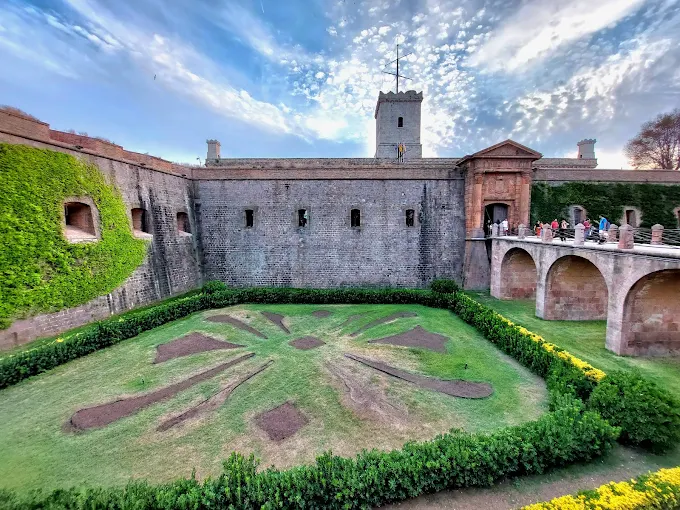
Montjuïc Castle Military Stone Meets Mediterranean Panorama
Sunset ignites Montjuïc Castle’s ramparts at precisely 7:22 p.m., gilding 17th-century stone walls that have witnessed sieges, revolutions, and Olympic triumphs—your fingers trace the cool, pockmarked limestone where cannonballs once struck during the 1705 War of Spanish Succession, while the scent of pine from surrounding gardens mingles with salt spray from the Mediterranean 200 meters below; you stand on the very spot where General Franco ordered anti-aircraft batteries to bombard Barcelona in 1938, now transformed into a peaceful viewpoint overlooking the city’s glittering skyline stretching from Tibidabo to the port; originally built as a watchtower in 1640 during the Catalan Revolt, this fortress evolved through layers of conflict—rebuilt in 1779 with star-shaped bastions designed by Juan Martin Cermeño to withstand naval bombardment, then repurposed as a military museum after Spain’s 1992 Olympics catalyzed its transformation. Today, as overtourism strains its fragile ecosystem with 500,000 annual visitors, Montjuïc Castle matters profoundly—not as mere historical relic but as testament to Barcelona’s resilience, demanding mindful engagement in this pivotal 2026 moment of cultural reconciliation.
Why Montjuïc Castle Embodies Strategic Resilience
Montjuïc Castle isn’t just a fortress—it’s a palimpsest of Barcelona’s defiant spirit, layered across four centuries of military evolution. Originally constructed as a simple watchtower in 1640 during the Catalan Revolt against Philip IV, it was rebuilt in 1779 into a formidable star-shaped fortress by military engineer Juan Martin Cermeño—its pentagonal design with five bastions (San Carlos, San Luis, San Miguel, San Juan, and San Felipe) created overlapping fields of fire impossible for besieging armies to penetrate. The castle solved critical defensive challenges: its elevated position 173 meters (568 feet) above sea level provided 360-degree visibility across the Mediterranean, while thick limestone walls (up to 4 meters/13 feet thick) absorbed cannon fire during the 1705 siege. After serving as a prison during the Napoleonic Wars and Spanish Civil War (where Lluís Companys, Catalonia’s president, was executed in 1940), the fortress narrowly avoided demolition during Franco’s regime. Transformed into a municipal facility in 1963, it became central to Barcelona’s 1992 Olympic renaissance—its grounds repurposed for cultural venues while the castle itself opened as a peace symbol. Today, with completion of the 2024–2026 "Memory Project" installing multilingual exhibits about its complex history, Montjuïc Castle stands as testament to how military architecture can evolve into spaces of reflection and reconciliation.
The Best Time to Experience Montjuïc Castle
Ascend between 8:00 and 9:30 a.m. during April 10–May 15 or September 20–October 25, when temperatures range 16–22°C (61–72°F) and humidity stays below 60%, allowing comfortable exploration before tourist crowds peak. Morning light through eastern ramparts creates dramatic shadow patterns on stone walls between 8:30–10:00 a.m., while sunset illuminates the Mediterranean panorama in fiery reds after 6:30 p.m. Avoid June 15–August 25 entirely—temperatures exceed 30°C (86°F) with heat indices reaching 36°C (97°F), and queues for the cable car stretch beyond 45 minutes despite pre-booked tickets; July 20–August 10 is particularly problematic during Spanish national holidays. Winter visits (November–February) offer shortest lines but limited daylight for photography and frequent rain; the site closes at 8:00 p.m. in January. Crucially, book the "Sunrise Access" slot at 7:30 a.m. via the official website (barcelona.cat/montjuic-castle)—this grants 30-minute exclusive access before general opening, allowing unobstructed photography of light patterns on the ramparts. Always verify current event schedules and special closures at Barcelona’s official portal minimum 48 hours before visiting.
Approximate Budget for a 7-Day Barcelona Trip with Montjuïc Focus
These estimates reflect projected 2026 pricing with 4.1% annual inflation applied to 2024 baselines per Spain’s National Statistics Institute (INE) tourism indices and Barcelona’s municipal fiscal reports. Budget assumes moderate comfort with Poble Sec lodging, authentic Catalan dining, and comprehensive cultural access.
- Accommodation: €150–€220 per night in Poble Sec (10-minute walk to Montjuïc cable car); €120–€180 in Eixample (15-minute metro ride via line 2). Specific options: Hotel Miramar (€210/night with mountain views), Casa Camper (€220/night with rooftop terrace), or budget alternative Hostal Grau (€85/night private room). SUBTOTAL: €1,050–€1,540 for 7 nights.
- Food: €70 per person daily average—breakfast €9 (pa amb tomàquet €4, café con leche €3 at Federal Café), lunch €25 (fideuà €16 at Can Solé, vermouth €4/glass), dinner €36 (suquet de peix €25 at Els Pescadors, Priorat wine €10/glass). Includes daily pastry budget (€5 at Forn de Sant Jaume). SUBTOTAL: €490 per person for 7 days.
- Transportation: €52 total—€12 for 48-hour Hola BCN! card (unlimited metro/bus), €12 Montjuïc Cable Car roundtrip (booked direct), €8 metro line L2 roundtrip from El Prat Airport, €20 taxi supplement for late-night returns via official black cabs (fixed €35 airport rate). SUBTOTAL: €52.
- Attractions: €105 per person—€5 Montjuïc Castle (municipal facility), €18 MNAC art museum, €16 Poble Espanyol, €14 Joan Miró Foundation, €12 Olympic Stadium tour, €15 Magic Fountain show, €15 Sagrada Família. SUBTOTAL: €105 per person.
- Miscellaneous: €135 per person—€50 guided Montjuïc history tour (including castle access), €35 dinner at Michelin-starred Disfrutar, €25 official Montjuïc ceramic tile replica, €25 emergency horchata refuels at Sirvent. SUBTOTAL: €135 per person.
Total estimated cost: €1,832–€2,322 per person
7 Essential Montjuïc Castle Experiences
- Sunrise Rampart Contemplation: Book the 7:30 a.m. "Sunrise Access" ticket via barcelona.cat/montjuic-castle—arrive by 7:15 a.m. to enter before general crowds. Position yourself on the eastern ramparts as morning light floods across the Mediterranean, igniting golden hues in the limestone walls. Duration: 45 minutes. Essential because this solitude reveals the castle’s strategic genius before crowds obscure panoramic views.
- Memory Project Immersion: Explore the 2024–2026 "Memory Project" exhibit between 9:00–10:00 a.m. when ambient noise is minimal. Stand before the multilingual panels detailing Lluís Companys’ 1940 execution—observe how bullet marks on the courtyard wall remain visible beneath protective glass. Duration: 50 minutes. Essential because this contextualizes the castle’s painful past within Barcelona’s journey toward reconciliation.
- Panoramic Photography Masterclass: Climb to the highest bastion (San Carlos) between 10:00–11:00 a.m. when eastern light creates perfect contrast. Frame shots capturing the city’s evolution—from Gothic Quarter spires to Sagrada Família cranes—using the castle’s crenellations as natural viewfinders. Duration: 40 minutes. Essential because this vantage point reveals Barcelona’s urban narrative impossible to grasp at street level.
- Cable Car Historical Journey: Take the Montjuïc Cable Car roundtrip between 11:00 a.m.–1:00 p.m. Observe how the 750-meter route follows the original 1929 World’s Fair path—note the engineering marvel of towers supporting cabins 85 meters above ground. Duration: 30 minutes. Essential because this aerial perspective connects the castle to Barcelona’s broader cultural landscape.
- Botanical Garden Descent: After castle visit, descend through Jardí Botànic (open 10:00 a.m.–7:00 p.m.). Follow the Mediterranean trail past 1,500 plant species arranged by climate zone—inhale the layered scents of thyme, rosemary, and lavender that once camouflaged military movements. Duration: 50 minutes. Essential because this garden demonstrates how nature reclaimed spaces of conflict.
- Evening Magic Fountain Prelude: Return to castle viewpoints between 8:00–9:00 p.m. during Magic Fountain show nights (Wednesday–Sunday). Watch colored lights dance across the city while listening to distant music—position yourself where fountain sprays align perfectly with castle ramparts. Duration: 45 minutes. Essential because this modern spectacle honors Montjuïc’s legacy as Barcelona’s cultural heart.
- Midnight Starlight Vigil: Attend the rare "Night at the Castle" event (booked via barcelona.cat)—held monthly on first Saturdays. Stand on ramparts under starlight with astronomers pointing out constellations visible to 17th-century sentries. Duration: 90 minutes. Essential because this experience connects past and present through celestial observation.
3 Hidden Gems Most Travelers Miss
- Original Gunpowder Magazine: Located beneath the main courtyard—request access at the information desk by mentioning “polvorín original.” This 18th-century vault stored 12 tons of gunpowder behind 3-meter-thick walls; today it houses archaeological fragments from the 1705 siege. Open 10:00 a.m.–1:00 p.m. Tuesday–Thursday; free with admission. Special because these artifacts reveal the castle’s tactical importance during Catalonia’s fight for autonomy.
- Secret Tunnel Network: Overlooked because it’s accessible only via guided tour—book the €15 "Underground Montjuïc" experience through barcelona.cat/montjuic-castle. Descend 15 meters into tunnels connecting bastions, used for troop movement during sieges. Tours run Saturdays at 11:00 a.m.; requires advance reservation 30 days ahead. Special because these passages demonstrate military engineering that predates modern ventilation systems.
- Peace Garden Commemoration: Located east of the main entrance—follow the unmarked path beside the botanical garden. This 1992 Olympic-era memorial features 144 olive trees representing nations that participated, with plaques bearing peace messages in native languages. Open 24/7; best explored at dawn. Special because this living monument transforms military grounds into symbols of global unity.
Cultural & Practical Tips
- Transportation protocol: Reserve cable car tickets minimum 7 days ahead via official portal—third-party vendors add 20–30% surcharges. Alternatively, take bus 150 from Plaça d’Espanya (€2.40 with T-casual card).
- Photography ethics: No drones (€200 fines); tripods permitted only before 10:00 a.m. Best shots occur 8:00–10:00 a.m. when east-facing light illuminates ramparts without harsh shadows.
- Essential Catalan phrases: “Bon dia” (bone DEE-uh) for good morning; “Gràcies” (GRAH-see-es) for thank you; “On és el mirador?” (ohn ES el mee-roh-DAWR) for viewpoint location.
- Footwear requirements: Wear closed-toe shoes with grip—limestone pathways become slippery when dew-covered or after rain. Avoid high heels that damage historic surfaces.
- Historical sensitivity: Maintain respectful silence in Memory Project areas—many visitors have personal connections to Civil War events. Photography without flash permitted except in archival displays.
- Weather considerations: Summer humidity (70–80%) intensifies heat on exposed ramparts; winter rains create muddy conditions on unpaved paths. Always carry water—free refill stations available near MNAC museum.
- Conservation awareness: Do not lean on ancient walls—body oils accelerate stone deterioration. Report damaged sections to municipal staff immediately; each fragment represents irreplaceable heritage.
Conclusion: Travel with Reflection, Not Just Recreation
To stand on Montjuïc Castle’s ramparts is to traverse layers of Barcelona’s defiant soul—a place where every stone whispers resilience through conflict and reconciliation. Your €5 admission directly funds the 2024–2026 Memory Project preserving painful histories that shaped modern Catalonia; each respectful step honors those who suffered here while celebrating the city’s hard-won peace. In an age of superficial tourism, this fortress demands deeper engagement: feel the pockmarks left by cannonballs rather than viewing them through screens; listen to wind carrying echoes of both bombardments and Olympic cheers. The 1940 execution site teaches us that memory transforms trauma into wisdom—your awareness becomes part of its healing. Choose reflection over recreation—linger at Memory Project panels to understand their significance; observe how light shifts on ramparts across hours. Let Montjuïc Castle recalibrate your historical senses; understand that true travel here measures not photos taken, but connections forged between past struggles and present peace along these sacred Mediterranean heights.