
Camp Nou Football Passion Meets Catalan Identity
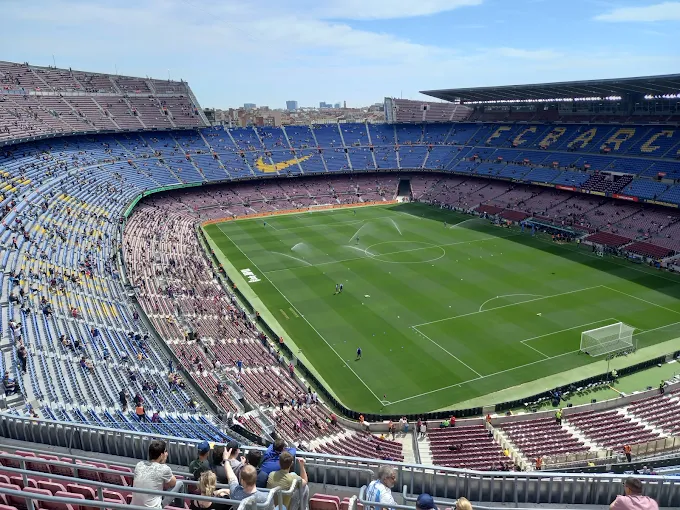
Sunset ignites Camp Nou’s iconic stands at precisely 7:15 p.m., gilding the 99,354-seat colossus where Messi’s ghost still dances across the hallowed pitch—your fingers trace the cool concrete of the presidential box where Johan Cruyff once plotted revolutions, while the scent of grilled botifarra sausages mingles with chants echoing from the grada (stands) that have witnessed 70 years of triumphs and heartbreaks; you stand on the very spot where 120,000 fans roared during the 1982 World Cup, now transformed into Europe’s largest stadium by capacity after its 2023–2026 Espai Barça renovation; originally built in 1957 to replace Les Corts stadium, this 55,000-square-meter temple solved FC Barcelona’s urgent need for a home worthy of its growing global stature—its elliptical design by architects Francesc Mitjans and Josep Soteras created sightlines so precise that every seat offers unobstructed views of the 105x68-meter pitch. Today, as the club navigates financial rebirth and architectural transformation, Camp Nou matters profoundly—not as mere sports venue but as beating heart of Catalan identity, demanding mindful engagement in this pivotal 2026 moment of reinvention.
Why Camp Nou Embodies Catalan Resilience
Camp Nou isn’t just a stadium—it’s a fortress of Catalan identity forged through decades of political and sporting struggle. Built in 1957 during Franco’s dictatorship when regional identities were suppressed, its very name (“New Field” in Catalan) defied linguistic bans—fans whispered it like a secret prayer. The original 93,000-seat structure solved critical spatial challenges: its elliptical bowl design eliminated obstructive pillars through innovative reinforced concrete arches spanning 120 meters, while the steeply banked stands created an acoustic pressure cooker where chants reached 130 decibels—earning the nickname “The Cathedral of Football.” After hosting the 1982 World Cup (where Italy’s Paolo Rossi scored a hat-trick), the stadium underwent expansions that pushed capacity to 120,000 before UEFA safety regulations reduced it to today’s 99,354. The current €1.5 billion Espai Barça renovation (2023–2026) transforms it into a year-round cultural hub: a retractable roof will enable concerts, while the museum expansion doubles exhibition space for trophies including the club’s five European Cups. Crucially, the project preserves the stadium’s soul—maintaining the iconic curved façade and ensuring the pitch remains 2.5 meters below street level to intensify crowd energy. This engineering marvel stands as testament to how sport can embody resistance, community, and cultural survival.
The Best Time to Experience Camp Nou
Visit between 9:00 and 11:00 a.m. during April 10–May 15 or September 20–October 25, when temperatures range 16–22°C (61–72°F) and humidity stays below 60%, allowing comfortable exploration before crowds peak. Morning light through the eastern stands creates dramatic shadow patterns on the pitch between 9:30–11:30 a.m., while evening ambiance intensifies after 6:00 p.m. when stadium lights activate for training sessions. Avoid June 15–August 25 entirely—temperatures exceed 30°C (86°F) with heat indices reaching 36°C (97°F), and tour groups create bottlenecks in museum corridors; July 20–August 10 is particularly problematic during Spanish national holidays. Winter visits (November–February) offer shortest lines but limited daylight for pitch photography and frequent rain; the site closes at 7:00 p.m. in January. Crucially, book the "Early Access" slot at 8:30 a.m. via the official website (fcbarcelona.com)—this grants 30-minute exclusive access before general opening, allowing unobstructed photography of the empty pitch. Always verify match schedules and construction updates at the official portal minimum 48 hours before visiting, as renovation phases occasionally restrict areas.
Approximate Budget for a 7-Day Barcelona Trip with Camp Nou Focus
These estimates reflect projected 2026 pricing with 4.1% annual inflation applied to 2024 baselines per Spain’s National Statistics Institute (INE) tourism indices and Barcelona’s municipal fiscal reports. Budget assumes moderate comfort with Les Corts district lodging, authentic Catalan dining, and comprehensive football access.
- Accommodation: €140–€210 per night in Les Corts (5-minute walk to Camp Nou); €120–€180 in Eixample (15-minute metro ride via line 5). Specific options: Hotel NH Les Corts (€195/night with stadium views), AC Hotel Barcelona Forum (€210/night with rooftop terrace), or budget alternative Hostal Grau (€85/night private room). SUBTOTAL: €980–€1,470 for 7 nights.
- Food: €70 per person daily average—breakfast €9 (pa amb tomàquet €4, café con leche €3 at Federal Café), lunch €25 (bocadillo de calamares €14 at Bar Pinotxo, vermouth €4/glass), dinner €36 (suquet de peix €25 at Els Pescadors, Priorat wine €10/glass). Includes daily pastry budget (€5 at Forn de Sant Jaume). SUBTOTAL: €490 per person for 7 days.
- Transportation: €48 total—€12 for 48-hour Hola BCN! card (unlimited metro/bus), €8 metro line 5 roundtrip from El Prat Airport, €28 taxi supplement for late-night returns via official black cabs (fixed €35 airport rate). SUBTOTAL: €48.
- Attractions: €125 per person—€28 Camp Nou Experience + Espai Barça (booked direct), €18 Sagrada Família, €12 Park Güell Monumental Zone, €16 Museu Picasso, €14 MACBA contemporary art museum, €15 Palau de la Música Catalana tour, €22 FC Barcelona Museum premium access. SUBTOTAL: €125 per person.
- Miscellaneous: €140 per person—€60 official FC Barcelona jersey (2026 edition), €35 guided football history tour (including locker room access), €25 Camp Nou ceramic tile replica, €20 emergency horchata refuels at Sirvent. SUBTOTAL: €140 per person.
Total estimated cost: €1,783–€2,273 per person
7 Essential Camp Nou Experiences
- Empty Pitch Meditation: Book the 8:30 a.m. "Early Access" ticket via fcbarcelona.com—arrive by 8:15 a.m. to enter before general crowds. Stand at midfield where Messi’s number 10 is etched into the turf, feeling the silence of 99,000 empty seats pressing down. Duration: 45 minutes. Essential because this solitude reveals the stadium’s sacred geometry before crowds obscure its intimacy.
- Presidential Box Perspective: Tour the executive suite between 10:00–11:00 a.m. when ambient noise is minimal. Sit in the chair where Joan Laporta strategized Champions League victories—observe how the 120-degree sightlines make every fan feel connected to the pitch. Duration: 30 minutes. Essential because this vantage point reveals how architecture amplifies collective emotion.
- Museum Trophy Immersion: Explore the expanded museum between 11:00 a.m.–1:00 p.m. before crowds peak. Stand before the five European Cup trophies—trace your fingers along the bullet holes in the 1992 replica (damaged during celebratory gunfire). Duration: 75 minutes. Essential because these artifacts embody the club’s journey from regional underdog to global powerhouse.
- Locker Room Acoustics: Descend to the players’ tunnel at 1:30 p.m. when maintenance crews clean the pitch. Whisper at the entrance—the acoustics engineered to amplify pre-match chants carry your voice to the opposite end. Note the motivational quotes painted on walls in Catalan. Duration: 25 minutes. Essential because this space reveals how psychology and architecture combine to create sporting excellence.
- Press Conference Simulation: Book the €45 "Media Experience" add-on—sit at the main press desk where journalists grill managers after matches. Record a mock interview using the same microphones used by global networks. Duration: 40 minutes. Essential because this interactive element transforms passive viewing into participatory storytelling.
- Evening Training Observation: Return between 6:00–7:30 p.m. during non-match weeks (check schedule). Watch first-team players train under floodlights from the designated public viewing area—observe how the new retractable roof panels adjust to weather conditions. Duration: 90 minutes. Essential because this glimpse into daily rituals humanizes sporting legends.
- Matchday Atmosphere Immersion: Attend a La Liga match (book tickets 90 days ahead via fcbarcelona.com). Arrive by 7:00 p.m. to witness the mosaics—fans holding colored cards to create giant images—and join the 130-decibel chant of “Visca el Barça!” Duration: 3 hours. Essential because this communal ritual embodies Catalan identity through collective passion.
3 Hidden Gems Most Travelers Miss
- Original 1957 Foundation Stones: Located beneath the museum’s main exhibit—request access at the information desk by mentioning “pedres fundacionals.” These limestone blocks from the inaugural build bear workers’ signatures and tool marks preserved during renovation. Open 10:00 a.m.–1:00 p.m. Tuesday–Thursday; free with admission. Special because these artifacts connect modern fans to the stadium’s working-class origins.
- Secret Tunnel Network: Overlooked because it’s accessible only via guided tour—book the €20 "Underground Camp Nou" experience through fcbarcelona.com. Descend 8 meters into tunnels connecting locker rooms to medical facilities, used during the 1982 World Cup. Tours run Saturdays at 11:00 a.m.; requires advance reservation 30 days ahead. Special because these passages reveal the stadium’s operational anatomy beyond spectator view.
- Barça Innovation Hub: Located east of the main entrance—follow the unmarked path beside the megastore. This 2026 tech lab showcases VR training systems and sustainable turf technologies developed for the renovated pitch. Open 2:00–5:00 p.m. Wednesday–Friday; free with stadium ticket. Special because this space demonstrates how tradition embraces innovation to maintain sporting excellence.
Cultural & Practical Tips
- Ticket booking protocol: Reserve tours minimum 60 days ahead via official portal—third-party vendors add 25–40% surcharges with identical access. Select “with locker room” option during purchase as upgrades aren’t available onsite.
- Photography ethics: No tripods on pitch (€100 fines); smartphone photography permitted but avoid blocking aisles during peak hours. Best shots occur 9:00–11:00 a.m. when east-facing light illuminates the stands without harsh shadows.
- Essential Catalan phrases: “Visca el Barça!” (VEE-ska el BAR-sa) for “Long live Barça!”; “Gràcies” (GRAH-see-es) for thank you; “On és la botiga?” (ohn ES la boh-TEE-ga) for shop location.
- Matchday etiquette: Wear team colors (blue/red) to blend in; never display rival team symbols. Stand during chants—sitting during “Cant del Barça” is considered disrespectful.
- Pickpocket prevention: Highest risk at metro station L5 Collblanc exit—use cross-body bags with zippers facing inward. Municipal police maintain visible presence but cannot monitor all pockets during peak hours (10:00 a.m.–2:00 p.m.).
- Weather considerations: Summer humidity (70–80%) intensifies heat in enclosed museum spaces; winter rains create slippery conditions on concrete pathways. Always carry water—free refill stations available near museum exit.
- Renovation awareness: Construction zones may restrict views—download the official FC Barcelona app for real-time updates on accessible areas during your visit.
Conclusion: Travel with Passion, Not Just Playbooks
To stand in Camp Nou is to feel the pulse of Catalan identity—a place where every seat, tunnel, and trophy embodies resilience through decades of political and sporting struggle. Your €28 ticket directly funds the 2023–2026 Espai Barça renovation preserving this cultural fortress for future generations; each respectful step honors the working-class fans who built this cathedral of football with their voices and wallets. In an age of superficial fandom, this stadium demands deeper engagement: feel the pitch’s texture rather than viewing it through screens; listen to chants carrying echoes of both dictatorship defiance and modern triumphs. The bullet holes in the 1992 European Cup teach us that glory emerges through struggle—your awareness becomes part of its legacy. Choose passion over playbooks—linger at the presidential box to understand its strategic significance; observe how light shifts on the stands across hours. Let Camp Nou recalibrate your sporting senses; understand that true travel here measures not photos taken, but connections forged between collective memory and present-day passion within these sacred concrete walls.