
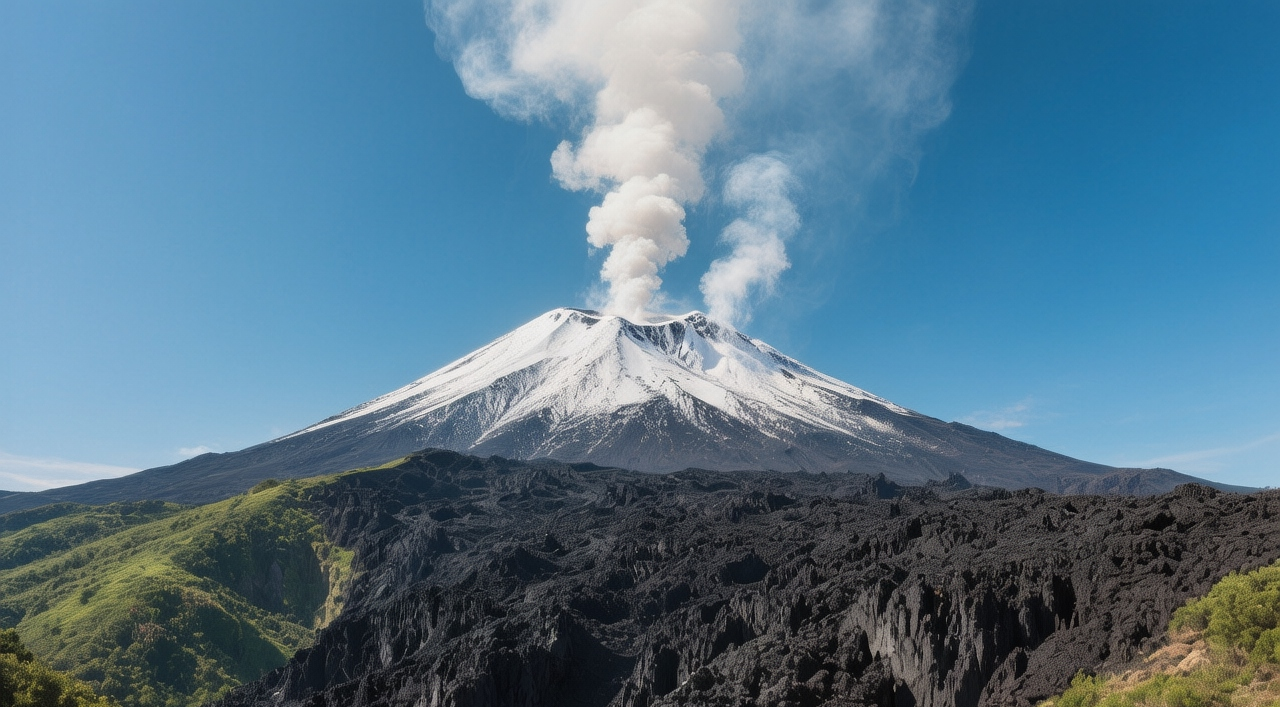
Mount Etna Volcano Fire Meets Fertile Earth
The morning sun glints off the snow-dusted peak of Mount Etna, Europe’s tallest and most active volcano, as a thin plume of white vapor rises from its summit craters. You hear the crunch of volcanic rock underfoot, the distant rumble of the earth’s inner fire, and the whisper of the wind through the sparse vegetation on the upper slopes. At 3,357 meters (11,014 feet), Etna is not just a mountain—it is a living, breathing entity that has shaped Sicily’s landscape, culture, and cuisine for millennia. Its frequent eruptions, while dramatic, have gifted the surrounding land with mineral-rich soil so fertile that it produces some of Italy’s most prized wines, citrus fruits, and honey. In an age of climate anxiety and disconnection from nature, Mount Etna matters now more than ever—it is a powerful reminder of the planet’s raw, creative energy, where destruction and life are two sides of the same geological coin.
Why Mount Etna Volcano Embodies Creative Power
Mount Etna is not merely a geological feature; it is the very heart of eastern Sicily, a dynamic force that has defined the region for over 500,000 years. Its continuous activity—Etna erupts on average once every year—makes it one of the world’s most closely monitored volcanoes. The mountain’s unique structure is a testament to its long history: a massive shield volcano built from countless layers of lava flows, punctuated by four distinct summit craters and over 300 parasitic cones on its flanks [[32]]. This constant renewal “solved” a fundamental problem for ancient civilizations: how to thrive in a volatile environment. The Greeks and Romans revered Etna as the forge of Hephaestus, the god of fire, and the prison of the giant Typhon. Today, this same power fulfills a modern need—for a direct encounter with the primal forces that shape our planet. The rich, black soil created by millennia of eruptions supports a UNESCO-recognized agricultural system, producing the grapes for Etna DOC wines and the famous arancia rossa di Sicilia (blood orange). Etna is not a threat to be feared, but a partner in a delicate, ongoing dance between fire and fertility.
The Best Time to Experience Mount Etna Volcano
To experience Etna in its most accessible and comfortable state, plan your visit for the specific windows of May 15–June 20 or September 10–October 15, 2026. During these periods, the weather is ideal for hiking, with daytime temperatures at the base ranging from 22–26°C (72–79°F), while the summit remains cool but not icy [[11]]. The best time of day to ascend is in the early morning, between 8:00 AM and 10:00 AM, when the air is clear, the trails are quiet, and you can witness the sunrise from the upper slopes. It is strongly advised to avoid the peak summer months of July and August, when temperatures at the base can exceed 35°C (95°F) and the high altitude offers little relief from the intense sun [[50]]. For the most current information on volcanic activity, trail conditions, and guided tours,
Approximate Budget for a 7-Day Trip (2026)
This budget is calculated for a solo traveler seeking a comfortable, adventure-focused experience in eastern Sicily in 2026, based on current inflation trends and average regional costs.
- Accommodation: €90–€160 per night. Staying in a hotel in Catania or Nicolosi offers easy access to the volcano. Options on the northern side near Linguaglossa are quieter and closer to the main park entrance.
- Food: €45 per day. Breakfast (€5): a cappuccino and brioche at a local bar. Lunch (€16): a light pasta dish at a mountain rifugio. Dinner (€24): a main course like grilled sardines with a glass of local Etna Rosso wine.
- Transportation: €180 total. A rental car for the week is essential for exploring the volcano’s diverse access points (€45/day). Cable car and 4x4 tour to the summit craters (€65).
- Attractions: Entry to the Etna Park visitor center (free). Guided hike to the Valle del Bove (€35). Wine tasting tour at a local vineyard on the slopes (€25).
- Miscellaneous: €100. This covers a bottle of local wine (€20), several gelato stops (€3 each), a lava stone souvenir (€15), and meals during your volcano excursions.
Total Estimated Cost: €975–€1,095
6 Essential Mount Etna Volcano Experiences
- Ride the Cable Car to Torre del Filosofo: Take the cable car from Rifugio Sapienza up to 2,500 meters (8,202 feet), then board a 4x4 bus to the edge of the summit craters. The views are otherworldly, and you can feel the heat from the fumaroles.
- Hike the Lava Fields of 2002: Walk across the stark, black expanse of the most recent major lava flow. The surreal landscape is a powerful reminder of Etna’s creative-destructive power.
- Explore the Grotta del Gelo: This ice cave, located on the northern side, contains a permanent glacier inside a lava tube. It’s a fascinating contrast of fire and ice, formed by a 16th-century eruption.
- Visit a Winery on the Volcanic Slopes: Tour a family-run vineyard in the Etna DOC zone. Taste wines made from Nerello Mascalese grapes grown in the mineral-rich soil, and learn how the volcano shapes their unique flavor.
- Walk the Crateri Silvestri: These extinct craters from the 1892 eruption are easily accessible and offer a safe, close-up look at Etna’s geology. The short hike around their rims is perfect for all fitness levels.
- Witness the Sunset from Piano Provenzana: On the northern side, this scenic viewpoint offers a panoramic vista of the mountain and the sea beyond. Watching the sun dip below the horizon while Etna looms behind is unforgettable.
3 Hidden Gems Most Travelers Miss
- The Chestnut Forest of Sant’Alfio: On the eastern slopes, this ancient forest is home to the “Chestnut Tree of a Hundred Horses,” a 3,000-year-old tree that is the largest and oldest chestnut in the world. It’s a peaceful, mystical place far from the main tourist routes.
- The Alcantara Gorges: Formed by lava meeting the Alcantara River, these dramatic basalt canyons are a short drive from the volcano. You can walk down into the cool, narrow gorges—a refreshing contrast to the mountain’s heat.
- The Observatory of Monte Cagliato: A small, private observatory run by a local vulcanologist offers intimate, expert-led tours that go beyond the standard tourist experience. Book ahead via their website for a truly personalized adventure.
Cultural & Practical Tips
- Dress in layers: Temperatures can vary drastically from the base to the summit. Wear sturdy hiking boots, a warm jacket, and bring gloves even in summer.
- Always go with a certified guide for summit hikes: The terrain is unstable, and volcanic activity can change rapidly. A guide ensures your safety and provides invaluable context.
- Learn a few key phrases: “Dov’è l’Etna?” (DOH-veh LEHT-nah?) for “Where is Etna?”, and “Un caffè, per favore” (oon kah-FEH).
- Respect the park rules: Stay on marked trails, do not remove rocks or lava samples, and carry out all your trash. The ecosystem is fragile and actively protected.
- Check the volcanic alert level before your visit: Activity can lead to trail closures. The official park website provides real-time updates.
- Tipping is appreciated but not expected: A small tip of €5–€10 for your guide is a kind gesture for a safe and informative experience.
Conclusion: Travel with Humility, Not Just Adventure
Mount Etna is not a trophy to be conquered; it is a teacher of humility and awe. In 2026, as we seek travel experiences that are both thrilling and meaningful, Etna offers a profound lesson in our place within the natural world. Your journey here should be one of respect, not just adrenaline. Feel the warmth of the earth beneath your feet, listen to the deep rumble of its inner fire, and marvel at the life that flourishes in its shadow. By traveling with this mindful humility, you honor the spirit of the mountain and support its preservation as a UNESCO World Heritage site. Slow down. Sit on a lava rock and watch the clouds drift over the summit. In that quiet moment of communion with Etna’s immense, ancient power, you don’t just visit a volcano—you connect with the very pulse of the planet.