
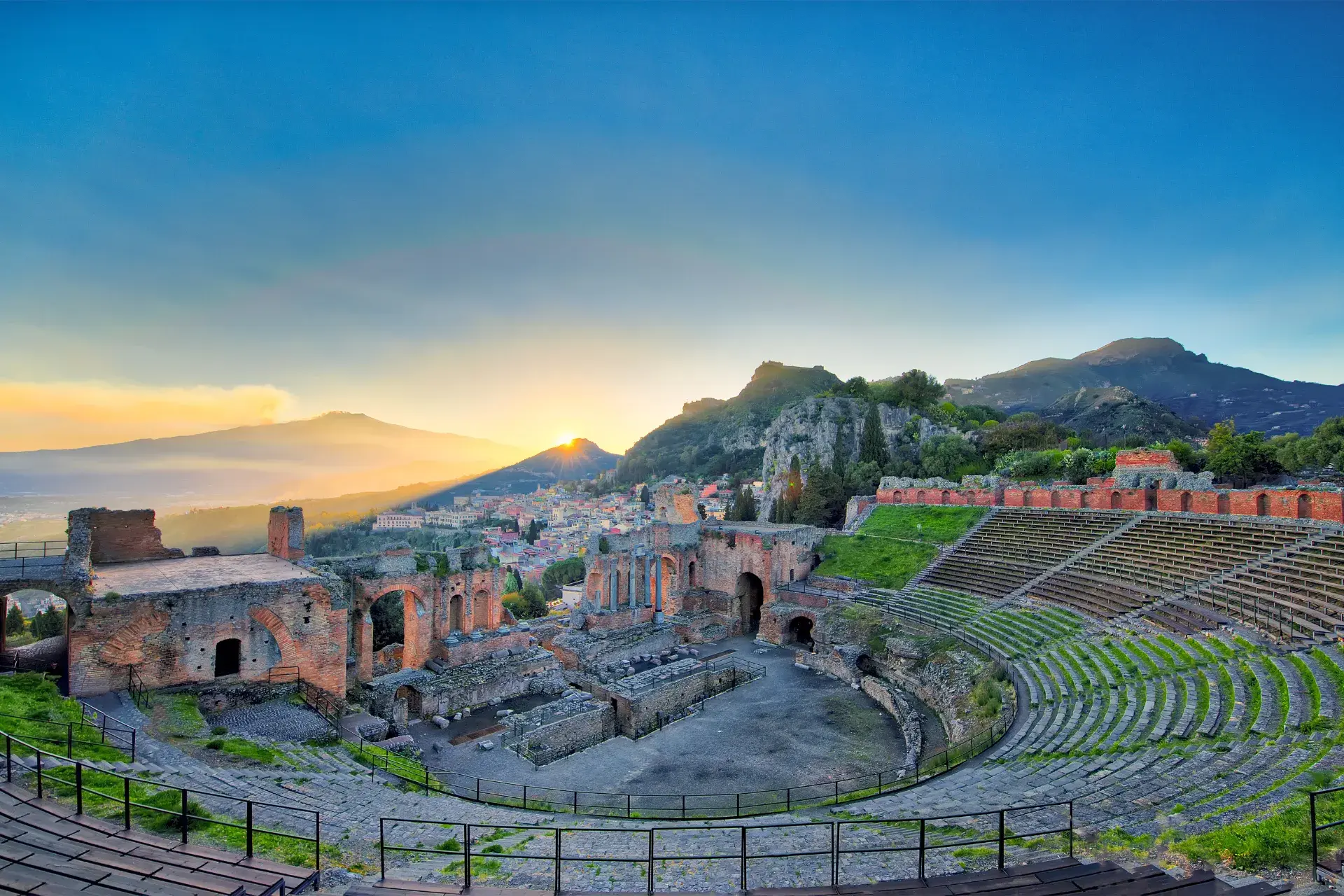
Taormina Greek Theater Ancient Drama Meets Sicilian Majesty
The morning sun in Sicily strikes the honey-colored limestone of the ancient theater, warming the stone seats that have held audiences for over 2,300 years. You hear the soft echo of your own footsteps on the worn steps, the distant murmur of the Ionian Sea far below, and the profound silence that hangs over this sacred space. Before you, the stage opens to one of the most breathtaking backdrops in the world: the snow-capped cone of Mount Etna, Europe’s largest and most active volcano, rising 3,357 meters (11,014 feet) into the sky, with the deep blue sea stretching to the horizon beyond [[31]]. Built by the Greeks in the 3rd century BC and later expanded by the Romans, this theater is not just an archaeological site—it is a living stage where time, nature, and human artistry converge. In an age of digital distraction and fleeting experiences, the Taormina theater matters now more than ever—it is a place where you can feel the weight of history while gazing upon a landscape that has inspired awe since antiquity.
Why Taormina Greek Theater Embodies Timeless Spectacle
The Greek Theater of Taormina is not merely a ruin; it is a masterclass in the ancient art of theatrical design and natural integration. Originally constructed in the 3rd century BC by the Greek colonists of Tauromenion, the theater was built into the natural slope of Monte Tauro, a strategic choice that provided both structural stability and an unparalleled panoramic view. Its original Hellenistic form was a classic semicircular theatron with a diameter of 109 meters (358 feet), capable of seating up to 5,000 spectators. In the 2nd century AD, the Romans transformed it into an amphitheater by adding a central arena for gladiatorial games, a modification that speaks to the site’s enduring cultural importance [[31]]. The theater’s genius lies in its symbiotic relationship with the landscape—the architects didn’t just build a venue; they framed a living masterpiece. The stage perfectly aligns with Mount Etna, turning the volcano into a dynamic, ever-present backdrop. This solved a fundamental problem of ancient theater: how to create a sense of the divine and the epic. Today, it fulfills a modern need—for a place where beauty is not static, but a dialogue between human creation and the raw power of nature.
The Best Time to Experience Taormina Greek Theater
To experience the theater in its most atmospheric and comfortable state, plan your visit for the specific windows of April 20–May 30 or September 10–October 15, 2026. During these periods, Sicily enjoys ideal weather, with daytime temperatures ranging from a pleasant 22–26°C (72–79°F), and the intense summer crowds have yet to arrive or have already departed [[11]]. The best time of day to visit is in the early morning, between 8:30 AM and 10:30 AM, when the light is soft, the site is quiet, and you can have the theater almost to yourself to absorb its grandeur. It is strongly advised to avoid the peak summer months of July and August, when temperatures can soar above 34°C (93°F), the open-air site offers little shade, and the experience is diminished by large tour groups [[49]]. For the most current information on opening hours, special events like the annual Taormina Film Fest, and guided tours, always consult the official website: comune.taormina.me.it.
Approximate Budget for a 7-Day Trip (2026)
This budget is calculated for a solo traveler seeking a comfortable, culturally rich experience in eastern Sicily in 2026, based on current inflation trends and average regional costs.
- Accommodation: €100–€180 per night. Staying in a boutique hotel in Taormina’s historic center offers stunning views and easy access to the theater. Options in nearby Giardini Naxos are more affordable.
- Food: €50 per day. Breakfast (€6): a cappuccino and brioche at a local bar. Lunch (€18): a plate of pasta alla Norma at a trattoria. Dinner (€26): a main course like grilled swordfish with a glass of local Etna Rosso wine.
- Transportation: €150 total. A regional train ticket from Catania to Taormina (€5). A weekly pass for local buses (€15). A rental car for day trips to Etna or Syracuse (€40/day).
- Attractions: Entry to the Greek Theater (€10). Guided walking tour of Taormina (€20). Cable car ride to Mazzarò Beach (€3).
- Miscellaneous: €110. This covers a bottle of local wine (€20), several gelato stops (€4 each), a cooking class featuring Sicilian recipes (€45), and souvenirs like a replica of a Greek mask.
Total Estimated Cost: €980–€1,100
6 Essential Taormina Greek Theater Experiences
- Sit in the Upper Tiers at Sunrise: Arrive just after opening to climb to the highest rows. From here, the view of Mount Etna and the Ionian Sea is utterly cinematic—a perspective that has moved audiences for millennia.
- Attend a Performance at the Teatro Antico: If your visit coincides with the summer festival season, book a ticket to see an opera, concert, or play. Experiencing a live performance in this ancient space is unforgettable.
- Walk the Ancient Stage: Stand where Greek actors once performed tragedies by Sophocles. Imagine the roar of the crowd as you look out over the same majestic vista they did over 2,000 years ago.
- Explore the Roman Modifications: Look for the traces of the Roman arena and the underground chambers where gladiators and animals were held. It’s a fascinating layer of history added to the original Greek structure.
- Photograph the Iconic View: Capture the classic shot from the stage looking out towards Etna. The best light for photography is in the early morning or late afternoon when the mountain is bathed in golden light.
- Combine Your Visit with Corvaja Palace: Just a short walk away, this 10th-century palace houses the Public Library and offers another stunning viewpoint over the coast, providing historical context for the town.
3 Hidden Gems Most Travelers Miss
- The Secret Garden of Palazzo Corvaja: Behind the famous palace, a small, peaceful garden offers a quiet retreat with a unique view of the theater’s exterior walls. It’s often overlooked by those rushing to the main sites.
- The View from Porta Catania: This ancient city gate at the top of Corso Umberto offers a panoramic view that includes the theater, the sea, and Etna in one sweeping vista. It’s a perfect spot for a quiet moment of reflection.
- The Naumachia Roman Wall: Hidden in a residential neighborhood, this well-preserved 2nd-century AD Roman wall is a remnant of a naval battle arena. It’s free to visit and rarely crowded—ask a local for directions.
Cultural & Practical Tips
- Wear a hat and sunscreen: The theater is completely exposed to the sun. There is very little shade, so protect yourself, especially in the warmer months.
- Bring plenty of water: Dehydration is a real risk. Carry at least 1 liter of water with you, particularly in summer.
- Learn a few key phrases: “Dov’è il teatro greco?” (DOH-veh eel TEH-ah-troh GREH-koh?) for “Where is the Greek theater?”, and “Un caffè, per favore” (oon kah-FEH).
- Respect the ruins: Do not climb on the ancient walls or sit on the fragile upper tiers. The site is actively preserved, and your care helps maintain it for future generations.
- Book performance tickets early: If you plan to attend a summer event, tickets sell out months in advance. Check the official festival schedule online.
- Tipping is appreciated but not expected: A small tip of €1–€2 for a knowledgeable guide is a kind gesture.
Conclusion: Travel with Reverence, Not Just a Lens
The Taormina Greek Theater is not a static monument to be photographed and left behind; it is a living portal to the past that demands your full presence. In 2026, as we seek travel experiences that are both profound and grounding, this ancient stage offers a rare gift: the chance to sit where countless others have sat and gaze upon the same eternal landscape. Your journey here should be one of reverence, not just curiosity. Feel the warmth of the ancient stone, listen to the wind that carries echoes of long-forgotten dramas, and let the majesty of Etna put your own life into perspective. By traveling with this mindful respect, you honor the legacy of the Greeks and Romans who built this marvel and help ensure its power endures. Slow down. Breathe in the Sicilian air. In that quiet moment of communion with antiquity and nature, you don’t just visit Taormina—you become part of its timeless, echoing story.