
Naples Historic Center Baroque Chaos Meets Neapolitan Soul
The morning sun in Naples filters through a web of laundry lines strung between centuries-old buildings, casting dappled shadows on the ancient basalt stones of Spaccanapoli. You hear the rhythmic clang of a espresso cup on a saucer, the animated chatter of locals debating football over cornetti, and the distant hum of a Vespas navigating the narrow, 2,400-year-old streets. This is the heart of one of the world’s oldest continuously inhabited cities—a dense, 17-square-kilometer (6.5-square-mile) UNESCO World Heritage site that has been a crossroads of Greek, Roman, Norman, Spanish, and Bourbon civilizations [[24]]. From the 1st-century BC underground aqueducts to the 18th-century Royal Palace, every layer of history is visible, lived-in, and vibrantly alive. In an age of sanitized tourist experiences, Naples’ historic center matters now more than ever—it is a raw, unfiltered masterpiece of human resilience, where beauty and chaos coexist in perfect, chaotic harmony.
Why Naples Historic Center Embodies Layered Resilience
Naples’ historic center is not a museum frozen in time; it is a living palimpsest where millennia of history are written, erased, and rewritten on the same urban canvas. Its foundation was laid by the Greeks in the 8th century BC as Neapolis (“New City”), and its grid-like street plan—centered on the three main east-west decumani, including Spaccanapoli—is still visible today [[24]]. Over the centuries, Romans built temples and baths; Normans erected castles; Spanish viceroys commissioned grand Baroque churches; and Bourbons constructed royal palaces. This layering wasn’t just architectural—it was a survival strategy. The city’s dense, vertical structure, with buildings stacked upon ancient Roman ruins and even older Greek foundations, solved a critical problem: how to house a growing population within fortified walls while maximizing limited space. The result is a unique urban fabric where you can descend 40 meters (131 feet) below street level into the Greek-Roman Aqueducts or climb to a rooftop terrace for a view of Mount Vesuvius. Today, this layered resilience fulfills a modern need—for authenticity in a world of curated experiences. Naples doesn’t perform for tourists; it simply lives, loudly, passionately, and beautifully, offering a profound lesson in embracing life in all its messy, magnificent complexity.
The Best Time to Experience Naples Historic Center
To experience the historic center in its most vibrant yet manageable state, plan your visit for the specific windows of April 15–May 25 or September 10–October 20, 2026. During these periods, Naples enjoys ideal weather, with daytime temperatures ranging from a comfortable 20–25°C (68–77°F) and clear skies that make the Baroque facades glow warmly [[11]]. The best time of day to explore is in the early morning, between 8:00 AM and 10:30 AM, when the light is soft, the streets are less crowded, and you can witness the authentic morning rituals of coffee, pastry, and market preparation. It is strongly advised to avoid the peak summer months of July and August, when temperatures can soar above 32°C (90°F), the humidity is oppressive, and the narrow streets feel claustrophobic with crowds [[42]]. For the most current information on opening hours, local festivals like the Feast of San Gennaro (September 19), and guided tours, always consult the official tourism portal: napleshistoricalsociety.
Approximate Budget for a 7-Day Trip (2026)
This budget is calculated for a solo traveler seeking a comfortable, culturally immersive experience in Naples in 2026, based on current inflation trends and average regional costs for southern Italy.
- Accommodation: €80–€140 per night. Staying in a boutique hotel in the historic center near Piazza del Gesù offers an authentic experience. Options in the Chiaia district are more upscale but slightly farther from the core.
- Food: €40 per day. Breakfast (€3): a caffè and cornetto at a local bar. Lunch (€12): a slice of pizza margherita from a historic pizzeria like Sorbillo. Dinner (€25): a main course like spaghetti alle vongole with a glass of local Lacryma Christi wine.
- Transportation: €100 total. A regional train ticket from Naples airport to the city center (€5). A weekly UnicoCampania pass for unlimited public transport (€20). Local transport within the center is primarily on foot.
- Attractions: Entry to the National Archaeological Museum (€15). Guided walking tour of the historic center (€20). Visit to the underground Napoli Sotterranea (€12).
- Miscellaneous: €90. This covers a bottle of local limoncello (€15), several gelato stops (€3 each), a hands-on pizza-making class (€40), and souvenirs like handmade presepi (nativity scenes).
Total Estimated Cost: €855–€975
6 Essential Naples Historic Center Experiences
- Walk the Spaccanapoli at Dawn: Start your day on this iconic street that “splits Naples in two.” Watch the city awaken as shopkeepers open their doors and the first rays of sun hit the Baroque facades of churches like Gesù Nuovo.
- Eat Pizza at its Birthplace: Visit a historic pizzeria like L’Antica Pizzeria da Michele or Gino e Toto Sorbillo. Order a classic Margherita—the simple combination of tomato, mozzarella, and basil is a UNESCO-recognized culinary art.
- Explore Napoli Sotterranea: Descend 40 meters below the city into a labyrinth of Greek and Roman aqueducts, cisterns, and WWII air raid shelters. The guided tour is a journey through 2,400 years of subterranean history.
- Visit the Sansevero Chapel: Marvel at the breathtaking Cristo Velato (Veiled Christ), a marble sculpture so lifelike it seems to breathe. This 18th-century chapel is a masterpiece of Neapolitan art and mystery.
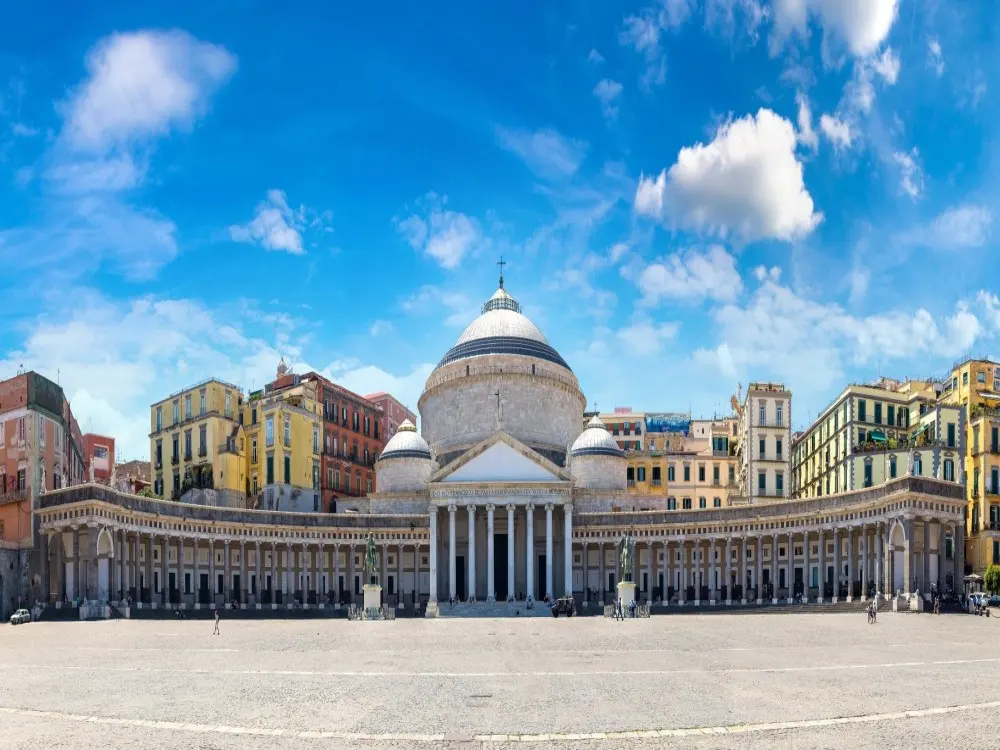
- Stroll Through Piazza del Plebiscito: This grand square, framed by the Royal Palace and the Basilica of San Francesco di Paola, is the perfect place to people-watch and soak in the city’s regal side.
- Discover the Art of the Presepe: Visit the historic workshops on Via San Gregorio Armeno, where artisans craft intricate nativity scenes year-round. Even in summer, the street is a living museum of this Neapolitan tradition.
3 Hidden Gems Most Travelers Miss
- The Cloister of Santa Chiara: Behind the famous church lies a stunning majolica-tiled cloister, a peaceful oasis of color and tranquility. It’s often overlooked for the main church but is a masterpiece of 18th-century craftsmanship.
- The View from Castel Sant’Elmo at Sunset: While many visit the castle, few stay for sunset. The panoramic view over the entire city, with Vesuvius in the background, is unforgettable. Go 30 minutes before closing.
- The Bookshop of the Girolamini Library: Tucked away near the Duomo, this historic library has a small bookshop selling rare prints and maps. It’s a quiet haven for bibliophiles and a testament to Naples’ intellectual heritage.
Cultural & Practical Tips
- Wear comfortable walking shoes: The streets are steep, cobbled, and uneven. Good footwear is essential for exploring the historic center safely.
- Be aware of your surroundings: Like any major city, petty theft can occur. Keep your bag in front of you in crowded areas like Spaccanapoli and the metro.
- Learn a few key phrases: “Un caffè, per favore” (oon kah-FEH pehr fah-VOH-reh) for “A coffee, please,” and “Dov’è la stazione?” (DOH-veh lah stah-TSYOH-neh?) for “Where is the station?”
- Embrace the chaos: Naples is loud, fast, and intense. Don’t fight it—lean into the energy. The city rewards those who engage with its rhythm.
- Tipping is not expected but appreciated: Rounding up the bill or leaving €1–€2 for exceptional service is a kind gesture.
- Carry cash: Many small eateries, bakeries, and even some museums operate on a cash-only basis.
Conclusion: Travel with Heart, Not Just Itinerary
Naples’ historic center is not a place to be navigated with a checklist; it is a city to be felt with your whole being. In 2026, as we seek travel that is both authentic and transformative, Naples offers a powerful lesson in embracing life in all its glorious imperfection. Your journey here should be one of heart—not just seeing its monuments, but listening to its stories, tasting its soul in a perfect slice of pizza, and feeling its pulse in the rhythm of the streets. By traveling with this open-hearted engagement, you honor the resilience of a city that has risen from ashes again and again. Slow down. Sit at a bar and order a caffè. Let Naples’ chaotic beauty wash over you. In that moment of surrender, you don’t just visit Naples—you become part of its enduring, passionate spirit.
Image Description: Sun-drenched Spaccanapoli street in Naples historic center, with laundry lines, Baroque facades, and vibrant street life under a clear blue sky at mid-morning