
Narbonne Market Halls : Mediterranean Bounty Meets Occitan Conviviality
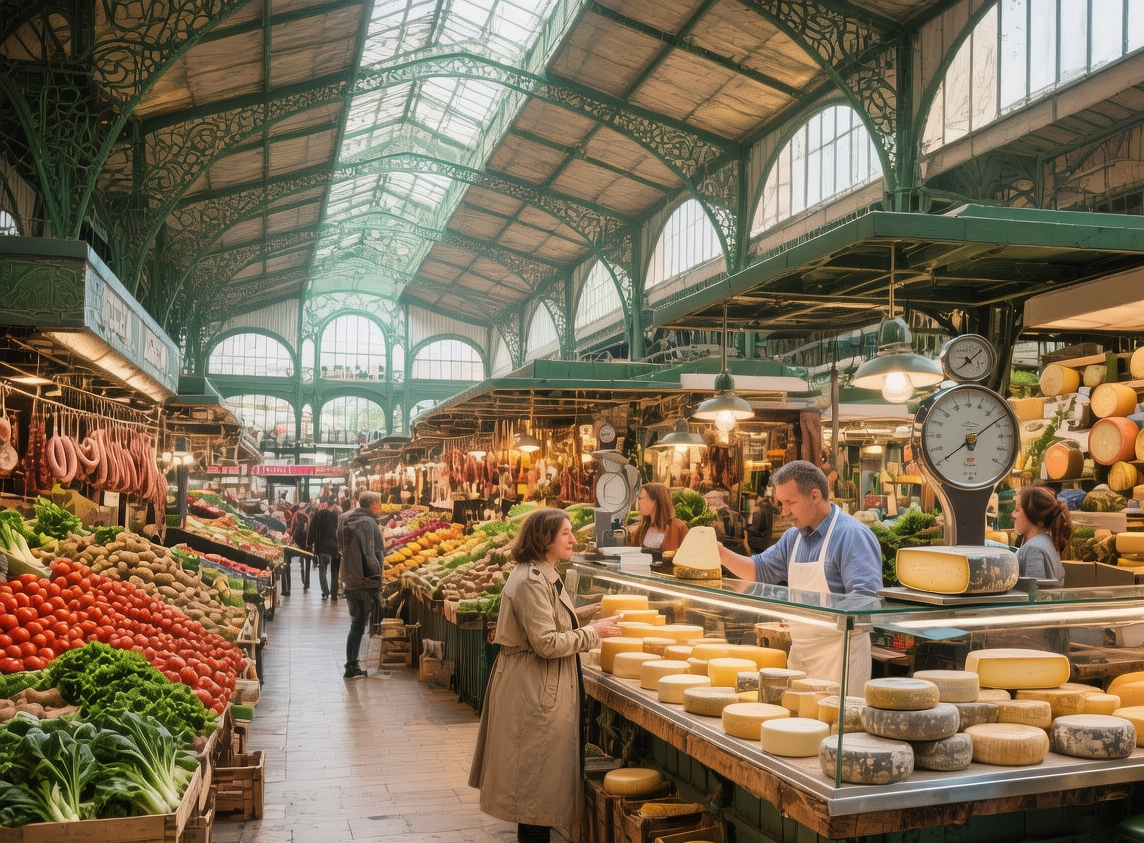
The ritual begins before dawn. As the first light touches Narbonne's Canal de la Robine, vendors unlock heavy wooden shutters at Les Halles, releasing scents that define southern France: the briny perfume of oysters just shucked from Étang de Thau, the earthy aroma of black truffles shaved over foie gras, the warm sweetness of fougasse still steaming from wood-fired ovens. By 8:00 AM, the 1901 iron-and-stone hall thrums with purposeful energy—fishermen arranging sea bream on ice, cheesemongers unwrapping wheels of Roquefort aged in Combalou caves, octogenarian vintners pouring samples of Minervois from ceramic jugs. This is not a tourist spectacle but living commerce: a covered market where 72 stalls operate as they have for generations, where transactions happen in Occitan-accented French, and where strangers become temporary companions sharing tables laden with local bounty. In 2026, Narbonne market halls remain Europe's most authentically functioning food temple—not preserved behind glass, but pulsing with the daily rhythm of producers feeding their community.
Why Narbonne Market Halls Represent Authentic Provençal Commerce
Narbonne market halls embody more than culinary excellence—they represent a rare survival of pre-industrial food systems in an age of globalization. Built between 1895 and 1901 to replace medieval open-air markets, Les Halles' elegant iron framework (designed by Victor Toulouse) created a weatherproof sanctuary where regional producers could sell directly to consumers without intermediaries. Unlike sanitized food halls in major cities, Narbonne's market maintains uncompromising authenticity: 95% of vendors are first- or second-generation producers selling goods from their own farms, fisheries, or cellars within 50 kilometers. The hall's layout follows historical logic—seafood stalls cluster near the canal entrance where boats once unloaded, butchers occupy the cooler northern end, and wine merchants anchor the southern arcade where barrels were historically rolled from cellars. This continuity creates rare depth: where a €6 glass of Corbières rosé comes from vines tended by the pourer's grandfather, and the oysters on your plate were harvested that morning from beds worked by families since the 18th century. As France's Ministry of Agriculture recognizes Les Halles as a "Living Heritage Site," its power lies not in curation, but in unbroken lineage.
The Best Time to Experience Narbonne Market Halls
For optimal conditions—peak product availability, authentic local interaction, and manageable crowds—visit between May 12 and June 2 or September 15–28. These windows deliver daytime temperatures of 20–26°C (68–79°F), creating ideal conditions for lingering at communal tables without summer's intensity. Arrive between 9:00–10:30 AM to witness the market's vibrant equilibrium: vendors have completed morning restocking but haven't yet begun afternoon preparations, creating a sweet spot for unhurried exploration and conversation. This window also offers the best product selection—fishermen's ice beds remain full, cheese affineurs present their morning selections, and bakers replenish bread baskets before the lunch rush. September provides a second excellent opportunity: grape harvest season brings winemakers pouring new vintages, departing tourists restore local atmosphere, and autumn light filtering through the iron roof creates dramatic shadows across produce displays. Avoid July 20–August 20 when temperatures exceed 32°C (90°F), making the hall uncomfortably warm despite ceiling fans, and many vendors close for traditional August vacations. Note that Les Halles closes entirely on Monday year-round and Tuesday mornings—verify openings at narbonne-tourisme.fr before travel.
Approximate Budget for a 7-Day Trip (2026)
Based on 2025 benchmarks adjusted for 4% inflation (per INSEE and Occitanie Tourism Board projections), here's a realistic mid-range budget for a Languedoc-focused itinerary:
- Accommodation: €85–€125 per night for a family-run guesthouse in Narbonne's Ville Basse (lower town) or a boutique hotel near the canal—essential for early market access.
- Food: €75–€90 per day—breakfast at lodging, market hall lunch (€18–€24 for oysters/charcuterie/wine), dinner at neighborhood bistro featuring cassoulet (€38–€48).
- Transportation: €38 for a 7-day regional bus pass. Train from Paris Gare de Lyon to Narbonne (4h10, €65–€95 one-way via SNCF Connect). Walking is optimal for market exploration.
- Attractions: Market hall access: free. Guided market tasting tour: €28. Canal de la Robine boat tour: €22. Narbo Via Roman Museum: €11. Allocate €95 total.
- Miscellaneous: €55 for direct purchases from market vendors (vacuum-sealed charcuterie, truffle oil), local olive oil from Domaine de l'Argentière, or handmade santons.
Total Estimated Cost: €950–€1,350 for seven days, excluding international flights.
5 Essential Narbonne Market Halls Experiences
- Communal Table Lunch: Purchase items from multiple vendors (oysters from Chez Bebelle, jambon noir de Bigorre from Au Petit Gascon, cheese from Fromagerie Robert) then claim a seat at shared wooden tables—arrive by 12:15 PM to secure space before the 1:00 PM rush.
- Wine Tasting Circuit: Sample regional appellations at three dedicated stalls: Cave de Sieur d'Arques (blancs), Domaine de Fontsainte (rosés), and Château d'Anglès (reds)—vendors pour €3–€5 tastings when you express genuine interest.
- Seafood Counter Ritual: Watch oyster shuckers at Chez Bebelle or La Mer au Quotidien expertly open 100+ bivalves per hour—order a dozen with lemon and rye bread, eaten standing at the counter as locals do.
- Charcuterie Education: At Au Petit Gascon, proprietor Jean-Pierre explains the difference between jambon de Bayonne and local jambon noir while slicing paper-thin portions—best experienced Tuesday/Thursday mornings when he's less rushed.
- Dawn Market Setup: Arrive at 7:30 AM to witness vendors transforming empty stalls into vibrant displays—a choreography of ice beds laid, cheeses unwrapped, and flowers arranged that concludes precisely at 8:00 AM opening.
3 Hidden Gems Most Travelers Miss
- Cour de l'Ancien Évêché: Behind No. 17 Rue de l'Ancien Courrier, an unmarked archway leads to a hidden courtyard where market vendors take morning coffee at Café de la Cour—observe authentic interactions rarely seen by tourists.
- Canal-side Oyster Shucking: Purchase a dozen oysters from Chez Bebelle, then walk 200m east along Quai de la Grave to stone steps descending to the canal—shuck and eat them waterside as 19th-century fishermen did (bring your own knife).
- Atelier du Saucisson: A charcuterie workshop hidden in a vaulted cellar at 9 Rue de l'Ancien Courrier—observe master butcher Bernard Marty dry-curing saucissons using techniques unchanged since 1923 (open Wednesday mornings by appointment: +33 4 68 42 11 37).
Cultural & Practical Tips
- Market Etiquette: Never touch produce—vendors select items to ensure quality. Greet each stallholder with "Bonjour Madame/Monsieur" before browsing; this simple courtesy often yields tastings or insider tips.
- Communal Table Protocol: Clear your own dishes to designated racks after eating. Never save seats for others during peak hours (12:30–2:00 PM)—tables operate on first-come rotation.
- Learn Key Phrases: "Adishatz" (hello in Occitan), "Merci," and "Qu'est-ce qui est de saison?" (What's in season?) show respect—vendors reward curiosity with premium samples.
- Payment Practices: Most stalls accept cards, but carry €20–€30 cash for smaller vendors and market porters who assist with luggage. Never haggle—prices reflect fair compensation for artisanal labor.
- Sustainability Practice: Bring reusable bags for purchases. Vendors appreciate this gesture and often wrap delicate items (cheeses, charcuterie) with extra care for environmentally conscious customers.
Conclusion: Travel with Culinary Reverence, Not Just an Appetite
Narbonne market halls endure not as attraction to be consumed, but as living ecosystem where terroir becomes community. As a conscious traveler, your presence should honor this reciprocity: purchase directly from producers rather than resellers, learn the story behind your oysters rather than rushing consumption, and understand that every transaction sustains families who've stewarded this land for generations. Sit quietly at a communal table and observe how strangers become temporary kin over shared bread and wine—a conviviality that predates tourism. Support vendors practicing regenerative agriculture (look for "Nature et Progrès" certification). By approaching Les Halles not as backdrop for food photography, but as sacred space of exchange, you help ensure these stalls continue sheltering not just commerce, but connection—for those who recognize that true nourishment resides not in consumption, but in communion.