
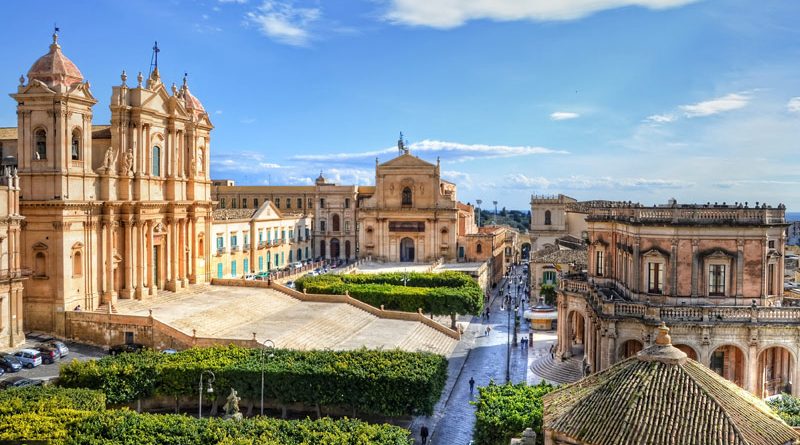
Noto Baroque Town Golden Stone Meets Sicilian Soul
The morning sun in southeastern Sicily strikes the honey-colored limestone of Noto’s Baroque facades, setting the entire town ablaze with a warm, golden glow. You hear the soft echo of footsteps on the ancient basalt stones of Corso Vittorio Emanuele, the distant chime of bells from the reconstructed Cathedral, and the murmur of locals sipping espresso at a café beneath ornate wrought-iron balconies. This is the heart of the Val di Noto, a UNESCO World Heritage site that was rebuilt from the ground up after the devastating 1693 earthquake that destroyed much of southeastern Sicily [[42]]. The entire town is a masterpiece of late Baroque architecture, where every church, palace, and fountain was designed as part of a unified urban plan—a rare example of 18th-century city planning executed with artistic genius. In an age of generic urban sprawl, Noto matters now more than ever—it is a living testament to human resilience and the transformative power of beauty, where every street corner feels like a stage set for life itself.
Why Noto Baroque Town Embodies Unified Grandeur
Noto’s Baroque splendor is not a collection of random buildings; it is a single, cohesive work of art born from catastrophe. After the 1693 earthquake leveled the original hilltop town, the Spanish viceroys commissioned a new city on a lower, more stable site, entrusting its design to military engineer Giovanni Battista Landolina and a team of visionary architects. Their plan was revolutionary: a grid of three main streets converging on a grand central axis—Corso Vittorio Emanuele—that culminates in the majestic Cathedral of San Nicolò. Every structure was built from the local golden limestone, which hardens upon exposure to air and glows spectacularly in the Sicilian light. The facades are adorned with intricate carvings of putti, floral motifs, and mythological figures—a style known as “Sicilian Baroque” that blends theatricality with local craftsmanship. This unified vision “solved” a critical problem of its time: how to rebuild a community with both spiritual hope and civic pride. Today, it fulfills a modern need—for a place where architecture is not just functional, but emotionally uplifting, where beauty is woven into the very fabric of daily life.
The Best Time to Experience Noto Baroque Town
To experience Noto in its most photogenic and comfortable state, plan your visit for the specific windows of April 20–May 30 or September 10–October 15, 2026. During these periods, the weather in southeastern Sicily is ideal, with daytime temperatures ranging from a pleasant 22–27°C (72–81°F), and the intense summer crowds have yet to arrive or have already departed [[11]]. The best time of day to explore is in the late afternoon, between 4:30 PM and 6:30 PM, when the setting sun bathes the limestone facades in a rich, golden light that makes the Baroque details truly pop. It is strongly advised to avoid the peak summer months of July and August, when temperatures can soar above 35°C (95°F) and the narrow streets feel claustrophobic with crowds [[60]]. For the most current information on opening hours, the famous Infiorata flower festival (third Sunday in May), and guided tours, always consult the official tourism portal: comune.noto.sr.it.
Approximate Budget for a 7-Day Trip (2026)
This budget is calculated for a solo traveler seeking a comfortable, culturally rich experience in southeastern Sicily in 2026, based on current inflation trends and average regional costs.
- Accommodation: €90–€150 per night. Staying in a historic palazzo hotel on Corso Vittorio Emanuele offers an immersive experience. Options in the newer part of town are more affordable.
- Food: €45 per day. Breakfast (€5): a cappuccino and brioche at Caffè Sicilia. Lunch (€16): a plate of pasta with fresh ricotta at a trattoria near Piazza Municipio. Dinner (€24): a main course like grilled lamb chops with a glass of local Nero d’Avola wine.
- Transportation: €130 total. A rental car for the week is essential for exploring the Val di Noto (€40/day). Occasional taxi rides from the bus station (€10).
- Attractions: Entry to the Noto Cathedral Treasury (€3). Guided walking tour of the Baroque town (€20). Visit to the Villadorata Palace (€5).
- Miscellaneous: €95. This covers a box of almond pastries from Caffè Sicilia (€15), several gelato stops (€3 each), a cooking class featuring Sicilian recipes (€40), and souvenirs like handmade ceramics.
Total Estimated Cost: €890–€1,010
6 Essential Noto Baroque Town Experiences
- Stroll Corso Vittorio Emanuele at Golden Hour: Walk the town’s main artery in the late afternoon when the sun sets the golden limestone facades ablaze. Admire the intricate carvings on palaces like Ducezio and Villadorata.
- Visit the Reconstructed Cathedral of San Nicolò: Climb the grand staircase to the cathedral, rebuilt after its 1996 collapse. The interior’s frescoes and the panoramic view from the steps are breathtaking.
- Indulge at Caffè Sicilia: This legendary café has been serving Sicilian pastries since 1892. Try the granita di mandorla (almond granita) and watch the world go by from its elegant terrace.
- Explore the Church of San Domenico: Considered the masterpiece of Noto’s Baroque, this church features a stunning concave-convex facade and an interior filled with gilded stuccoes and frescoes.
- Attend the Infiorata Festival: If your visit coincides with the third Sunday in May, witness the streets transformed into a carpet of millions of flower petals depicting religious and artistic scenes.
- Walk the Belvedere at Sunset: Head to the public gardens on the eastern edge of town for a panoramic view over the red rooftops and the distant Iblean Mountains.
3 Hidden Gems Most Travelers Miss
- The Courtyard of Palazzo Nicolaci di Villadorata: While many admire the facade, few enter the courtyard to see the famous balcony supported by carved stone figures of mermaids, satyrs, and lions. It’s open during the Infiorata or by appointment.
- The Church of Montevergine: Tucked away on a quiet side street, this small church has a stunning elliptical dome and a peaceful cloister garden. It’s often locked, but ask at the nearby tourist office for access.
- The View from Porta Reale: This ancient city gate on the western edge offers a dramatic vista back toward the cathedral and the entire sweep of the Baroque town. It’s a perfect spot for a quiet moment of reflection.
Cultural & Practical Tips
- Wear comfortable walking shoes: The streets are steep, cobbled, and uneven. Good footwear is essential for exploring the town safely.
- Dress respectfully for churches: Shoulders and knees must be covered. Carry a light scarf or jacket even in summer.
- Learn a few key phrases: “Dov’è il duomo?” (DOH-veh eel DOO-oh-moh?) for “Where is the cathedral?”, and “Un caffè, per favore” (oon kah-FEH).
- Beware of the midday sun in summer: The white stone reflects intense heat. Wear a hat, sunglasses, and high-SPF sunscreen, especially between 11:00 AM and 3:00 PM.
- Respect the siesta: Many small shops and cafes close between 1:00 PM and 4:00 PM. Plan your hikes or visits to viewpoints during these hours.
- Tipping is appreciated but not expected: Rounding up the bill or leaving €1–€2 for exceptional service is a kind gesture.
Conclusion: Travel with Wonder, Not Just a Checklist
Noto is not a town to be navigated with a checklist; it is a symphony of light, stone, and human ingenuity to be absorbed. In 2026, as we seek travel experiences that are both beautiful and meaningful, Noto offers a powerful lesson in the restorative power of beauty. Your journey here should be one of wonder—not just capturing its facades, but feeling the warmth of the golden stone, listening to the echo of history in its streets, and understanding the resilience that built this masterpiece from rubble. By traveling with this mindful attention, you honor the spirit of Noto and help preserve its luminous legacy. Slow down. Sit at a café and watch the light change on the balconies. In that quiet moment of communion with art and history, you don’t just visit Noto—you become part of its enduring, golden story.
Image Description: Sun-drenched Baroque buildings lining Corso Vittorio Emanuele in Noto, with golden limestone facades and ornate balconies under a clear blue sky at mid-morning