
Notting Hill Pastel Facades Meet Multicultural Carnival Spirit
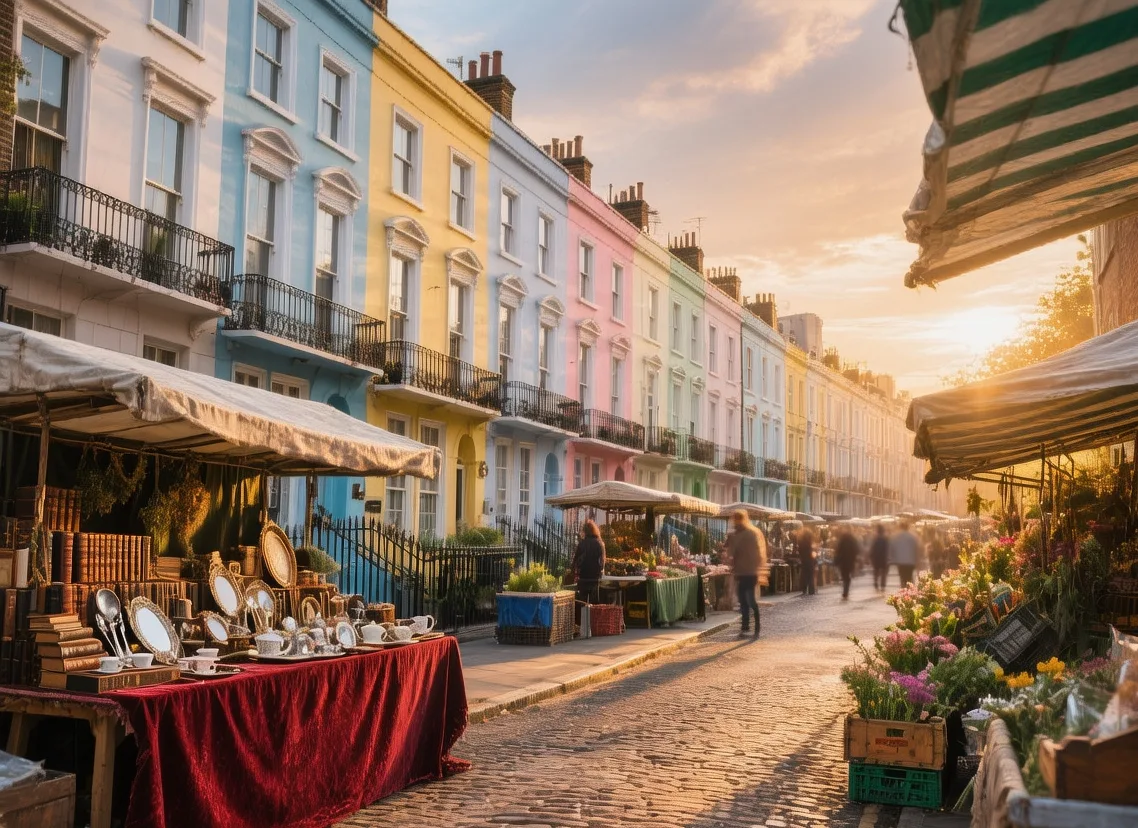
The air hums—a melodic blend of steelpan drums and espresso machines—as you turn onto Portobello Road at 9:15 AM, watching sunlight fracture across the pastel stucco facades. You stand beneath the canopy of plane trees, where the scent of roasting coffee beans mingles with the damp earth of the garden squares; the energy vibrates with the rhythm of a thousand footsteps on the pavement. Developed in the 1820s as a speculative housing estate, Notting Hill spans 3.5 square kilometers of West London, hosting over 1,000 independent shops and the world's largest street festival. The Victorian terraces rise three stories high, painted in hues of cornflower blue, mint green, and buttercup yellow, while the iron railings gleam against the black asphalt. Every corner tells a story: antique dealers unlocking shutters, film crews scouting locations for rom-coms, and the lingering echo of the 1966 carnival that transformed this district. In 2026, as gentrification reshapes urban landscapes globally, visiting Notting Hill means engaging with a neighborhood that balances boutique luxury with deep-rooted Caribbean heritage. This place matters now because it remains a vibrant testament to cultural fusion, challenging visitors to look beyond the postcard colors and witness the living community within.
Why Notting Hill Embodies Multicultural Urban Regeneration
Notting Hill solves the social challenge of integrating diverse communities within a historic architectural framework—a feat achieved through decades of grassroots activism and cultural celebration. Originally a slum area in the mid-20th century, the district underwent significant regeneration following the 1958 race riots, leading to the first Notting Hill Carnival in 1966 organized by Rhaune Laslett. The carnival now attracts over 1 million visitors annually, covering a 5-kilometer route through Ladbroke Grove and Westbourne Park, utilizing 30,000 sound systems and food stalls to celebrate Caribbean culture. Architecturally, the area features 19th-century stucco-fronted villas with 4-meter-high ceilings and original cornicing, preserved under strict conservation area guidelines established in 1970. Engineering-wise, the basement conversions common in the area require complex underpinning to support the Victorian brickwork while adding modern living space below ground. Today, the neighborhood operates as a microcosm of London's evolution, balancing high-end real estate with social housing initiatives managed by the Notting Hill Genesis housing association. This unique status ensures Notting Hill remains not merely a tourist backdrop but a living community where cultural heritage is actively performed, blending historic preservation with contemporary diversity in a manner few urban districts sustain.
The Best Time to Experience Notting Hill
For optimal atmosphere and manageable crowds, plan your visit between May 15–June 20 or September 10–October 15, when London's temperatures range from 15–22°C (59–72°F) and daylight extends until 9:00 PM. Arrive precisely at 8:30 AM when the antique dealers set up to beat the tour groups that typically converge by 11:00 AM; the morning light illuminates the colorful doors beautifully without the glare of midday sun. Evening visits between 6:00–9:00 PM offer a romantic atmosphere as the street lamps glow and the diners fill the bistros. Avoid August 25–27, 2026 (Bank Holiday Weekend) when the Notting Hill Carnival brings peak congestion, pushing pedestrian flow to a standstill despite the vibrant energy. Winter months (December–February) offer shorter lines but temperatures drop to 2–8°C (36–46°F), and the outdoor market becomes less active. For event schedules, verify the calendar at before booking, as road closures affect transport access. Weekday mornings typically see the lowest visitor volume, allowing for quieter exploration of the mews houses.
Approximate Budget for a 7-Day Trip (2026)
London remains a premium destination, but staying in Zone 2 near Notting Hill Gate provides immediate access to the neighborhood without central London price gouging. These 2026 estimates assume a moderate travel style, accounting for approximately 3-4% annual inflation in UK hospitality and attraction pricing.
- Accommodation: £150–£350 per night for a double room in Notting Hill, Holland Park, or Bayswater; budget hostels from £55/night in nearby Shepherd's Bush
- Food: £55–90 per day—breakfast £10–15 (café pastry or full English), lunch £15–25 (market street food or pub meal), dinner £30–50 (mid-range restaurant with wine); traditional Sunday roast £25
- Transportation: £8.10 daily cap for Zones 1-2 using contactless/Oyster; Heathrow Express £25 one-way or Elizabeth Line £12.80; Santander Cycle £20 daily access
- Attractions: Portobello Market free (entry), Electric Cinema £22.00, Museum of Brands £12.00, Kensington Palace £32.00, Thames cruise £18.00
- Miscellaneous: Vintage clothing £60, market souvenirs £20, rain jacket (essential) £35, travel insurance £50 for week
Total for 7 days: £1,500–2,100 per person (excluding international flights)
7 Essential Notting Hill Experiences
- Portobello Road Market Walk: Traverse the 2-kilometer stretch of antique and food stalls. Open Saturday 9:00 AM–6:00 PM; arrive early to browse the antique arcades before the crowds. The scent of spices and old books fills the air as you haggle with vendors.
- Colorful House Photography: Capture the iconic pastel facades on Lancaster Road. Best light occurs at 8:00 AM or 7:00 PM; stand on the opposite pavement to frame the doors without blocking residential access. The colors range from cerulean to magenta, creating a vibrant streetscape.
- Electric Cinema Screening: Watch a film in the oldest working cinema in the UK. Shows start at 2:00 PM and 7:00 PM; book the front row sofas for a luxury experience. The velvet curtains and art deco interior transport you to the 1920s.
- Holland Park Kyoto Garden: Stroll the Japanese garden within the public park. Open 7:30 AM–dusk; listen for the peacocks calling from the trees. The waterfall and stone lanterns offer a serene contrast to the busy market streets nearby.
- The Churchill Arms Pub: Dine in the flower-covered Victorian pub. Open 12:00 PM–11:00 PM; the exterior is draped in thousands of seasonal blooms. Try the Thai food served in the back room while admiring the floral display.
- Grain Store Kitchen Dining: Eat at the farm-to-table restaurant on Rupert Street. Open 6:00 PM–10:00 PM; the menu features seasonal British ingredients. The industrial-chic interior with exposed brick complements the neighborhood's aesthetic.
- Mews House Exploration: Wander the cobblestone mews behind the main roads. Access via Ledbury Road or Blenheim Crescent; look for the former stables converted into homes. The quiet lanes offer a glimpse into the private residential life of the area.
3 Hidden Gems Most Travelers Miss
- Museum of Brands: This small museum charts 200 years of consumer culture through packaging. Access via Lancaster Road; open Tuesday–Sunday 10:00 AM–6:00 PM. Most tourists walk past the entrance, missing the nostalgic journey through British advertising history and social change.
- Electric Bookshop: Located inside the Electric Cinema, this shop sells film memorabilia and scripts. Access via the cinema lobby; open during screening hours. Look for the signed first editions and vintage posters that celebrate the building's cinematic legacy.
- St. John's Church Garden: This hidden churchyard offers a quiet green space away from the market. Access via Powis Gardens; open during daylight hours. The gravestones date to the 1840s, and the sycamore trees provide shade for reading beneath the spire.
Cultural & Practical Tips
- Residential etiquette: Notting Hill is primarily a residential area; keep noise levels down, especially in the mews. Do not knock on doors or peer into windows of the colorful houses; respect the privacy of the residents living behind the facades.
- Photography rules: Photography is permitted on public streets for personal use without flash. Avoid using tripods that block the narrow pavements; respect signs indicating no photography inside specific shops or private gardens.
- Market bargaining: Haggling is acceptable in the antique section but not for food items. Ask politely "Is this your best price?" before purchasing; vendors are often open to negotiation on cash transactions over £50.
- Local phrases: Learn "Mind the gap" (watch the step), "Cheers" (thanks), and "Queue here" (wait in line); Londoners appreciate visitors who respect pedestrian flow on the narrow market streets.
- Weather preparedness: The market is largely outdoors and exposed to rain; carry a compact umbrella (£10 from Boots pharmacy) and waterproof layers. Cobblestones become slippery when wet—wear shoes with good grip.
- Accessibility: The main road offers step-free access, but mews lanes are cobbled and uneven. Wheelchair users may find some antique shops narrow; contact specific venues ahead to arrange assistance for entry.
- Transport logistics: Notting Hill Gate station can be exit-only during Carnival; check TfL updates. Use the Central, Circle, or District lines for access; buses routes 7, 23, and 52 also serve the area frequently.
Conclusion: Travel with Curiosity, Not Just Checklists
Notting Hill demands more than a selfie with a blue door—it invites you to contemplate the layers of history resting on those stucco terraces. When you walk the streets in 2026, tracing the same paths worn by carnival revelers and film stars for decades, you're not just ticking a sightseeing box; you're witnessing the delicate balance between gentrification and cultural preservation. As overtourism pressures London's landmarks, visiting mindfully means respecting the residential nature of this district, understanding that behind the pastel paint, a community of families and artists thrives. Walk slowly across the pavement, noticing how the light changes on the iron railings; listen to the market chatter not as background noise but as the soundtrack of the city. Leave only footprints on the cobblestones, take only memories of vibrant color, and carry forward the understanding that places like this endure because each generation chooses to nurture them—not as film sets, but as living testaments to community, diversity, and the enduring human spirit.