
Paestum Greek Temples Doric Grandeur Meets Campanian Light
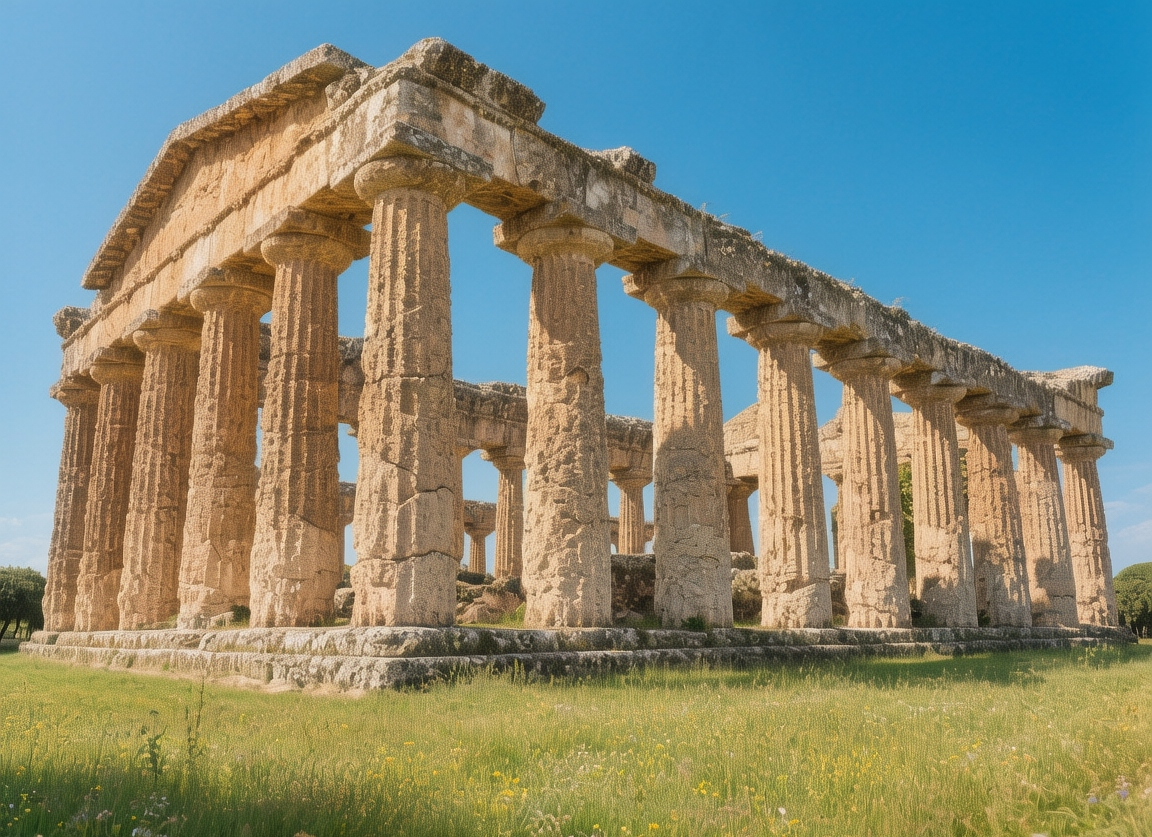
The morning sun in southern Italy strikes the honey-colored travertine of the ancient temples, casting long, sharp shadows that accentuate every fluted column and weathered capital. You hear the soft buzz of cicadas in the surrounding meadows, the distant lowing of water buffalo from a nearby farm, and the profound silence that hangs over this sacred plain. This is Paestum, a site where time seems to have paused—home to three of the world’s best-preserved Greek temples, built between 550 and 450 BC by colonists from Sybaris [[29]]. The two temples of Hera and the Temple of Athena stand as monumental testaments to the power and piety of Magna Graecia, their Doric columns rising 15 meters (49 feet) into the sky with a simplicity that is both austere and awe-inspiring. In an age of digital distraction and fleeting trends, Paestum matters now more than ever—it is a place of elemental beauty, where the raw power of ancient architecture can be felt in every stone, offering a direct, unmediated connection to the cradle of Western civilization.
Why Paestum Greek Temples Embodies Timeless Simplicity
The temples of Paestum are not merely archaeological relics; they are masterclasses in the enduring power of architectural simplicity. Built by Greek colonists who named their city Poseidonia after the sea god, these structures represent the purest expression of the Doric order—a style defined by its sturdy, fluted columns, simple capitals, and lack of ornamental friezes. The First Temple of Hera, constructed around 550 BC, is one of the oldest surviving Greek temples in the world, its massive columns (over 2 meters in diameter) conveying a sense of primal strength. The Second Temple of Hera, built a century later, showcases the evolution of the style with more slender proportions and refined details. These temples solved a fundamental problem of their time: how to create a physical space that embodied the divine order and civic pride of a thriving colony. Their location on a fertile coastal plain was strategic, serving both religious and defensive purposes. Today, their stark, unadorned beauty fulfills a modern need—for authenticity in a world of visual noise. Standing among them, you don’t just see history; you feel the weight of millennia in the cool stone and the vast, open sky.
The Best Time to Experience Paestum Greek Temples
To experience the temples in their most atmospheric and comfortable state, plan your visit for the specific windows of April 15–May 25 or September 10–October 15, 2026. During these periods, the weather in Campania is ideal, with daytime temperatures ranging from a pleasant 20–25°C (68–77°F), and the surrounding meadows are lush and green [[11]]. The best time of day to visit is in the early morning, between 8:30 AM and 10:30 AM, when the light is soft, the site is quiet, and you can have the temples almost to yourself before the tour groups arrive. It is strongly advised to avoid the peak summer months of July and August, when temperatures can soar above 33°C (91°F) and the open archaeological site offers little shade, making exploration uncomfortable [[47]]. For the most current information on opening hours, special events like the annual Festival of Hera,
Approximate Budget for a 7-Day Trip (2026)
This budget is calculated for a solo traveler seeking a comfortable, culturally rich experience in the Campania region in 2026, based on current inflation trends and average regional costs.
- Accommodation: €80–€140 per night. Staying in a hotel in the modern town of Capaccio-Paestum offers easy access to the site. Options in Salerno or Agropoli are more varied but require a short drive.
- Food: €40 per day. Breakfast (€4): a cappuccino and cornetto at a local bar. Lunch (€15): a plate of pasta with fresh tomato sauce at a trattoria near the site. Dinner (€21): a main course like grilled local fish with a glass of Fiano di Avellino wine.
- Transportation: €120 total. A regional train ticket from Naples to Paestum station (€6). A weekly UnicoCampania pass for unlimited regional transport (€20). Local transport within Paestum is primarily on foot or by bicycle (rental €10/day).
- Attractions: Entry to the Paestum Archaeological Park and Museum (€12). Guided walking tour of the temples (€18). Visit to the nearby National Park of Cilento (free).
- Miscellaneous: €85. This covers a bottle of local olive oil (€15), several gelato stops (€3 each), a cooking class featuring regional recipes (€40), and souvenirs like a replica of a temple column.
Total Estimated Cost: €857–€977
6 Essential Paestum Greek Temples Experiences
- Witness the Sunrise at the First Temple of Hera: Arrive just after opening to see the first light strike the massive columns of this 550 BC temple. The play of shadow and light on the ancient stone is profoundly moving.
- Explore the National Archaeological Museum: Located within the park, this museum houses the famous Tomb of the Diver, a 5th-century BC fresco that is a masterpiece of Greek art and a rare depiction of symposium scenes.
- Walk the Ancient City Walls: Trace the perimeter of the ancient city along its well-preserved 5-kilometer (3-mile) circuit of walls. The views from the towers offer a unique perspective on the layout of Poseidonia.
- Attend a Performance at the Roman Amphitheater: During the summer, the small Roman amphitheater hosts concerts and plays. Check the schedule for a chance to experience the site as a living cultural venue.
- Visit the Temple of Athena: This smaller, more intimate temple sits on a slight rise between the two Hera temples. Its blend of Doric and Ionic elements makes it a fascinating study in architectural transition.
- Picnic in the Sacred Meadow: Bring a simple lunch and find a quiet spot in the green meadow that surrounds the temples. There’s no more powerful way to connect with the site than to sit in its peaceful embrace.
3 Hidden Gems Most Travelers Miss
- The Porta Sirena (Siren’s Gate): One of the best-preserved ancient city gates, this entrance on the western wall features a beautiful arch and offers a dramatic view of the temples from a distance. It’s often missed by those who enter through the main gate.
- The Secret Garden of the Heraion: Behind the Second Temple of Hera, a small, unmarked path leads to a quiet grove of olive trees. It’s a peaceful spot for reflection, away from the main paths.
- The View from Torre di Paestum: A short walk from the archaeological site, this 15th-century watchtower offers a panoramic view over the entire plain, including the temples and the Tyrrhenian Sea in the distance.
Cultural & Practical Tips
- Wear a hat and sunscreen: The site is completely exposed to the sun. There is very little shade, so protect yourself, especially in the warmer months.
- Bring plenty of water: Dehydration is a real risk, particularly in summer. Carry at least 1 liter of water with you.
- Learn a few key phrases: “Dov’è il tempio di Hera?” (DOH-veh eel TEM-pyoh dee EH-rah?) for “Where is the Temple of Hera?”, and “Un caffè, per favore” (oon kah-FEH).
- Respect the ruins: Do not climb on the walls or touch the ancient stones. The oils from your skin can damage the surface over time.
- Combine your visit with other sites: Paestum pairs perfectly with a trip to the Amalfi Coast, Pompeii, or the Cilento National Park. The train station is a 10-minute walk from the site.
- Tipping is appreciated but not expected: A small tip of €1–€2 for a knowledgeable guide is a kind gesture.
Conclusion: Travel with Reverence, Not Just Curiosity
The temples of Paestum are not a backdrop for your vacation photos; they are silent teachers of time, beauty, and human aspiration. In 2026, as we seek travel experiences that are both profound and grounding, Paestum offers a rare gift: the chance to stand in the presence of something truly eternal. Your journey here should be one of reverence, not just curiosity. Feel the weight of the ancient stone, listen to the wind in the columns, and let the vast Campanian sky put your own life into perspective. By traveling with this mindful respect, you honor the legacy of the Greeks who built these monuments and help preserve their power for future generations. Slow down. Sit on the grass and watch the light change on the columns. In that quiet moment of communion with antiquity, you don’t just visit Paestum—you become part of its timeless, echoing story.