
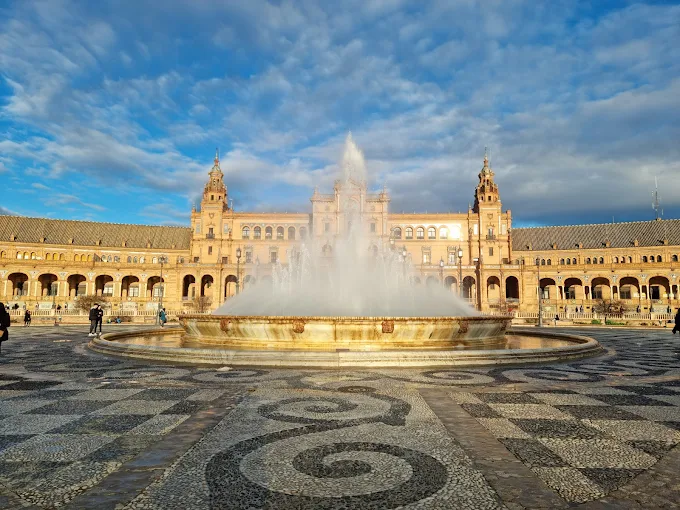
Plaza de España, Seville Ceramic Art Meets Royal Ambition
The midday sun beats down on the red brick façade, heating the air until it shimmers above the canal—a liquid mirror reflecting the twin towers that pierce the sky at 74 meters high. You walk along the curved bench, your hand brushing against cool azulejo tiles that depict maps and battles from centuries past. The scent of orange blossom mixes with the mineral tang of water; the sound of horse-drawn carriages clip-clopping on stone competes with the laughter of children chasing pigeons. This is the Plaza de España, Seville, a monumental semi-circle spanning 190 meters in diameter, constructed between 1914 and 1928 for the Ibero-American Exposition. You stand in a space designed to unify a nation through architecture, where 48 provincial alcoves line the perimeter like a stone encyclopedia of Spanish identity. In 2026, as digital distractions dominate travel, the Plaza de España, Seville demands physical presence—a place where you must walk the bridges, touch the tiles, and feel the weight of history in every brick laid by Aníbal González.
Why Plaza de España, Seville Embodies Regionalist Identity
The Plaza de España, Seville stands as the definitive masterpiece of Regionalist Architecture, a movement seeking to define Spanish identity through a synthesis of historical styles. Architect Aníbal González faced a complex design challenge: how to create a structure that honored Spain's diverse past while projecting modern unity for the 1929 Ibero-American Exposition. The solution was a semi-circular building oriented toward the Americas, symbolizing an embrace of former colonies. The structure utilizes 18,000 square meters of exposed red brick from Seville's own kilns, combined with stone from Sierra de Teba and marble from Macael.
Engineering precision defines the hydraulic system feeding the 515-meter canal. Water is pumped from the Guadalquivir River, filtered, and circulated to maintain clarity despite the heat. The four bridges crossing the canal represent the ancient kingdoms of Spain: Castile, León, Aragón, and Navarra, each constructed with distinct stylistic nuances reflecting their historical periods. The 48 tiled alcoves serve an educational purpose, each displaying a map, historical event, and coat of arms specific to a province. This integration of geography, history, and art makes the Plaza de España, Seville more than a square; it is a pedagogical tool built in stone and ceramic, preserving the political geography of 1929 Spain within its intricate tilework.
The Best Time to Experience Plaza de España
For the optimal Plaza de España, Seville visit, target February 20–April 10 or October 15–November 30, when temperatures range between 15–25°C (59–77°F) and the park's vegetation is lush. The square is accessible 24 hours, but the ideal viewing window is 7:00–8:30 AM when the light hits the eastern façade directly, illuminating the tile details without harsh shadows. Evening visits between 8:00–10:00 PM offer cooler temperatures and dramatic artificial lighting, though crowds peak during sunset. Spring coincides with the Feria de Abril, causing hotel rates to double; book accommodation four months in advance if visiting during this period.
Avoid July 1–August 20 unless acclimated to extreme heat; temperatures frequently surpass 42°C (108°F), making the brick surfaces radiate intense thermal energy. Winter months (December–February) offer mild days (12–18°C / 54–64°F) but occasional rain can make the stone pathways slippery. The canal drainage sometimes occurs in late January for maintenance; verify water levels at www.sevilla.org or contact the city council at turismo@sevilla.org (+34 955 471 000). Weekday afternoons typically see fewer tour groups compared to weekends, allowing for clearer photography of the alcoves.
Approximate Budget for a 7-Day Trip
Seville offers excellent value for cultural travelers, though costs fluctuate during major festivals. The following budget assumes mid-range comfort with a focus on local experiences, based on 2026 pricing with approximately 3.5% inflation from 2025 figures. Estimates include stays near the historic center for easy access to the Plaza de España, Seville.
- Accommodation: €70–€120 per night for a double room in a renovated casa de vecinos or three-star hotel in Centro or San Vicente; luxury suites overlooking the park command €200–€350 per night
- Food: €35–€55 per day—breakfast €4–€7 (café solo and pan con tomate), lunch €12–€20 (daily special including salmorejo, berza, and water), dinner €18–€28 (tapas selection including pringá and montaditos)
- Transportation: Train from Madrid Atocha to Seville Santa Justa: €50–€70 high-speed AVE (2.5 hours); local bus 34 or C4: €1.35 per ride or €5 daily pass; taxi from airport: €25 fixed rate; bicycle rental: €12 per day
- Attractions: Plaza de España entry: free; Boat rental on canal: €6 per 30 minutes; Real Alcázar: €13.50; Seville Cathedral: €12; Museum of Fine Arts: €1.50
- Miscellaneous: Ceramic tiles from €15; local Manzanilla sherry €7–€18 per bottle; mosto (grape juice) €2; fan souvenirs €10–€40; guided history walk €18
Total estimated cost for 7 days: €880–€1,280 per person (based on double occupancy; solo travelers should add 35–45% for single supplements)
7 Essential Plaza de España Experiences
- Identify Your Provincial Alcove: Walk the curved gallery to locate the tile bench representing your home province or a region you wish to visit. Each of the 48 alcoves features a unique map and historical vignette painted in the 1920s. Look closely at the glaze; the Triana ceramics show slight variations in color due to hand-painting. Visit at 10:00 AM when the sun illuminates the recessed niches. Take a rubbing sketch or photograph to remember the specific heraldry. It creates a personal connection to the vast Spanish geography displayed here.
- Cross the Bridge of Castile: Walk the central bridge connecting the main building to the island section. This bridge features the most ornate stone balustrades and offers the best vantage point for photography. Stand in the center to capture the symmetry of the towers framing the canal. The water reflects the arches perfectly in the morning calm. Watch for the ducks that nest beneath the bridge supports. It is the most photographed angle of the Plaza de España, Seville; arrive early to avoid tourists in your shot.
- Ride a Horse-Drawn Carriage: Book a 45-minute tour from the rank located near the North Tower. The drivers are licensed and knowledgeable about local history. The ride takes you around the perimeter and into Maria Luisa Park. Cost is approximately €50 per carriage (fits four people). The sound of hooves on cobblestone adds an authentic historical layer to the experience. Best done at dusk when the lights begin to glow on the façade. Tip the driver 10% for detailed commentary.
- Examine the Ceiling Mudéjar Work: Look up while walking under the covered gallery connecting the towers. The wooden ceilings feature intricate geometric patterns typical of Mudéjar craftsmanship. The dark wood contrasts with the white walls and colorful tiles. Use a zoom lens to capture the joinery details without blocking foot traffic. This area provides shade during hot afternoons. The craftsmanship demonstrates the Islamic influence on Christian architecture in Andalusia.
- Watch the Sunset from the Central Steps: Gather on the wide steps facing the fountain as the sun dips below the park trees. The sky turns violet and orange, reflecting in the canal water. The fountain jets are illuminated with colored lights after dark. Bring a small blanket to sit on the stone which retains heat. Street performers often play classical guitar nearby. This is the prime social hour for locals enjoying the evening cool.
- Explore the North Tower Interior: While often closed, the towers occasionally open for cultural events or guided tours. Check the schedule at the tourist office. The interior features spiral staircases and viewing platforms. The view from the top offers a unique perspective on the semi-circular geometry. You can see the layout of Maria Luisa Park clearly. Access is limited; inquire at the information kiosk near the entrance upon arrival.
- Picnic in Maria Luisa Park: Purchase supplies from a local market and find a shaded bench under the palm trees adjacent to the plaza. The park covers 34 hectares with diverse botanical species. Look for the Glorieta de los Lotos nearby with its pond and water lilies. It is free to enter and open until 10:00 PM. This provides a quiet retreat from the busy square. Respect the park rules regarding litter and noise.
3 Hidden Gems Most Travelers Miss
- Museum of Arts and Popular Customs: Located in the Mudéjar Pavilion within the park complex, this museum houses traditional costumes, ceramics, and religious art. Entry: €3; open Tuesday–Saturday 9:00 AM–5:00 PM. It explains the cultural context of the tiles seen in the plaza. The building itself is an exposition relic often ignored by visitors. Contact: +34 955 471 000. Visit during lunch hours when crowds are thinner. The textile collection provides insight into Andalusian heritage.
- Glorieta de Bécquer: A small monument dedicated to poet Gustavo Adolfo Bécquer located deep within Maria Luisa Park. Access via the path behind the Archaeological Museum. Free entry; open 24 hours. It features a bench and bust surrounded by greenery. It is a quiet spot for reading poetry away from the plaza noise. Best visited in the early morning when mist rises from the pond. Locals come here for reflection rather than tourism.
- Archaeological Museum of Seville: Housed in the Renaissance Pavilion next to the Plaza de América. Entry: €1.50 (free for EU citizens); open Tuesday–Saturday 9:00 AM–3:00 PM. It contains Roman mosaics and Moorish artifacts found in the region. The building is part of the 1929 exposition architecture. Visit mid-morning when natural light illuminates the mosaic floors. It provides historical depth often missing from the plaza visit. The Carambolo Treasure is a highlight exhibit.
Cultural & Practical Tips
- Respect public property: The Plaza de España, Seville is a protected monument. Do not scratch initials into the tiles or climb the railings. Fines for vandalism can reach €300. Keep the canal clean; do not throw coins or trash into the water. Security patrols regularly monitor the area.
- Master these phrases: "Buenos días" (BWEH-nos DEE-as) for good morning; "Por favor" (por fah-BOR) for please; "¿Hay baños?" (AI BA-nyos) to ask for restrooms; "La cuenta" (lah KWEN-tah) for the bill.
- Photography guidelines: Tripods are allowed in the open square but not inside museum pavilions without permission. Drone usage is strictly prohibited over the monument. Flash photography is discouraged to preserve tile colors. Respect privacy when photographing locals. Early morning offers the best light without crowds.
- Hydration strategy: Seville's dry heat dehydrates quickly; carry a refillable bottle. Public fountains are available in the park perimeter. The water is safe to drink. Avoid alcohol during midday heat. You'll save money and stay healthier. Purchase water from kiosks if fountains are unavailable.
- Footwear selection: The ground consists of brick, stone, and gravel. Wear sturdy walking shoes with cushioned soles. The bridges can be slippery when wet. Avoid sandals for long walks. Comfort is prioritized over style for extensive exploration. Blisters can ruin a day of sightseeing.
- Event awareness: Check for special events like graduations or film shoots which may close sections. The square is popular for weddings and commercials. Closures are usually partial and short-term. Verify status on the city website before visiting. Plan alternative routes if specific alcoves are blocked.
- Seasonal clothing: Summer requires light, breathable fabrics and hats. Winter evenings need layers as temperatures drop rapidly. Spring brings pollen; allergy sufferers should prepare. Rain is uncommon but possible in winter; pack a compact umbrella. The brick retains heat even after sunset.
Conclusion: Travel with Reverence, Not Just Reverie
The Plaza de España, Seville demands more than casual observation—it asks for contemplation of the layers of history embedded in every tile, every brick, every ripple in the canal. When you walk this square in 2026, you're not merely touring a monument; you're walking through a fragile ecosystem of memory where Regionalist ambition, Islamic influence, and modern tourism intersect in delicate balance.
Choose to engage deeply: hire a local guide from the Santa Cruz neighborhood rather than a large tour company; purchase tickets directly to support preservation efforts; respect the silence of the halls that once housed exposition pavilions. The Plaza de España, Seville survives not as a museum exhibit but as a living public space—and its preservation depends on visitors who recognize the difference between appreciation and consumption.
Slow down. Sit by the canal after the tour buses depart. Listen to the water flowing through centuries-old channels. Taste the bitterness of an orange from the park trees. The plaza rewards those who approach it not as a checklist item but as a conversation across time—a dialogue between past and present that continues, like the water in the canal, in perpetual motion.