
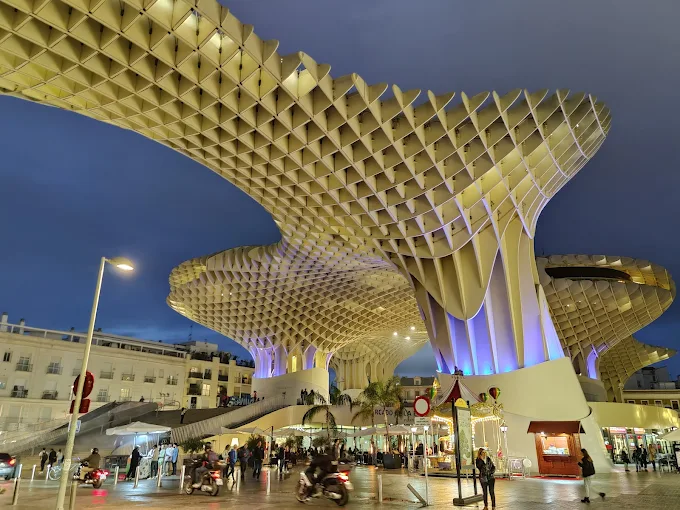
Metropol Parasol, Seville Modern Wood Meets Ancient Stone
The late afternoon sun filters through the honeycomb canopy, casting geometric shadows that dance across the Roman mosaics 26 meters below. You stand beneath the world's largest wooden structure—a undulating mass of timber and concrete that seems to breathe against the Sevillian sky. The air smells of heated wood and orange blossoms; the sound of footsteps echoes on the elevated walkway where tourists trace the perimeter 12 meters above the plaza. This is Metropol Parasol, known locally as Las Setas (The Mushrooms), a controversial architectural statement rising 150 meters long and 70 meters wide over the Plaza de la Encarnación. Constructed between 2005 and 2011 by German architect Jürgen Mayer, the structure shelters Roman and Moorish ruins discovered during excavation while creating a modern public space. In 2026, as cities worldwide grapple with balancing heritage preservation and contemporary design, Metropol Parasol, Seville stands as a bold experiment—a place where 21st-century ambition cradles 2,000-year-old history in its wooden embrace.
Why Metropol Parasol Embodies Architectural Courage
Metropol Parasol, Seville represents one of the most audacious urban interventions of the 21st century, solving a complex archaeological and social problem: how to protect ancient Roman and Moorish remains while revitalizing a deteriorating public square. When construction began in 2005, workers uncovered a 1st-century Roman house with mosaics and a 12th-century Almohad cistern beneath the Plaza de la Encarnación. The solution, designed by Jürgen Mayer, was radical—a massive wooden parasol structure that shelters the archaeological site while creating a multi-level public space above.
The engineering is remarkable: 150 meters long, 70 meters wide, and 26 meters high, the structure uses a wood-concrete composite system with 3,500 cubic meters of Finnish spruce treated with polyurethane resin. The honeycomb pattern consists of hexagonal cells that distribute weight efficiently while allowing light to penetrate. The €100 million project—significantly over the initial €50 million budget—faced intense local criticism during construction, with critics calling it an eyesore. However, the completed structure houses the Antiquarium museum at basement level, a market hall on the ground floor, and an elevated walkway offering 360-degree views of Seville. This layering of functions makes Metropol Parasol, Seville not merely a monument but a living urban organism that reconciles past and present.
The Best Time to Experience Metropol Parasol
For the optimal Metropol Parasol, Seville visit, target March 10–May 15 or October 5–November 20, when temperatures range between 16–26°C (61–79°F) and the wooden structure doesn't radiate excessive heat. The Antiquarium opens at 10:30 AM Tuesday through Sunday; arrive at opening time to explore the Roman mosaics before crowds gather. The elevated walkway offers the best light for photography between 6:00–8:00 PM in summer when the honeycomb casts dramatic shadows. Sunset from the terrace—specifically 8:30–10:00 PM in July—provides panoramic views of the Cathedral and Giralda tower.
Avoid July 15–August 25 unless you tolerate extreme heat; temperatures regularly exceed 40°C (104°F), making the wooden surfaces uncomfortably warm despite shade. The structure's thermal mass retains heat throughout the evening. Winter months (December–February) bring mild weather (10–16°C / 50–61°F) but occasional rain can make the walkway slippery. Monday closures affect the Antiquarium museum though the plaza remains accessible. Approximate Budget for a 7-Day Trip
Seville remains affordable compared to Madrid or Barcelona, though prices rise during Feria de Abril and Holy Week. The following budget assumes mid-range comfort with cultural immersion, based on 2026 pricing with approximately 3.5% inflation from 2025 figures. Costs reflect a focus on historic center accommodation near Metropol Parasol, Seville.
- Accommodation: €70–€125 per night for a double room in a boutique hotel or renovated apartment in Centro, Encarnación, or Alameda neighborhoods; luxury options near the structure command €160–€280 per night
- Food: €38–€58 per day—breakfast €5–€8 (café con leche and churros), lunch €14–€22 (menú del día including gazpacho, carrillada, and wine), dinner €19–€28 (tapas crawl including pescaíto frito and croquetas)
- Transportation: Train from Madrid Atocha to Seville Santa Justa: €52–€72 high-speed AVE (2.5 hours); local bus 27, 37, or C5: €1.40 per ride or €5 daily pass; taxi from airport: €25 fixed rate; bike rental: €14 per day
- Attractions: Metropol Parasol walkway + Antiquarium: €10; Seville Cathedral + Giralda: €12; Real Alcázar: €13.50; Museum of Fine Arts: €1.50; Flamenco show: €30
- Miscellaneous: Local ceramics from €12; Sherry wine €8–€22 per bottle; horchata drink €2.50; artisan leather goods €28–€65; guided architecture tour €16
Total estimated cost for 7 days: €900–€1,320 per person (based on double occupancy; solo travelers should add 35–45% for single supplements)
7 Essential Metropol Parasol Experiences
- Walk the Elevated Panoramic Terrace: Ascend to the top level via the curved ramps that wind through the honeycomb structure. The 1,200-meter walkway offers 360-degree views of Seville's skyline including the Cathedral, Giralda, and Torre del Oro. Visit at 7:30 PM during summer when the setting sun illuminates the terracotta rooftops. The wooden lattice creates shifting patterns of light and shadow as you walk. Allow 45 minutes to complete the full circuit. Bring a wide-angle lens for photography; the views extend 15 kilometers on clear days.
- Explore the Antiquarium Museum: Descend to the basement level to discover Roman mosaics from the 1st century and Almohad cisterns from the 12th century. The climate-controlled space preserves remains uncovered during 2003 excavations. Visit at 10:30 AM opening time to avoid crowds. The domus (Roman house) features geometric mosaics depicting marine scenes. Audio guides available in six languages for €3. Allow 60 minutes to appreciate the archaeological layers. The contrast between ancient stone and modern wood above creates a powerful temporal dialogue.
- Photograph the Honeycomb Geometry: Position yourself beneath the structure at midday when sunlight penetrates the hexagonal cells. The interplay of light and shadow creates abstract patterns on the plaza floor. Use a telephoto lens to capture the repeating geometry. The best angles face northeast toward the curved ramps. Visit on weekdays when fewer people obstruct the composition. The wood-concrete composite shows texture details that photograph beautifully in high contrast. This is architectural photography at its most dramatic.
- Shop at the Morning Market: Visit the ground-level market hall Saturday 8:00–11:00 AM when local vendors sell fresh produce, cheeses, and cured meats. The space transforms into a vibrant community gathering under the wooden canopy. Sample jamón ibérico from stalls near the central pillars. Prices are 20–30% lower than tourist areas. The market operates Tuesday through Sunday; Monday is closure day. Bring cash for smaller vendors who don't accept cards. This is authentic Sevillian daily life beneath an architectural icon.
- Dine at the Rooftop Restaurant: Reserve a table at the terrace restaurant for lunch with panoramic views. The menu features modern Andalusian cuisine with prices 15–20% higher than ground level, but the ambiance justifies the premium. Order the solomillo al whisky (whiskey sirloin) and local white wine. Request a table near the eastern edge for Cathedral views. Lunch service runs 1:00–4:00 PM; dinner 8:30–11:30 PM. Reservations essential: +34 954 562 970. The sunset views compensate for the tourist pricing.
- Attend Evening Cultural Events: Check the programming calendar for concerts, exhibitions, and performances held beneath the structure. The acoustics under the wooden canopy are exceptional for flamenco and classical music. Events typically start at 9:00 PM in summer. Tickets range €8–€25 depending on the performance. The space transforms from tourist attraction to cultural venue after dark. Follow @metropolparasol on social media for schedule updates. These events reveal the structure's function as a living public space rather than mere monument.
- Trace the Roman Remains Route: Follow the glass-floored walkways in the Antiquarium that pass directly over excavated Roman walls and Moorish foundations. The interpretive panels (in Spanish and English) explain the stratigraphy of Seville's urban development. Notice how the modern pillars avoid disturbing archaeological zones—a engineering compromise that increased costs but preserved heritage. The route takes 30 minutes at a contemplative pace. This underground journey provides context impossible to grasp from street level alone.
3 Hidden Gems Most Travelers Miss
- Church of the Savior (Iglesia del Salvador): Located 400 meters northeast at Plaza del Salvador, this baroque masterpiece sits atop another former mosque. Your Metropol Parasol ticket sometimes includes combined entry (verify at purchase). The interior features stunning altarpieces and an underground exhibition of the original mosque foundations. Entry: €6 (or combined); open 11:00 AM–7:00 PM. It receives one-tenth the visitors of the Cathedral. Contact: +34 954 900 257. Visit early morning for private guided tours that access rooms closed to general public.
- Alameda de Hércules: A 10-minute walk north of Metropol Parasol, this tree-lined boulevard features ancient Roman columns and a vibrant café culture. The area underwent gentrification but retains authentic tapas bars frequented by locals. Visit Tuesday–Thursday evenings when the terrace crowds are manageable. The Roman columns date to the 1st century, relocated from a temple of Hercules. Free access; best experienced 7:00–10:00 PM. This is where Sevillians come to socialize away from tourist circuits. Try Bodega La Alameda for traditional vermouth.
- House of Pilatos (Casa de Pilatos): Located 800 meters east at Plaza de Pilatos, 1, this 16th-century palace mimics Mudéjar style but receives far fewer visitors than the Alcázar. It features a stunning blend of Gothic, Renaissance, and Islamic elements. Entry: €10 (gardens only €7); open 9:00 AM–6:00 PM. The tile collection rivals the Alcázar's. Contact: +34 954 225 337. Visit early morning for private guided tours that access rooms closed to general public. The gardens feature fountains and orange trees in peaceful symmetry.
Cultural & Practical Tips
- Respect the structure: Metropol Parasol, Seville is a protected architectural work. Do not climb on the wooden pillars or scratch the surfaces. The wood treatment requires maintenance; touching accelerates deterioration. Security monitors the walkway; follow staff instructions during crowded periods.
- Master these phrases: "Buenas tardes" (BWEH-nas TAR-des) for good afternoon; "Por favor" (por fah-BOR) for please; "¿Cuánto cuesta?" (KWAN-toh KWES-tah) to ask price; "La cuenta, por favor" (lah KWEN-tah) to request the bill.
- Photography guidelines: Tripods permitted on the terrace but not inside the Antiquarium without special permission. Flash photography prohibited in the museum to protect mosaics. Drones strictly forbidden. Commercial shoots require advance authorization from the city council (+34 954 562 970).
- Accessibility: Elevators serve all levels for visitors with mobility issues. Wheelchairs available free at the information desk. The Antiquarium is fully accessible. However, the terrace walkway has some narrow sections; request assistance during peak hours. Service animals permitted throughout.
- Hydration strategy: Seville's dry heat dehydrates quickly; carry a refillable bottle. Public fountains exist in Plaza de la Encarnación. The water is potable. Avoid alcohol during midday heat. You'll save €2–€3 daily and reduce plastic waste. Purchase water from market vendors if fountains are unavailable.
- Footwear selection: The walkway surface can be slippery when wet. Wear shoes with good grip. The Antiquarium involves walking on uneven ancient surfaces. Avoid high heels. Comfortable walking shoes essential for the 1,200-meter terrace circuit. The wooden ramps have a slight incline.
- Weather considerations: The structure provides shade but temperatures beneath can feel 3–5°C warmer due to thermal mass. Summer evenings remain hot; bring a fan. Winter rain occasionally leaks through the honeycomb; carry an umbrella. Wind speeds increase on the terrace; secure loose items like hats.
Conclusion: Travel with Reverence, Not Just Reverie
Metropol Parasol, Seville demands more than casual observation—it asks for contemplation of the layers of history embedded in every wooden beam, every Roman mosaic, every hexagonal cell. When you walk this structure in 2026, you're not merely touring a monument; you're walking through a bold experiment where 21st-century architectural ambition cradles 2,000-year-old heritage in delicate, controversial balance.
Choose to engage deeply: hire a local guide from the Encarnación neighborhood rather than a large tour company; purchase tickets directly to support preservation efforts; respect the archaeological fragility beneath your feet. Metropol Parasol, Seville survives not as a finished statement but as an ongoing dialogue between past and future—and its success depends on visitors who recognize the difference between appreciation and consumption.
Slow down. Sit on the terrace after the tour buses depart. Listen to the wind moving through the honeycomb lattice. Trace the geometric shadows as they shift across the plaza. The structure rewards those who approach it not as a checklist item but as a conversation across time—a dialogue between Roman stone and modern wood that continues, like the city itself, in perpetual evolution.