Pont-Aven: Where Artistic Legacy Meets River Valley
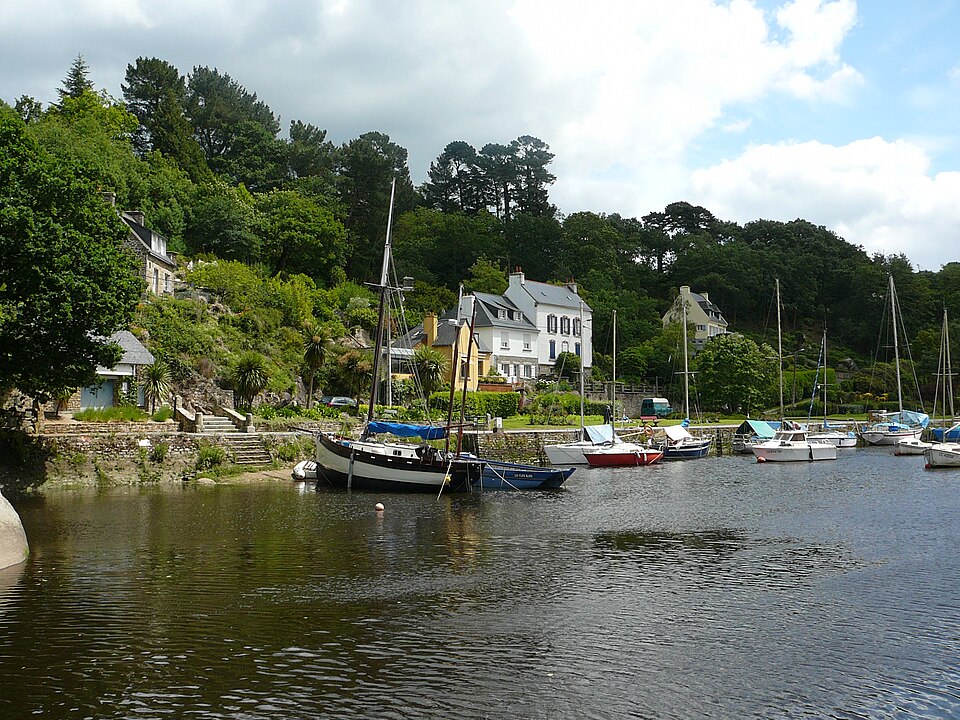
I stand beside the Aven at 10:15 on a Thursday morning. Clear water tumbles over granite stones. Sunlight filters through riverside trees. I paid nothing to walk the riverside path. A buttery kouign-amann cost 3.50 euros from the bakery on the main square. The village spreads along the river where it widens toward the sea. Whitewashed houses with slate roofs line both banks. Stone bridges connect lanes that climb wooded slopes. It feels gentle and self-contained, a place where light and water drew painters and still shape how visitors see the world.
Why Pont-Aven Matters
Before tourism, this was a mill town — fourteen watermills once lined the river. In the 1860s, artists began arriving, drawn by soft light, wooded valleys, and low living costs. Paul Gauguin came in 1886 and returned repeatedly. He and fellow painters developed the Synthetist style here, moving beyond pure impression to use bold forms and symbolic colour. The village became an artists’ colony that changed modern art. Today the legacy draws visitors from across the world. That attention brings trade-offs. The main street feels crowded in summer. Some galleries show mass-produced work rather than genuine art. The riverfront looks neat but feels overly polished in spots. You must step back from the centre to find the quiet that inspired the painters.
The Best Time to Experience Pont-Aven
Late May through June offers fresh green leaves and longest evenings. Temperatures sit between 10°C (50°F) and 19°C (66°F). Crowds stay manageable. July and August reach 14°C (57°F) to 23°C (73°F), but the main square fills by mid-morning. September holds steady at 11°C (52°F) to 20°C (68°F). Golden light matches what Gauguin and his contemporaries worked to capture. October through April runs quieter and cooler — 5°C (41°F) to 11°C (52°F). Some smaller galleries and cafés close then. Visit before 10:00 AM. You will share the river paths with few others. Sunday afternoons stay calm as well.
Approximate Budget for a 7-Day Trip
- Accommodation: 7 nights in a family-run guesthouse just outside the centre — 532 euros. Staying right beside the river costs roughly 150 euros extra with no better view.
- Food: Daily breakfast, casual lunches, evening meals — 427 euros. Restaurants directly on Place de l’Hôtel de Ville charge premium prices. Menus cost nearly double what places down side lanes ask. They are overpriced.
- Transport: Train from Paris to Rosporden then short bus or taxi — 133 euros. Taxis from the station are overpriced. The bus takes 20 minutes and costs a fraction. Walking covers the village easily once you arrive.
- Attractions: Museum entry — 9 euros. Gallery visits mostly free. Chapelle de Trémalo — donation only.
- Miscellaneous: Drinks, prints, cider, rain gear — 85 euros.
Total estimated cost: 1,177 euros per person
Skip the souvenir shop beside the museum entrance. The bookshop on the upper street sells identical art cards and guides at lower prices.
Essential Pont-Aven Experiences
- Walk the river path upstream — Follow the Aven past old mill sites and wooded banks. This is the landscape the artists knew. Light filters through trees and falls across the water. It stays quiet even when the village fills. Go slowly.
- Visit the Musée de Pont-Aven — Works by Gauguin, Sérusier, and other colony members hang here. The collection explains how the style developed. Rooms stay calm and well laid out. Allow one relaxed hour.
- Find Chapelle de Trémalo — Small white chapel set back from the road. Its wooden Christ inspired Gauguin’s famous painting. The building feels unchanged since his day. Skip if you dislike narrow uphill lanes — the walk is short but steep.
- Cross the old bridges — Each offers a different view of the river and rooftops. Stand in the middle for a moment. Notice how the water moves fast and clear. Light shifts across the stone constantly.
- Explore the port downstream — Where the river widens toward the sea. Fishing boats still tie up here. The tide rises and falls visibly. It connects the village to the coast beyond the trees.
- Walk up to the Calvary — Stone monument on the hill above the village. Views open across rooftops, river, and distant forest. The climb takes ten minutes. It rewards the effort.
- Visit an artist’s studio — Working spaces stay open to visitors in designated lanes. You see painters at work. Prices vary. Support local creators if you can.
Hidden Gems Most Travelers Miss
- The path on the far bank upstream runs through trees and open meadows. Almost no one crosses over to walk it. You see the village from across the water, exactly as the painters did. It feels peaceful and private.
- Rue des Fleurs climbs away from the main street. Small galleries and workshops sit in quiet houses. Prices stay fair and owners talk willingly. The main street art shops are overrated — they stock mass-produced prints rather than original work.
- The old mill ruin further upstream sits half-hidden by trees. Stone walls stand beside falling water. No sign marks it. You find it by walking past the last paved path. It feels untouched and timeless.
- The viewpoint from the coastal path west of the port opens across the estuary. Sunset here colours the water deep gold. Few people walk this far. It stays quiet even in summer.
Cultural & Practical Tips
- Book ahead July and August. Guesthouses fill fast. Rooms disappear months in advance. Do not leave planning to the last minute.
- Respect working artists. Studios are not displays. Ask before taking photos. Keep voices low. Some spaces close to visitors at short notice.
- Wear sturdy shoes. River paths stay uneven and slippery when damp. Cobbled lanes slope uphill everywhere. Thin-soled shoes tire feet fast.
- Do not block the narrow bridges. Locals cross daily. Step aside to let others pass. Keep to the right.
- Carry small change. Chapelle de Trémalo runs on donations. No ticket machine exists. A few euros help keep the chapel open.
- Check opening days. Some galleries close Mondays or Tuesdays. The museum stays open daily but shuts early on Sundays.
- Walk further than the map shows. The best spots have no signs. Follow the river, climb a lane, keep going. The quietest places stay unmarked.
Essential Visitor Information
Location & Access: Pont-Aven, Finistère, Brittany. GPS coordinates 47.86, -3.75. Three options: TGV from Paris Montparnasse to Rosporden (roughly 3.5 hours), then bus or taxi 15 minutes; drive via Rennes and N165 (4.5–5 hours from Paris); train to Quimper then bus 30 minutes.
Tickets & Booking: Musée de Pont-Aven — 9 euros adults. Reduced 5.50 euros. Under 12s free. Combined pass with nearby sites available. No booking required for museum but advance recommended for accommodation in summer.
Operating Hours: Museum: April–September 10:00–18:00; October–March 10:00–12:30 and 14:00–17:30; closed Mondays November–March. Chapelle de Trémalo open daylight hours year-round.
Visit Duration: Minimum 3 hours for museum and central village. Recommended full day including river walks, chapel, and relaxed exploration.
Family Suitability: Centre mostly flat and stroller-friendly. Uphill paths to chapel and Calvary have stairs and slopes. Public restrooms near museum and port. Shallow river edges — watch children closely.
Timing: Best season: May–June or September. Best time: before 10:00 AM. Quietest paths, softest light, freshest air.
Highlights: Upstream river path, Musée de Pont-Aven, Chapelle de Trémalo, old stone bridges, port estuary, Calvary viewpoint.
Nearby & Day Trip: Three nearby stops: Concarneau walled town and port (20 minutes drive), Locronan historic centre (30 minutes), Quimper cathedral and old town (35 minutes). Pointe du Raz and wild coast make a rewarding full-day trip at 1 hour drive.
Conclusion: Travel with Seeing, Not Just Buying
Pont-Aven changed how art saw the world. Some corners feel overcommercialised. Some work sold here carries little real connection to the colony. Those things do not erase the place. You do not need to know every painter’s name to feel the light. Walk beside the river. Watch water catch sunlight. Notice how the trees and stone shaped what Gauguin and his friends painted. What vision will you carry away?
Comments
Post a Comment