
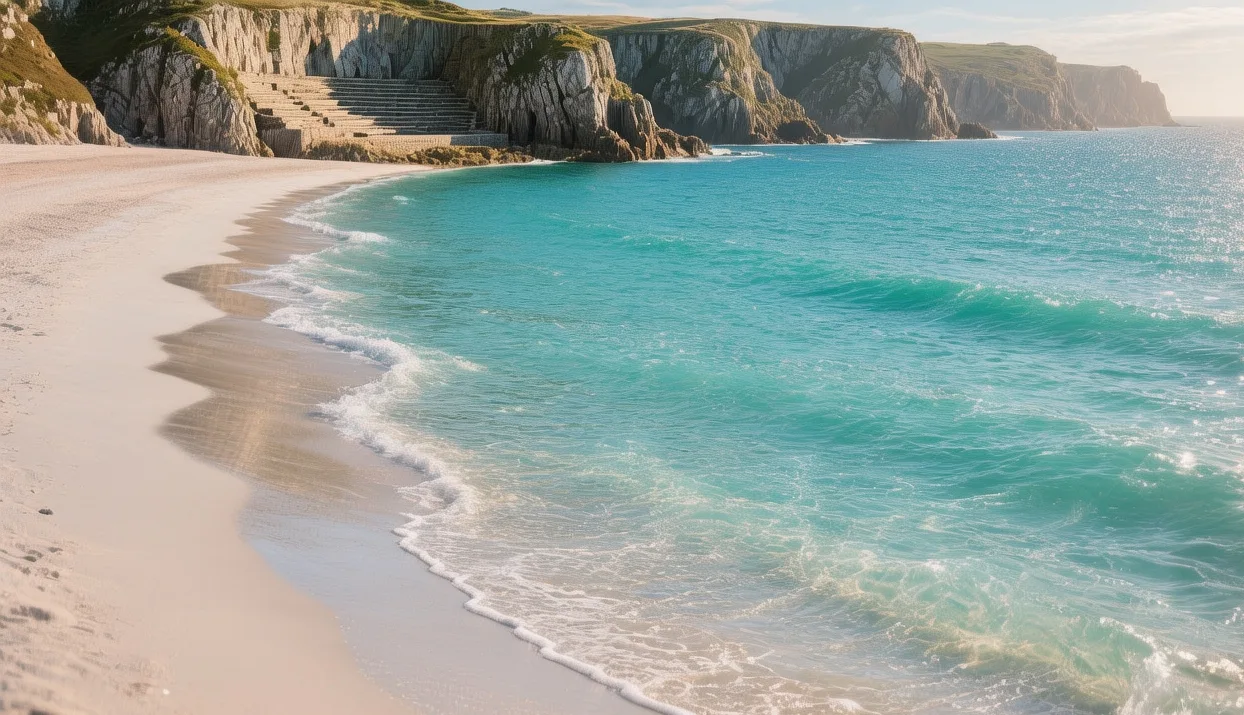
Porthcurno Beach Turquoise Waters Meet Cornish Granite
Sunlight fractures through the surface as the tide recedes—revealing powdery white sand that contrasts sharply with the dark granite boulders framing the cove. You stand at the edge of Porthcurno beach, where the water shifts from pale aquamarine to deep sapphire within meters, while the distant echo of rehearsal vocals drifts from the Minack Theatre carved into the cliffs above. This sheltered bay, measuring 200 meters (656 feet) across, has served as a landing point for submarine telegraph cables since 1870, connecting Britain to the world before the internet existed. As you dip your toes into the 16°C (61°F) water, watching seabirds circle the jagged headland, you realize this place matters now more than ever: in an era of digital disconnection, Porthcurno beach remains a physical sanctuary where technology and nature coexist, offering a rare glimpse of the Cornish Caribbean that demands protection from the rising tides of overtourism in 2026.
Why Porthcurno Beach Embodies Coastal Harmony
The Porthcurno beach is not merely a scenic stretch of sand; it is a geological anomaly where quartz-rich granite erosion meets sheltered ocean currents. Unlike the rugged shingle beaches common to the north coast, this south-facing cove traps fine sediment, creating water clarity that rivals the Mediterranean. The site solved a critical communication need in the Victorian era: the shallow shelf provided a safe landing for the first submarine telegraph cables to India, established by the Falmouth, Gibraltar and Malta Telegraph Company in 1870. Technical engineering involved laying 14 cables by 1903, transforming this remote valley into a global communications hub protected by bunkers dug into the cliffs during World War II.
Today, it fulfills a cultural need for connection to both natural beauty and industrial heritage. Managed by the National Trust and the PK Porthcurno Telegraph Museum, the site hosts over 300,000 annual visitors who walk the path between the beach and the cable station. The Minack Theatre, opened by Rowena Cade in 1932, overlooks the bay from 60 meters (197 feet) above, creating a unique amphitheater where drama meets the sea. When you walk the sand, you traverse a space where Victorian engineers laid the groundwork for the internet and where actors perform Shakespeare against the sunset. The Porthcurno beach represents a continuous narrative of innovation and preservation, balanced by the conservation efforts that keep the dunes stable against the erosive power of the Atlantic storms.
The Best Time to Experience Porthcurno Beach
To witness Porthcurno beach in optimal conditions, plan your visit between May 18 and June 12. During this window, temperatures average 14-19°C (57-66°F), and daylight extends until 9:15 PM, maximizing beach time. The water is clearest during low tide, which exposes the tidal pools and sandbars. Check the UK Tide Tables for specific dates; a tide below 2.0 meters is ideal for swimming. Morning light between 8:00-10:00 AM reduces glare on the water, aiding photography of the turquoise hues.
Autumn offers a secondary window—specifically September 15 to October 15—when summer crowds dissipate and the sea retains summer warmth. Temperatures remain mild at 13-18°C (55-64°F). Avoid July 25 to August 25 when school holidays push visitor numbers above 2,000 daily, creating congestion in the car park and limited space on the sand. Winter months (November-February) offer solitude but challenging conditions; high winds often close the coastal path, and sunset occurs as early as 4:05 PM in December. For current water quality .
Approximate Budget for a 7-Day Trip (2026)
Exploring Porthcurno beach and the wider Penwith peninsula requires moderate budgeting, as West Cornwall commands premium prices during peak season. The following budget reflects mid-range travel for one person in 2026, accounting for approximately 4.5% UK inflation (ONS data, January 2026). Prices assume a base in Penzance or St Just for optimal access to the beach and coastal paths.
- Accommodation: £95-£160 per night for a B&B or cottage in St Just (6 nights = £570-£960). Budget options: £55-£75 for hostels in Penzance or camping at Trewellard.
- Food: £50-70 per day total • Breakfast: £10-15 (Full English at The Logan Rock Inn) • Lunch: £15-20 (Cornish pasty at The Porthcurno Cafe) • Dinner: £25-35 (Seafood platter at The Old Coastguard or Reef)
- Transportation: • Train London Paddington to Penzance: £80-140 return (advance booking) • Local bus (Route 1): £4.50 day pass • Car rental (recommended): £65/day plus fuel £1.58/liter • Parking at Porthcurno: £8/day (March-October)
- Attractions: • Telegraph Museum Entry: £14.50 • Minack Theatre Tour: £12 • Boat Trip to Seal Colony: £35 • Free: Beach access, coastal path, swimming
- Miscellaneous: • Ordnance Survey Explorer Map 102: £10.99 • Local artisan souvenirs: £25 • Travel insurance: £40-60 for week • Wetsuit rental: £20
Total estimated cost: £1,450-£1,800 for 7 days (excluding international flights)
5 Essential Porthcurno Experiences
- Swim at Low Tide: Arrive 2 hours before low tide to access the safest swimming zones. The water is calmest in the morning before winds pick up. Spend 60 minutes swimming in the sheltered bay. The temperature averages 16°C (61°F) in summer; a wetsuit is recommended for extended dips. Watch for jellyfish in August. This experience connects you to the clean waters that made the site ideal for cable landing.
- Visit the Telegraph Museum: Located 200 meters from the beach, this museum houses the history of global communications. Entry is £14.50. Spend 90 minutes examining the cable machinery and WWII bunkers. Open 10:00 AM-5:00 PM daily. The staff provide free talks on the first submarine cable at 11:00 AM. This context enriches your beach visit, explaining the industrial history hidden beneath the sand.
- Watch a Performance at the Minack: Book tickets for an evening show (May-September). The open-air theatre seats 750 people carved into the cliff. Arrive 45 minutes early to secure your seat and watch the sunset. Bring warm layers; temperatures drop 5°C after dusk. This experience demonstrates the cultural significance of the cliffs overlooking the bay.
- Walk the South West Coast Path: Dedicate 90 minutes to the section east toward Pedn Vounder. The path climbs 50 meters to clifftops offering panoramic views. The scent of gorse and thrift fills the air. Wear sturdy shoes; paths are uneven and exposed. This experience connects the beach to the wider geological landscape of the Penwith Heritage Coast.
- Explore the Tide Pools: At low tide, walk to the eastern end of the beach where granite boulders form natural pools. Spend 45 minutes observing marine life. Look for blennies, crabs, and anemones. Bring a net and bucket for children. This experience provides a tangible connection to the biodiversity protected by the clear waters.
3 Hidden Gems Most Travelers Miss
- Pedn Vounder Beach: While crowds cluster at Porthcurno, this secluded cove 1 kilometer east remains surprisingly quiet. Access via the coastal path (grid reference SV365245). The sand is finer and the water deeper. Visit between 3:00-5:00 PM when tide is receding. No facilities exist—bring water and a headlamp for the return. The National Trust notes this area has high ecological interest due to undisturbed dune systems.
- The Cable Hut Bunkers: Contact the Telegraph Museum (+44 (0)1736 810101) for access to the WWII bunkers on the cliff top. The site features original concrete structures used to protect cables from bombing. Access is restricted to guided tours on Tuesdays at 2:00 PM. The space offers a tangible connection to the wartime history often overlooked by beachgoers. This site reveals the strategic importance of the valley beyond tourism.
- Logan Rock Viewpoint: Located 1 kilometer west, grid reference SV355250, lies the famous rocking stone. Access via a public footpath from the road. The rock weighs 80 tonnes and was tipped in 1824, then restored. Visit during weekday mornings when the site is empty. No facilities exist—bring snacks. This spot demonstrates the geological quirks of the coastline, offering a raw view of the granite formations before they meet the sea.
Cultural & Practical Tips
- Respect the dunes: The sand dunes are fragile—erosion occurs rapidly. Stay on marked paths; red warning flags indicate dangerous conditions. Keep dogs on leads during nesting season (April-July). The National Trust reports 5-10 incidents annually due to visitors straying into protected zones.
- Understand tide schedules: The tidal range at Porthcurno averages 5-6 meters. Check www.uktides.co.uk before visiting. Never turn your back on the sea—rogue waves occur. If trapped by incoming tide, call HM Coastguard immediately at 999.
- Leave no trace: Remove all litter, including biodegradable items. The site collects 8 tonnes of waste annually from the beach. Do not remove stones or shells—this violates the Wildlife and Countryside Act 1981. Photograph specimens in situ instead.
- Learn local terminology: "Cove" (small bay); "Headland" (promontory); "Granite" (local rock). Using these terms shows respect for geological heritage and helps guides assist you better during tours.
- Photography guidelines: Tripods are permitted on the sand but restricted on the Minack Theatre during performances. Drone use requires written permission from the National Trust and Civil Aviation Authority—apply 6 weeks in advance. Respect other visitors; do not block pathways for extended shoots during peak hours (11:00 AM-3:00 PM).
- Weather preparedness: The bay is sheltered but exposed to southwesterly winds. Pack waterproof layers; Cornwall showers are sudden. Wear sturdy shoes with grippy soles—granite becomes slippery when wet. Sun protection is essential; reflection from sand increases UV exposure by 25%.
- Accessibility considerations: The beach is accessible via a steep path; not wheelchair friendly. Alternative viewing exists from the cafe terrace. The Museum is fully accessible. Request an accessibility map at the ticket office upon arrival.
Conclusion: Travel with Reverence, Not Just Sightseeing
The Porthcurno beach does not exist merely to be photographed—it exists to be felt as a sanctuary of light and water. When you walk this sand in 2026, you are not observing a static postcard; you are entering a space where Victorian engineering and ancient geology converge. The engineers who laid the cables are gone, but their legacy remains buried beneath the waves. The actors who perform on the cliffs are gone, but their voices still echo in the amphitheater. This is not heritage frozen in amber—it is heritage living, breathing, enduring.
So slow down. Sit on the grassy banks for ten minutes without your phone. Listen to the wind that once carried the signals of empire and now carries the cries of choughs. Buy your lunch from a café whose owners pay rates that support the local community. Donate to the National Trust rather than purchasing plastic souvenirs. Leave only footprints on ancient sand, take only memories of turquoise water, carry home only the profound understanding that some things—coastlines, clarity, natural beauty—cannot be rushed, cannot be owned, can only be honored. The beach will still shine in 2126 if we choose stewardship over exploitation today.