
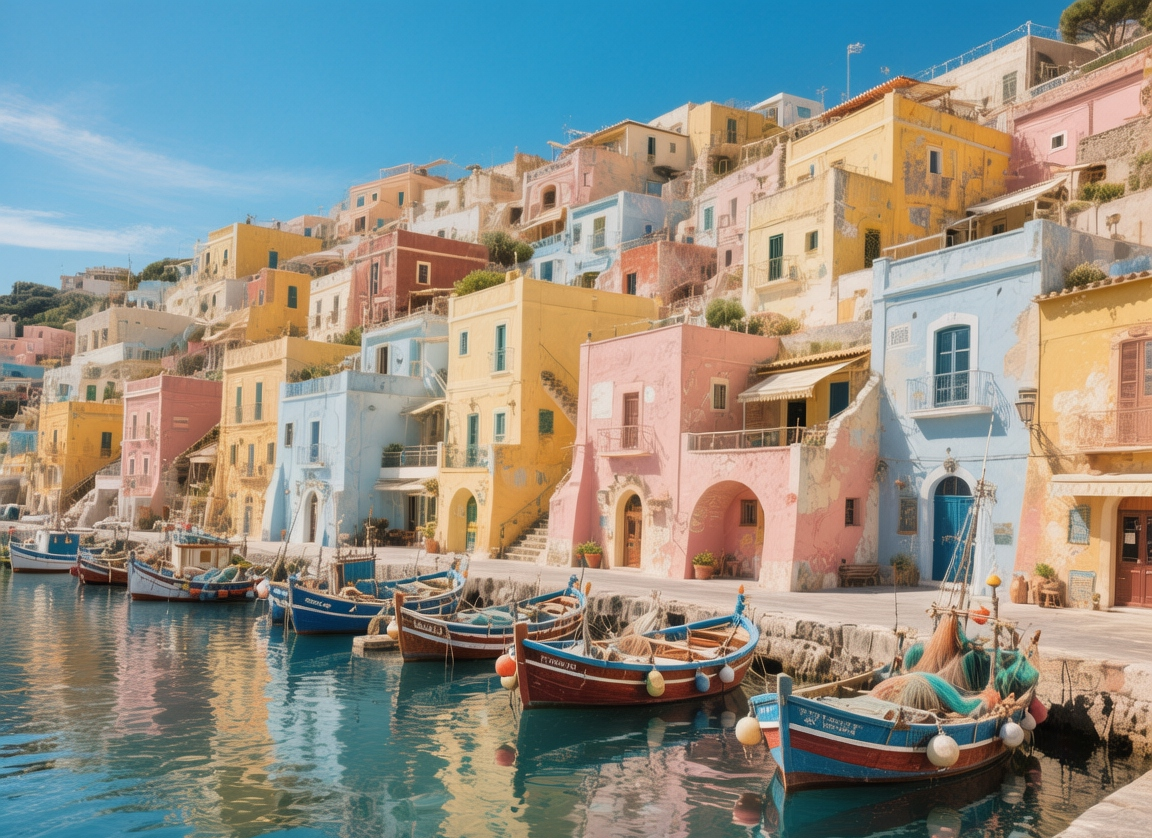
Procida Colorful Island Mediterranean Hues Meet Authentic Soul
The morning sun in the Bay of Naples strikes the pastel-hued houses of Marina Corricella, setting the entire harbor ablaze with a kaleidoscope of ochre, coral, cobalt, and lemon. You hear the gentle lap of waves against the hulls of fishing boats, the distant clang of a buoy bell, and the low murmur of fishermen mending their nets on the quay. This is Procida, the smallest of the three main islands in the bay, a place that has remained defiantly authentic while its neighbors have embraced mass tourism. With a land area of just 4 square kilometers (1.5 square miles) and a population of around 10,000, Procida’s charm lies in its intimate scale and working-class heart [[27]]. Its colorful architecture isn’t for show—it’s the practical result of generations of fishermen painting their homes with the same marine-grade paints used on their boats to protect against the salty air. In an age of Instagrammable facades and curated experiences, Procida matters now more than ever—it is a genuine, unpretentious slice of Mediterranean life where beauty is born of necessity, not performance.
Why Procida Colorful Island Embodies Authentic Vibrancy
Procida’s famous colors are far more than a visual delight; they are a direct expression of its maritime identity and resilient community spirit. Unlike the planned pastel palettes of other destinations, Procida’s hues emerged organically from the practical needs of its fishing families. For centuries, boat owners would use leftover marine paint—formulated to withstand salt, sun, and sea—to refresh the exteriors of their homes. This created a spontaneous, ever-changing mosaic of color that reflected the island’s economic lifeblood. The epicenter of this chromatic wonder is Marina Corricella, a tiny, sheltered harbor where houses are stacked like a child’s blocks, each balcony draped with laundry and potted geraniums. This dense, vertical settlement solved a critical problem: how to maximize limited space on a small island while maintaining direct access to the sea. The layout also fostered a powerful sense of community, where neighbors lived in close quarters and shared the rhythms of the tides. Today, this authenticity fulfills a deep modern need—for a place that feels real, where the primary industry is still fishing, and the primary language is one of warmth and welcome, not commerce.
The Best Time to Experience Procida Colorful Island
To experience Procida in its most peaceful and vibrant state, plan your visit for the specific windows of April 25–June 10 or September 15–October 10, 2026. During these periods, the weather in the Bay of Naples is ideal, with daytime temperatures ranging from a comfortable 22–26°C (72–79°F) and clear skies that make the island’s colors truly pop [[11]]. The best time of day to explore is in the early morning, between 8:00 AM and 10:30 AM, when the light is soft, the streets are quiet, and you can witness the authentic morning rituals of the fishermen returning with their catch. It is strongly advised to avoid the peak summer months of July and August, when the island’s small ferry terminal becomes congested with day-trippers, and the serene atmosphere of Marina Corricella gives way to a more bustling energy [[45]]. For the most current information on ferry schedules, local events, and the official program of Procida’s tenure as Italian Capital of Culture in 2022 (whose legacy continues), always consult the official tourism portal: procida.it.
Approximate Budget for a 7-Day Trip (2026)
This budget is calculated for a solo traveler seeking a comfortable, culturally immersive experience in Procida in 2026, based on current inflation trends and average regional costs for the Campania islands.
- Accommodation: €90–€150 per night. Staying in a guesthouse in the historic center near Terra Murata offers an authentic experience. Options with a sea view in Corricella command higher prices.
- Food: €45 per day. Breakfast (€5): a cappuccino and cornetto at a local bar. Lunch (€16): a plate of spaghetti with fresh anchovies at a family-run trattoria. Dinner (€24): a main course like grilled octopus with a glass of local white wine.
- Transportation: €140 total. Round-trip ferry from Naples to Procida (€15). A weekly pass for the small local bus that circles the island (€10). Walking is the primary mode of transport.
- Attractions: Entry to the Abbey of San Michele Arcangelo (€3). Guided walking tour of the island’s history and colors (€20). Visit to the Vivara islet nature reserve (€5).
- Miscellaneous: €95. This covers a bottle of local limoncello (€20), several gelato stops (€3 each), a hands-on cooking class featuring seafood recipes (€40), and souvenirs like handmade ceramics.
Total Estimated Cost: €905–€1,025
6 Essential Procida Colorful Island Experiences
- Wander Marina Corricella at Dawn: Be there by 8:00 AM to see the harbor in its most peaceful state. Watch the fishermen unload their boats and capture the perfect light on the colorful houses before the crowds arrive.
- Climb to Terra Murata: Walk up to the island’s highest point, the ancient fortified village of Terra Murata. Visit the 17th-century Abbey of San Michele Arcangelo for panoramic views over the entire Bay of Naples.
- Dine on Fresh Seafood in Corricella: Reserve a table at a family-run restaurant like Ristorante La Lampara. Savor the day’s catch on a terrace overlooking the tiny harbor, with boats bobbing just meters below.
- Take a Boat Tour Around the Island: Book a small-group tour to see Procida’s dramatic cliffs, hidden coves, and the uninhabited islet of Vivara. The perspective from the water highlights the island’s compact, colorful beauty.
- Explore the Citara Beach: Relax on the island’s largest sandy beach on the western side. It’s a favorite with locals and offers a different, more relaxed vibe than the historic center.
- Visit a Local Limoncello Workshop: Tour a small producer to learn about the island’s tradition of making this iconic lemon liqueur. Taste the different varieties and buy a bottle to take home.
3 Hidden Gems Most Travelers Miss
- The View from the Clock Tower in Terra Murata: Climb the steps of the old clock tower for a bird’s-eye view over the red rooftops of the historic center and the sparkling sea beyond. It’s free and rarely crowded.
- The Chapel of Santa Maria della Pietà: Tucked away on a quiet street near the port, this small 18th-century chapel has a stunning blue-and-white tiled floor and a peaceful courtyard. It’s often locked, but ask at the nearby tourist office for access.
- The Path to Chiaiolella: On the island’s northern coast, this quiet path leads to a small, rocky inlet favored by local swimmers. It’s a peaceful escape from the main beaches and offers a glimpse into everyday island life.
Cultural & Practical Tips
- Wear comfortable walking shoes: The streets are steep, cobbled, and uneven. Good footwear is essential for exploring the island’s hills safely.
- Respect the locals’ privacy: When taking photos of people or their homes, especially in Corricella, always ask permission with a smile and a “Permesso?” (pehr-MEH-soh?).
- Learn a few key phrases: “Dov’è il mare?” (DOH-veh eel MAH-reh?) for “Where is the sea?”, and “Un caffè, per favore” (oon kah-FEH).
- Carry cash: Many small restaurants, bars, and even some B&Bs operate on a cash-only basis.
- Embrace the slow pace: Procida runs on island time. Don’t rush. Sit at a bar, order a granita, and let the rhythm of the place wash over you.
- Tipping is appreciated but not expected: Rounding up the bill or leaving €1–€2 for exceptional service is a kind gesture.
Conclusion: Travel with Heart, Not Just a Camera
Procida’s colorful island is not a stage set for your vacation photos; it is a living, breathing community with a soul of its own. In 2026, as we seek travel that is both beautiful and meaningful, Procida offers a powerful lesson in authenticity. Your journey here should be one of heart—not just capturing its vibrant hues, but feeling its pulse in the rhythm of the fishing boats, tasting its essence in a perfect plate of pasta, and connecting with its people who have guarded their way of life for generations. By traveling with this open-hearted respect, you honor the spirit of Procida and help ensure its colors remain genuine, not just for the camera, but for the community that calls it home. Slow down. Sit on a wall and watch the light change on the water. In that quiet moment of connection, you don’t just visit Procida—you become part of its enduring, colorful story.
Image Description: Sun-drenched Marina Corricella in Procida, with colorful fishing houses cascading down to a small harbor filled with bobbing boats under a clear blue sky at mid-morning