
Real Alcázar, Seville Islamic Art Meets Christian Power
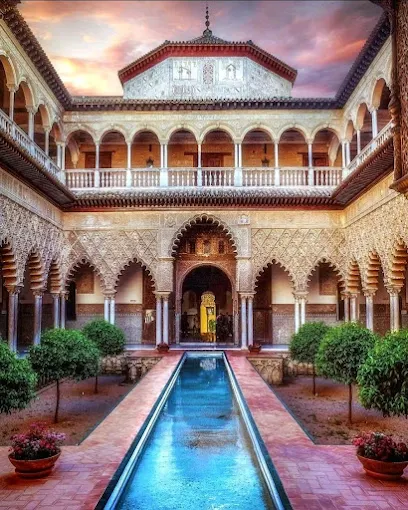
The sound of water precedes the sight—a gentle trickle from hidden spouts that has flowed through the Real Alcázar since 1364. You step into the Patio de las Doncellas, where sunlight fractures through intricate lace-like stucco, casting geometric shadows on marble floors cooled by centuries of shade. The air smells of orange blossoms and damp earth; the temperature drops five degrees instantly beneath the arches. This is not merely a palace but a living palimpsest, where Almohad foundations support Mudéjar walls, and Christian monarchs walked the same corridors as Islamic caliphs. The complex spans seven hectares, containing over 150 rooms and gardens that whisper stories of Pedro I, known as "the Cruel," who commissioned the main palace in the 14th century. In 2026, as heritage sites globally struggle with overtourism, the Real Alcázar stands as a testament to preservation—a place where history is not frozen behind glass but breathed in every tile, every fountain, and every whispered echo of power.
Why Real Alcázar Embodies Architectural Synthesis
The Real Alcázar represents the pinnacle of Mudéjar architecture, a style born from the coexistence of Muslim, Christian, and Jewish cultures in medieval Spain. Constructed primarily between 1364 and 1366 under King Pedro I, the palace solves a critical climatic and political problem: how to maintain royal grandeur while adapting to Seville's scorching summers. The solution lies in the engineering of the courtyards—specifically the Patio de las Doncellas, which measures 44 meters by 29 meters. Thick walls made of tapial (rammed earth) and brick provide thermal mass, keeping interiors cool during the day and warm at night.
The hydraulic system is equally sophisticated; water channels (acequias) distribute moisture from the Guadalquivir River throughout the gardens, feeding 170 plant species and maintaining humidity levels that reduce ambient temperature by up to 8°C. The Hall of Ambassadors, capped by a dome representing the universe with 7,000 carved cedar pieces, demonstrates the mathematical precision of Islamic geometry applied to Christian sovereignty. This architectural layering—where Arabic inscriptions praise Allah alongside Castilian coats of arms—makes the Real Alcázar a unique document of cultural negotiation. Recognized as a UNESCO World Heritage Site since 1987, it remains the oldest royal palace in Europe still in use, hosting state visits while preserving its 14th-century soul.
The Best Time to Experience Real Alcázar
For the optimal Real Alcázar visit, target March 15–May 20 or October 10–November 25, when temperatures range between 18–28°C (64–82°F) and the gardens are either blooming or bearing fruit. The palace opens at 9:30 AM daily; arrive 15 minutes before opening to enter with the first group, as crowds swell by 11:00 AM. Sunset in the gardens—specifically 7:30–9:00 PM in summer—offers magical lighting, though last entry is typically one hour before closing. Spring offers the added spectacle of Seville Fair, though accommodation prices increase 60–80% during this period and tickets should be booked three months in advance.
Avoid July 15–August 31 unless you tolerate extreme heat; temperatures regularly exceed 40°C (104°F), making garden exploration physically demanding despite shade. Winter months (December–February) bring milder weather (10–16°C / 50–61°F) but shorter daylight hours, limiting photography opportunities in the lower gardens. Monday mornings often see reduced hours due to maintenance; verify current schedules at https://alcazarsevilla.org/ or contact the ticket office at informacion@alcázarsevilla.org (+34 954 502 324). Purchasing tickets online saves 45–60 minutes of queueing time during peak season.
Approximate Budget for a 7-Day Trip
Seville remains affordable compared to Madrid or Barcelona, though prices rise during Feria de Abril and Holy Week. The following budget assumes mid-range comfort with cultural immersion, based on 2026 pricing with approximately 3.5% inflation from 2025 figures. Costs reflect a focus on historic center accommodation and authentic dining near the Real Alcázar.
- Accommodation: €75–€130 per night for a double room in a palacio hotel or boutique guesthouse in Santa Cruz or Arenal neighborhoods; luxury options near the palace command €180–€300 per night
- Food: €40–€60 per day—breakfast €5–€8 (café con leche and torrija), lunch €15–€25 (menú del día including gazpacho, pescaíto frito, and wine), dinner €20–€30 (tapas crawl including jamón ibérico and espinacas con garbanzos)
- Transportation: Train from Madrid Atocha to Seville Santa Justa: €55–€75 high-speed AVE (2.5 hours); local tram T1 or bus C5: €1.40 per ride or €5 daily pass; taxi from airport: €25 fixed rate; bike rental: €15 per day
- Attractions: Real Alcázar general ticket: €13.50; Seville Cathedral + Giralda: €12; Archive of the Indies: free; Flamenco show at La Casa del Flamenco: €35; River cruise on Guadalquivir: €18
- Miscellaneous: Ceramic souvenirs from €10; local Sherry wine €8–€20 per bottle; horchata drink €2.50; artisan leather goods €30–€70; guided palace tour €15
Total estimated cost for 7 days: €920–€1,350 per person (based on double occupancy; solo travelers should add 35–45% for single supplements)
7 Essential Real Alcázar Experiences
- Stand in the Patio de las Doncellas: Enter the heart of the palace where Pedro I held court. The rectangular pool reflects the surrounding arches, creating an illusion of infinite space. Visit at 9:30 AM opening time to capture the water without crowds. Notice the Arabic inscriptions praising God alongside Castilian symbols; this duality defines the Mudéjar style. The marble columns were imported from Genoa and Tunisia, showcasing the king's international reach. Spend 15 minutes simply observing how light moves across the stucco walls.
- Explore the Hall of Ambassadors: Stand beneath the golden dome representing the universe, composed of 7,000 interlocking cedar pieces. This room hosted the reception of Christopher Columbus by the Catholic Monarchs in 1492. The light filters through alabaster windows, illuminating the intricate yesería (plasterwork) on the walls. Audio guides explain the symbolism of the constellations carved above. Photography is permitted without flash; allow your eyes to adjust to the dimmer interior light to appreciate the gold leaf details.
- Wander the Upper Gardens: Ascend to the higher terraces for panoramic views over the lower gardens and the Giralda tower. The Upper Gardens feature neatly trimmed hedges, rose bushes, and pavilions used for royal events. Visit between 4:00–6:00 PM when the sun softens. The Pavilion of Charles V, built in 1540, offers a Renaissance contrast to the Moorish palace below. Benches are available for rest; bring water as shade is limited in the upper sections compared to the dense lower gardens.
- Discover the Baños de María de Padilla: Descend into the underground cisterns beneath the Patio del Crucero. These vaulted chambers, once used for water storage, gained fame as a filming location for Game of Thrones (Dorne). The cool air and echoing drips create an atmospheric experience distinct from the sunlit courtyards above. Entry is included with the general ticket; located near the exit route. The acoustics amplify sound, so speak softly to respect other visitors enjoying the ambiance.
- Walk the Garden of the Dance: This secluded courtyard features a central fountain surrounded by myrtle hedges and orange trees. It was historically used for private royal gatherings and performances. Visit in late afternoon when the scent of orange blossoms is strongest. The surrounding galleries display azulejo tiles from the 16th century. It is often quieter than the main patios; take time to examine the tile patterns which depict geometric and floral motifs unique to Sevillian craftsmanship.
- Observe the Peacocks and Wildlife: The gardens are home to resident peacocks, ducks, and turtles that roam freely. Children especially delight in spotting them near the ponds. Do not feed the animals; park staff maintain their diet strictly. The peacocks often display near the Pond of Mercury in the morning. This living element adds vitality to the historic setting, reminding visitors that the Real Alcázar is a functioning ecosystem as well as a monument.
- Visit the House of Trade (Casa de Contratación): Located within the complex, this building managed Spain's trade with the Americas from 1503 to 1717. The Hall of Audiences features maps and artifacts related to the Age of Discovery. Entry is included; open 9:30 AM–5:00 PM. It provides crucial context for Seville's wealth during the 16th century. Look for the Map Room where navigators planned routes to the New World using early cartography tools.
3 Hidden Gems Most Travelers Miss
- House of Pilatos (Casa de Pilatos): Located 800 meters northeast at Plaza de Pilatos, 1, this 16th-century palace mimics the Real Alcázar style but receives far fewer visitors. It features a stunning blend of Mudéjar, Gothic, and Renaissance elements. Entry: €10 (gardens only €7); open 9:00 AM–6:00 PM. The tile collection is arguably superior to the Alcázar's. Contact: +34 954 225 337. Visit early morning for private guided tours that access rooms closed to general public.
- Murillo Gardens: Accessed via the Alcázar exit or separately from Calle Santa María La Blanca, these public gardens offer views of the palace walls without the ticket cost. The gardens feature Roman columns and a central fountain dedicated to Bartolomé Esteban Murillo. Free entry; open 8:00 AM–sunset. It is a favorite spot for locals to read or picnic. Best time: late afternoon when families gather. Bring a book and enjoy the view of the Alcázar's outer walls from a peaceful distance.
- Church of Santa Cruz: Originally the synagogue of the Jewish quarter, this small church sits in the plaza where the quarter stood before the 1391 pogrom. Located at Plaza Santa Cruz, it houses a remarkable altarpiece. Free entry; open 10:00 AM–1:00 PM and 4:00–7:00 PM. It is often overlooked by tourists rushing to the Cathedral. The silence inside contrasts sharply with the bustling square outside. Look for the plaque commemorating the Jewish heritage of the neighborhood.
Cultural & Practical Tips
- Ticket timing: Purchase tickets online at least 48 hours in advance during peak season (March–May, October). On-site queues can exceed 90 minutes. Students under 25 and children under 16 enter free with ID. Seniors over 65 receive discounted rates (€7).
- Master these phrases: "Buenos días" (BWEH-nos DEE-as) for good morning; "Por favor" (por fah-BOR) for please; "Una entrada, por favor" (OO-nah en-TRAH-dah) to buy a ticket; "¿Dónde está el baño?" (DON-deh es-TAH el BA-nyo) to find the restroom.
- Photography guidelines: Flash photography is prohibited inside the palace rooms to protect artwork and stucco. Tripods require special permission from the palace administration (+34 954 502 324). Mobile phones must be silenced. Respect "no fotos" signs in temporary exhibition areas.
- Dress code: While less strict than churches, modest dress is respectful. Shoulders and knees should ideally be covered. Comfortable walking shoes are essential; the gardens involve gravel paths and uneven stone surfaces. Avoid high heels.
- Hydration and heat: Seville's inland location means dry heat; carry a refillable water bottle. Public fountains (fuentes) are available in the gardens. The water is potable and sourced from local springs. You'll save €2–€3 daily and reduce plastic waste.
- Security checks: Expect airport-style security screening at the entrance. Large backpacks and suitcases are not permitted; use the left luggage facility at Santa Justa train station or your hotel. Allow an extra 15 minutes for security processing during peak hours.
- Guided vs. Self-Guided: Self-guided visits allow flexibility, but guided tours provide historical context often missed on plaques. Official guides wear identifiable badges. If booking privately, ensure the guide is licensed by the Andalusian Tourism Board.
Conclusion: Travel with Reverence, Not Just Reverie
The Real Alcázar demands more than casual observation—it asks for contemplation of the layers of history embedded in every tile, every fountain, every archway carved by hands long turned to dust. When you walk these gardens in 2026, you're not merely touring a monument; you're walking through a fragile ecosystem of memory where Islamic artistry, Christian power, and Jewish heritage intersect in delicate balance.
Choose to engage deeply: hire a local guide from the Santa Cruz neighborhood rather than a large tour company; purchase tickets directly to support preservation efforts; respect the silence of the halls that once housed kings. The Real Alcázar survives not as a museum exhibit but as a living palace—and its preservation depends on visitors who recognize the difference between appreciation and consumption.
Slow down. Sit by the Pool of Mercury after the tour buses depart. Listen to the water flowing through centuries-old channels. Taste the bitterness of an orange from the garden trees. The palace rewards those who approach it not as a checklist item but as a conversation across time—a dialogue between past and present that continues, like the water in the courtyards, in perpetual motion.