
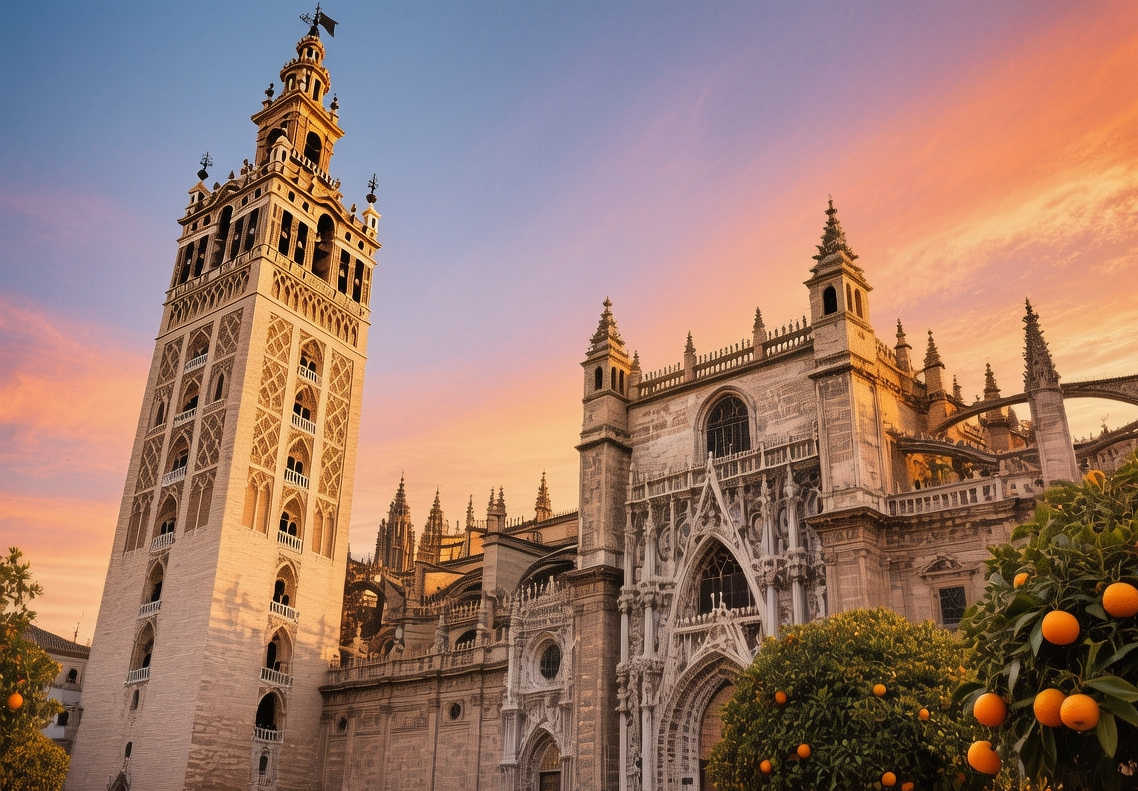
Seville Cathedral Gothic Stone Meets Andalusian Sky
The bronze bells of the Giralda chime across the Plaza del Triunfo—deep, resonant tones that have marked the hours since 1401. You stand beneath the shadow of the world's largest Gothic cathedral, where the air smells of bitter orange blossoms and heated limestone. The structure rises 104 meters at its highest point, a colossal assertion of faith built on the foundations of a 12th-century Almohad mosque. Inside, the nave stretches 126 meters long and 76 meters wide, vaulted ceilings disappearing into dim shadows pierced by stained glass light. You hear the shuffle of pilgrims approaching the tomb of Christopher Columbus; the scrape of chairs in the sacristy; the distant hum of traffic from the Avenida de la Constitución. This is not merely a monument—it is a living archive of conquest and conversion, where Islamic minarets support Christian bells and Renaissance art adorns Gothic walls. In 2026, as heritage sites face increasing pressure from mass tourism, the Seville Cathedral remains a sanctuary of contemplation—a place where history is not displayed behind glass but breathed in every cool stone corridor.
Why Seville Cathedral Embodies Architectural Synthesis
The Seville Cathedral represents one of history's most ambitious architectural statements, constructed between 1401 and 1506 to demonstrate the city's wealth following the Reconquista. The cathedral solves a profound symbolic problem: how to assert Christian dominance while utilizing existing Islamic infrastructure. The solution was radical—retain the mosque's minaret (now the Giralda tower) and courtyard (Patio de los Naranjos) while erecting a Gothic superstructure around them. The resulting building covers 11,500 square meters, featuring 80 chapels and a main nave that soars 30 meters high, supported by 40 massive pillars.
The Giralda itself, completed in 1198 under the Almohad Caliph Abu Yaqub Yusuf, stands 104.1 meters tall and originally served as a call-to-prayer tower. Unlike European bell towers with stairs, the Giralda features 35 gradual ramps wide enough for a horse to ascend—a engineering necessity for the muezzin to reach the top daily. The Christian addition, the El Giraldillo bronze weathervane, was added in 1568, weighing 1,200 kilograms and rotating with the wind. This layering of styles—Moorish base, Renaissance top, Gothic body—makes the Seville Cathedral a unique palimpsest of Andalusian history, recognized as a UNESCO World Heritage Site since 1987 alongside the Alcázar and Archive of the Indies.
The Best Time to Experience Seville Cathedral
For the optimal Seville Cathedral visit, target March 15–May 20 or October 10–November 25, when temperatures range between 18–28°C (64–82°F) and the orange trees are either blossoming or fruiting. The cathedral opens at 11:00 AM on Mondays and 10:30 AM Tuesday through Saturday; arrive 15 minutes before opening to secure entry before tour groups converge. Sunset at the Giralda tower—specifically 7:30–9:00 PM in summer—offers dramatic lighting over the city, though last entry is typically one hour before closing. Spring offers the added spectacle of Semana Santa (Holy Week), though expect crowds exceeding 50,000 daily visitors and book tickets three months in advance.
Avoid July 15–August 31 unless you tolerate extreme heat; temperatures regularly exceed 40°C (104°F), making the climb up the Giralda's ramps physically demanding despite internal shade. Winter months (December–February) bring milder weather (10–16°C / 50–61°F) but shorter daylight hours, limiting rooftop views. Monday mornings often see reduced hours due to liturgical services; verify current schedules at www.catedraldesevilla.es or contact the ticket office at info@catedraldesevilla.es (+34 954 214 971). Purchasing tickets online saves 30–45 minutes of queueing time during peak season.
Approximate Budget for a 7-Day Trip
Seville remains affordable compared to Madrid or Barcelona, though prices rise during Feria de Abril and Holy Week. The following budget assumes mid-range comfort with cultural immersion, based on 2026 pricing with approximately 3.5% inflation from 2025 figures. Costs reflect a focus on historic center accommodation and authentic dining.
- Accommodation: €75–€130 per night for a double room in a palacio hotel or boutique guesthouse in Santa Cruz or Arenal neighborhoods; luxury options near the cathedral command €180–€300 per night
- Food: €40–€60 per day—breakfast €5–€8 (café con leche and torrija), lunch €15–€25 (menú del día including gazpacho, pescaíto frito, and wine), dinner €20–€30 (tapas crawl including jamón ibérico and espinacas con garbanzos)
- Transportation: Train from Madrid Atocha to Seville Santa Justa: €55–€75 high-speed AVE (2.5 hours); local tram T1 or bus C5: €1.40 per ride or €5 daily pass; taxi from airport: €25 fixed rate; bike rental: €15 per day
- Attractions: Seville Cathedral + Giralda entry: €12; Alcázar of Seville: €13.50; Archive of the Indies: free; Flamenco show at La Casa del Flamenco: €35; River cruise on Guadalquivir: €18
- Miscellaneous: Ceramic souvenirs from €10; local Sherry wine €8–€20 per bottle; horchata drink €2.50; artisan leather goods €30–€70; guided cathedral tour €15
Total estimated cost for 7 days: €920–€1,350 per person (based on double occupancy; solo travelers should add 35–45% for single supplements)
7 Essential Seville Cathedral Experiences
- Climb the Giralda Tower Ramps: Ascend the 35 inclined ramps instead of stairs, just as the Moorish muezzin did centuries ago. The climb takes 15–20 minutes at a leisurely pace; pause at the three interior levels to view historical bells and architectural details. At the top, 70 meters above ground, you gain 360-degree views of Seville's terracotta rooftops and the Sierra Morena mountains. Visit at 10:30 AM opening time to avoid crowds. The bronze El Giraldillo statue sits above you, weighing over a ton and acting as a weather vane since 1568.
- View the Tomb of Christopher Columbus: Located in the Crucero (crossing), this monumental tomb features four heraldic figures representing the kingdoms of Castile, León, Aragón, and Navarra carrying the explorer's casket. The remains were transferred here from Santo Domingo in 1898 after decades of dispute. Stand quietly for a moment to observe the intricate carvings; photography is permitted without flash. The tomb sits directly beneath the main dome, creating a dramatic focal point within the vast nave.
- Examine the Main Altarpiece (Retablo Mayor): This towering wooden structure, carved between 1482 and 1564, is the largest altarpiece in Christendom—measuring 20 meters high and 18 meters wide. It features 45 scenes from the life of Christ painted in gold leaf and polychrome wood. Visit between 2:00–4:00 PM when side lighting accentuates the gold details. Guided tours explain the iconography; otherwise, pick up an audio guide for €4 to understand the biblical narratives depicted in the intricate panels.
- Walk the Patio de los Naranjos: Exit the cathedral into the original mosque's courtyard, where 66 orange trees, palms, and cypresses surround the Fuente del Lavadero (ablution fountain). The courtyard retains the Islamic grid pattern, with arches lining the perimeter. It is free to enter from the street (Calle Mateos Gago) even without a cathedral ticket, though access to the interior requires admission. Visit in late afternoon when the scent of orange blossoms is strongest and the light filters through the branches.
- Explore the Sacristy of the Chalices: This room houses masterpieces by Francisco de Goya, Bartolomé Esteban Murillo, and Francisco de Zurbarán. The vaulted ceiling features frescoes by Antonio Palomino. Look for the Virgin of the Navigators by Alejo Fernández, the first known painting depicting the Americas. Entry is included with your cathedral ticket; allow 20 minutes to appreciate the collection. Lighting is subdued to protect the canvases, so allow your eyes to adjust upon entering.
- Attend Sunday Morning Mass: Experience the cathedral as a functioning church by attending the 12:00 PM Sunday Mass in the main chapel. The choir sings from the Coro, a Renaissance enclosure carved in wood and stone that splits the nave. Entry is free for worshippers, though tourists must respect liturgical silence and remain in designated areas. This offers a rare glimpse of the space in active use, contrasting with the daytime tourist flow.
- Visit the Chapter House (Sala Capitular): Considered one of the finest Renaissance rooms in Spain, this oval chamber features a dome painted by Bartolomé Esteban Murillo. It served as the meeting place for cathedral canons and now houses important documents. Access is included in the general ticket; look for the intricate marble flooring and the paintings depicting Immaculate Conception themes. The acoustics are exceptional—whisper near the center to hear the sound amplify.
3 Hidden Gems Most Travelers Miss
- Church of El Salvador: Located 400 meters northeast at Plaza del Salvador, this baroque church sits atop another former mosque. Your Seville Cathedral ticket often includes combined entry (verify at purchase). The interior features stunning altarpieces and an underground exhibition of the original mosque foundations discovered during renovations. Entry: €6 (or combined); open 11:00 AM–7:00 PM. It receives one-tenth the visitors of the main cathedral, offering quiet contemplation. Contact: +34 954 900 257.
- Archivo General de Indias: Directly behind the cathedral, this UNESCO site houses centuries of documents relating to the Spanish Empire in the Americas. The building itself, designed by Juan de Herrera in 1584, is an architectural masterpiece of the Spanish Renaissance. Entry is free; open Tuesday–Saturday 9:30 AM–5:00 PM. Request to see the temporary exhibitions featuring original letters from Columbus and Magellan. The climate-controlled reading rooms preserve history you can touch (with gloves). Book free tickets online at www.culturaydeporte.gob.es.
- Capilla Real (Royal Chapel): Often overlooked within the cathedral complex, this chapel houses the tombs of King Ferdinand III and his son Alfonso X. The bronze effigies lie beneath Gothic arches, guarded by ceremonial swords. Access requires a separate €4 ticket or guided tour; open 11:00 AM–5:00 PM. The chapel's stained glass windows date to the 15th century and cast colored light onto the stone floors. Visit mid-afternoon when the sun aligns with the western windows for maximum visual impact.
Cultural & Practical Tips
- Dress code enforcement: Shoulders and knees must be covered for all visitors; shorts above the knee and sleeveless tops are prohibited. Guards actively enforce this rule at entry points. Carry a lightweight scarf even in summer; you will need it for church visits and cooler evenings.
- Master these phrases: "Buenos días" (BWEH-nos DEE-as) for good morning; "Por favor" (por fah-BOR) for please; "Una entrada, por favor" (OO-nah en-TRAH-dah) to buy a ticket; "¿Dónde está el baño?" (DON-deh es-TAH el BA-nyo) to find the restroom.
- Photography guidelines: Flash photography is prohibited inside the cathedral to protect artwork. Tripods require special permission from the cathedral administration (+34 954 214 971). Mobile phones must be silenced. Respect "no fotos" signs in the Sacristy and Chapter House during private events.
- Ticket strategy: Purchase tickets online at least 48 hours in advance during peak season (March–May, October). On-site queues can exceed 90 minutes. Students under 25 and children under 14 enter free with ID. Seniors over 65 receive discounted rates (€7).
- Hydration and heat: Seville's inland location means dry heat; carry a refillable water bottle. Public fountains (fuentes) are available in the Plaza del Triunfo and Patio de los Naranjos. The water is potable and sourced from local springs. You'll save €2–€3 daily and reduce plastic waste.
- Siesta timing: Many nearby shops close between 2:00–5:00 PM. Use this time to visit the cathedral interior (which remains open) or rest at your accommodation. Evening activity resumes after 8:00 PM when locals return to the streets for dinner.
- Security checks: Expect airport-style security screening at the entrance. Large backpacks and suitcases are not permitted; use the left luggage facility at Santa Justa train station or your hotel. Allow an extra 15 minutes for security processing during peak hours.
Conclusion: Travel with Reverence, Not Just Reverie
The Seville Cathedral demands more than casual observation—it asks for contemplation of the layers of history embedded in every stone, every bell, every ramp climbed by horses and pilgrims alike. When you stand beneath its vaulted ceilings in 2026, you're not merely touring a monument; you're walking through a fragile ecosystem of memory where Islamic engineering, Gothic ambition, and Renaissance art intersect in delicate balance.
Choose to engage deeply: hire a local guide from the Santa Cruz neighborhood rather than a large tour company; purchase tickets directly to support preservation efforts; respect the liturgical functions that continue amidst the tourism. The Seville Cathedral survives not as a museum exhibit but as a living church—and its preservation depends on visitors who recognize the difference between appreciation and consumption.
Slow down. Sit in the Patio de los Naranjos after the tour buses depart. Listen to the fountain water flowing through centuries-old channels. Taste the bitterness of an orange from the courtyard trees. The cathedral rewards those who approach it not as a checklist item but as a conversation across time—a dialogue between past and present that continues, like the bells above, in perpetual motion.