
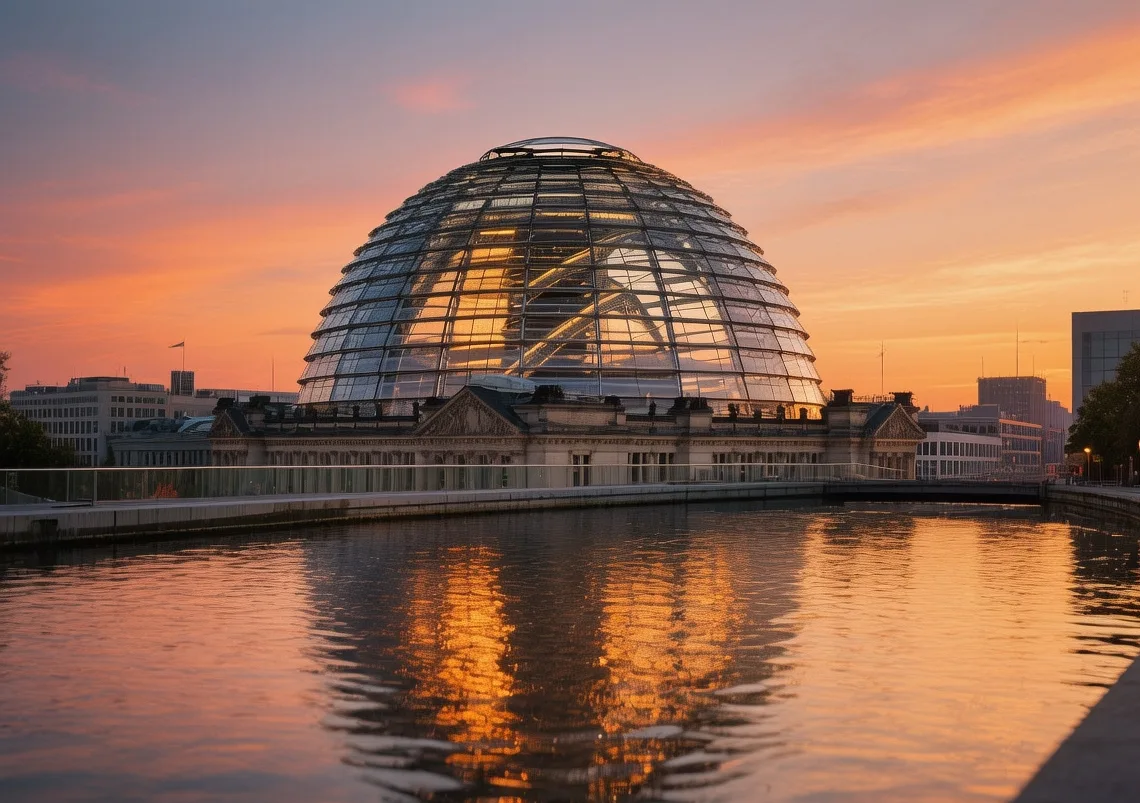
Reichstag Dome Glass Architecture Meets German Democracy
6:00 AM breaks over the Platz der Republik—a vast open square measuring 36,000 square meters in the heart of Berlin, Germany. The air bites at 8°C (46°F), sharp with the scent of damp sandstone, exhaust from early buses, and the earthy perfume of the Tiergarten waking from sleep. Dawn light spills over the glass cupola of the Reichstag Dome, illuminating the steel and glass structure that has crowned the parliament since 1999. This is not merely a government building; it is a symbol of transparency rising 47 meters (154 feet) above the ground, standing sentinel over the capital since the German Empire was proclaimed here in 1871. You hear the distant hum of the S-Bahn; the mist lifts 50 meters from the Spree River, exposing the scars of history etched into the stone facade. In 2026, as global democracy faces challenges, the Reichstag Dome matters now more than ever. It remains a tactile connection to political resilience—a place where you walk the same ramps as citizens, where the past isn't behind glass but embedded in the graffiti of 1945, and where the rhythm of life follows the sessions of the Bundestag rather than the clock. This is why you visit.
Why Reichstag Dome Embodies Political Transparency
The Reichstag Dome isn't merely an architectural landmark—it's a testament to reconstruction and democratic evolution spanning 130 years. Designed by Paul Wallot and completed in 1894, the building was severely damaged by fire in 1933 and again during the Battle of Berlin in 1945. The current dome, designed by Sir Norman Foster and completed in 1999, solved a fundamental symbolic need: to place the people physically above their government. The engineering is remarkable: the glass structure spans 40 meters in diameter, supported by a steel lattice that weighs 1,200 tons. At its center stands a mirror cone, 7 meters high, reflecting natural light down into the Plenary Chamber below while allowing visitors to look down on their representatives. In 2026, the dome welcomes over 3 million visitors annually, making it the most visited parliament in the world. The renovation preserved the original stone walls, including the Soviet graffiti from 1945, creating a layered narrative of conflict and reconciliation. When you walk these ramps, you traverse a layered history: Imperial grandeur in 1894, Nazi destruction in 1933, Cold War neglect, and a contemporary commitment to openness that defines the future of civic architecture. The building doesn't care about your schedule; it demands you respect its security protocols.
The Best Time to Experience Reichstag Dome
The Reichstag Dome reveals its true character during specific windows, though it operates daily except for parliamentary recesses. The definitive experience occurs between May 15 and June 10. During this window, you'll experience average temperatures of 14–18°C (57–64°F), with daylight stretching until 9:30 PM—ample time for evening photography after closing. The spring light filters beautifully through the glass panels, creating dramatic contrasts between shadow and illumination on the ramps. The tourist hordes of July haven't yet descended. For those seeking quieter contemplation, weekday mornings (8:00–9:30 AM) offer a more intimate atmosphere with significantly fewer tour groups on the spiral walkway.
Autumn—specifically September 10–October 5—provides a second peak experience, with temperatures cooling to 9–13°C (48–55°F) and the Tiergarten trees turning russet and gold. This is when you'll witness the Berlin Marathon passing the building. However, avoid August 1–25 unless you enjoy navigating crowds: this summer period sees visitor numbers swell to 15,000 daily, with timed slots booking out weeks in advance and accommodation prices inflating by 40%. Winter (December–February) brings its own magic but limited services—some viewing areas close early, and daylight shrinks to 8:15 AM–4:00 PM. For real-time opening hours and booking availability, verify current information at www.bundestag.de before your visit. Always book timed entry tickets at least 14 days in advance during peak season; walk-up availability is rare.
Approximate Budget for a 7-Day Trip (2026)
Berlin accommodates various budgets, though 2026 prices reflect post-pandemic tourism recovery and 3.5% German inflation. The following breakdown assumes mid-range travel with comfortable accommodations, local dining, and comprehensive exploration including public transport. Prices are listed in Euros (€), the local currency.
- Accommodation: €100–€160 per night for a double room in a traditional hotel or boutique guesthouse in Mitte or Kreuzberg. Luxury properties like the Adlon command premium rates (€300–€500), while hostels offer better value (€40–€60 per bed).
- Food: €45–€65 per day. Breakfast (€10–€15) typically includes bread rolls, cold cuts, and local cheese. Lunch (€12–€18) at street stalls: Currywurst with fries, or a Döner Kebab. Dinner (€25–€35) featuring regional specialties: Eisbein (pork knuckle), fresh river pike, or apple strudel.
- Transportation: Berlin Brandenburg Airport train: €3.80 single. BVG day pass (ABC zones): €9.50. Taxi from airport to center: €55. Car rental not recommended due to environmental zones and parking costs.
- Attractions: Reichstag Dome entry: Free (booking required). Museum Island pass: €24. East Side Gallery: Free. Topography of Terror: Free. TV Tower ticket: €28.50.
- Miscellaneous: City map: €5. Local wool scarf: €50–€100. Guidebook: €15. Travel insurance: €35–€50 for the week.
Total estimated cost for 7 days: €1,350–€1,850 per person (based on double occupancy)
Seven Essential Reichstag Dome Experiences
- Register for Dome Access: Book your slot online at least 14 days in advance. Arrive at the visitor entrance 15 minutes before your time. The security check is strict; bring your passport. The queue moves efficiently. Allow 30 minutes for entry procedures. It is mandatory for all visitors.
- Climb the Spiral Ramp: Start the ascent at 9:00 AM. The ramp winds 258 steps to the top. The glass panels offer 360-degree views of Berlin. The air is cooler as you rise; wear layers. The view toward the Brandenburg Gate is definitive. Allow 45 minutes for the climb. It is physically moderate but offers the definitive perspective.
- View the Mirror Cone: Reach the top platform at 9:45 AM. The central cone stands 7 meters high, reflecting light downward. Notice the inscriptions on the cone; they are quotes about democracy. The acoustics amplify the wind; speak softly. The room is exposed to the elements; wear layers. Stand quietly for 10 minutes. This is the spiritual heart of the building. Photography is permitted without flash.
- Look Down into the Chamber: Peer through the glass floor at 10:30 AM. You can see the Plenary Chamber where MPs debate. The seats are arranged in a semicircle. The microphones are visible below. The perspective emphasizes public oversight. Allow 15 minutes for observation. It contextualizes the dome within political function.
- Walk the Rooftop Terrace: Step outside onto the viewing deck at 11:00 AM. The wind is strong here; hold onto the railings. The view across the Spree River is panoramic. You can see the Berlin Cathedral dome. The city noise diminishes. It is the best time for exterior photography. The glass structure frames the sky perfectly. Allow 30 minutes for a full circuit.
- Visit the Plenary Chamber: If parliament is not in session, enter the chamber at 1:00 PM. The space measures 100 meters wide. The blue seats are iconic. The temperature is constant at 20°C (68°F). Audio guides are included with entry. Allow 40 minutes to read the displays. It contextualizes the dome within legislative history.
- Dine at the Rooftop Restaurant: End your visit at the Käfer Dachgarten (open 10:00 AM–11:00 PM). Order a schnitzel (€22) in the glass-walled room. The building dates to 1999 but blends with the historic stone. Speak to the staff about the parliamentary schedule. The fireplace crackles even in summer. This is the traditional end to a Reichstag Dome exploration.
Three Hidden Gems Most Travelers Miss
- The Roof Terrace Café: While most visitors focus on the dome, this small café sits on the lower terrace. Access: Enter via the side elevator (open 9:00 AM–5:00 PM). It is overlooked because it lacks signage, but the view of the Brandenburg Gate is the definitive photograph. Best visited: Late afternoon when the sun hits the sandstone. No facilities; bring food. It offers a perspective on government architecture.
- The Memorial Plaque: Located on the north wall, this plaque commemorates the 1945 battle. Access: View from the exterior path. Open during daylight hours. It's overlooked because it is small, but the bullet holes are visible. Insider tip: Look for the Soviet inscriptions nearby. Benches available for rest. It provides context for the building's survival.
- The Paul-Löbe-House Bridge: Beneath the Spree lies a glass bridge connecting parliament buildings. Access: View from the riverbank path. Open 24 hours. It is overlooked because it functions as a workspace. The steel structure is modern. It's special because you see the expansion of the parliament complex. Best visited: Evening when lit up. A unique architectural heritage experience.
Cultural & Practical Tips
- Security Protocols: Airport-style security is mandatory. Do not bring large bags or sharp objects. This is not just etiquette; it is law. Leave no trace; take all litter home. Keep voices low in the chamber.
- Photography Guidelines: Photography is permitted in the dome and public areas. Tripods are allowed but cannot obstruct paths. Do not use flash inside the chamber. Respect MPs during sessions; no photography at all during debates. Silence your phone completely.
- Booking Strategy: Timed entry slots sell out during summer. Book online at least 14 days in advance. Arrive 15 minutes before your slot to pass through security. Late arrival may result in denied entry without refund. Print your ticket or save it to your phone wallet.
- Learn these Local Terms: "Bundestag" (Parliament), "Plenarsaal" (Plenary Chamber), and "Kuppel" (Dome). Locals appreciate the correct terminology. When asking for directions, say "der Reichstag" rather than "the building." It shows respect for German heritage.
- Weather Preparation: Berlin is windy on the exposed rooftop. Even on sunny days, carry a windproof layer. The glass floors are cold in winter; wear thick socks. The building is unheated in some areas to preserve artifacts. Dress in layers even in summer.
- Accessibility Information: The dome is wheelchair accessible via elevator. However, the spiral ramp is for walking only. Virtual tours are available online. Contact the visitor team at +49 30 227 32152 for specific access queries before traveling.
- Support Conservation: Consider donating to the "Parliamentary History Foundation" upon exit. Maintenance costs €5 million annually. Purchase guidebooks from the shop rather than online to support the local revenue stream. Membership offers free entry to other sites.
Conclusion: Travel with Transparency, Not Just Tourism
The Reichstag Dome in 2026 asks something different of you than mere sightseeing. This building—glass, stone, resilient—has witnessed centuries of empire, war, and reunification. But it also sustains a living community of politicians, staff, and visitors who keep the democracy alive. To travel here responsibly means understanding that you're not just visiting a monument but entering a sanctuary maintained by strict security protocols. Walk softly on these ramps; they've carried emperors, dictators, and democrats for generations. Choose the quiet morning visit over the crowded afternoon. Listen to the audio guide's history, not just the facts. Donate to the conservation fund, not just the gift shop. Let the Reichstag Dome change you, not just entertain you. In an age of mass tourism and digital detachment, this is how we ensure that 2026's visitors don't become the generation that loved this place to death. The dome will still be here in 2126—if we treat it not as a backdrop to consume but as a legacy to protect.